377810582153132


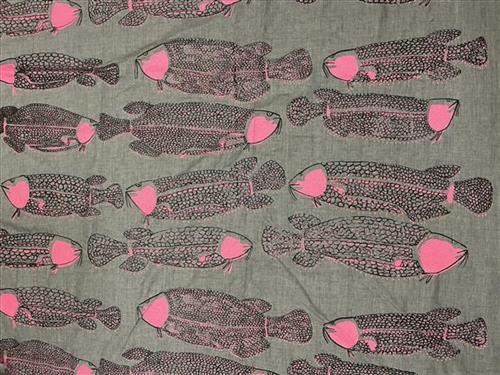
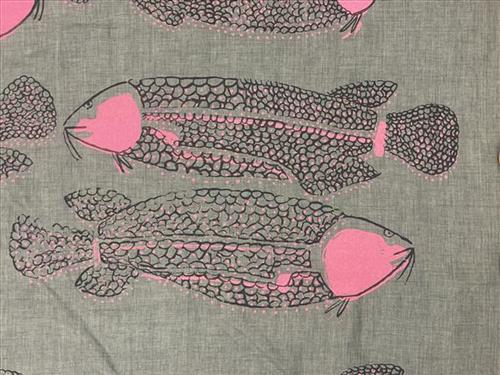
Ngaldadmurrng (Saratoga)

This design tells the story of Saratoga dreaming,  a freshwater fish that swims on the edge of creeks and rivers. This design is the Saratoga dreaming from the Mularra songline. Where the Saratoga we call Murdulngu, Danguny travelled from Malmyangarnak billabong to Mirrigatja.

This Billabong was owned by Murdulngu (Saratoga) before the water was taken over by shark Barlangu he came all the way from east to north then to west. He was travelling when that water level was high he went up the stream but he couldn’t make it. This Barlangu came from Murruggun clan but really this shark came from long way all the way south. This story is connected through Mularra songline it represents many clans.

With permission from clan elders, Carol is able to pass on this family knowledge through her passion in textile and art.


‘I am proud of my first design, I want to keep this design for future, for my children and grandchildren so they remember this story, this story is a big part of the mularra songline’ Carol Liyawanga Campion

Grey linen with pink and black ink

377810582153128


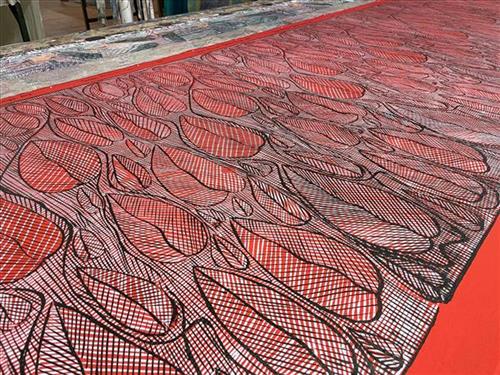
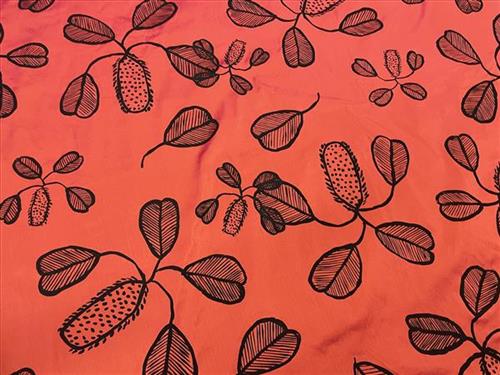
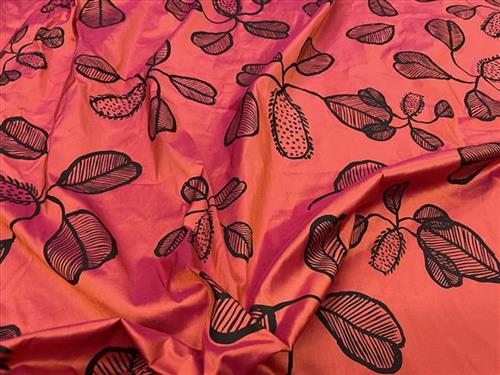
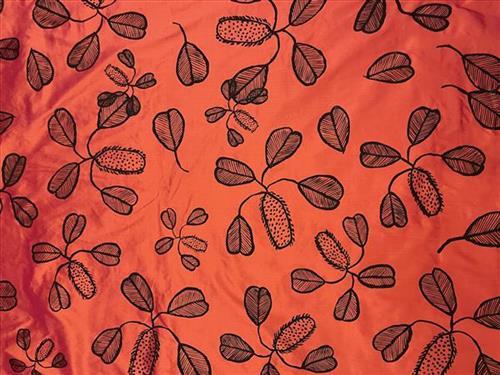
Man-mobban (Billygoat Plum)

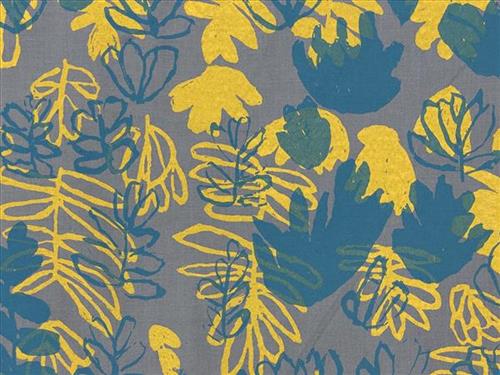
Susan has depicted the leaves of the man-mobban (billygoat plum tree,  Terminalia carpentariae). Its small green plums can be found in abundance on Susan’s homeland, Mumeka.

Red cotton, black and grey ink.

377810582153125


Manyawok (Cheeky Yam)

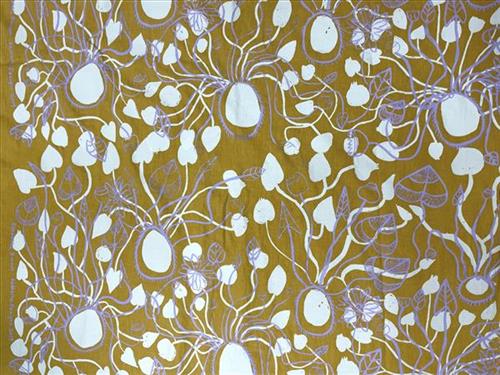
This design depicts the cheeky yam, which is found on the artist’s country, near the outstation of Mumeka in central Arnhem Land. Yams are an important bush food that are collected during the wet season.

Unlike other yams that can be eaten roasted, the cheeky yam can be poisonous if not properly prepared. The preparation process of the yam traditionally takes two days. Firstly, the yams are dug up with a digging stick and boiled over a fire. They are then peeled and sliced into thin strips, which are placed in a special dillybag woven by women from pandanus leaves. The yam-laden dillybag is then strung from an overhanging branch into a river, so the bag just touches the flowing fresh water. The cheeky yams are left like this overnight to allow the running water to remove the toxins. The next morning, people return and collect the dillybag, and leave the yam pieces in full sunlight to dry out. Finally, when the yam pieces have dried in the sun for a day, they are ready to eat.

377810582153548


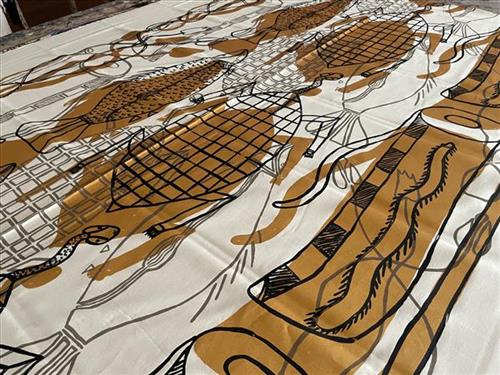
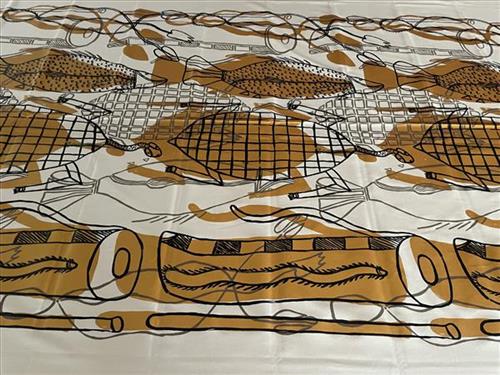
Kunronj (Freshwater Story)

Jennifer is a Kuninjku artist from the Kurulk clan whose country lies around the outstation of Mumeka in central Arnhem Land. Jennifer works at Bábbarra Women’s Centre alongside other members of her family who are also accomplished artists too: her mother, Helen Lanyinwanga (now deceased), sister Deborah Wurrkidj and daughter Abigail Namundja. She is a niece of Australia’s most highly acclaimed bark painter, John Mawurndjul, and she is renowned, in her own right, for her bark paintings, hollow logs and carved sculptures.

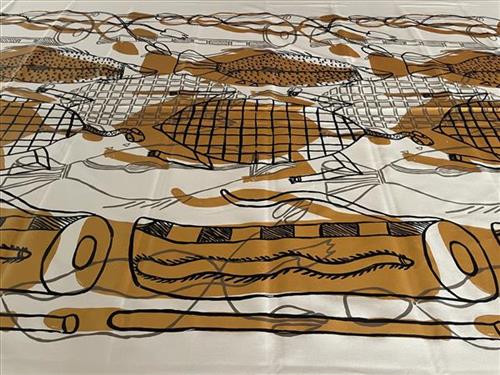
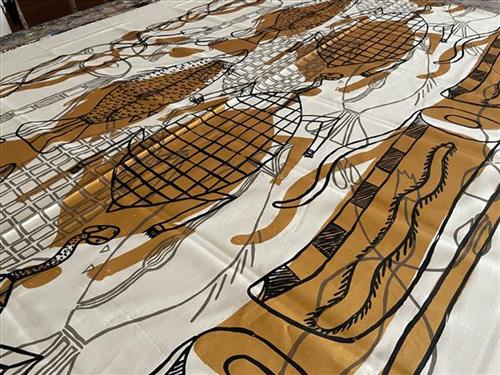
This design depicts important manme (food) sources from freshwater environments on Jennifer’s country and the implements used to gather these items.  The kunkaninjor digging stick featured in the design is used to dig for wayuk (waterlily) roots in billabongs, which are eaten fresh from the water or cooked on an open fire. The kunkaninj is also used to find and dig freshwater komrdawh (northern snake-necked turtle) that hibernate on the floodplains during the dry season.

Various fish species including the birlmu (barramundi), as shown here, are hunted with a spear or trapped inside a woven fish trap. This manme is carried within kunmadj (woven bags), which are made with fibres from the pandanus tree or sedge grasses, then enjoyed together by the family back at camp.

377810582153544


Manyawok (Cheeky Yam)

This design depicts the cheeky yam, which is found on the artist’s country, near the outstation of Mumeka in central Arnhem Land. Yams are an important bush food that are collected during the wet season.

Unlike other yams that can be eaten roasted, the cheeky yam can be poisonous if not properly prepared. The preparation process of the yam traditionally takes two days. Firstly, the yams are dug up with a digging stick and boiled over a fire. They are then peeled and sliced into thin strips, which are placed in a special dillybag woven by women from pandanus leaves. The yam-laden dillybag is then strung from an overhanging branch into a river, so the bag just touches the flowing fresh water. The cheeky yams are left like this overnight to allow the running water to remove the toxins. The next morning, people return and collect the dillybag, and leave the yam pieces in full sunlight to dry out. Finally, when the yam pieces have dried in the sun for a day, they are ready to eat.

377810582153543


Kunronj (Freshwater Story)

Jennifer is a Kuninjku artist from the Kurulk clan whose country lies around the outstation of Mumeka in central Arnhem Land. Jennifer works at Bábbarra Women’s Centre alongside other members of her family who are also accomplished artists too: her mother, Helen Lanyinwanga (now deceased), sister Deborah Wurrkidj and daughter Abigail Namundja. She is a niece of Australia’s most highly acclaimed bark painter, John Mawurndjul, and she is renowned, in her own right, for her bark paintings, hollow logs and carved sculptures.

This design depicts important manme (food) sources from freshwater environments on Jennifer’s country and the implements used to gather these items.  The kunkaninjor digging stick featured in the design is used to dig for wayuk (waterlily) roots in billabongs, which are eaten fresh from the water or cooked on an open fire. The kunkaninj is also used to find and dig freshwater komrdawh (northern snake-necked turtle) that hibernate on the floodplains during the dry season.

Various fish species including the birlmu (barramundi), as shown here, are hunted with a spear or trapped inside a woven fish trap. This manme is carried within kunmadj (woven bags), which are made with fibres from the pandanus tree or sedge grasses, then enjoyed together by the family back at camp.

377810582153488


Man-ngarre (Native Grasses)

Elizabeth had a distinctive artistic style, depicting the natural world with loose, organic strokes. Her style was evident in her key designs Kun-ngol (clouds), showing the cloud formations over her floodplain country after the wet season, and the fine detail of Kun-kirh (mud ripples) depicting cracked mud in the sun during dry season. Elizabeth was close family with Janet Marawarr, Lucy Yarawanga and Raylene Bonson, leading artists at Bábbarra.

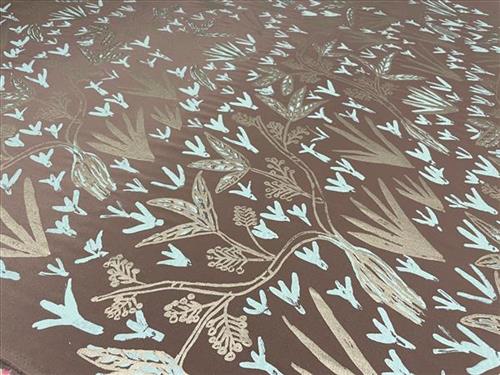
This design celebrates the grasses of Arnhem land, the spear grass, Sorghum intransthat grows in the wet season and dies off or is burnt during the dry season.

377810582153578


Man-djarduk (Red Bush Apples)

Deborah Wurrkidj is a Kuninjku artist from the Kurulk clan whose country lies around the outstation of Mumeka in central Arnhem Land.

In this design she has depicted man-djarduk (red bush apples) – a sweet, crisp bush food that is a favourite to collect.

Man-djarduk fruits in kurrung and kunumeleng seasons, the build-up and first rains seasons.

377810582153550


Kunngol

This design depicts certain Kun-ngol (clouds) that signal to people of central Arnhem Land that the end of the wet season is approaching. After months of daily monsoonal rain in Arnhem Land, these clouds are light and fluffy, not like the dark, heavy clouds of the monsoonal sky. At the time of the kun-ngol clouds, people know the country will soon dry up and the cold season (dry season) will arrive. When the kun-ngol clouds appear, all of the billabongs are already filled, the rivers are high and the country is brimming with life and fresh new growth after months of fresh water pouring from the sky.

377810582153531


Wayuk – (Waterlily)

‘I always follow the footpath of my grandmother. I have too many stories of my grandmother. We went to the bush and ate bushtucker like yam, yabbie, barra, catfish and magpie goose. We didn’t come into town often, we were staying at Barrihdjowkkeng outstation. I learned how the old people used to live. I always think about my family out there and I keep going. My grandmother asked me to work with her for many years. I watched her making lino and screen printing. That’s why I stay in this job and I’m for the women’s centre’.  Roseanna Bonson 2021

Roseanna’s first design is a 2 colour waterlily design. Wayuk (waterlily) *kuninjki grow in the swamps around Barrihdjowkkeng.

‘The flowers of the waterlily are white and yellow and I like that kind of colour.’ Roseanna Bonson 2021