377810582151551


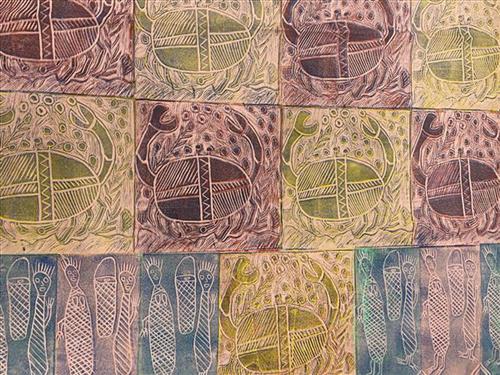
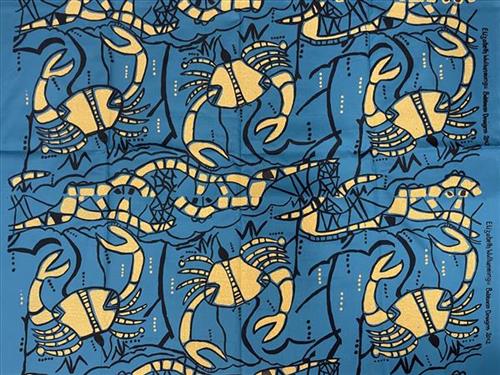
Rrugurrgurda (Mud Crab)

This design tells the story of Elizabeth’s homeland – a dreaming place, a good dreaming place with plentiful mud crabs. Elizabeth’s homeland lies east of Maningrida, at the mouth of Blyth river. This country is known for a large spiritual mud crab, which lives in the area.

Many families go and collect crabs to eat there with long sticks, or collect directly from the shores. Mud crabs hide in the muddy bottoms of estuaries and mangrove forests in areas surrounding Maningrida. After a king tide, a large cyclical tide that bring the crabs out from the mangroves, it is a good time to find crabs.

Rrugurrgurda (mud crabs) is pronounced Ahh-rewg-gurd-gurda in the Burarra language. Rrugurrgurda are good baladji (bush food in Burarra) and can be caught all year round. They are put on the fire to cook and they are ready when they turn a bright orange colour.

377810582149898


Wubbunj (Paperbark Canoe)

“Wubbunj is our traditional canoe. This design is the old history story of how people came to live in this place we call Maningrida. Two old people were staying on the other side of the saltwater, in Narlarrambarr area. The old people slept in a paper bark shelter and hunted on the water using their canoe.

A long time ago our people carved these canoes from the big paperbark trees. They had paddles with one person at the front, one at back, and other kids and passengers in the middle. Kunkot (paper bark) was used to make the sails which they would stand up and catch the wind.

One day these old people saw a new boat in their waters, which belonged to the Makassans (Indonesians). Those two old men saw the big Makassan boat coming in, and decided to paddle their canoe from Narlarrambarr to the other side (modern day Maningrida). We were scared of the Makassans, they gave us tobacco and tea, but they took many of our women.

When those two old people tasted that water at Maningrida from the Djomi spring, it was sweet freshwater and they decided to stay here. People here had no clothes in those time, we were just wearing string morkoi (loin cloths). Seven tribes were here then, but now in Maningrida there are lots more languages.” – Raylene Bonson

377810582149885


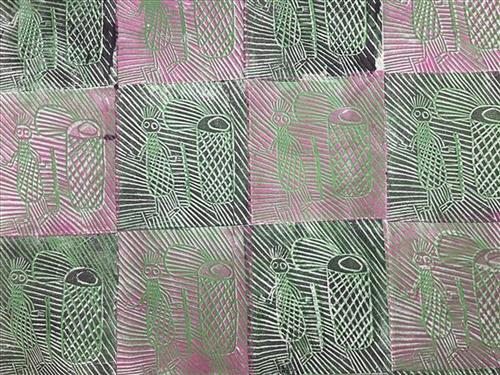
Bawáliba (Stone Country Mimih)

‘Bawáliba is the djang (Dreaming) of my mother and my uncles. They are good spirits, they protect us and they recognise families. They are really tall- just like human beings, like us. They dance late at night and have a lot of hair.

In olden times, long long long time ago Bawáliba were here, before people were on the land. Bawáliba used to go out hunting and care for country. They hunt carrying fish traps and digging sticks, near the homeland Djinkarr. They go out hunting on the floodplains with dilly bags and digging sticks. They collect a lot of bush foods, and sleep together with one bark shelter.
Sometimes now they still come alive when we sleep, they might come to our houses and peep through the window. At night, they cover themselves with white clay and red cloth tied around their waist. If we hear them, we jump out of bed and get up to look -but they have disappeared, they’re just too quick. Bawáliba might knock on the window to remind us they are there looking out for us.If you listen deeply you can hear them whisper, sometimes they talk about us and might say, ‘why are those people making camp here?’ then they realise ‘Oh they are family from here, it’s ok, they are just sleeping here for the night’.

During the day they always turn into stone and they sleep. We still know that green rock covered in moss near Djinkarr, that’s Bawáliba sleeping.
Some of my ancestors used to speak the same language as the Bawaliba, but all those old people are passed away now. It’s a little bit sad for us, because no one now can speak that Bawaliba language anymore.’ Lucy Yarawanga 2019

377810582149856


Bawáliba and Mududu (Mud crab)

‘Bawáliba is the djang (Dreaming) of my mother and my uncles. They are good spirits, they protect us and they recognise families. They are really tall- just like human beings, like us. They dance late at night and have a lot of hair.

In olden times, long long long time ago Bawáliba were here, before people were on the land. Bawáliba used to go out hunting and care for country. They hunt carrying fish traps and digging sticks, near the homeland Djinkarr. They go out hunting on the floodplains with dilly bags and digging sticks. They collect a lot of bush foods, and sleep together with one bark shelter.
Sometimes now they still come alive when we sleep, they might come to our houses and peep through the window. At night, they cover themselves with white clay and red cloth tied around their waist. If we hear them, we jump out of bed and get up to look -but they have disappeared, they’re just too quick. Bawáliba might knock on the window to remind us they are there looking out for us.If you listen deeply you can hear them whisper, sometimes they talk about us and might say, ‘why are those people making camp here?’ then they realise ‘Oh they are family from here, it’s ok, they are just sleeping here for the night’.

During the day they always turn into stone and they sleep. We still know that green rock covered in moss near Djinkarr, that’s Bawáliba sleeping.
Some of my ancestors used to speak the same language as the Bawaliba, but all those old people are passed away now. It’s a little bit sad for us, because no one now can speak that Bawaliba language anymore.’ Lucy Yarawanga 2019

377810582149936


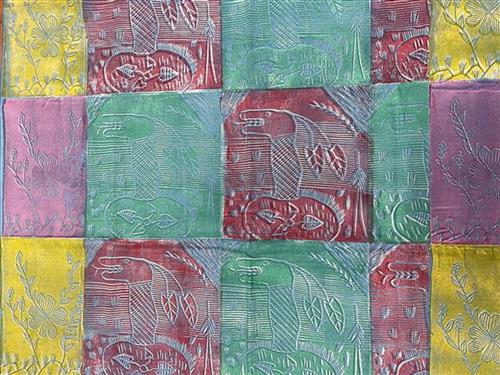
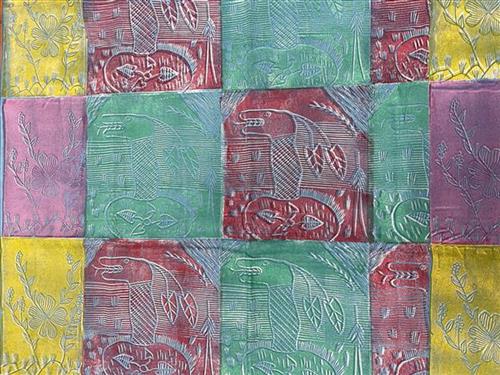
Bush Flower

Belinda has strong skills in hand carving lino designs, a medium through which she often depicts significant natural plants from her mother’s country (the central desert).