377810582144122


Kundayarr

Works in fibre from the Maningrida region are widely recognised as some of the finest in Australia. Artists confidently push the boundaries of fibre craft and cultural expression, adapting traditional techniques and forms to produce strikingly inventive and aesthetically exquisite artworks.

Artists usually use kundayarr, pandanus spiralis, to weave decorative round or oblong mats, as well as the less common triangular and conical shapes. Weaving is physically hard work, now done only by women. They colour the pandanus using natural dyes made from the roots, leaves or flowers of plants within the weaver’s clan estate.

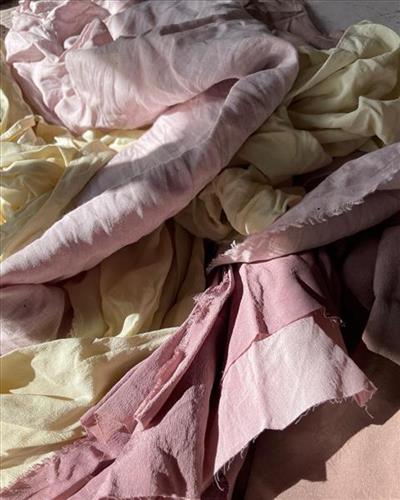
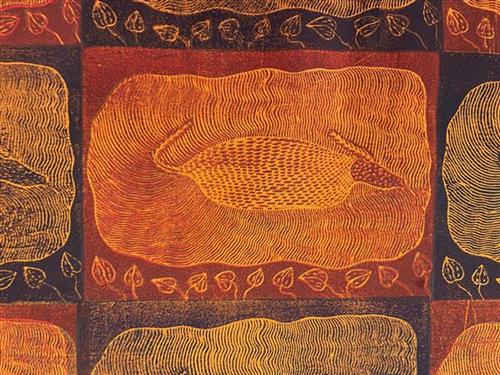
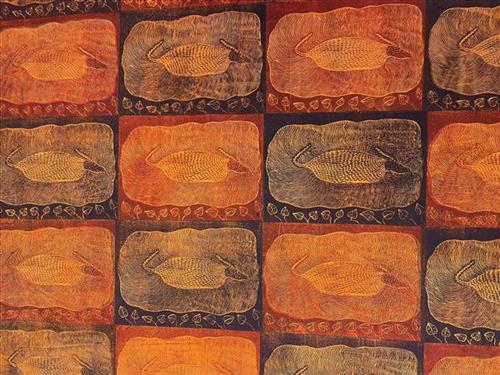
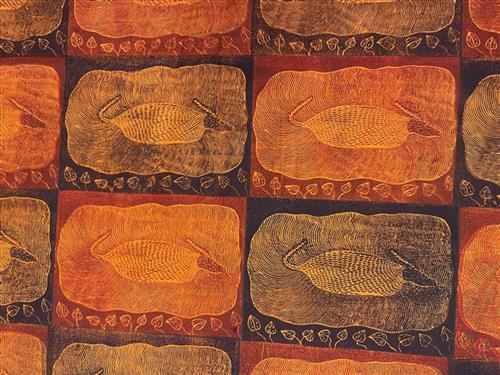
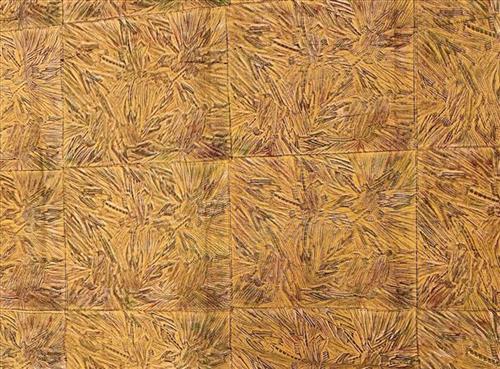
Deborah has used the root of Man-Kurdudjumuk (coelospermun reticulatum) to dye the fabric a beautiful yellow. This fabric has been dyed on country in the outstation of Kakodbubuldi and later printed in our Maningrida studio. Feathers, basket weaves and pandanus plants are pictured.
377810582144421


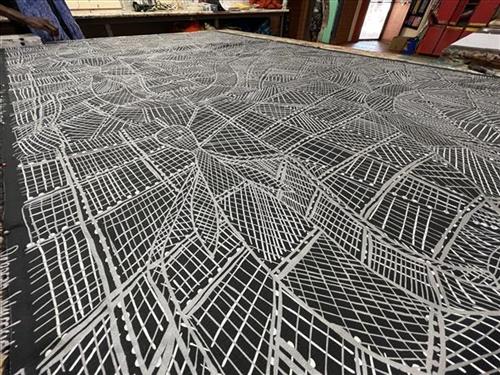
Wak (Black Crow Dreaming)

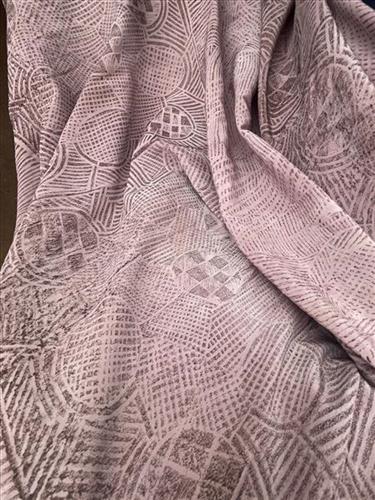
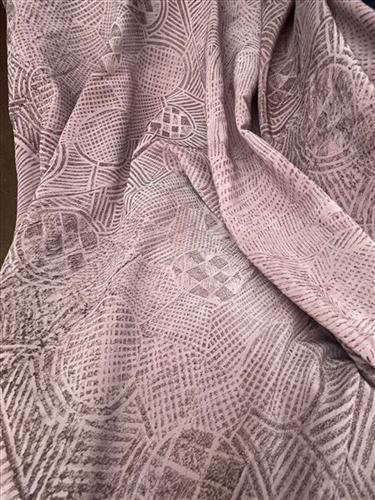
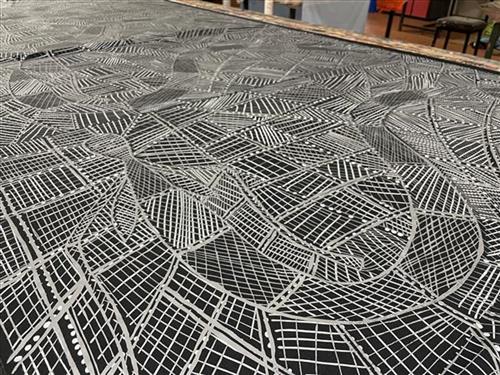
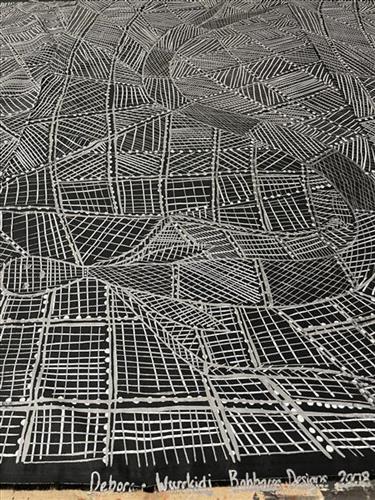
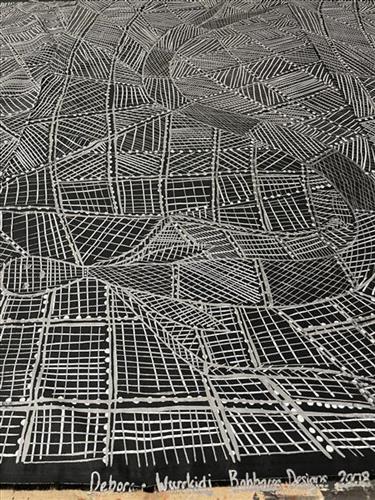
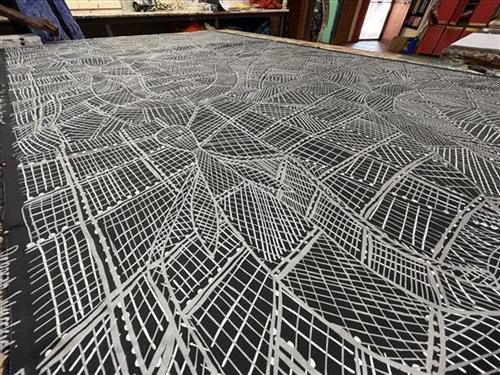
The ‘rarrk’, or abstract crosshatching, on this work represents the design for the crow totem ancestor called ‘Djimarr’. Today this being exists in the form of a rock, which is permanently submerged at the bottom of Kurrurldul Creek. The ‘Djimarr’ rock in the stream at Kurrurldul is said to move around and call out in a soft hooting tone at night. Both the stone itself and the area around it are considered sacred.

The imagery represents the rock mentioned above at the bottom of Kurrurldul creek, which is the final transmutation of the dreaming ancestor ‘Djimarr’. Finally, the pattern used here is also the crow design used in the sacred ‘Mardayin’ ceremony, which is a large regional patri-moiety ceremony now rarely conducted in central and eastern Arnhem Land.

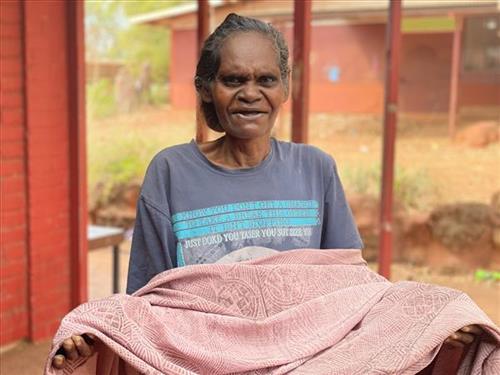
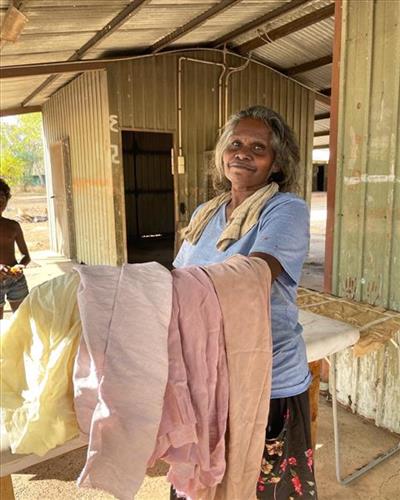
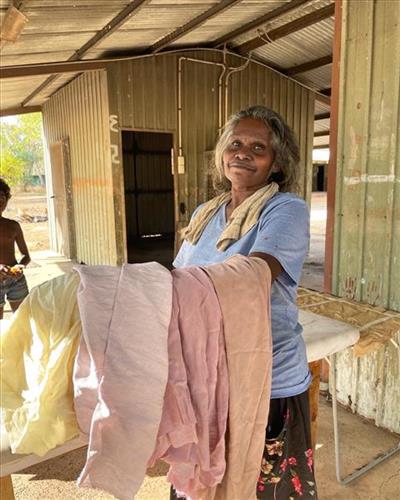
Deborah Kamanj pictured at her home studio in Kakodbebuldi where she has been creating bush colour to dye kundayarr Pandanus spiralis for her famed baskets. In a sustainable practice, Deb re uses the dye water to create soft hues on natural fabric. Here she shows us purple pink linen dyed from the seed of Wirndilk – a kangaroo paw like shrub.

377810582144420


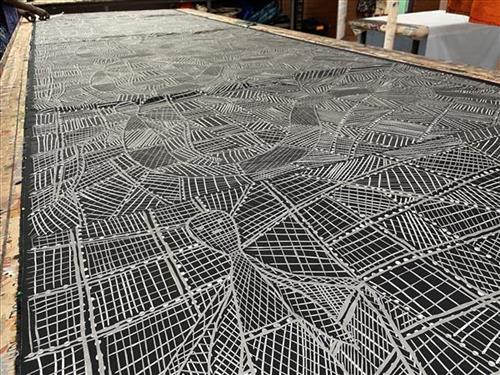
Wak

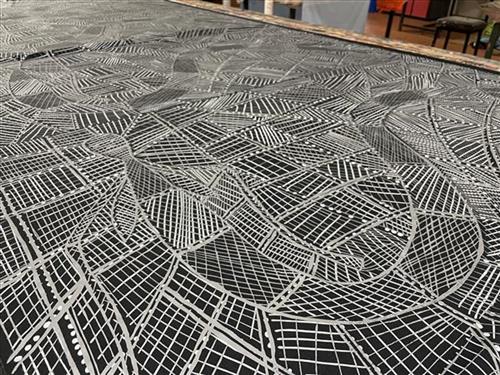
The ‘rarrk’, or abstract crosshatching, on this work represents the design for the crow totem ancestor called ‘Djimarr’. Today this being exists in the form of a rock, which is permanently submerged at the bottom of Kurrurldul Creek. The ‘Djimarr’ rock in the stream at Kurrurldul is said to move around and call out in a soft hooting tone at night. Both the stone itself and the area around it are considered sacred.

The imagery represents the rock mentioned above at the bottom of Kurrurldul creek, which is the final transmutation of the dreaming ancestor ‘Djimarr’. Finally, the pattern used here is also the crow design used in the sacred ‘Mardayin’ ceremony, which is a large regional patri-moiety ceremony now rarely conducted in central and eastern Arnhem Land.

Deborah Kamanj pictured at her home studio in Kakodbebuldi where she has been creating bush colour to dye kundayarr Pandanus spiralis for her famed baskets. In a sustainable practice, Deb re uses the dye water to create soft hues on natural fabric. Here she shows us purple pink linen dyed from the seed of Wirndilk – a kangaroo paw like shrub.

377810582144301


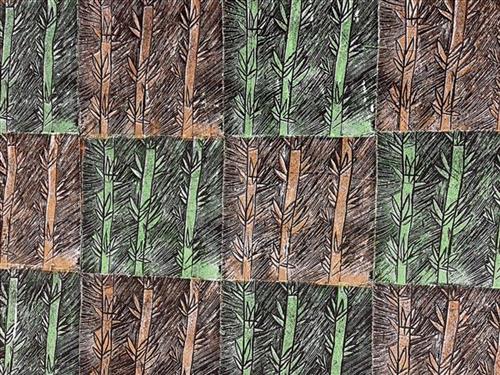
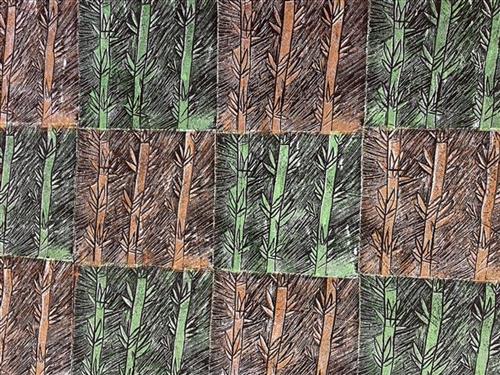
Bamboo Shoot

‘I see bamboo everywhere where i go in Maningrida. I see it at every house – it’s a common house plant. When i see bamboo i get excited because i feel at home. Bamboo makes me feel good.’ Belinda Kernan

377810582144282


Djabayéna (conefish)

A sawfish or ‘conefish’ in Ndjébbana. 

The saw shaped snout of the fish is traditionally used as a rasp in working wood.

377810582144262


Bolung

Bolung (Rainbow Serpent) is from the sacred country of Dukala- Djarranj. This is the country of Jay’s grandparent and a place of great significance, as Bolung, the Rainbow Serpent, travelled through the landscape. Rock art in the area depicts a rotund Bolung. 

377810582144261


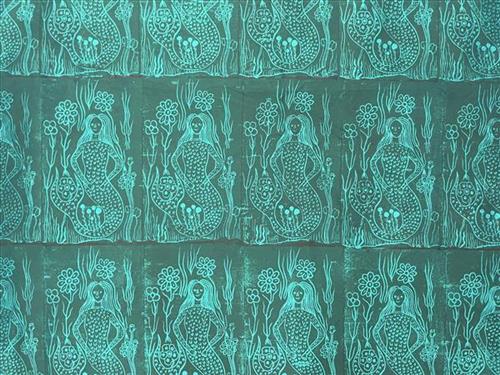
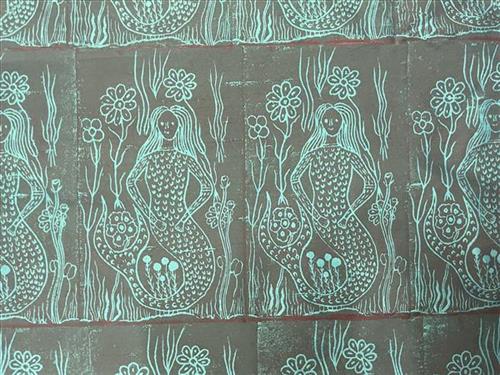
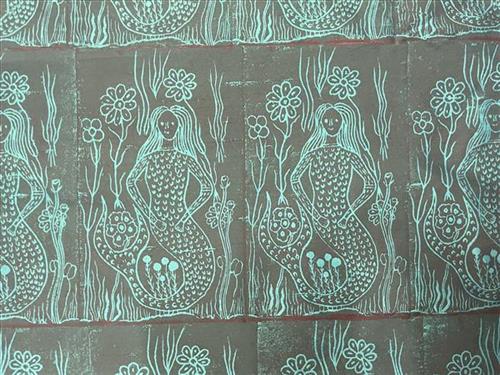
Ngalkunburriyaymi (Mermaid)

Ngalkunburriyaymi 

Kuninjku people call mermaids yawkyawk, but in my language, Kune, we call them Ngalkunburriyaymi (pronounced Ngaal gun borro yay mee).

The Ngalkunburriyaymi depicted in my artworks is from a place called Marra-yii (sp?).  There are too many Ngalkunburriyaymi living at this place.  They are always there and have been there forever. We can go camping and fishing at this place.  Marar-yii is a place in the river. They are freshwater. They are Duwa moiety. Same as the freshwater crocodile. 

My mum told me her story.  Ngalkunburriyaymi gave her a baby.  Ngalkunburriyaymi came to her in a dream.  They gave her my brother. In my mother’s dream, she went fishing Marra-yii and Ngalkunburriyaymi came to her to tell her she was having a baby.  She said to her I will give you a baby.  In a couple of months, you will be pregnant.

Ngalkunburriyaymi eats fish and waterlilies.

Owen Yalandja is my cousin from my father’s side and Lulu is my grandmother also from my father’s side. They are from different outstations, but we are family.  My Ngalkunburriyaymi story is connected to them but different.

I love my mother’s story and it is why I made a lino plate. I print it on different colour fabrics – silk, linen and cotton. I like using lots of different colours.  I come from a family who have made artwork on bark and hollow logs using ochre—black, yellow, red and white. But at Babbarra Designs, we can use bright colours in our fabric designs.

377810582144259


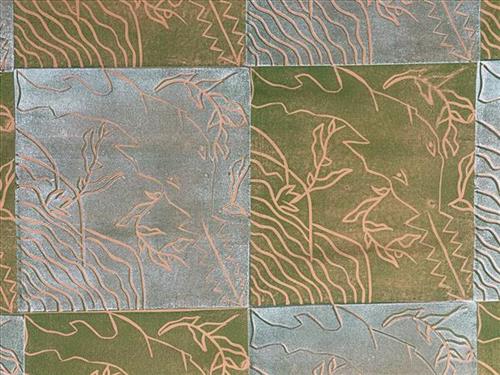
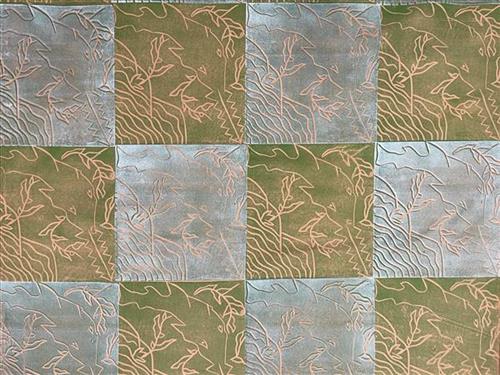
Yawkyawk in Stone Country

Yawkyawk is a word from the Aboriginal Kunwinjku/Kunwok language, meaning ‘young woman’ and ‘young woman spirit being’.

Sometimes compared to the European notion of mermaids, yawkyawks are usually depicted with the tails of fish. They have long hair, associated with trailing blooms of algae, typically found in Arnhem Land streams and rock pools. There can be wet season yawkyawk and dry season yawkyawk. It is said that when men go out hunting, they sometimes hear the song of the yawkyawk and become confused, loosing their way back to country.


377810582144256


Yawkyawk in Stone Country

Yawkyawk is a word from the Aboriginal Kunwinjku/Kunwok language, meaning ‘young woman’ and ‘young woman spirit being’.

Sometimes compared to the European notion of mermaids, yawkyawks are usually depicted with the tails of fish. They have long hair, associated with trailing blooms of algae, typically found in Arnhem Land streams and rock pools. There can be wet season yawkyawk and dry season yawkyawk. It is said that when men go out hunting, they sometimes hear the song of the yawkyawk and become confused, loosing their way back to country.


377810582144249


Yawkyawk in Stone Country

Yawkyawk is a word from the Aboriginal Kunwinjku/Kunwok language, meaning ‘young woman’ and ‘young woman spirit being’.

Sometimes compared to the European notion of mermaids, yawkyawks are usually depicted with the tails of fish. They have long hair, associated with trailing blooms of algae, typically found in Arnhem Land streams and rock pools. There can be wet season yawkyawk and dry season yawkyawk. It is said that when men go out hunting, they sometimes hear the song of the yawkyawk and become confused, loosing their way back to country.