225182321789
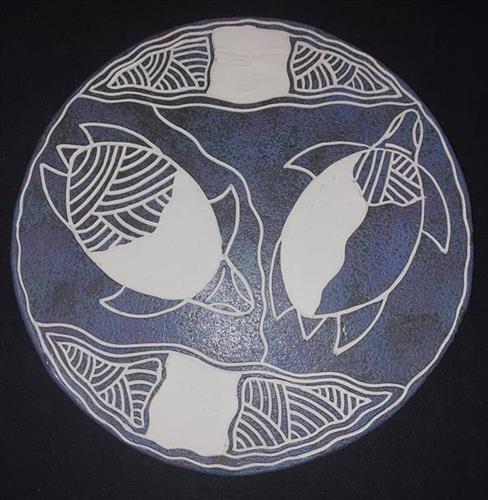
Ngawiya (Sea Turtle)
In the past, sea turtles were an important food source for Kuku Yalanji people. Only men were allowed to hunt them. The men were also responsible for cooking them in a ground oven and distributing the meat to all the families.
We ate turtle meat on special occasions such as the birth of a new born baby and during funeral ceremonies. Our ancestors used the shell of sea turtles carrying, storing and serving food as well as making damper.
225182321788
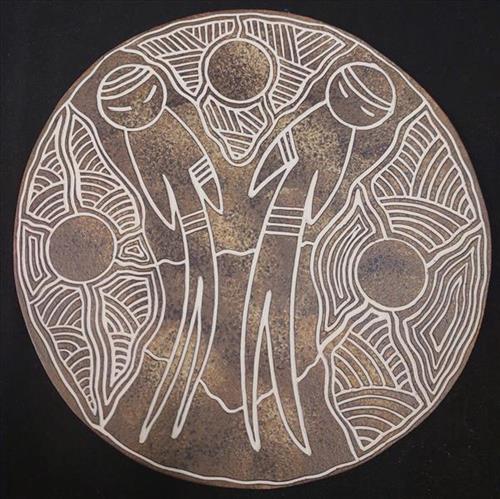
Warru Warru Murruku (Men’s Business)
225182321787
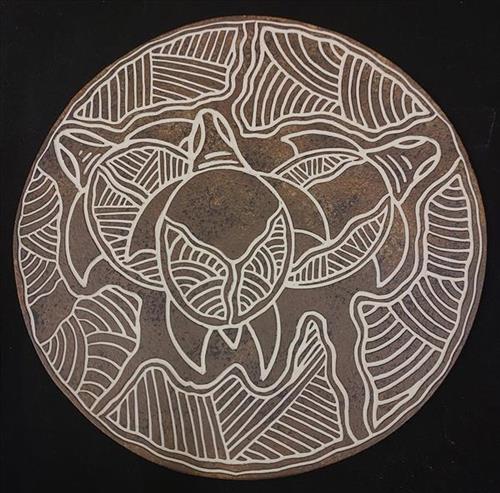
Ngawiya (Sea Turtle)
In the past, sea turtles were an important food source for Kuku Yalanji people. Only men were allowed to hunt them. The men were also responsible for cooking them in a ground oven and distributing the meat to all the families.
We ate turtle meat on special occasions such as the birth of a new born baby and during funeral ceremonies.
Our ancestors used the shell of sea turtles carrying, storing and serving food as well as making damper.
225182321786
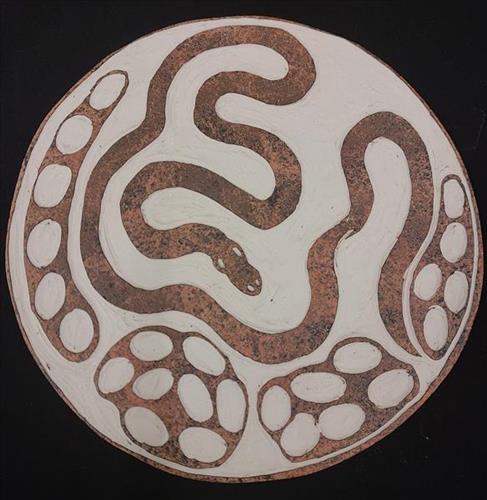
Kurriyala (Carpet Snake)
The carpet snake used to be an important food animal for our ancestors. They wrapped the meat in native ginger leaves and cooked it on the hot coals of the ground oven. They also used the skin to make head bands or skillfully sewed blankets to keep the families warm and dry at night.
The carpet snake also has spiritual significance for me. I inherited the carpet snake Totem and related cultural knowledge from my father’s side. According to our Kuku Yalanji creation stories, the carpet snake was an Ancestral Being that travelled in its human form across the country creating waterways wherever it went, including on my father’s clan lands.
In my upbringing I was taught to respect our elders who prepared me for my future role as carrier of cultural knowledge and spiritual traditions. I was also taught the values of taking responsibility for caring for our traditional clan country and help maintain it for the younger generations so they can become strong leaders.
Art is my way of keeping the cultural knowledge of my ancestors alive and passing it down to my children and grandchildren. Sharing this body of knowledge creates strong family ties and gives me my strength.
225182321784
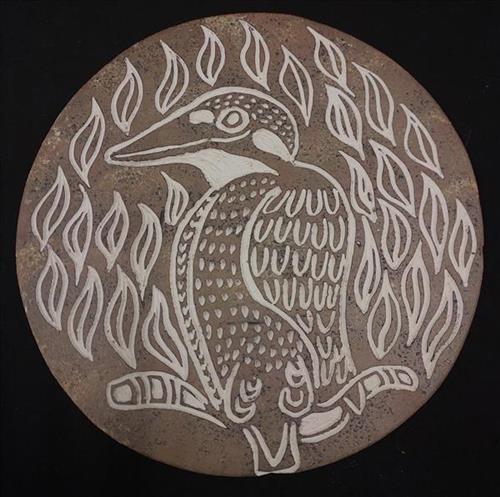
Yindili (Kingfisher)
The Kingfisher, known as Yindili in Kuku Yalanji language, is according to our culture one of the significant messenger birds. The Kingfisher will let us know when to expect a visit from families living in another community, And when we see a Kingfisher close by, we know that something good will soon happen in our personal life.
225182321782
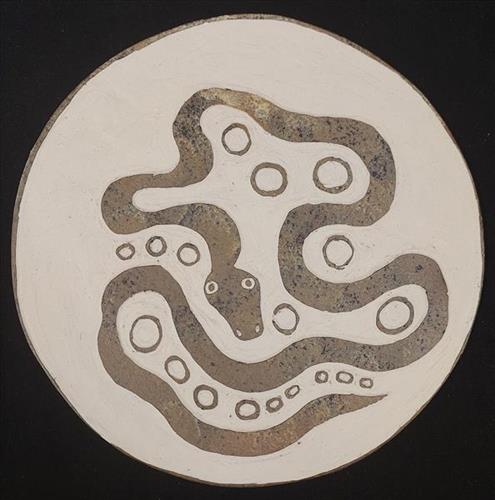
Kurriyala (Carpet Snake)
The carpet snake used to be an important food animal for our ancestors. They wrapped the meat in native ginger leaves and cooked it on the hot coals of the ground oven. They also used the skin to make head bands or skillfully sewed blankets to keep the families warm and dry at night.
The carpet snake also has spiritual significance for me. I inherited the carpet snake Totem and related cultural knowledge from my father’s side. According to our Kuku Yalanji creation stories, the carpet snake was an Ancestral Being that travelled in its human form across the country creating waterways wherever it went, including on my father’s clan lands.
In my upbringing I was taught to respect our elders who prepared me for my future role as carrier of cultural knowledge and spiritual traditions. I was also taught the values of taking responsibility for caring for our traditional clan country and help maintain it for the younger generations so they can become strong leaders.
Art is my way of keeping the cultural knowledge of my ancestors alive and passing it down to my children and grandchildren. Sharing this body of knowledge creates strong family ties and gives me my strength.
22514004714
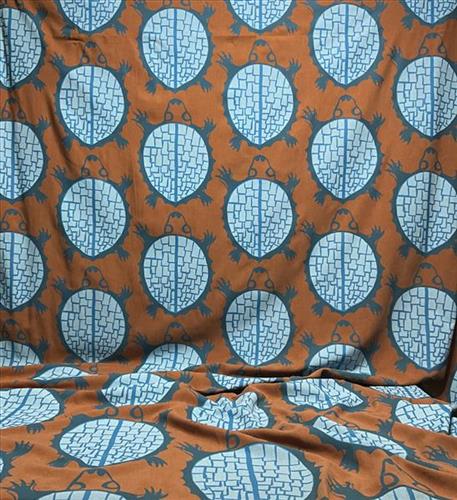
Status: Stock
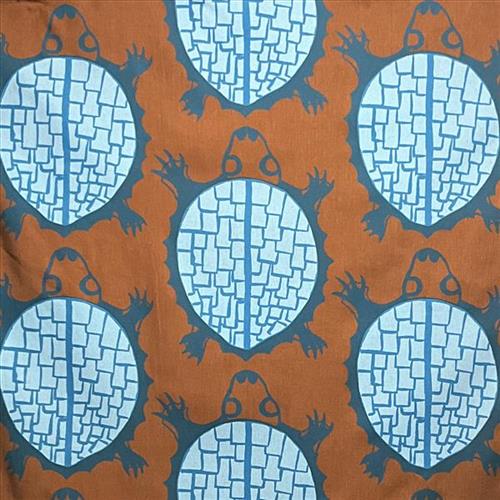
Karen Shuan, Ngujay (Freshwater Turtle)
Screen printed by hand in Sydney, by master printers on 100% tencel linen. Sold by the metre in 134 cm width.
Care Instructions: Gentle machine or hand wash only in cool water, using mild detergent.
Do Not Soak, Bleach, Rub, Wring, Tumble. Line Dry Only in Shade.
Warm Iron on Reverse. Do Not Dry Clean.
22514003667
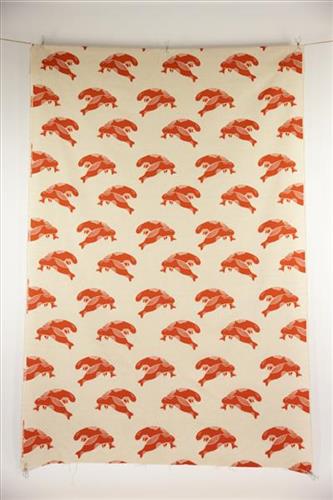
Status: Stock
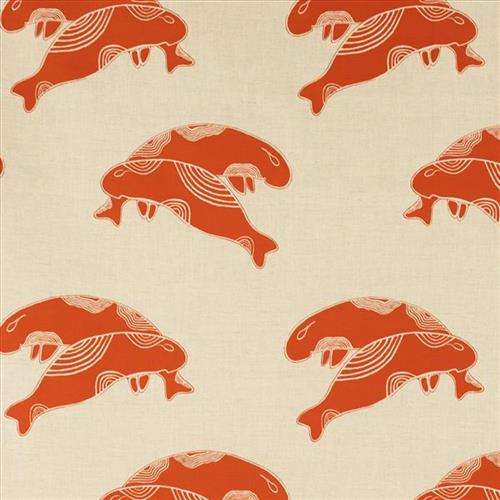
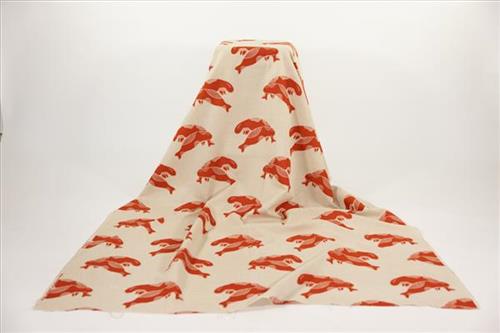
Laurence Gibson, Kirbaji (Dugong)
Kirbaji (Dugong) is an Ancestral Spirit Being (Totem) that I inherited it from my mother’s side. It is my Totem. The dugong was also an important food source for my ancestors. Only men were allowed to hunt them, and only men had the right to cook and distribute the meat to all the families. My uncles and cousins showed me how to hunt dugongs and they passed down to me the cultural knowledge about them.
My ancestors used to wrap the dugong meat in ginger leaves for flavour, close the wraps with a vine and cook them in the ground oven. Dugongs were only hunted on special occasions such as births, weddings and funerals to provide food for large family gatherings. Dugong fat was also melted to make oil which was used as a medicine for skin and hair ailments or as ointment to treat an upset stomach.
Screen printed by hand in Sydney, by master printers on 100% cotton linen. Sold by the metre in 132 cm width.
Care Instructions: Gentle machine or hand wash only in cool water, using mild detergent. Do Not Soak, Bleach, Rub, Wring, Tumble. Line Dry Only in Shade. Warm Iron on Reverse. Do Not Dry Clean.
22514003664
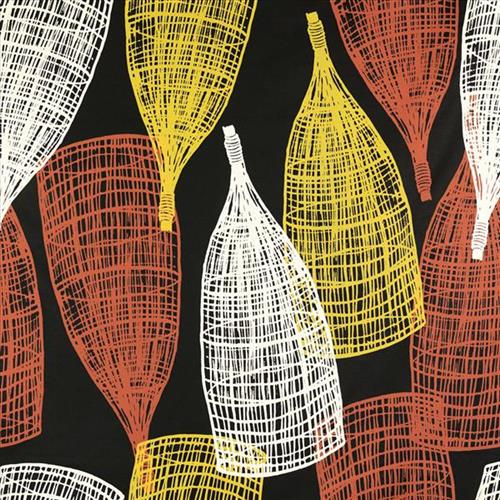
Status: Stock
Vanessa Cannon, Makarr (Fish Trap)
Fish traps are called Makarr in our language. They were made by men only. Our fathers and uncles used to make them with the lawyer vine. They striped the stems and then soaked them in the river to keep them soft and bendy. They also had a special way of weaving the fish traps. They used them in the river to catch eels, jungle perch fresh water catfish and turtle. To attract fish our old people used to sprinkle rain forest berries as bait over the trap.
Screen printed by hand in Sydney, by master printers on 100% tencel linen. Sold by the metre in 134 cm width.
Care Instructions: Gentle machine or hand wash only in cool water, using mild detergent.
Do Not Soak, Bleach, Rub, Wring, Tumble. Line Dry Only in Shade.
Warm Iron on Reverse. Do Not Dry Clean.