225182214815


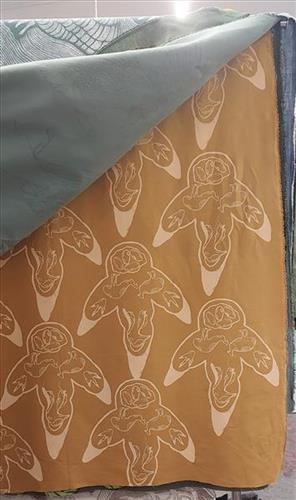
Bindi Bambayal (Yam Leaf)

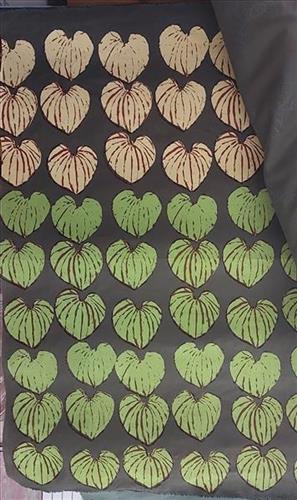
This fabric shows my yam leaf design. Yams are bush tucker to all our families. We go out and dig for it when they are in season. When the leaves turn dark brown, we know that the tubers are ready for harvest. I personally like cooking yams on the coals of a camp fire.


I like drawing plants or parts of them because I work as a gardener and forester for Jabalbina, a cultural heritage body for our Kuku Yalanji Traditional Owners. We grow native plants from seeds or cuttings to help restore cleared land into a healthy rainforest. 
225182214811


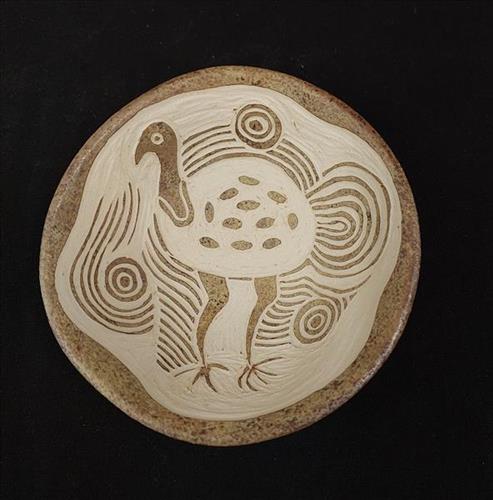
Kurranji (Cassowary)

The cassowary is my totem. My mother’s sister handed it down to me when I was a young boy. I perform the cassowary dance in public ceremonies. As a young men, I was part of the Yalanji Dance group and was invited to Hong Kong to perform our traditional dance cycles including the cassowary dance.


225182218052


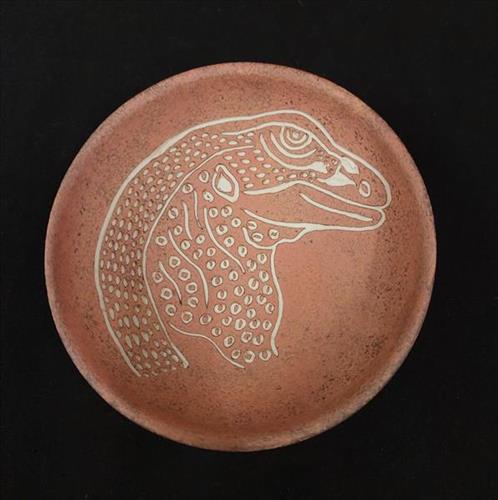
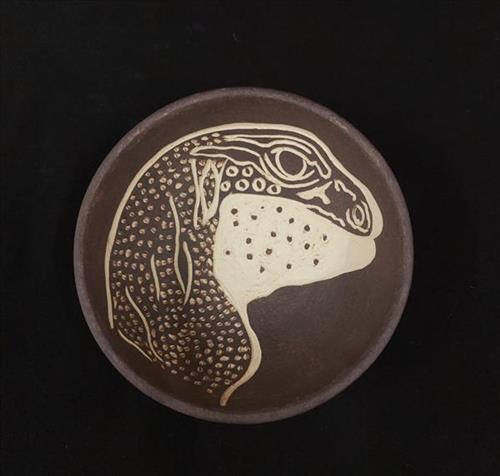
Walkarr (Bush Goanna)

Walkar (Bush Goanna) is found in eastern and western Yalanji land both in rainforest country and inland plains. Walkarr was an important food source to our Kuku Yalanji ancestors. Goannas are great tree climbers and sometimes hard to catch.
Walkarr was hunted with spears and brought back to prepare and cook in earth ovens or over a fire. Once it was cooked it was laid on paperbark and a mussel shell was used to scrape the outside of the skin and to cut up the meat to share. The oil from the Walkarr was also used as a liniment and to make cooking oil.

225182218051


Walkarr (Bush Goanna)

Walkar (Bush Goanna) is found in eastern and western Yalanji land both in rainforest country and inland plains. Walkarr was an important food source to our Kuku Yalanji ancestors. Goannas are great tree climbers and sometimes hard to catch.
Walkarr was hunted with spears and brought back to prepare and cook in earth ovens or over a fire. Once it was cooked it was laid on paperbark and a mussel shell was used to scrape the outside of the skin and to cut up the meat to share. The oil from the Walkarr was also used as a liniment and to make cooking oil.

225182221347


Diwan (Scrub Turkey)

Many years ago, our ancestors lived in harmony with the rainforest and other parts of the land, they learnt different ways of hunting and gathering for food. The women would collect Diwan (Scrub Turkey) eggs. Each Diwan can lay up to 15-20 eggs. The women gather the eggs by using their hands to dig deep into the nest, the eggs are found in the warmest area of the nest.

225182222948


Kirbaji (Dugong)

In the past, Kirbaji (dugong) was an important food source. It was men’s business to hunt dugongs and it was their responsibility to cook and provide the meat to all the families. The meat of the dugong was cooked in an earth oven.

Our ancestors also made oil form the dugong fat. They used the oil for medicinal purposes. They used it for skin and hair treatments. When people had an upset stomach they used the oil as an ointment.

225182222941


Rainforest Shield

Traditional shields were carved from a single piece of timber cut from side of the buttress root of a rainforest fig-tree. The kidney shaped shields are unique to the rainforest Bama of Far North Queensland. They were decorated with clan, totem or moiety designs using natural ochres and a water, fat or blood binder.

Shields were primarily used for deflecting spears in tribal fighting in conjunction with large rainforest swords.

Shields were usually made and painted by senior men and were a significant personal possession of adult males.