225182408603
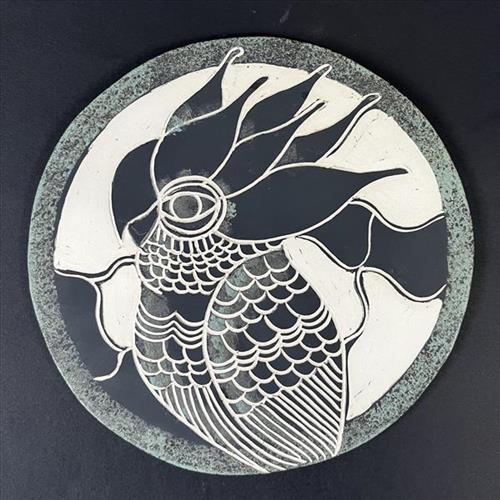
Kadanji (Black Cockatoo)
225182408602
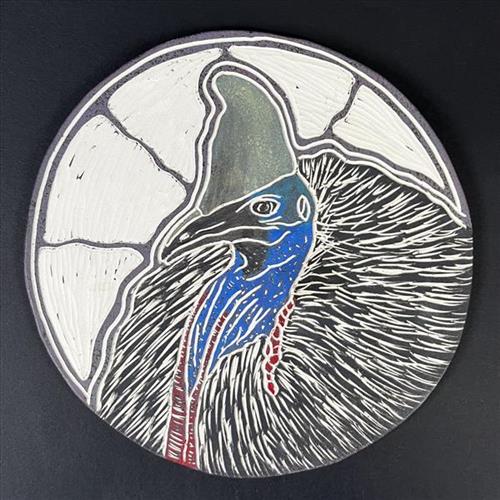
Kurranji (Cassowary)
Long time ago, the cassowary was a precious food source for our ancestors. They ate the meat and the eggs, used the feathers for ceremonies and weaving, and the skins for blankets. The Cassowary is a powerful Totem for us because it helps growing many plants that were important for food, medicine and tool making. The Cassowary can walk wide distances and spread the seeds of the fruits he eats everywhere. Plants grow also out of his dung.
I show the cassowary in my art because it is also my partner’s totem. He performs the cassowary dance in public ceremonies. It was bestowed on him by his mother’s sister when he was a young boy. In 1997 he went with the Yalanji Dance Group to Hong Kong to perform the Cassowary dance there.”
22514009152
Status: Stock
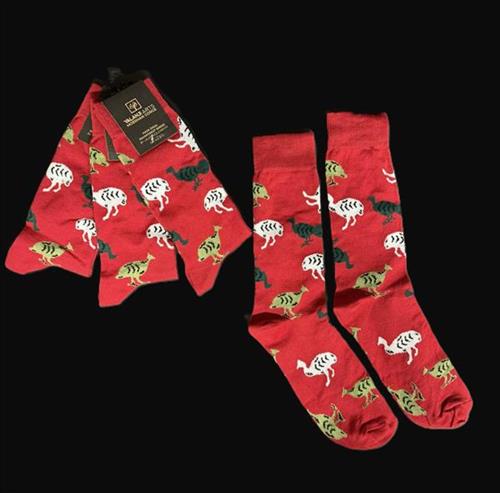
Socks – Maja Dikal (Rainforest Birds) by Laurence Gibson
225182404239
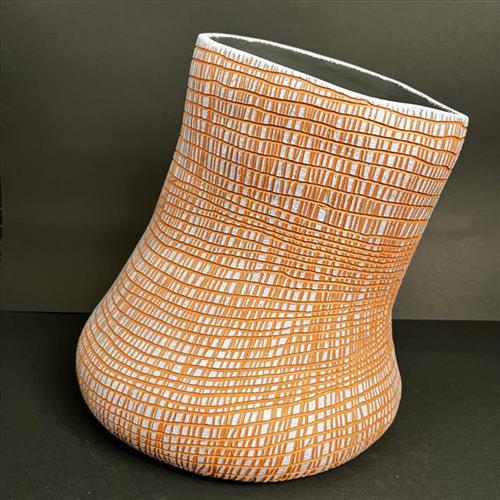
Kakan (Black Palm) Basket Weaving
This design shows how the bottom part of a black palm basket is woven. My grandmothers and aunties used to make them. They cut off the young palm leaves in the centre, stripped and scrapped them. Then they would put the strips in freshwater to make them soft and keep them straight for weaving.
225182404236
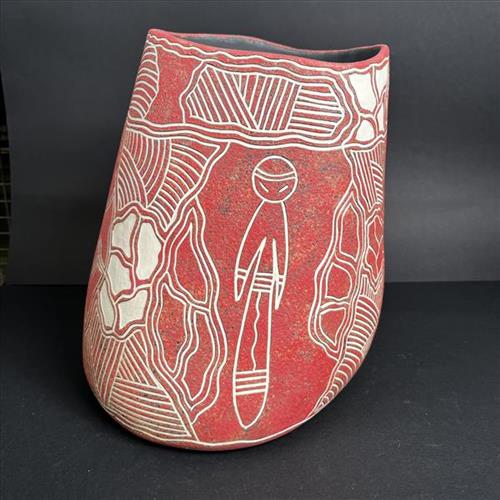
Warru Warru Murruku (Men’s Business)
225182404232
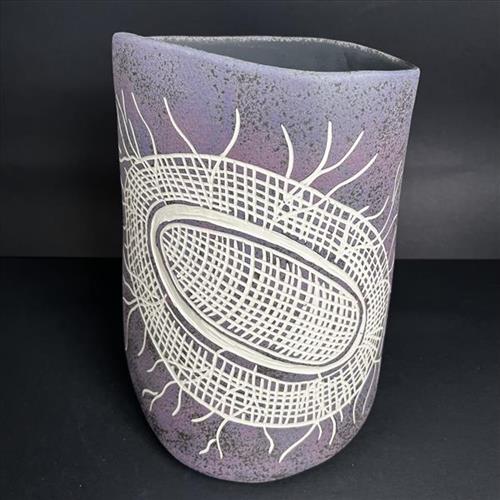
Ngunyin (Dillybag) Design
Dillybags played a vital part in Kuku Yalanji culture. Women used them to carry food when out hunting and gathering or soak bitter yams in creeks before cooking them. Dillybags were also used to hold personal and sacred items.
225182404226
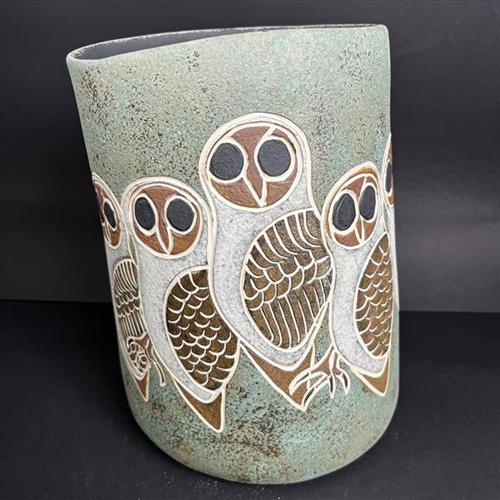
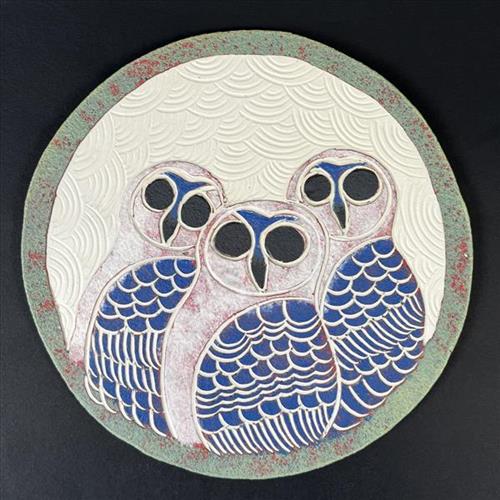
Yiki (Night Owl)
225182404160
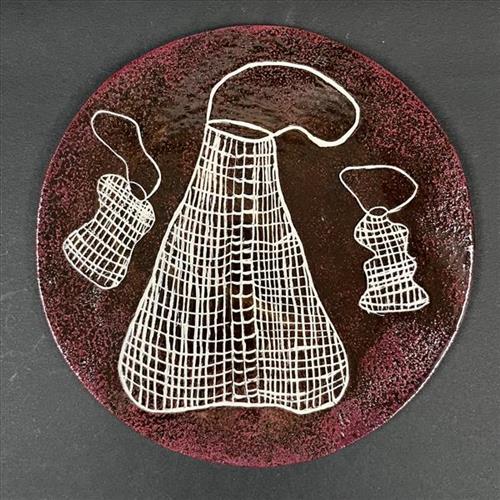
Kakan (Black Palm) Dillybag.
Our ancestors used Kakan (Black Palm) dilly bags to carry food when out hunting and gathering or soak bitter yams in creeks before cooking them. They were also used to hold personal items.
When I was a young girl my grandmother would teach me how to make Black Palm dillybags. We used to set up camp with other Kuku Yalanji women at a creek near Helenvale. It is very hard work. The men would help us cutting down the palm trees and separate the crownshaft from the trunk and the leaves. Then the women used to peel away the outer leaves until they felt strong threads they could pull out. They cleaned these threads from pulp with a mussel shell. When we moved away from Helenvale I forgot how to make them. Luckily years later I asked a relative of mine, Wilma Walker, who is great weaver, if she could refresh my memories. From then on I kept making dillybags as long as my health allowed it. I really enjoyed making them.
225182404159
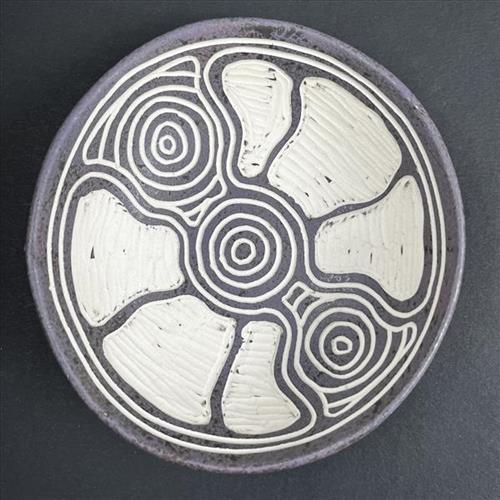
Mossman River Design
The Mossman River is very important to me and my family. Laurence, my partner and the father of our 5 children, is one of the Traditional Owners of this area. We both grew up along the river and Laurence’s grandparents used to live in a hut next to the river. In the hot season, we used to camp there with our families. Laurence would teach me and later our children how to dive for turtle and fish. We would cross the river to hunt and collect bush food. Back at the camp, we would make fire, cook our damper and fish in an earth oven and share with our families.