225182374972
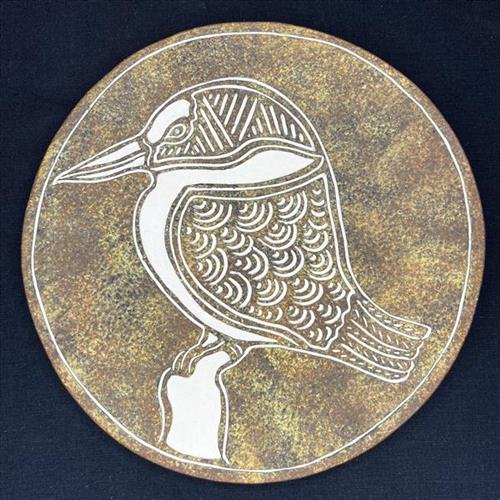
Yindili (Kingfisher)
225182376018
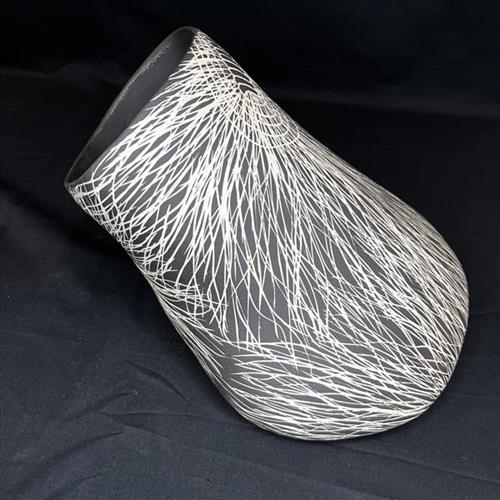
Kakan (Black Palm) Basket Weaving
This design shows how the bottom part of a black palm basket is woven. My grandmothers and aunties used to make them. They cut off the young palm leaves in the centre, stripped and scrapped them. Then they would put the strips in freshwater to make them soft and keep them straight for weaving.
225182376017
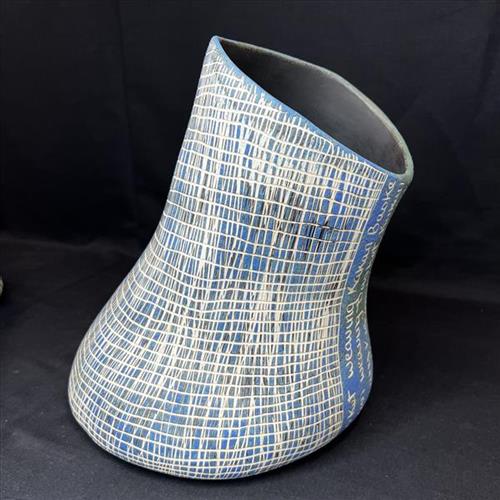
Kakan (Black Palm) Basket Weaving
This design shows how the bottom part of a black palm basket is woven. My grandmothers and aunties used to make them. They cut off the young palm leaves in the centre, stripped and scrapped them. Then they would put the strips in freshwater to make them soft and keep them straight for weaving.
225182376015
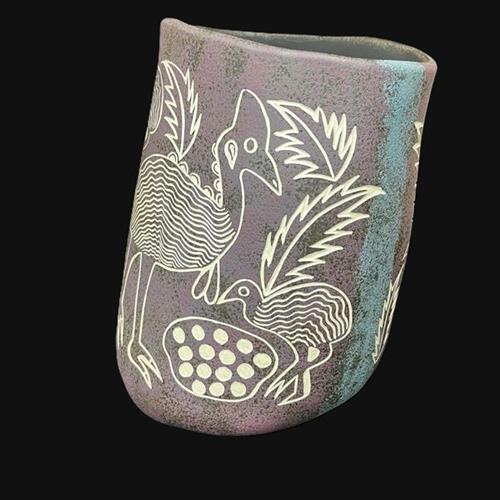
Kurranji (Cassowary)
The cassowary is one of the most important animals for our Kuku Yalanji people. The cassowary is the boss of the rainforest. He is dangerous but he also helps grow many of the plants we used to collect for food, medicine and tool making.
How does he do this? He eats many different fruits, digests them in his stomach, and then drops his dung mixed with the leftover seeds onto the ground. This way seeds grow into new plants wherever he walks. This helped us Kuku Yalanji in the past to survive.
The cassowary is a spirit bird and celebrated to this day in public ceremonies with song and dance. You must be very careful of them because they can attack. Never feed them. You must always be alert when walking in the rainforest.
225182376591
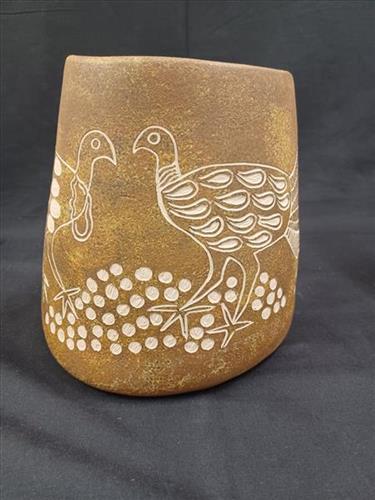
Diwan (Scrub Turkey)
Diwan are bush food – an important source of meat. We also eat the eggs. They are a delicacy. The male bird looks after the nest and will not go far, as he has to protect the nest from bush goanna’s. If they come around, he will send out an alarm call to other Diwan to alert therm. The nesting time for Diwan is September to December. The bush goanna knows when the eggs will be ready to hatch. When the goannas start hanging around, this is a good sign that the eggs are ready. We dig for eggs with digging sticks or by hand. The nest is very deep and when you can feel the warmth with your hands, you know that the eggs are close-by. The eggs are very good for health and make you strong.
225182376590
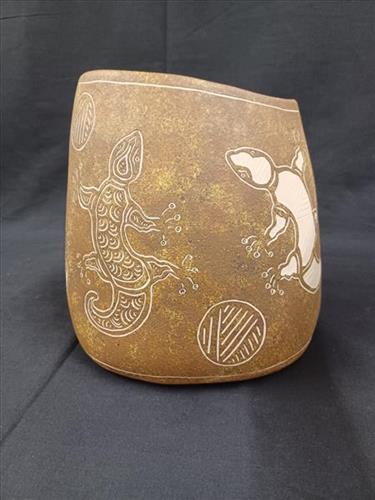
Walkarr (Bush Goanna)
22514008350
Status: Stock
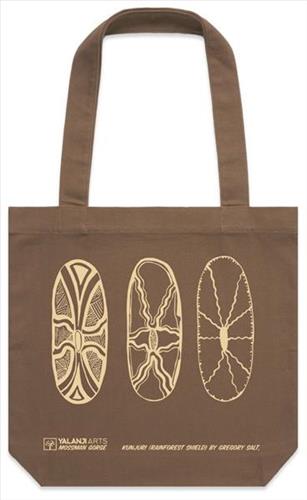
Tote Bag – ‘Kunjuri (Rainforest Shield)’ by Gregory Salt – TBGS01
Traditional shields were carved from a single piece of timber cut from side of the buttress root of a rainforest fig-tree. The kidney shaped shields are unique to the rainforest Bama of Far North Queensland. They were decorated with clan, totem or moiety designs using natural ochres and a water, fat or blood binder.
Shields were primarily used for deflecting spears in tribal fighting in conjunction with large rainforest swords.
Shields were usually made and painted by senior men and were a significant personal possession of adult males.
Fabrication: 12oz Cotton Canvas
22514008349
Status: Stock
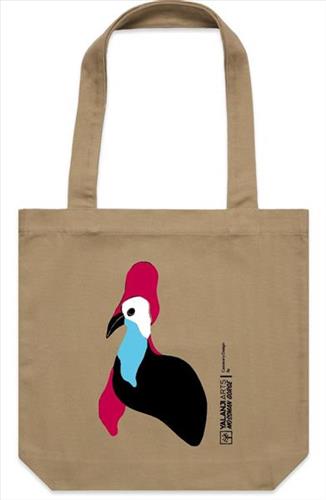
Tote Bag – Kurranji (Cassowary) by Karen Shuan – TBKS04 SAND
The cassowary is one of the major totems (Ancestral Spirit Beings) for our Kuku Yalanji people. He is a big, dangerous bird that rules the rainforest. The cassowary can attack people, but at the same time he helps growing many of the plants we used to collect for food, medicine and tool making.
I inherited the Cassowary Totem and all the cultural stories relating to it from my mother’s side. When I was four years old, my mum taught me how to dance the story of the female cassowary, who is protecting the chicks and the eggs from the carpet snake and goanna.
As a young woman, I took on the role of my mum and began teaching our cultural dances to the younger generation at the Mossman Gorge community as well as children that live in Mossman town. I still do this today.
Fabrication: 12oz Cotton Canvas
22514008346
Status: Stock
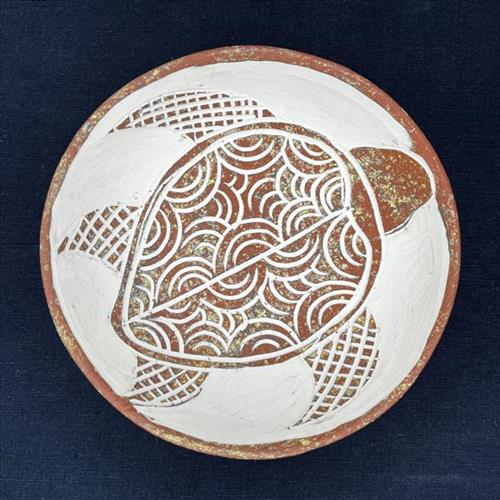
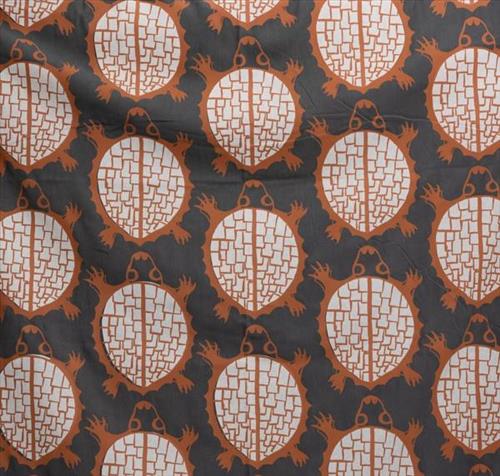
K. Shuan, Ngujay (Freshwater Turtle)
Screen printed by hand in Sydney by Publisher Textile. Sold by the metre.
Care Instructions: Gentle machine or hand wash only in cool water, using mild detergent.
Do Not Soak, Bleach, Rub, Wring, Tumble. Line Dry Only in Shade.
Warm Iron on Reverse. Do Not Dry Clean