
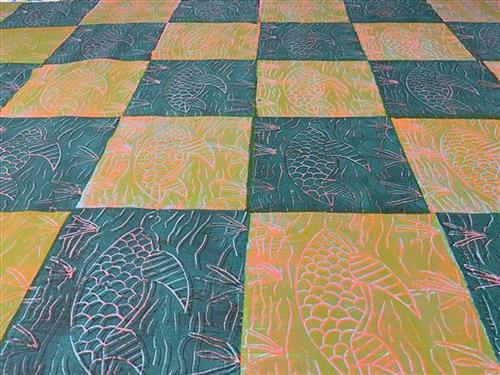

377810582253790
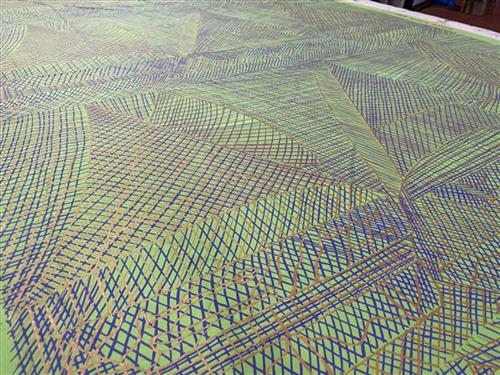
Wubbunj (Paperbark Canoe)
“Wubbunj is our traditional canoe. This design is the old history story of how people came to live in this place we call Maningrida. Two old people were staying on the other side of the saltwater, in Narlarrambarr area. The old people slept in a paper bark shelter and hunted on the water using their canoe.
A long time ago our people carved these canoes from the big paperbark trees. They had paddles with one person at the front, one at back, and other kids and passengers in the middle. Kunkot (paper bark) was used to make the sails which they would stand up and catch the wind.
One day these old people saw a new boat in their waters, which belonged to the Makassans (Indonesians). Those two old men saw the big Makassan boat coming in, and decided to paddle their canoe from Narlarrambarr to the other side (modern day Maningrida). We were scared of the Makassans, they gave us tobacco and tea, but they took many of our women.
When those two old people tasted that water at Maningrida from the Djomi spring, it was sweet freshwater and they decided to stay here. People here had no clothes in those time, we were just wearing string morkoi (loin cloths). Seven tribes were here then, but now in Maningrida there are lots more languages.” – Raylene Bonson

377810582251882
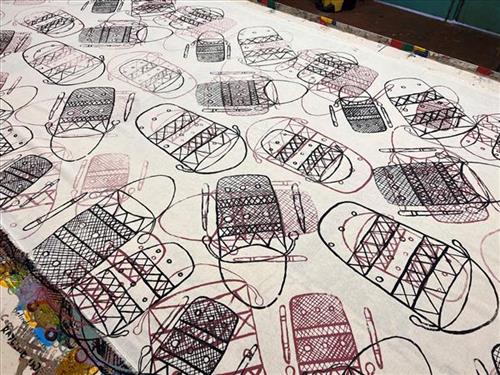
Dedded Wongkorr (ceremonial dilly bag with feathers)
This design depicts a ‘wongkorr’ sacred dilly bag woven with brightly coloured orange parrot feathers called ‘dedded’. It is depicted alongside a digging stick. Wongkorr are used in a number of public ceremonial contexts, and are sacred objects for the Bininj Kunwok speaking people of Western Arnhem Land.
‘This is a really special kind of dillybag for us, not like a normal dillybag.
This story was from a long time ago, when my great great grandfather was alive. He’s the one that was a medicine man for our people.
We are not supposed to see that sacred spirit dillybag that lives below the saltwater. If we ever see that site, it might drag us under and drown us. When the tide goes out he floats and when the tide comes in he goes under to hide.
This story is about fresh water and salt water mixing and our ancient law. There are strings of the Wongkorr hold it under the water. The Wongkorr is made with lorikeet parrot feathers and Kurrajong bark string.
I remember having a ceremony at that outstation Bolkjam when I was only 16 years old, near Ji Bal-bal homeland, and my father would tell me the story of the Wongkorr sacred site. My two sisters taught me to paint, and my Dad was a famous painter. Some balanda (non-Indigneous) know my father’s painting, it is about digging sticks, sharks and wongkorr.
This story links to mixed water, plant life and animals living at the artist’s country, and following the lessons and knowledge of the ancestors.’ Elizabeth Kala Kala

377810582251874
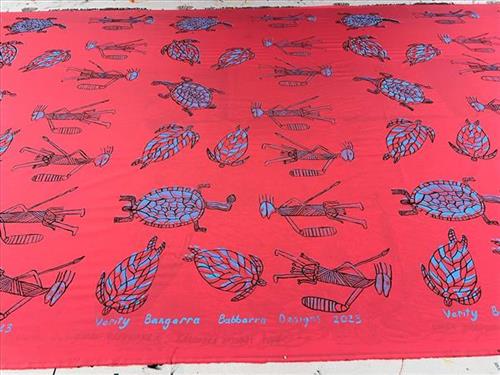
Makéddja (Turtle)
Makéddja means turtle in the Ndjébbana language of the Kunibidji people of Maningrida.

377810582251865
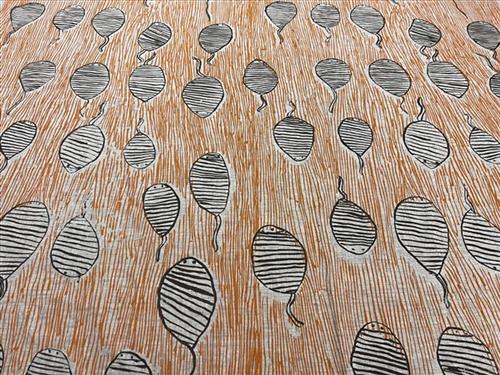
Stingray
This is Debbie Pascoe’s first ever screen print design. Printed as a two colour design.
Debbie is from the Djinang language group in Maningrida, which according to the ABS Census has approximately 220 speakers.

377810582251831
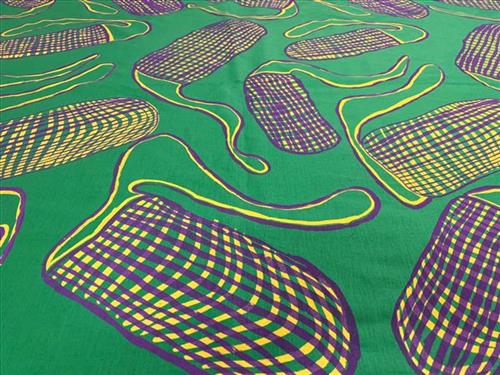
Bah-je (hunting bag) 2007
Linda Gurawana is a Djinang speaker and she calls hunting bag or dilly bag bah-je.
This design was created in 2007.

377810582251815
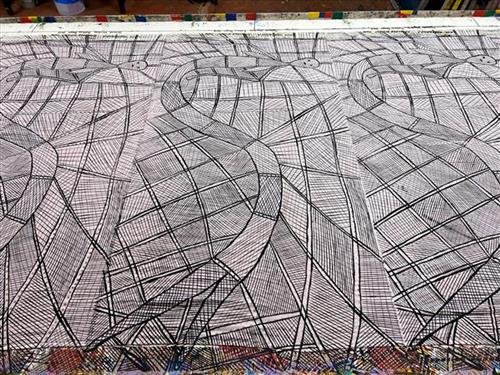
Yawkyawk in Stone Country
Yawkyawk is a word from the Aboriginal Kunwinjku/Kunwok language, meaning ‘young woman’ and ‘young woman spirit being’.
Sometimes compared to the European notion of mermaids, yawkyawks are usually depicted with the tails of fish. They have long hair, associated with trailing blooms of algae, typically found in Arnhem Land streams and rock pools. There can be wet season yawkyawk and dry season yawkyawk. It is said that when men go out hunting, they sometimes hear the song of the yawkyawk and become confused, loosing their way back to country.

377810582251805
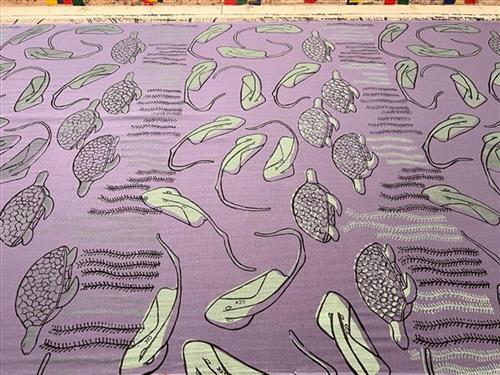
Mabbúlarr
Mabbúlarr is the Ndjébbana word describing calm and stillness – both regarding people and the ocean.
This design tells the story of underwater life in the shallows. The turtle we call marláddja (green turtle, Chelonia mydas) and the stingray we call marnandjúbba (Cowtail Stingray, Pastinachus sephen).
‘When strong wind blows the sea is rough, when there’s no wind the sea is calm. We call that mábbularr. You can see through the water and look at the turtle and stingray eating karlómerr (sea grass) and dancing underwater to find their mate. When we go on the boat hunting, we go at times of mábbularr.
In the old days men used to hunt with a canoe and with traditional made harpoon. Guided by our ancestors’ spirits they would paddle all day to find sea turtle and dugongs in the right places. The men had to be smart for the tide and know the weather to balance their canoes. They would go at times of mábbularr (calm), early morning in daytime or at night-time when there is no moon and the water glows. We call the night-time glimmer of phosphorescence mílarrng-milarrng. Today people still go hunting, it brings a lot of families together and they share eating down the beach.
We have songline for sea turtle, also men paint turtle on their back and dance turtle in the Míddjarn the same way turtle dance underwater. It is very important we look after our country and songline passed on from many generations’. Josephine James 2021

377810582251800
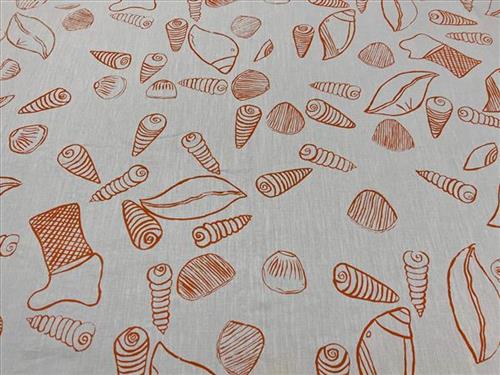
Sea Shells and Dilly Bags
‘Sometimes when we go down to the beach in Maningrida we pick all these shells up. Some family make necklaces and earrings. In the olden days they used to collect shells and put them in the dilly bags. The old people used to carry dilly bags when they went hunting. They used the dilly bag for bush food. My design shows mud muscle and long bum and cockles.’ Belinda Kernan 2022
Belinda’s mother is from Eastern Arrernte country near Alice Springs, the community of Ltyentye Apurte (Santa Teresa), and her father’s country is Maningrida. Belinda speaks languages from both sides of her family, as well as various languages belonging to Central Arnhem Land. She lives in Maningrida and prints lino at the women centre. Belinda is also a strong leader for young people in her community.

377810582251970
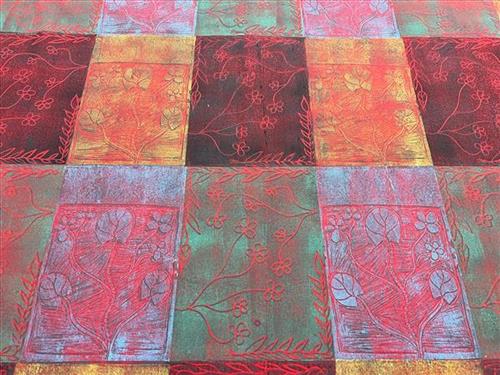
Kakárra (bush flowers)
This design features lost of flowers and bush food from around the coastal areas of Entrance Island and Maningrida.
‘There are the leaves of the black plum – we call that karranganjónganja vita glabrata. There are also jungle flowers that we find when we are looking for yam, I don’t know what they call them but that’s the curly one. The small one in the middle is the flowers of the warakkála (flowers of the long yam). These flowers grow all over this region, you can find them when you walk around the bush. Marilyn James