377810582393915


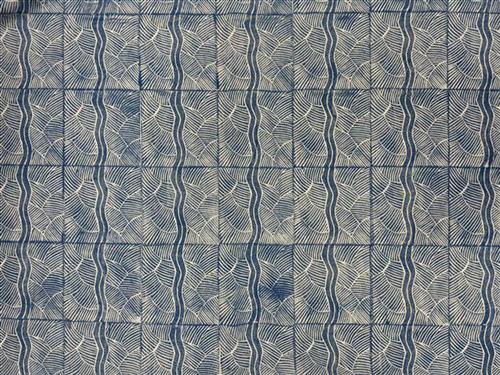
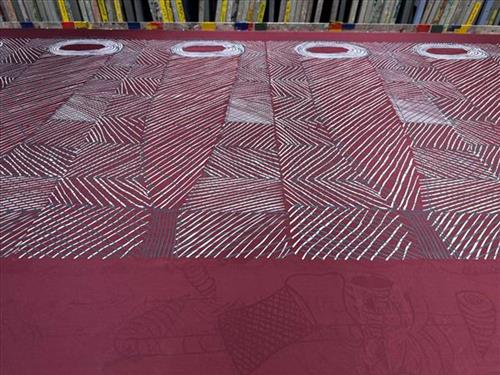
Bah-je (hunting bag) 2007

Linda Gurawana is a Djinang speaker with a long history of working at Babbarra Women’s Centre.

In Linda’s language, bah-je describes a woven hunting bag or dilly bag.

This three-colour design was created in 2007 and continues to be printed by the centre staff in Maningrida. 

377810582393914


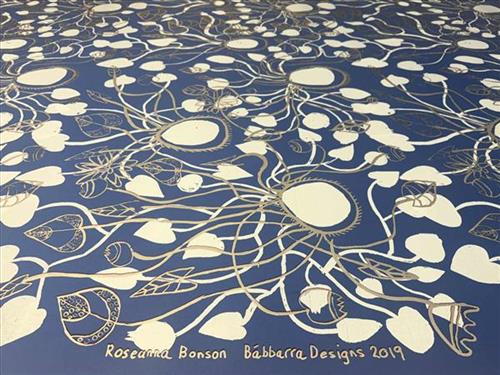
Wayuk – Roseanna Bonson

‘I always follow the footpath of my grandmother. I have too many stories of my grandmother. We went to the bush and ate bushtucker like yam, yabbie, barra, catfish and magpie goose. We didn’t come into town often, we were staying at Barrihdjowkkeng outstation. I learned how the old people used to live. I always think about my family out there and I keep going. My grandmother asked me to work with her for many years. I watched her making lino and screen printing. That’s why I stay in this job and I’m for the women’s centre’.  Roseanna Bonson 2021

Roseanna’s first design is a 2 colour waterlily design. Wayuk (waterlily) *kuninjki grow in the swamps around Barrihdjowkkeng.

‘The flowers of the waterlily are white and yellow and I like that kind of colour.’ Roseanna Bonson 2021

377810582393911


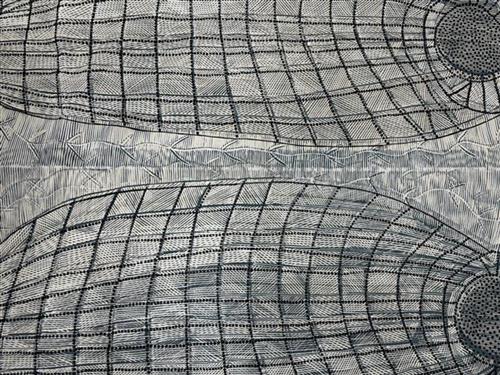
Mandjabu (Fish Trap) – Susan Marawarr

“In old times people would make these mandjabu (fish traps) to go fishing. They are made with vine we find in the jungle. That old man, Anchor Gulunba, he showed me how to make these fish traps. I would sit there and watch him making them. We catch barramundi, catfish, all kinds of fish.” – Helen Lanyinwanga

Kuninjku people traditionally make two sorts of conical fish traps. One called mandjabu made from a vine called milil, and another smaller one called manylik mandjabu, made from the grass manylik. The mandjabu conical fish trap is bigger and stronger and used in tidal reaches of creeks to catch large fish. The smaller, lighter manylik trap is used in freshwater flowing creeks to catch smaller fish and freshwater prawns. Traditionally, only men were involved in the construction of the large fish traps, but children would often crawl inside and assist.

To make fish traps and fish net fences artists firstly get vine (milil) from the jungle and they put it in water for one night to make it soft. Next they start weaving it; they make rings for the inside to keep the fish trap’s shape. Artists work for three or four weeks on the fish trap. They also make string from kurrajong (burdaga) to attach the hibiscus (bardainy) rings and to tie the conical end of the fish trap. This fish trap is used in saltwater and freshwater. People also use fish net fences called mun-dirra. A long time ago they would put the mun-dirra across rivers and creeks. In the middle they would place the an-gujechiya. They also used small things like sticks, rocks, mud and grass to block the fish from going through. People would then catch fish like saltwater barramundi rajarra, freshwater barramundi (janambal), small black freshwater catfish (buliya), bonefish (an-guwirrpiya), and sand bass (dalakan) in these fish traps.

377810582393839


Kunkurra (Spiral Wind) – Margot

Margot has depicted kunkurra, the spiralling wind associated with several sites in the Kardbam clan. On one level, this design can be interpreted as a depiction of the kinds of mini-cyclones common during the wet season in Arnhem Land. Kunkurra also relates specifically to a site called Bilwoyinj, near Mankorlod, on the artist’s clan estate.

At this site, two of the most important Kuninjku creation beings, a father and son known as na-korrkko, are believed to have hunted and eaten a goanna. They left some of the goanna fat behind at the site, which turned into the rock that still stands there today.

Bilwoyinj site is also a ceremonial ground for a ceremony called Yabbaduruwa, a major ceremony owned by the Yirridja patrimoiety. The Yabbaduruwa ceremony is primarily concerned with initiation, land ownership and promoting the cyclical regeneration of the human and natural worlds.

377810582393834


Bah-je (hunting bag) 2007

Linda Gurawana is a Djinang speaker with a long history of working at Babbarra Women’s Centre.

In Linda’s language, bah-je describes a woven hunting bag or dilly bag.

This three-colour design was created in 2007 and continues to be printed by the centre staff in Maningrida. 

377810582393833


Kunmadj dja Kunkanin (Dillybag and Digging Stick)

In this design, Jennifer has depicted kun-madj (dillybag), which is a large woven collecting basket. These large bags are often made from the burney vine (Malaisia scandens), a strong, pliable plant that grows along the ground and into the canopy of monsoon vine thickets. The bags are used to collect heavy foods, such as fish caught in conical fish traps or yams. They can also be made from kun-dayarr (Pandanus spiralis), a palm that grows in many areas of Arnhem Land. Tightly woven dillybags are used to collect sugarbag, the native honey.

As well as being of practical use, dillybags are of cultural significance to Arnhem Land people. They are totemic objects associated with particular sites in the landscape.

377810582392923


Lorrkkon – Jennifer Wurrkidj

Jennifer Wurrkidj

TITLE                         Lorrkon (Hollow funeral log)

YEAR                          2010

MEDIUM                     Screen print

DETAILS                    2 screen design, 1000 x 420mm

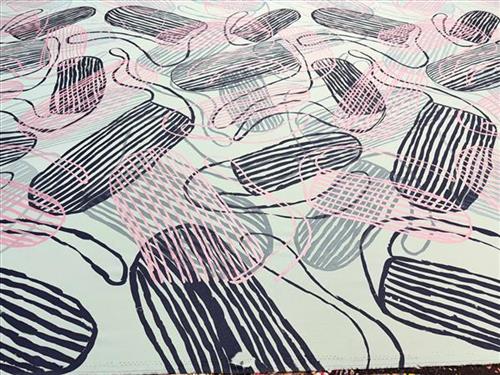
Before, a long time ago, when old people would die they would put their bones inside the lorrkkon and leave it outside. It is part of ceremony. The old people remembering and thinking about that person who passed away, there is lots of talking about where that lorrkkon needs to go.

My father, James Iyuna, taught me how to paint, to paint that rarrk. That memory is from him, he taught my sister Deborah and me. This story is from him, this design. When he was painting and drawing we would watch and we would learn.

Jennifer Wurrkidj

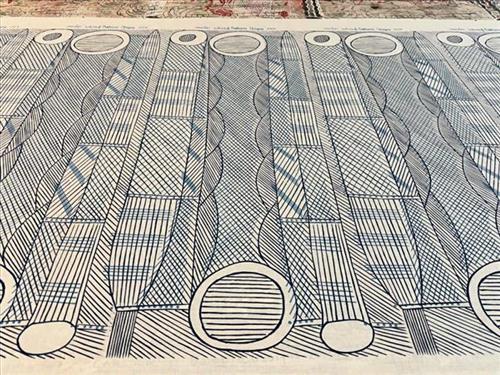
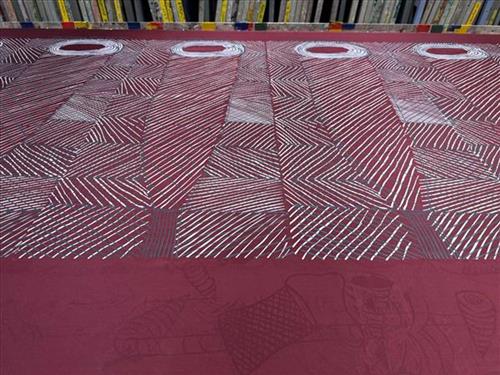
Jennifer is a Kuninjku artist from the Kurulk clan whose country lies around the outstation of Mumeka in central Arnhem Land. She has depicted lorrkkon (hollow-log coffin), kun-karninj (digging stick) and mandjabu (fishtrap) in this design.

The Lorrkkon or hollow-log coffin ceremony is the final ceremony in a sequence of mortuary rituals celebrated by the people of Arnhem Land. This ceremony might take place many years after the person has died, and involves the placing of the deceased’s bones into a hollow log that is decorated with painted clan designs and ceremonially placed into the ground where it slowly decays over many years.

The lorrkkon (hollow-log coffin) is made from the trunk of a termite-hollowed manbuluduk (stringybark tree, Eucalyptus tetradonta) and is decorated with totemic emblems. The western Arnhem Land version of the Lorrkkon ceremony involves the singing of sacred songs to the accompaniment of karlikarli, a pair of sacred boomerangs used as rhythm instruments. During the final evening of the ceremony, dancers decorate themselves with kapok down or, today, cotton wool, and conduct much of the final segments of the ceremony in the secrecy of a restricted men’s camp. The complete ceremony may stretch over a period of two weeks, but on the last night the bones of the deceased, which have been kept in a bark container, or today wrapped in cloth and kept in a suitcase, are taken out, and are painted with red ochre and placed inside the hollow-log coffin.

At first light on the final morning of the Lorrkkon ceremony, the men appear, coming out of their secret bush camp carrying the lorrkkon towards the women’s camp. The two groups call to each other using distinct ceremonial calls. The women have prepared a hole for the lorrkkon to be placed into, and when it is stood upright, women in particular kinship relationships to the deceased dance around the lorrkkon in a jumping/shuffling motion. It is then often covered with a tarpaulin and left to slowly decay.

377810582392920


Lorrkkon – Jennifer Wurrkidj

Jennifer Wurrkidj

TITLE                         Lorrkon (Hollow funeral log)

YEAR                          2010

MEDIUM                     Screen print

DETAILS                    2 screen design, 1000 x 420mm

Before, a long time ago, when old people would die they would put their bones inside the lorrkkon and leave it outside. It is part of ceremony. The old people remembering and thinking about that person who passed away, there is lots of talking about where that lorrkkon needs to go.

My father, James Iyuna, taught me how to paint, to paint that rarrk. That memory is from him, he taught my sister Deborah and me. This story is from him, this design. When he was painting and drawing we would watch and we would learn.

Jennifer Wurrkidj

Jennifer is a Kuninjku artist from the Kurulk clan whose country lies around the outstation of Mumeka in central Arnhem Land. She has depicted lorrkkon (hollow-log coffin), kun-karninj (digging stick) and mandjabu (fishtrap) in this design.

The Lorrkkon or hollow-log coffin ceremony is the final ceremony in a sequence of mortuary rituals celebrated by the people of Arnhem Land. This ceremony might take place many years after the person has died, and involves the placing of the deceased’s bones into a hollow log that is decorated with painted clan designs and ceremonially placed into the ground where it slowly decays over many years.

The lorrkkon (hollow-log coffin) is made from the trunk of a termite-hollowed manbuluduk (stringybark tree, Eucalyptus tetradonta) and is decorated with totemic emblems. The western Arnhem Land version of the Lorrkkon ceremony involves the singing of sacred songs to the accompaniment of karlikarli, a pair of sacred boomerangs used as rhythm instruments. During the final evening of the ceremony, dancers decorate themselves with kapok down or, today, cotton wool, and conduct much of the final segments of the ceremony in the secrecy of a restricted men’s camp. The complete ceremony may stretch over a period of two weeks, but on the last night the bones of the deceased, which have been kept in a bark container, or today wrapped in cloth and kept in a suitcase, are taken out, and are painted with red ochre and placed inside the hollow-log coffin.

At first light on the final morning of the Lorrkkon ceremony, the men appear, coming out of their secret bush camp carrying the lorrkkon towards the women’s camp. The two groups call to each other using distinct ceremonial calls. The women have prepared a hole for the lorrkkon to be placed into, and when it is stood upright, women in particular kinship relationships to the deceased dance around the lorrkkon in a jumping/shuffling motion. It is then often covered with a tarpaulin and left to slowly decay.
377810582392973


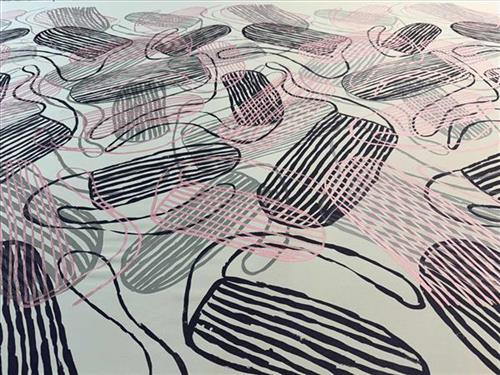
Lorrkkon (Hollow Funeral Logs)

Jennifer Wurrkidj

TITLE                         Lorrkon (Hollow funeral log)

YEAR                          2010

MEDIUM                     Screen print

DETAILS                    2 screen design, 1000 x 420mm

Before, a long time ago, when old people would die they would put their bones inside the lorrkkon and leave it outside. It is part of ceremony. The old people remembering and thinking about that person who passed away, there is lots of talking about where that lorrkkon needs to go.

My father, James Iyuna, taught me how to paint, to paint that rarrk. That memory is from him, he taught my sister Deborah and me. This story is from him, this design. When he was painting and drawing we would watch and we would learn.

Jennifer Wurrkidj

Jennifer is a Kuninjku artist from the Kurulk clan whose country lies around the outstation of Mumeka in central Arnhem Land. She has depicted lorrkkon (hollow-log coffin), kun-karninj (digging stick) and mandjabu (fishtrap) in this design.

The Lorrkkon or hollow-log coffin ceremony is the final ceremony in a sequence of mortuary rituals celebrated by the people of Arnhem Land. This ceremony might take place many years after the person has died, and involves the placing of the deceased’s bones into a hollow log that is decorated with painted clan designs and ceremonially placed into the ground where it slowly decays over many years.

The lorrkkon (hollow-log coffin) is made from the trunk of a termite-hollowed manbuluduk (stringybark tree, Eucalyptus tetradonta) and is decorated with totemic emblems. The western Arnhem Land version of the Lorrkkon ceremony involves the singing of sacred songs to the accompaniment of karlikarli, a pair of sacred boomerangs used as rhythm instruments. During the final evening of the ceremony, dancers decorate themselves with kapok down or, today, cotton wool, and conduct much of the final segments of the ceremony in the secrecy of a restricted men’s camp. The complete ceremony may stretch over a period of two weeks, but on the last night the bones of the deceased, which have been kept in a bark container, or today wrapped in cloth and kept in a suitcase, are taken out, and are painted with red ochre and placed inside the hollow-log coffin.

At first light on the final morning of the Lorrkkon ceremony, the men appear, coming out of their secret bush camp carrying the lorrkkon towards the women’s camp. The two groups call to each other using distinct ceremonial calls. The women have prepared a hole for the lorrkkon to be placed into, and when it is stood upright, women in particular kinship relationships to the deceased dance around the lorrkkon in a jumping/shuffling motion. It is then often covered with a tarpaulin and left to slowly decay.

377810582392926


Lorrkkon (Hollow Funeral Logs)

Jennifer Wurrkidj

TITLE                         Lorrkon (Hollow funeral log)

YEAR                          2010

MEDIUM                     Screen print

DETAILS                    2 screen design, 1000 x 420mm

Before, a long time ago, when old people would die they would put their bones inside the lorrkkon and leave it outside. It is part of ceremony. The old people remembering and thinking about that person who passed away, there is lots of talking about where that lorrkkon needs to go.

My father, James Iyuna, taught me how to paint, to paint that rarrk. That memory is from him, he taught my sister Deborah and me. This story is from him, this design. When he was painting and drawing we would watch and we would learn.

Jennifer Wurrkidj

Jennifer is a Kuninjku artist from the Kurulk clan whose country lies around the outstation of Mumeka in central Arnhem Land. She has depicted lorrkkon (hollow-log coffin), kun-karninj (digging stick) and mandjabu (fishtrap) in this design.

The Lorrkkon or hollow-log coffin ceremony is the final ceremony in a sequence of mortuary rituals celebrated by the people of Arnhem Land. This ceremony might take place many years after the person has died, and involves the placing of the deceased’s bones into a hollow log that is decorated with painted clan designs and ceremonially placed into the ground where it slowly decays over many years.

The lorrkkon (hollow-log coffin) is made from the trunk of a termite-hollowed manbuluduk (stringybark tree, Eucalyptus tetradonta) and is decorated with totemic emblems. The western Arnhem Land version of the Lorrkkon ceremony involves the singing of sacred songs to the accompaniment of karlikarli, a pair of sacred boomerangs used as rhythm instruments. During the final evening of the ceremony, dancers decorate themselves with kapok down or, today, cotton wool, and conduct much of the final segments of the ceremony in the secrecy of a restricted men’s camp. The complete ceremony may stretch over a period of two weeks, but on the last night the bones of the deceased, which have been kept in a bark container, or today wrapped in cloth and kept in a suitcase, are taken out, and are painted with red ochre and placed inside the hollow-log coffin.

At first light on the final morning of the Lorrkkon ceremony, the men appear, coming out of their secret bush camp carrying the lorrkkon towards the women’s camp. The two groups call to each other using distinct ceremonial calls. The women have prepared a hole for the lorrkkon to be placed into, and when it is stood upright, women in particular kinship relationships to the deceased dance around the lorrkkon in a jumping/shuffling motion. It is then often covered with a tarpaulin and left to slowly decay.