115682319034


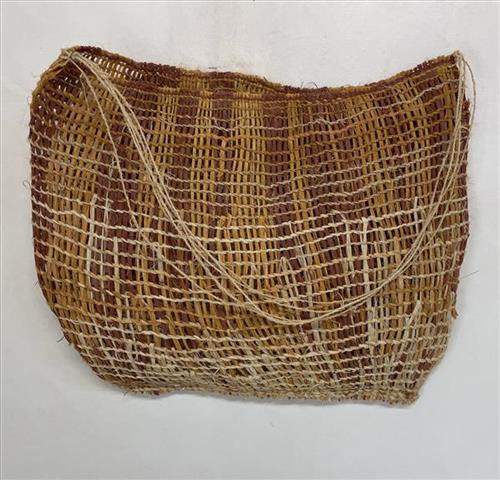
Dhawurr/batjbarra fish trap

Fish traps are placed into the river to face the oncoming fish. The woven tunnel traps the fish and prevents their escape. The traps are tapered so when they are submerged in the water, the water pressure wedges them into place. Traditionally, the fish traps are operated at night time.

115682319032


Dhawurr/batjbarra fish trap

Fish traps are placed into the river to face the oncoming fish. The woven tunnel traps the fish and prevents their escape. The traps are tapered so when they are submerged in the water, the water pressure wedges them into place. Traditionally, the fish traps are operated at night time.

115682309674


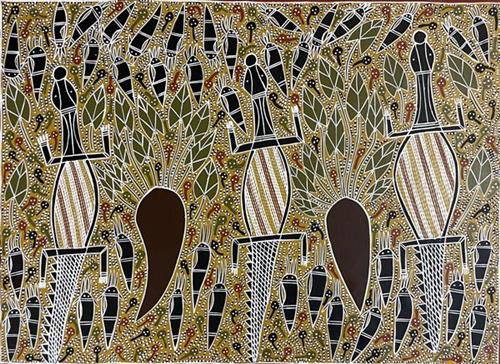
Wagilag ga Wititj Dhawu (Wagilag Sisters and Olive Python Story)

The Wagilag Sisters are central to the four important ceremonies of the Dhuwa moiety; the Djungguwan, the Gunabibi, the Ngulmarrk, and the Mandaialla.

The story is primarily an account of how, in the distant past, the two Wagilag Sisters came out of the southern interior and across the countryside to the Liyagalawumirr waterhole at Mirarrmina. There the younger sister profaned the pool of Wititj (the great Olive Python) by accidently allowing her blood to fall into the waterhole. Because of this, the women (and their children) were swallowed by Wititj.

All of the other sacred snakes stood up with their heads in the clouds and talked to each other with voices like thunder. The Pythons discovered that they had different languages and ‘skins’. Wititj confessed to eating the two women; his own moiety and fell to earth making a big depression in the ground. The big wind blew across the land making the first dry season. Wititj was ordered by the snakes to vomit the women and children back up. When he did this he also vomited up all the water from the waterhole, creating the monsoonal rains.

115682310503


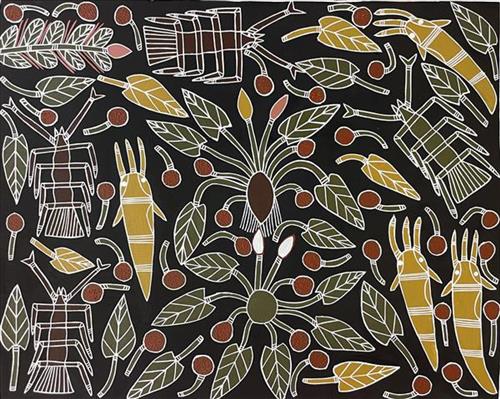
Nylalindi

In this painting Selena has paid homage to her father, B Bununggurr, by depicting the vastness of Gurwliny (Arafura Wetlands) in North East Arnhem Land and in particular his homeland of Nylalindi. These are the second biggest wetlands in the world, Florida has the biggest, and in this painting Bobby is showing the colours of the dry season sunsets and of the Earth and sky and the landscape scorched by fires used to control growth and for hunting, and the wilderness of the grasslands and paperbark tree forests which line the freshwater billabongs, so abundant in food and birdlife. 

115682314235


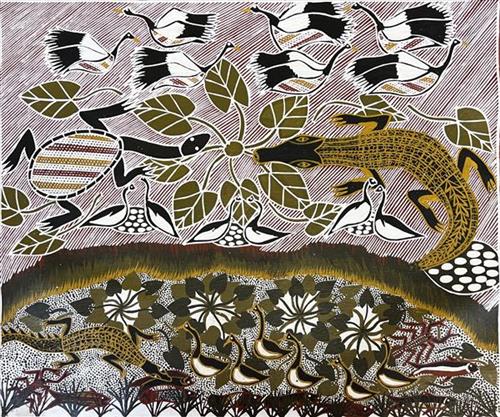
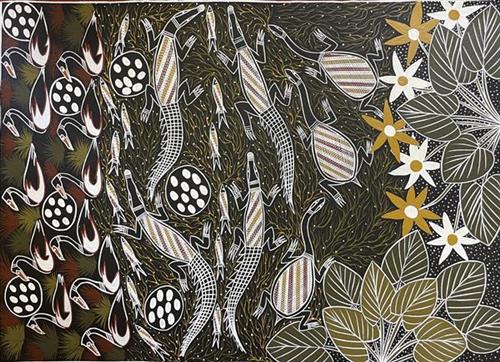
Raypiny Dhawu (Fresh Water Story)

All Aboriginal people originate from a spiritual source, fixed in a particular place in their land or the sea. These ‘spiritual reservoirs’ are often in the form of special waterholes made by Wangarr (creative spirits) that were created long ago close to the beginning of time. These creator beings moved across the countryside, shaping the land and implanting in each tract of country, the spiritual life force for the people who were to own it. These creative spirits took many forms and when they gave the land to each group, they also gave songs, dances, ceremony, the associated laws and language.


The creation story for Ganalbingu people took place near the middle section of the Glyde River where it becomes the Goyder River. Their land, Ngaliyindi, sits astride the Arafura Swamp in Central Arnhem Land. Many Ganalbingu artists paint totemic species significant to their clan. These can include baru (crocodile), banda (long necked turtle), buliya (catfish), yalman (waterlilies), gumang (magpie geese), dakawa (fresh water yabby), ratjuk (barramundi), warrnyu (flying fox) and more.
 

115682316601


Raypiny Dhawu (Fresh Water Story)

All Aboriginal people originate from a spiritual source, fixed in a particular place in their land or the sea. These ‘spiritual reservoirs’ are often in the form of special waterholes made by Wangarr (creative spirits) that were created long ago close to the beginning of time. These creator beings moved across the countryside, shaping the land and implanting in each tract of country, the spiritual life force for the people who were to own it. These creative spirits took many forms and when they gave the land to each group, they also gave songs, dances, ceremony, the associated laws and language.


The creation story for Ganalbingu people took place near the middle section of the Glyde River where it becomes the Goyder River. Their land, Ngaliyindi, sits astride the Arafura Swamp in Central Arnhem Land. Many Ganalbingu artists paint totemic species significant to their clan. These can include baru (crocodile), banda (long necked turtle), buliya (catfish), yalman (waterlilies), gumang (magpie geese), dakawa (fresh water yabby), ratjuk (barramundi), warrnyu (flying fox) and more.
 

115682316600


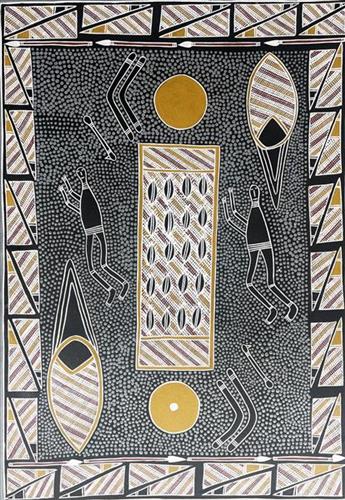
Raypiny Dhawu (Fresh Water Story)

All Aboriginal people originate from a spiritual source, fixed in a particular place in their land or the sea. These ‘spiritual reservoirs’ are often in the form of special waterholes made by Wangarr (creative spirits) that were created long ago close to the beginning of time. These creator beings moved across the countryside, shaping the land and implanting in each tract of country, the spiritual life force for the people who were to own it. These creative spirits took many forms and when they gave the land to each group, they also gave songs, dances, ceremony, the associated laws and language.


The creation story for Ganalbingu people took place near the middle section of the Glyde River where it becomes the Goyder River. Their land, Ngaliyindi, sits astride the Arafura Swamp in Central Arnhem Land. Many Ganalbingu artists paint totemic species significant to their clan. These can include baru (crocodile), banda (long necked turtle), buliya (catfish), yalman (waterlilies), gumang (magpie geese), dakawa (fresh water yabby), ratjuk (barramundi), warrnyu (flying fox) and more.
 

115682316599


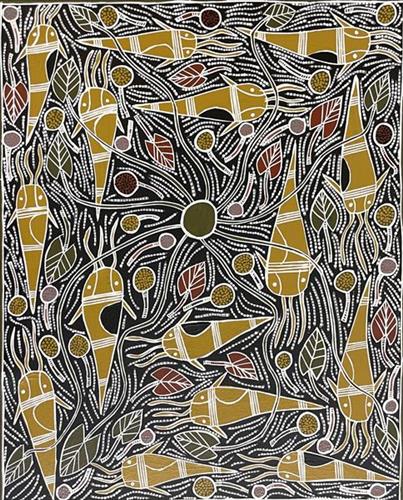
Buliya (catfish)

Buliya (catfish) are a favourite fish for Yolngu, They are often depicted amongst the waterlillies, leeches and natural debris such as leaves and reeds.


115682316598


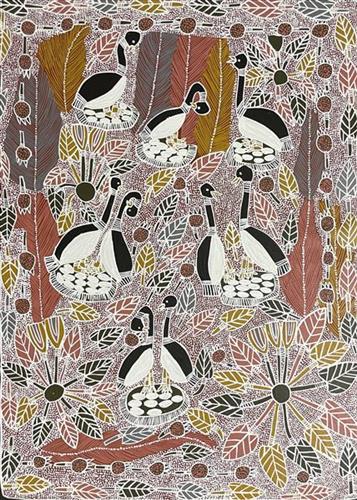
Gumang (Magpie Geese)

The Yolngu people of Arnhem Land originate from a spiritual source, fixed in a particular place in their land or the sea. These ‘Spiritual Reservoirs’ are often in the form of special waterholes made by Wangarr (Creative Beings) long ago close to the beginning of time.

The creator beings moved across the country side, shaping the land and implanting in each tract of country, the spiritual life force for the people who were to own it. These Creative Spirits took many forms. When they gave the land to each group they also gave songs, dances, ceremony, the associated laws and language. The Creation story for Ganalbingu people took place near the middle section of the Glyde River where it becomes the Goyder River. Their land, Ngaliyindi, sits astride the Arafura Swamp in Central Arnhem Land.

In this painting, the artist has depicted Gumang (magpie geese), which are sacred to the Ganalbingu people. To the east of the Arafura Swamp is a freshwater billabong which is said to have been made by the Goose Spirit and is in the shape of a goose nest. As a result, geese, their eggs and their nests are sacred.

115682317261


Bathi (Pandanus Basket)

Bathi are woven from the split leaves of the Screw Palm (Pandanus Spiralis). Coil weaving was introduced to Arnhem Land in the 1930s. It was adapted from techniques used by Indigenous women throughout South East Australia.