115682300316


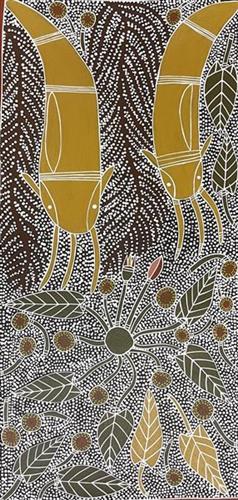
Giny’kiny (Catfish)

Giny’kiny (cat fish) are a totemic species significant to the Gupapuyngu clan. They are represented through storylines and songlines through art and bunggul (dance). The lines in the painting depict the ripples in which the Giny’kiny created when swimming through the shallow waters. During bunggul (dance) the ripples are depicted through the use of string and the barbs of the Giny’kiny are represented by holding out spears. Peter Gambung says “when we dance we imagine we are catfish, our mind leaves our human body and goes to our spirit”. The songline is performed at different bungguls such as dhapi (boys initiation ceremony) and bapurru (funeral) in which is performed to assist the deceased persons spirit to go home.
115682300300


Dhirrithirri (ceremonial skirt)

Dhirrithirri is a ceremonial skirt made from balgurr (kurrajong). They are worn by both men and women for different ceremonies particularly dhapi (boys initiation ceremony).

115682300299


Dhirrithirri (ceremonial skirt)

Dhirrithirri is a ceremonial skirt made from balgurr (kurrajong). They are worn by both men and women for different ceremonies particularly dhapi (boys initiation ceremony).

115682300297


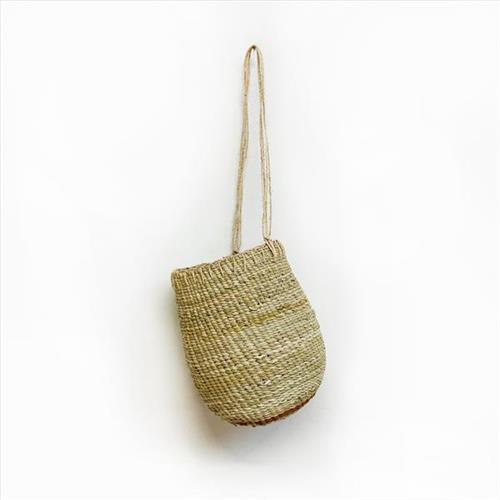
Mindirr (Pandanus Bag)

Miṉḏirr (dilly bags) are made from gunga (Pandanus spiralis), baḻgurr (kurrajong) and natural bush dyes. The body of the miṉḏirr is made from gunga, and the handles from baḻgurr. Once the gunga fronds and baḻgurr bark have been collected, they are stripped and prepared then boiled with the dyes.

Miṉḏirr were used traditionally for every day utilitarian purposes, particularly collecting bush foods such as bäḻtji (yam). Traditionally, the baḻgurr handles were worn across the forehead while the body of the miṉḏirr sat at the back, between the shoulder blades making it easily accessible when collecting ŋatha (food).

115682300289


Nawarlah (Brown River Stingray)

Aboriginal art in Ramingining, Central Arnhem Land is commonly illustrated through designs and images of animals, plants, and landscape. These motifs commonly reflect the artists ancestral inheritance and their dreamings and are referred to as totems.

For this, Serena has woven a stingray.

115682300622


Dhirrithirri (ceremonial skirt)

Dhirrithirri is a ceremonial skirt made from balgurr (kurrajong). They are worn by both men and women for different ceremonies particularly dhapi (boys initiation ceremony).

115682300621


Mindirr (Pandanus Bag)

Miṉḏirr (dilly bags) are made from gunga (Pandanus spiralis), baḻgurr (kurrajong) and natural bush dyes. The body of the miṉḏirr is made from gunga, and the handles from baḻgurr. Once the gunga fronds and baḻgurr bark have been collected, they are stripped and prepared then boiled with the dyes.

Miṉḏirr were used traditionally for every day utilitarian purposes, particularly collecting bush foods such as bäḻtji (yam). Traditionally, the baḻgurr handles were worn across the forehead while the body of the miṉḏirr sat at the back, between the shoulder blades making it easily accessible when collecting ŋatha (food).

115682300417


Burruna – Darrpa ga Dhamiling dhawu (king brown snake and blue tongue lizard story)

This is the story for the Djambarrpuyngu Wanybarrnga people of their country Djarraya & Lungurrungur, south-east of Galiwinku.  

A long time ago the darrpa (king brown snake) left his home and went hunting when a dhamiling (blue tongue lizard) found a hole and thought it would be a good home, so the dhamiling crawled on in to the darrpa’s hole. The darrpa came back to discover the dhamiling in his hole and said “this is my home where is yours?” and told him to go away. The dhamiling said “no this is my home” and they had a fight. The darrpa tried to beat the dhamiling but he couldn’t. The dhamiling spat in the face of the darrpa, killing him. Through his passing the darrpa took his land and crawled back into his hole where he will stay forever.

 When telling the story of her people, Burruna says “this is telling a story that happened on my country. That my father and mother told me and this story gets told and passed down through the family. All my tribe, Djambarrpuyngu, we dance, there is a king brown dance.”