115682192556


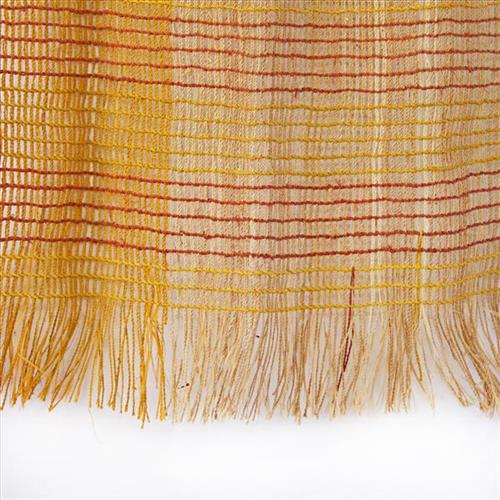
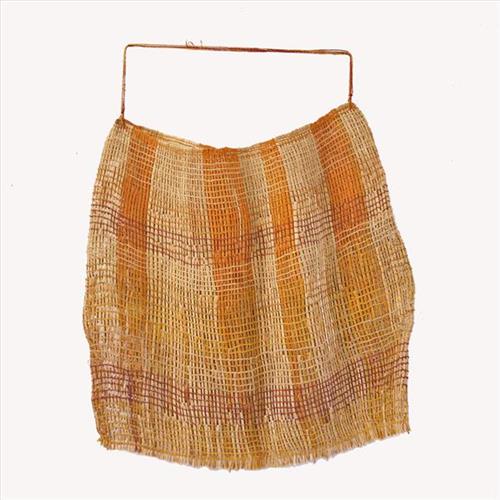
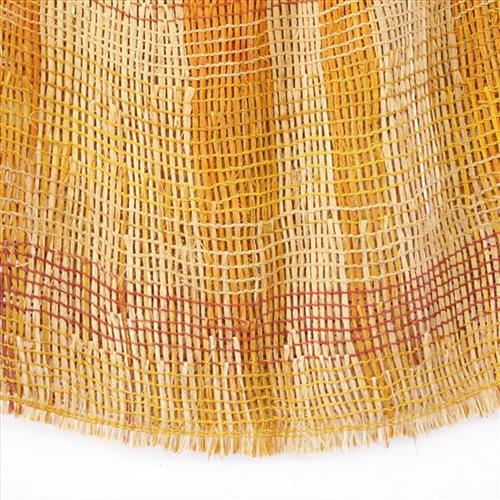
Djerrk (Bush String Bag)

Djerrk are primarily made from the bark of Baḻgurr (Red-flowered Kurrajong – Brachychiton megaphyllus) but sometimes Banyan tree (Ficus virens) and Cocky Apple tree (Planchonia careya). Sections of the tree are cut, and depending on the size, whole portions or part portions from the trunk. The inner bark is beaten or chewed to soften then dyed with natural bush dyes. Once softened and dyed, parts of the fibre are separated into fine strips then rolled on the thigh to create a rope otherwise known as bush string. The bush string is then woven and knotted to create a djerrk (string bag). Djerrk were used for every day utilitarian purposes, particularly collecting bush foods such as bäḻtji (yam).
 

115682192555


Shield

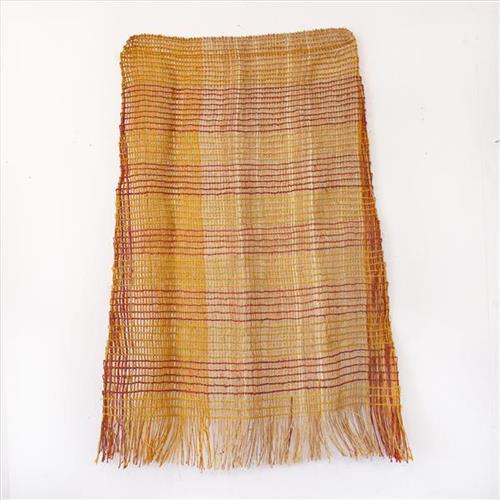
Shields were used as modesty shields for women, normally worn around the shoulders or around the waist. This shield has been made from balgurr (kurrajong). The balgurr is removed from the trunk of trees, the inner bark removed then stripped and smashed to soften. It is boiled to further soften and sometimes boiled with natural bush dyes. Once dried, the balgurr is rolled in to bush string then used to create weavings. 

115682192876


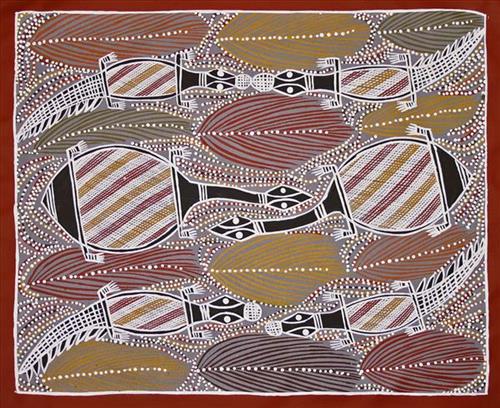
Bak ‘bididi (frogs)

This painting depicts Bak’ bididi (frogs) sitting around a billabong. The Arafura wetlands across East Arnhem Land are filled with billabongs during the wet season, providing the perfect living conditions for bak’ bididi. Their calls you can hear far and wide during the day and night. 


115682192874


Raypiny Dhawu (Fresh Water Story)

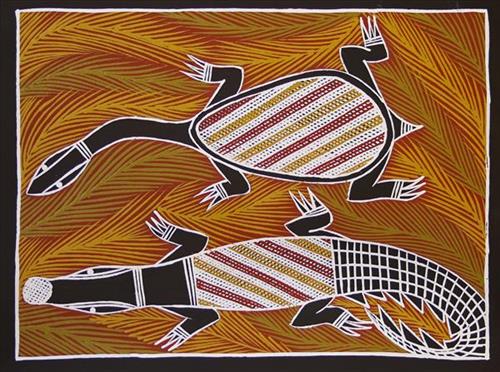
All Aboriginal people originate from a spiritual source, fixed in a particular place in their land or the sea. These ‘spiritual reservoirs’ are often in the form of special waterholes made by Wangarr (creative spirits) that were created long ago close to the beginning of time. These creator beings moved across the countryside, shaping the land and implanting in each tract of country, the spiritual life force for the people who were to own it. These creative spirits took many forms and when they gave the land to each group, they also gave songs, dances, ceremony, the associated laws and language.


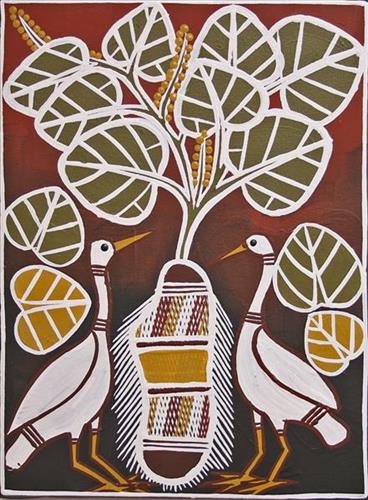
The creation story for Ganalbingu people took place near the middle section of the Glyde River where it becomes the Goyder River. Their land, Ngaliyindi, sits astride the Arafura Swamp in Central Arnhem Land. Many Ganalbingu artists paint totemic species significant to their clan. These can include baru (crocodile), banda (long necked turtle), buliya (catfish), yalman (waterlilies), gumang (magpie geese), dakawa (fresh water yabby), ratjuk (barramundi), warrnyu (flying fox) and more.


115682192873


Raypiny Dhawu (Fresh Water Story)

All Aboriginal people originate from a spiritual source, fixed in a particular place in their land or the sea. These ‘spiritual reservoirs’ are often in the form of special waterholes made by Wangarr (creative spirits) that were created long ago close to the beginning of time. These creator beings moved across the countryside, shaping the land and implanting in each tract of country, the spiritual life force for the people who were to own it. These creative spirits took many forms and when they gave the land to each group, they also gave songs, dances, ceremony, the associated laws and language.


The creation story for Ganalbingu people took place near the middle section of the Glyde River where it becomes the Goyder River. Their land, Ngaliyindi, sits astride the Arafura Swamp in Central Arnhem Land. Many Ganalbingu artists paint totemic species significant to their clan. These can include baru (crocodile), banda (long necked turtle), buliya (catfish), yalman (waterlilies), gumang (magpie geese), dakawa (fresh water yabby), ratjuk (barramundi), warrnyu (flying fox) and more.


115682192864


Baltji (Yam)

This painting depicts Baltji (Yam) which has been a reliable food source for Yolngu people for many centuries. Baltji can be found across the different landscapes of East Arnhem Land and are only harvested seasonally. 

115682192862


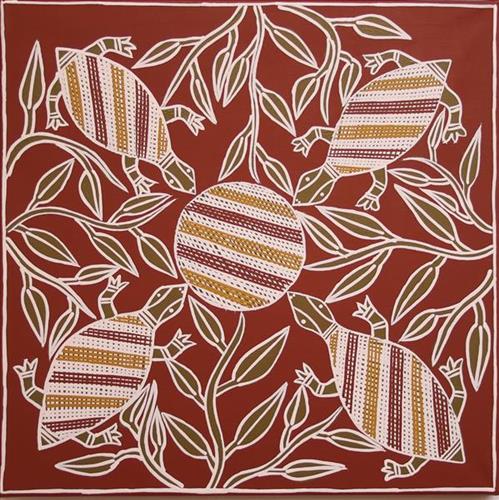
Raypiny Dhawu (Fresh Water Story)

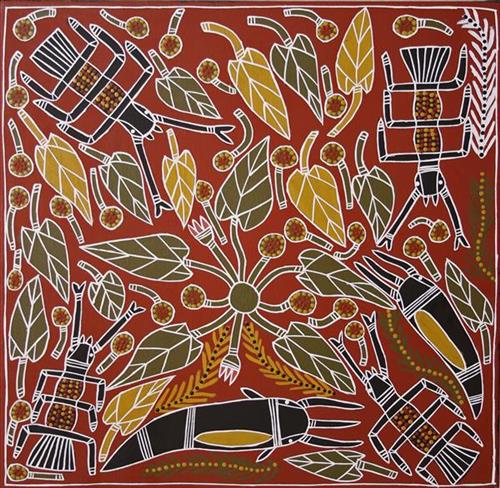
All Aboriginal people originate from a spiritual source, fixed in a particular place in their land or the sea. These ‘spiritual reservoirs’ are often in the form of special waterholes made by Wangarr (creative spirits) that were created long ago close to the beginning of time. These creator beings moved across the countryside, shaping the land and implanting in each tract of country, the spiritual life force for the people who were to own it. These creative spirits took many forms and when they gave the land to each group, they also gave songs, dances, ceremony, the associated laws and language.


The creation story for Ganalbingu people took place near the middle section of the Glyde River where it becomes the Goyder River. Their land, Ngaliyindi, sits astride the Arafura Swamp in Central Arnhem Land. Many Ganalbingu artists paint totemic species significant to their clan. These can include baru (crocodile), banda (long necked turtle), buliya (catfish), yalman (waterlilies), gumang (magpie geese), dakawa (fresh water yabby), ratjuk (barramundi), warrnyu (flying fox) and more.


115682192854


Banumbirr- Morning Star Ceremony (Dhuwa Moiety)

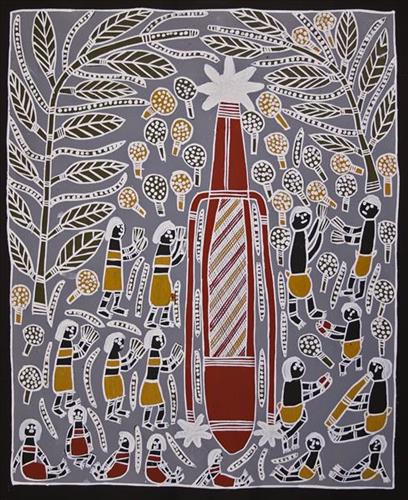
Banumbirr – Morning Star Ceremony (Dhuwa moiety)

The Morning Star Ceremony is from the Dhuwa moiety. I have painted the ceremony here. It’s got leaves from the banyan tree (ficus virnens) that makes figs for people to eat – they are part of our bush tucker.


The Morning Star is from my great grandfather, my grandfather and my father. I paint it for my family to show my sisters and brothers. My grandfather and my father have both passed away, so I teach the bunggul (dancing) to my children.

We make a little Morning Star (you can see a man holding that on the right side of the painting), so the big Morning Star can came out. It is a long ceremonial pole that we dance around. You can also see the little Morning Star in this painting. There are men with yidaki (didjeridoo) and bilma (clap sticks) singing the Morning Star song cycle part for my people. The women have banyan tree leaves that they are dancing with.

We make a big Morning Star pole as part of the ceremony. You can see that in the middle of this painting.

Banumbirr – Morning Star – is an exchange ceremony with other clans in the Bapurru (clan group).

The Morning Star is the first star you see in the sky in the mornings.

115682192842


Raypiny Dhawu (Fresh Water Story)

All Aboriginal people originate from a spiritual source, fixed in a particular place in their land or the sea. These ‘spiritual reservoirs’ are often in the form of special waterholes made by Wangarr (creative spirits) that were created long ago close to the beginning of time. These creator beings moved across the countryside, shaping the land and implanting in each tract of country, the spiritual life force for the people who were to own it. These creative spirits took many forms and when they gave the land to each group, they also gave songs, dances, ceremony, the associated laws and language.


The creation story for Ganalbingu people took place near the middle section of the Glyde River where it becomes the Goyder River. Their land, Ngaliyindi, sits astride the Arafura Swamp in Central Arnhem Land. Many Ganalbingu artists paint totemic species significant to their clan. These can include baru (crocodile), banda (long necked turtle), buliya (catfish), yalman (waterlilies), gumang (magpie geese), dakawa (fresh water yabby), ratjuk (barramundi), warrnyu (flying fox) and more.


115682192832


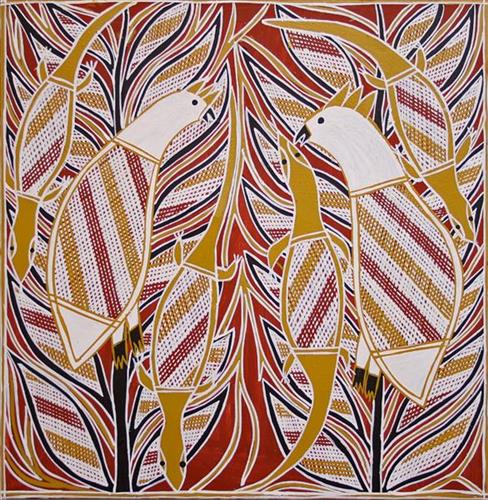
Lorrpu ga Marrngu in the Mayku tree

This painting depicts Lurrpu (Sulphur-crested cockatoo) and Marrngu (possum) in a Mayku Tree (Paper Bark Tree) and is a song line for the Gupapuyngu people. In the song line the Lurrpu feed on nuts and seeds of the Mayku Tree across the vast landscapes of Arnhem Land.