115682180825


Banumbirr- Morning Star Ceremony (Dhuwa Moiety)

Banumbirr – Morning Star Ceremony (Dhuwa moiety)

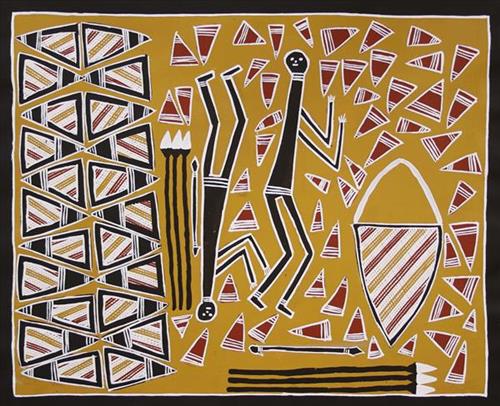
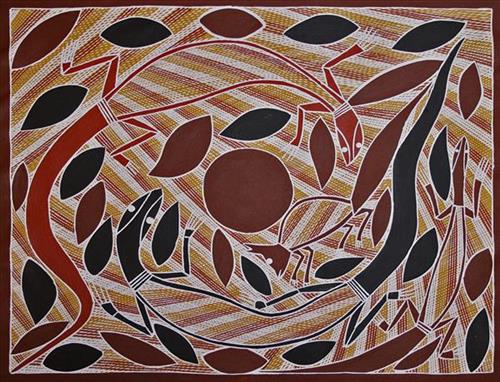
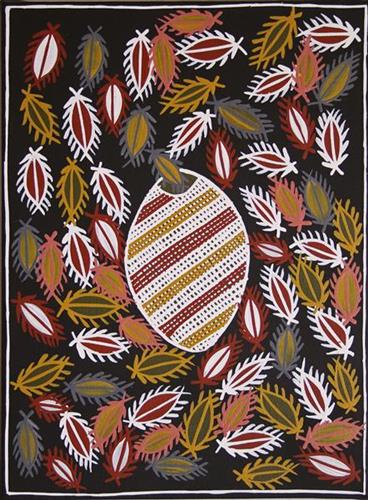
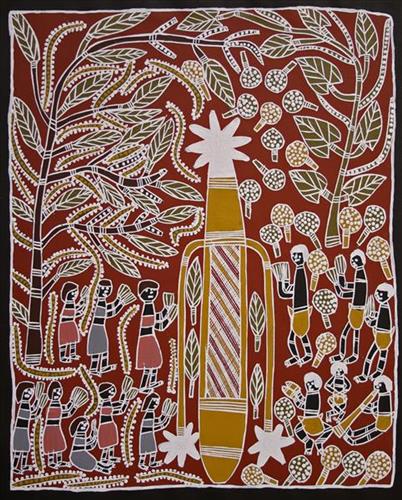
The Morning Star Ceremony is from the Dhuwa moiety. I have painted the ceremony here. It’s got leaves from the banyan tree (ficus virnens) that makes figs for people to eat – they are part of our bush tucker.


The Morning Star is from my great grandfather, my grandfather and my father. I paint it for my family to show my sisters and brothers. My grandfather and my father have both passed away, so I teach the bunggul (dancing) to my children.

We make a little Morning Star (you can see a man holding that on the right side of the painting), so the big Morning Star can came out. It is a long ceremonial pole that we dance around. You can also see the little Morning Star in this painting. There are men with yidaki (didjeridoo) and bilma (clap sticks) singing the Morning Star song cycle part for my people. The women have banyan tree leaves that they are dancing with.

We make a big Morning Star pole as part of the ceremony. You can see that in the middle of this painting.

Banumbirr – Morning Star – is an exchange ceremony with other clans in the Bapurru (clan group).

The Morning Star is the first star you see in the sky in the mornings.
115682180823


Baltji (Yam)

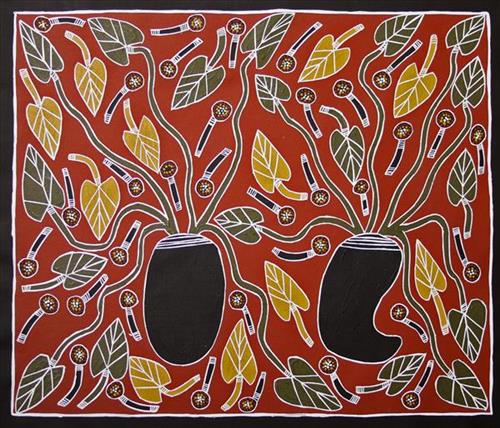
This painting depicts Baltji (Yam) which has been a reliable food source for Yolngu people for many centuries. Baltji can be found across the different landscapes of East Arnhem Land and are only harvested seasonally. 

115682181405


Wagilag Hunting Story

The Wagilag Sisters are central to the four important ceremonies of the Dhuwa moiety; the Djungguwan, the Gunabibi, the Ngulmarrk, and the Mandaialla.

The story is primarily an account of how, in the distant past, the two Wagilag Sisters came out of the southern interior and across the countryside to the Liyagalawumirr waterhole at Mirarrmina.


This painting is where the two sisters came along and get all the tools for hunting. They got ritjano and Damilipa (Blue Tongue Lizard). Ritjano is similar to a carrot, and grows abundantly in North East Arnhem Land. The vegetable is a staple food in traditional Yolngu culture, and has been a reliable food source when other foods are scarce. The ladies will collect and roast the ritjano, which has a very sweet flavour. 

 The sisters put all the bush food into their dilly bags.

115682181912


Wagilag Hunting Story

The Wagilag Sisters are central to the four important ceremonies of the Dhuwa moiety; the Djungguwan, the Gunabibi, the Ngulmarrk, and the Mandaialla.

The story is primarily an account of how, in the distant past, the two Wagilag Sisters came out of the southern interior and across the countryside to the Liyagalawumirr waterhole at Mirarrmina.


This painting is where the two sisters came along and get all the tools for hunting. They got ritjano and Damilipa (Blue Tongue Lizard). Ritjano is similar to a carrot, and grows abundantly in North East Arnhem Land. The vegetable is a staple food in traditional Yolngu culture, and has been a reliable food source when other foods are scarce. The ladies will collect and roast the ritjano, which has a very sweet flavour. 

 The sisters put all the bush food into their dilly bags.

115682181589


Generic

Aboriginal art in Ramingining, Central Arnhem Land is commonly illustrated through designs and images of animals, plants, and landscape. These motifs commonly reflect the artists ancestral inheritance and their dreamings and are referred to as totems.

For this painting, XXXX has painted XXXXX

115682182498


Waak Waak (Crow)

This painting depicts Waak Waak (Crow) which is an element of the Badurru (Milky Way) storyline and songline for the Durrurrnga people. The Badurru dhawu (story) is of a Waak Waak (crow) and cat travelling through the Milky Way and how all the different clans traded ngatha (food) and ngambi (spear tips) with one another under the Badurru.

115682183677


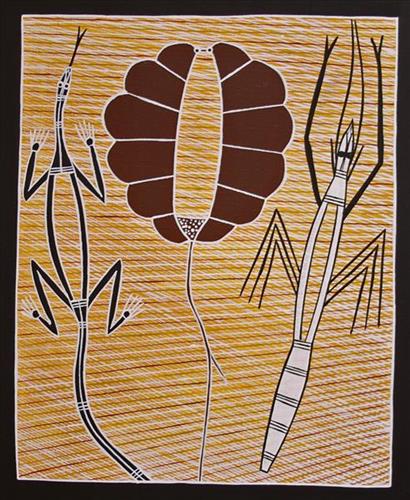
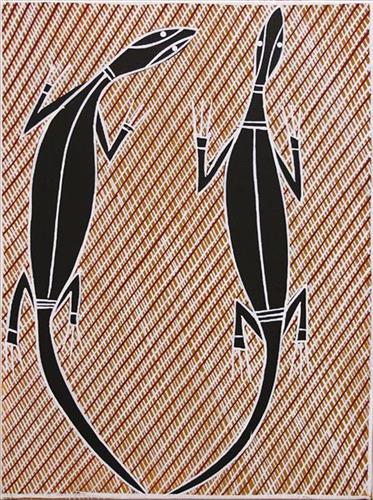
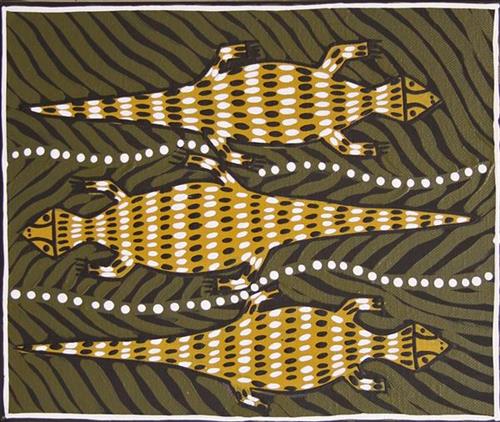
Djanda (lizard) by JB

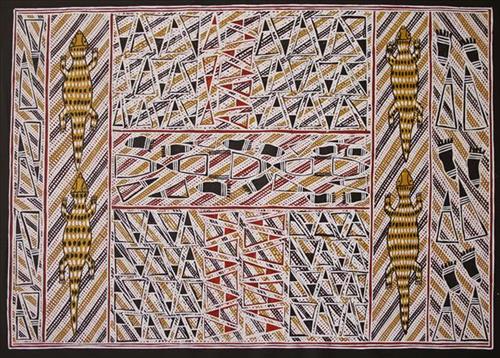
JB paints stories from his Dhuwa homeland in northeast Arnhem Land. Stories are passed on either paternally or maternally and JB would have learnt these stories from his ancestors. The cross-hatching style (Rrark) is a traditional painting style of this area and can represent elements such as water, air and wind.

His paintings often feature totemic animals of the fresh waters of North East Arnhem Land.

115682184142


Djanda (lizard)

Billy paints stories from his Dhuwa homeland in northeast Arnhem Land. Stories are passed on either paternally or maternally, Billy would have learnt these stories from his ancestors. The cross-hatching style (Rrark) is a traditional painting style of this area and can represent elements such as water, air and wind.

His paintings often feature totemic animals of the fresh waters of North East Arnhem Land.

115682184512


Wagilag Hunting Story

The Wagilag Sisters are central to the four important ceremonies of the Dhuwa moiety; the Djungguwan, the Gunabibi, the Ngulmarrk, and the Mandaialla.

The story is primarily an account of how, in the distant past, the two Wagilag Sisters came out of the southern interior and across the countryside to the Liyagalawumirr waterhole at Mirarrmina.


This painting is where the two sisters came along and get all the tools for hunting. They got ritjano and Damilipa (Blue Tongue Lizard). Ritjano is similar to a carrot, and grows abundantly in North East Arnhem Land. The vegetable is a staple food in traditional Yolngu culture, and has been a reliable food source when other foods are scarce. The ladies will collect and roast the ritjano, which has a very sweet flavour. 

 The sisters put all the bush food into their dilly bags.

115682184511


Damilipa (Blue Tongue Lizard)

This painting depicts Damilipa (Blue Tongue Lizard) scouring the vast landscapes of Gurrwiliny, NE Arnhem Land. Damilipa can be seen across Arnhem Land all year around. Damilipa is the dreaming for Evonne’s Waku (great-grandfather from mothers side).