115682397154


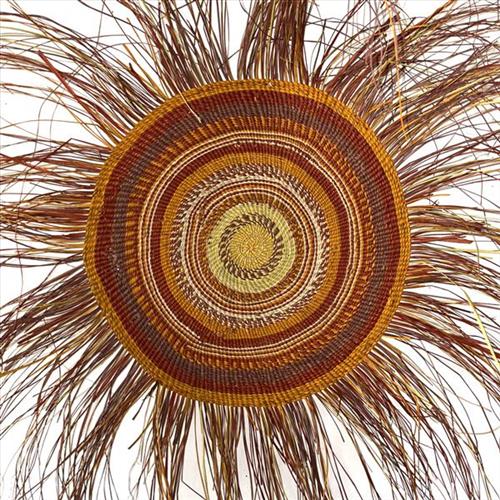
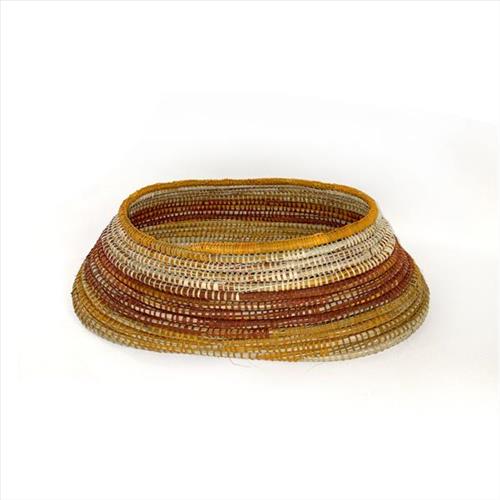
Bathi (Pandanus Basket)

Yolŋu weavers of Arnhem Land create utilitarian, ceremonial, and decorative pieces using naturally sourced materials. This Bathi (Pandanus Basket) is made from young Pandanus spiralis leaves, harvested with a wooden hook, stripped of prickles, and dried to create strong, resilient fibres. These fibres are then twisted, coiled, or woven using various techniques to produce both functional and decorative baskets.

Typically, Bathi are made using a coiling technique which was adapted from techniques used by Indigenous women throughout Southeast Australia. Introduced to Arnhem Land weavers in the 1930’s as Missionaries began commissioning pieces in this style.

Bula’bula weavers exclusively use natural dyes, derived from locally sourced roots, leaves and grasses. These pigments are extracted and infused into pandanus fibres by boiling over an open fire, producing the rich, vibrant colours characteristic of contemporary Yolŋu weavings.
115682399695


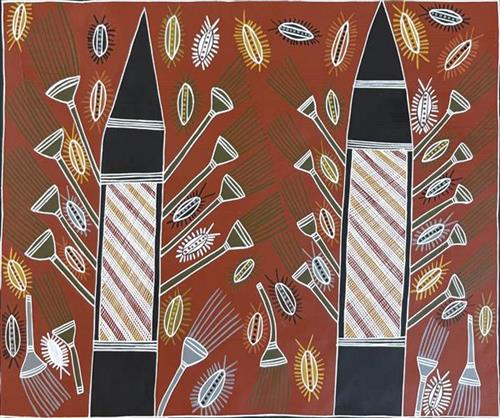
Wurrutjara (Sand Palm)

Seen in and around Ramingining, the sand palm is a small, slender palm, growing to about 7 m tall. It is fire tolerant and usually grows in environments where it is exposed to frequent fires. Aboriginal people use this palm as the fruits are edible and the heart  can be eaten, either raw or roasted. The core of the stem is pounded and made into a drink which was used to treat coughs, colds, chest infections, diarrhoea, and tuberculosis.

115682401039


Woven Mat

Yolŋu weavers of Arnhem Land create utilitarian, ceremonial, and decorative pieces using naturally sourced materials. This mat is made from young Pandanus spiralis leaves, harvested with a wooden hook, stripped of prickles, and dried to create strong, resilient fibres. These fibres are then twisted, coiled, or woven using traditional techniques to produce both functional and decorative mats.

Bula’bula weavers exclusively use natural dyes, derived from locally sourced roots, leaves and grasses. These pigments are extracted and infused into pandanus fibres by boiling over an open fire, producing the rich, vibrant colours characteristic of contemporary Yolŋu weavings.
Traditionally, Nganiyal (conical mats) functioned as insect screens when erected and as seating mats when folded, playing an important role in both daily life and ceremonial practices. Today, Yolŋu artists create a variety of shapes, including flat, round, and oblong mats. These non-traditional styles and the use of bright colours became more common after Missionaries began commissioning pieces in this style.

115682398666


Woven Mat

Yolŋu weavers of Arnhem Land create utilitarian, ceremonial, and decorative pieces using naturally sourced materials. This mat is made from young Pandanus spiralis leaves, harvested with a wooden hook, stripped of prickles, and dried to create strong, resilient fibres. These fibres are then twisted, coiled, or woven using traditional techniques to produce both functional and decorative mats.

Bula’bula weavers exclusively use natural dyes, derived from locally sourced roots, leaves and grasses. These pigments are extracted and infused into pandanus fibres by boiling over an open fire, producing the rich, vibrant colours characteristic of contemporary Yolŋu weavings.
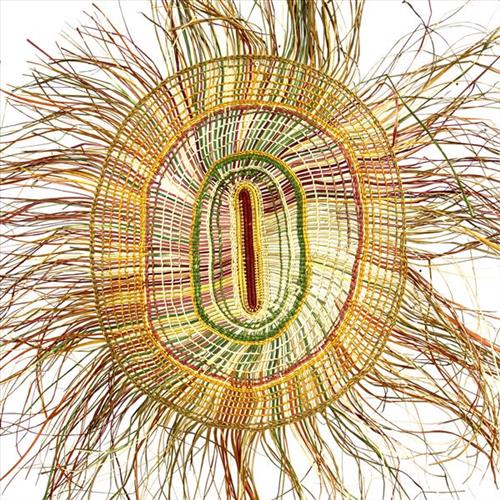
Traditionally, Nganiyal (conical mats) functioned as insect screens when erected and as seating mats when folded, playing an important role in both daily life and ceremonial practices. Today, Yolŋu artists create a variety of shapes, including flat, round, and oblong mats. These non-traditional styles and the use of bright colours became more common after Missionaries began commissioning pieces in this style.

115682400805


Woven Mat

Yolŋu weavers of Arnhem Land create utilitarian, ceremonial, and decorative pieces using naturally sourced materials. This mat is made from young Pandanus spiralis leaves, harvested with a wooden hook, stripped of prickles, and dried to create strong, resilient fibres. These fibres are then twisted, coiled, or woven using traditional techniques to produce both functional and decorative mats.

Bula’bula weavers exclusively use natural dyes, derived from locally sourced roots, leaves and grasses. These pigments are extracted and infused into pandanus fibres by boiling over an open fire, producing the rich, vibrant colours characteristic of contemporary Yolŋu weavings.
Traditionally, Nganiyal (conical mats) functioned as insect screens when erected and as seating mats when folded, playing an important role in both daily life and ceremonial practices. Today, Yolŋu artists create a variety of shapes, including flat, round, and oblong mats. These non-traditional styles and the use of bright colours became more common after Missionaries began commissioning pieces in this style.

115682400803


Woven Mat

Yolŋu weavers of Arnhem Land create utilitarian, ceremonial, and decorative pieces using naturally sourced materials. This mat is made from young Pandanus spiralis leaves, harvested with a wooden hook, stripped of prickles, and dried to create strong, resilient fibres. These fibres are then twisted, coiled, or woven using traditional techniques to produce both functional and decorative mats.

Bula’bula weavers exclusively use natural dyes, derived from locally sourced roots, leaves and grasses. These pigments are extracted and infused into pandanus fibres by boiling over an open fire, producing the rich, vibrant colours characteristic of contemporary Yolŋu weavings.
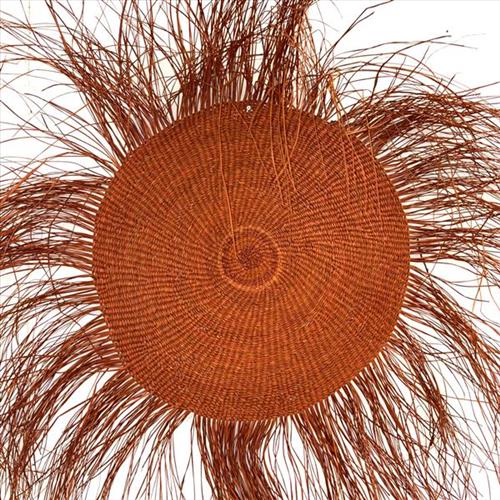
Traditionally, Nganiyal (conical mats) functioned as insect screens when erected and as seating mats when folded, playing an important role in both daily life and ceremonial practices. Today, Yolŋu artists create a variety of shapes, including flat, round, and oblong mats. These non-traditional styles and the use of bright colours became more common after Missionaries began commissioning pieces in this style.

115682400802


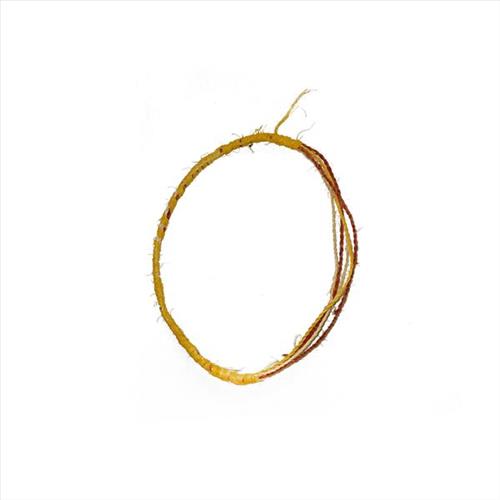
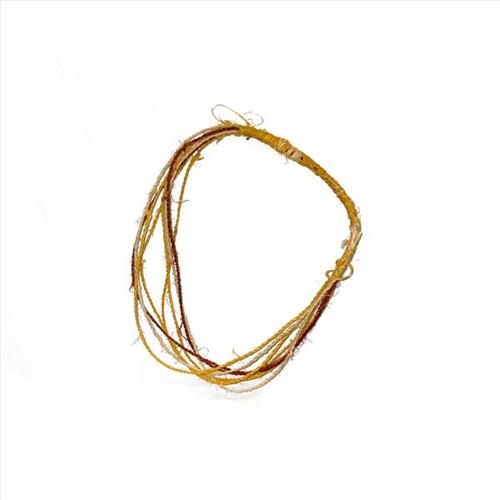
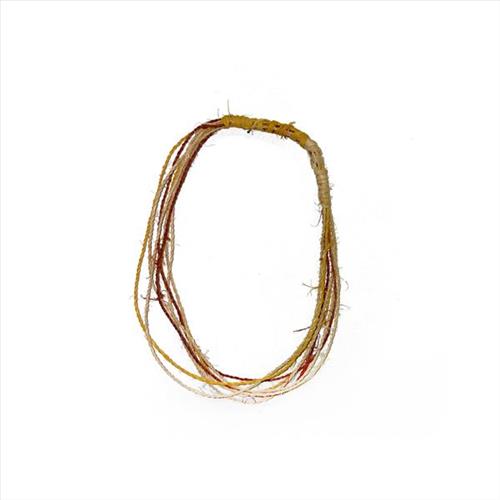
Malka (Ceremonial Head Wear)

Malka are ceremonial head adornments made from balgurr (Kurrajong). The bark is stripped from the tree, smashed with a rock to soften then boiled, sometimes with natural bush dyes. The balgurr is then rolled in the a rope then used to create ceremonial wear. 

The essence of Yolngu ceremonies lies in the reenactment of the ancestral beings’ actions that shaped the land and established the laws that govern it. These ceremonies are conveyed through an intricate blend of songs, dances, paintings, objects, and carefully choreographed sequences of action.

For Yolngu, these elements are more than mere expressions; they embody the very essence of the ancestral beings. They serve as a vital link to the ancestral world, bridging the past with the present. Each clan holds a unique collection of songs, paintings, and sacred objects known collectively as the clan’s “madayin” or sacred Law, which is intimately tied to the deeds and legacies of the ancestral beings who forged the clan’s land.

The sacred Law of each clan is not isolated but interconnected with the Laws of other clans within the same moiety. This interconnection stems from the ancestral beings’ journeys, which often traversed the lands of multiple clans, creating a shared foundation of Law and tradition.

115682400801


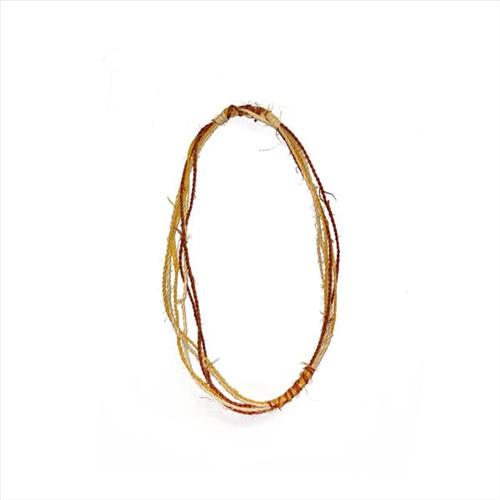
Malka (Ceremonial Head Wear)

Malka are ceremonial head adornments made from balgurr (Kurrajong). The bark is stripped from the tree, smashed with a rock to soften then boiled, sometimes with natural bush dyes. The balgurr is then rolled in the a rope then used to create ceremonial wear. 

The essence of Yolngu ceremonies lies in the reenactment of the ancestral beings’ actions that shaped the land and established the laws that govern it. These ceremonies are conveyed through an intricate blend of songs, dances, paintings, objects, and carefully choreographed sequences of action.

For Yolngu, these elements are more than mere expressions; they embody the very essence of the ancestral beings. They serve as a vital link to the ancestral world, bridging the past with the present. Each clan holds a unique collection of songs, paintings, and sacred objects known collectively as the clan’s “madayin” or sacred Law, which is intimately tied to the deeds and legacies of the ancestral beings who forged the clan’s land.

The sacred Law of each clan is not isolated but interconnected with the Laws of other clans within the same moiety. This interconnection stems from the ancestral beings’ journeys, which often traversed the lands of multiple clans, creating a shared foundation of Law and tradition.

115682400798


Malka (Ceremonial Head Wear)

Malka are ceremonial head adornments made from balgurr (Kurrajong). The bark is stripped from the tree, smashed with a rock to soften then boiled, sometimes with natural bush dyes. The balgurr is then rolled in the a rope then used to create ceremonial wear. 

The essence of Yolngu ceremonies lies in the reenactment of the ancestral beings’ actions that shaped the land and established the laws that govern it. These ceremonies are conveyed through an intricate blend of songs, dances, paintings, objects, and carefully choreographed sequences of action.

For Yolngu, these elements are more than mere expressions; they embody the very essence of the ancestral beings. They serve as a vital link to the ancestral world, bridging the past with the present. Each clan holds a unique collection of songs, paintings, and sacred objects known collectively as the clan’s “madayin” or sacred Law, which is intimately tied to the deeds and legacies of the ancestral beings who forged the clan’s land.

The sacred Law of each clan is not isolated but interconnected with the Laws of other clans within the same moiety. This interconnection stems from the ancestral beings’ journeys, which often traversed the lands of multiple clans, creating a shared foundation of Law and tradition.

115682400795


Malka (Ceremonial Head Wear)

Malka are ceremonial head adornments made from balgurr (Kurrajong). The bark is stripped from the tree, smashed with a rock to soften then boiled, sometimes with natural bush dyes. The balgurr is then rolled in the a rope then used to create ceremonial wear. 

The essence of Yolngu ceremonies lies in the reenactment of the ancestral beings’ actions that shaped the land and established the laws that govern it. These ceremonies are conveyed through an intricate blend of songs, dances, paintings, objects, and carefully choreographed sequences of action.

For Yolngu, these elements are more than mere expressions; they embody the very essence of the ancestral beings. They serve as a vital link to the ancestral world, bridging the past with the present. Each clan holds a unique collection of songs, paintings, and sacred objects known collectively as the clan’s “madayin” or sacred Law, which is intimately tied to the deeds and legacies of the ancestral beings who forged the clan’s land.

The sacred Law of each clan is not isolated but interconnected with the Laws of other clans within the same moiety. This interconnection stems from the ancestral beings’ journeys, which often traversed the lands of multiple clans, creating a shared foundation of Law and tradition.