115682330266


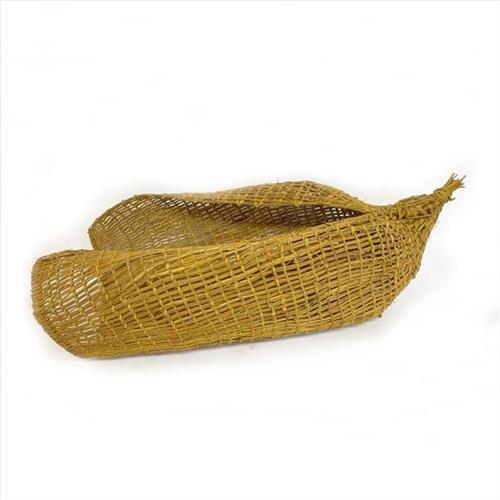
Dhawurr/batjbarra fish trap

Fish traps are placed into the river to face the oncoming fish. The woven tunnel traps the fish and prevents their escape. The traps are tapered so when they are submerged in the water, the water pressure wedges them into place. Traditionally, the fish traps are operated at night time.

115682331625


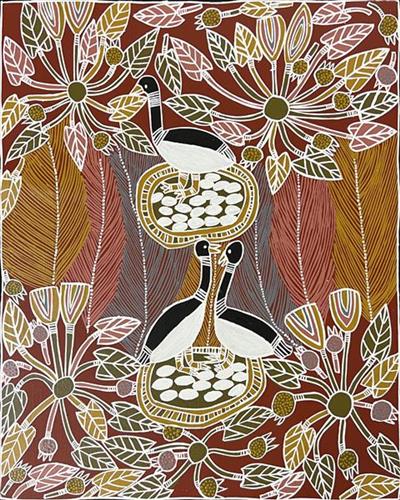
Gumang (Magpie Geese)

The Yolngu people of Arnhem Land originate from a spiritual source, fixed in a particular place in their land or the sea. These ‘Spiritual Reservoirs’ are often in the form of special waterholes made by Wangarr (Creative Beings) long ago close to the beginning of time.

The creator beings moved across the country side, shaping the land and implanting in each tract of country, the spiritual life force for the people who were to own it. These Creative Spirits took many forms. When they gave the land to each group they also gave songs, dances, ceremony, the associated laws and language. The Creation story for Ganalbingu people took place near the middle section of the Glyde River where it becomes the Goyder River. Their land, Ngaliyindi, sits astride the Arafura Swamp in Central Arnhem Land.

In this painting, the artist has depicted Gumang (magpie geese), which are sacred to the Ganalbingu people. To the east of the Arafura Swamp is a freshwater billabong which is said to have been made by the Goose Spirit and is in the shape of a goose nest. As a result, geese, their eggs and their nests are sacred.
115682330641


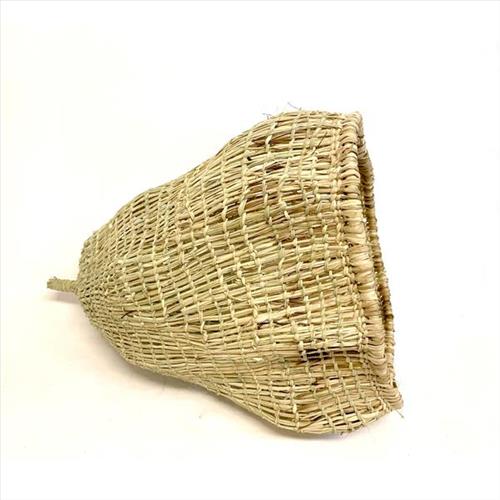
Mewana

Mewana is a bush basket/scoop primarily made from mewana grass but sometimes from other fibres such as gunga (pandanus spiralis). Traditionally Yolngu made mewana baskets to carry bush foods such as baltji (yam) and warraga ngatha (cycad nuts). Sometimes mewana were used to scoop dhulumburrk (water lily) and other water reeds from the billabongs.

115682331093


Ganybu (Fishing Net/Drag Net)

This is a piece from the old times, about how Yolngu ancestors used to live.  Men used to go into the Arafura Swamp, and caught the fish with a drag net.

115682331454


Nawarlah (Brown River Stingray)

Aboriginal art in Ramingining, Central Arnhem Land is commonly illustrated through designs and images of animals, plants, and landscape. These motifs commonly reflect the artists ancestral inheritance and their dreamings and are referred to as totems.

For this, the weaver has made a stingray.

115682331450


Nawarlah (Brown River Stingray)

Aboriginal art in Ramingining, Central Arnhem Land is commonly illustrated through designs and images of animals, plants, and landscape. These motifs commonly reflect the artists ancestral inheritance and their dreamings and are referred to as totems.

For this, the weaver has made a stingray.

115682331449


Nawarlah (Brown River Stingray)

Aboriginal art in Ramingining, Central Arnhem Land is commonly illustrated through designs and images of animals, plants, and landscape. These motifs commonly reflect the artists ancestral inheritance and their dreamings and are referred to as totems.

For this, the weaver has made a stingray.

115682331448


Nawarlah (Brown River Stingray)

Aboriginal art in Ramingining, Central Arnhem Land is commonly illustrated through designs and images of animals, plants, and landscape. These motifs commonly reflect the artists ancestral inheritance and their dreamings and are referred to as totems.

For this, the weaver has made a stingray.

115682331669


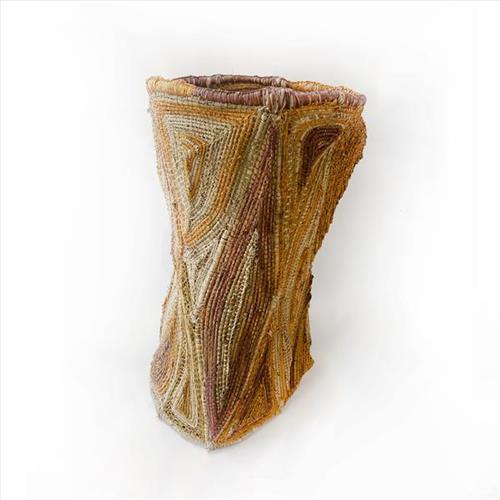
Hollow Log

Janice was inspired by the hollow logs seen in and around the bushlands of Ramingining. 

11564006340


Status: Stock


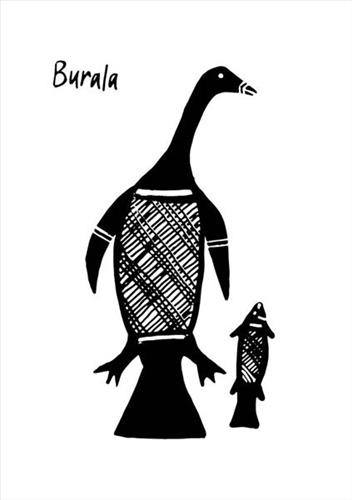
Burala (Diving Ducks) by Peter Gambung

Manymak (very good)! This product helps build a sustainable source of income for Yolŋu artists and art workers at Bula’Bula Arts.

  • Screenprinted linen tea towel with Gurrumatji (Magpie Geese) design 
  • 100% linen
  • 70cm x 50cm
  • Available in black and flax colours 


ARTWORK STORY 

This painting depicts diving ducks, both realistically and symbolically. A particular clan group uses the object in the painting during a hollow log ceremony (traditional funeral ceremony). The rrark (cross hatching) is the water. One group will perform the catfish dance whilst another performs as diving ducks. The object is whirled above the head to make a noise that emulates the ducks “roar”. The dance crescendos into the catfish coming closer to the diving ducks allowing them to eat the catfish in a frenzy.