221382332961


Woven Dragonfly

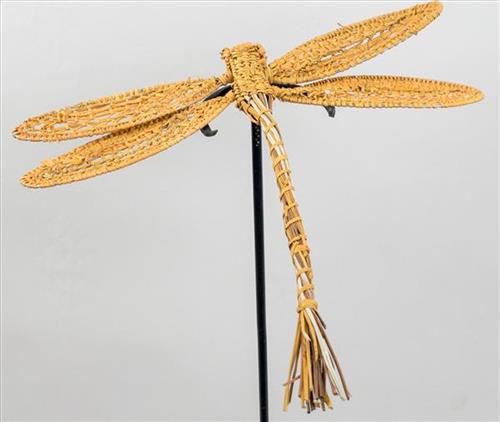
This finely crafted hand woven dragonfly is a cheerful reminder of the real dry season dragonflies.

Signalling in the dry season, dragonflies are ubiquitous with dry winds, cool nights and saying goodbye to the wet season! Our senior fibre artists are continuing to expand their techniques and range with dragonflies and other complex woven forms. Each are unique, hand woven and coloured using natural bush dyes.

Pandanus fibre art is labour intensive requiring a high level of care and fine needlework. Finished works are both functional and beautiful. Women collect pandanus by pulling from the top of a pandanus tree, stripping then dying the leaves using natural bush colour.

221382329199


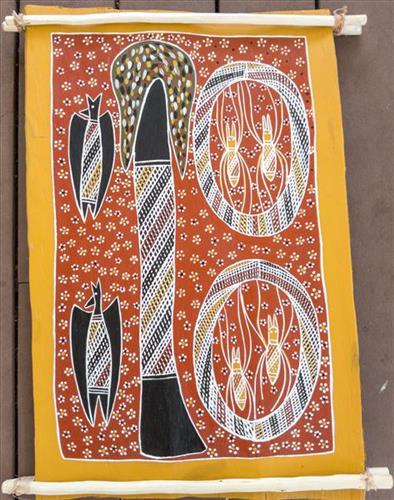
Spider, Bats & Tree

This painting depicts a small component of a longer Yirritja moiety songline. This has been painted on the traditional medium of dried and flattened stringybark. This bark is held in place by two plum tree sticks which helps the painting remain flat as humidity levels change. These sticks are bound using anbutbut (kurrajong) inner bark which is often used to make bush string.

Summarising the songline, the dance begins as a tree root, which grows into a small tree. From here it becomes a big tree along with a spider, flower pollen and hungry bats. At the end a dingo is involved. To finish the ceremonial dance, dancers are smoked, with the smoke releasing the spirit which holds this songline knowledge allowing it to move on to the next person. 

The small component shown in this painting – from the larger over all songline – consists of a growing tree in centre, two separate spider webs on the right, and two bats on the left. The spider is only found out bush and not to be confused with a spider around camp. Dots represented in the painting depict flower pollen blown into the spider web. This pollen is food for the bush bats.

Painting has been completed using a handmade grass reed brush called Jarlk. Raark or fineline work is in Yirritja style and consists of multiple lines before alternating colour. Modern acrylic paint has been used.

221382329946


Golden Tree Snake

This carving shows a golden tree snake climbing a small branch. Golden tree snakes often can be found in pandanus surprising ladies who gather this for weaving!

Carved using a collection of hand tools along with a modern grinder. Painted using acrylic paint.

221382329943


Mukuy

This carving shows a Mukuy from Solomans country. Soloman tells the story that when you catch fish you shouldn’t take too much… “give half back”. Mukuys travel around at night and if you have taken too much they will go hungry and cause mischief for you. By giving half back you are looking after the Mukuys and ensuring you remain safe.

Soloman has depicted this Mukuy with a full binji (belly) of nailfish (eel tail catfish). These have been completed in Yirritja style Raark which consists of multiple lines before alternating colour. Carved using a mixture of hand tools and completed using modern acrylic paint.

221382329931


Long Neck Turtle – Nyangura

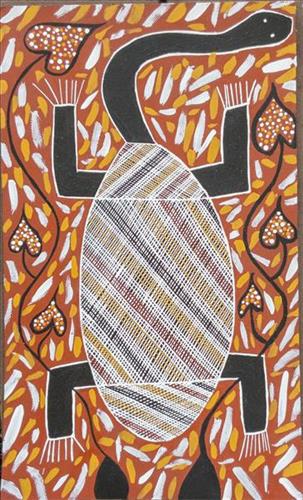
Nyangura the Long-Neck Tortoise is Yirritja. The two sacred ancestral Nyangura are found at a place called Djirringi in north-central Arnhem Lane on Ganalbingu land. The tracks left by the two ancestral totemic Nyangura, as they crawled over the land at Djirringi, is a sacred symbol. This symbol is used as a ground design or sand sculpture during cleansing ceremonies otherwise known as Bulu-Lup or Wan’tjirr. During this ceremony, water is poured over the bodies of Yolngu relatives of the deceased as they stand within the sacred ground design representing the marks left on the ground by the two original ancestral Nyangura at Djirringi. Yolngu also dance Nyangura during bunggul ceremonies. Here they may paint the design for Nyanguru and other designs. Nyangura is also food for Yolngu. It is cooked and cut according to age old tradition. The artist has depicted four Long Neck Turtle’s in this painting.

221382330904


bondock

Wood carving has always been part of Aboriginal culture and Djilpin artists continue this tradition. Men carved wood for many purposes – tools for hunting or gathering food, axes and knives for building shelters, spears and clubs for protection of their lives and territory, objects for ceremony and to mark sacred sites.

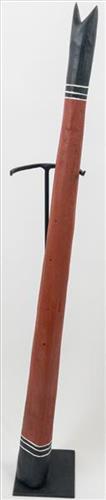
Hunting implements include the boomerang, woomera and spear. The woomera is a lever which helps to increase the speed and distance the spear travels. Clapsticks are used as percussion instruments by the Songmen to accompany dancing along with the didgeridoo (mago).

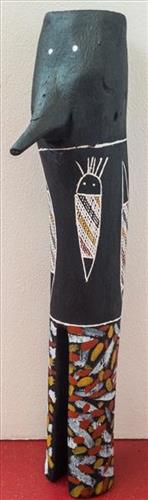
As well as the more functional carvings, artists portray animals and birds in wood, and these carvings are often painted. Ceremonial carvings include spirit creatures including mukuy (devil devils) and mimi.

Some fine mimi figures have been cast in bronze.

221382330900


Clapsticks

Wood carving has always been part of Aboriginal culture. Men carved wood for many purposes – tools for hunting or gathering food, axes and knives for building shelters, spears and clubs for protection of their lives and territory, objects for ceremony and to mark sacred sites.

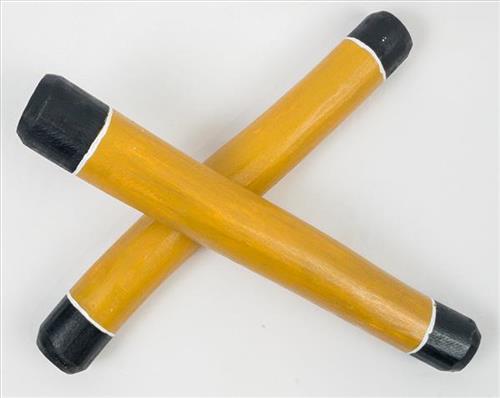
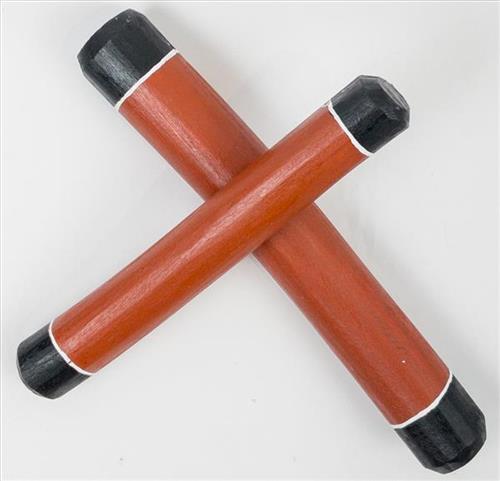
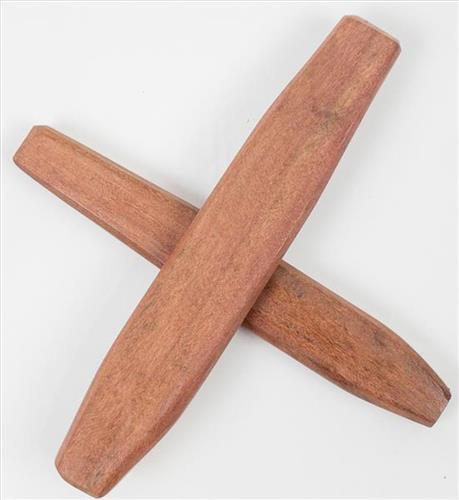
Artists source the timber on country, walking from tree to tree to find the right piece for the desired functional outcome. Once found, it is cut and then brought back to camp to be worked, shaped, sanded and finally finished.

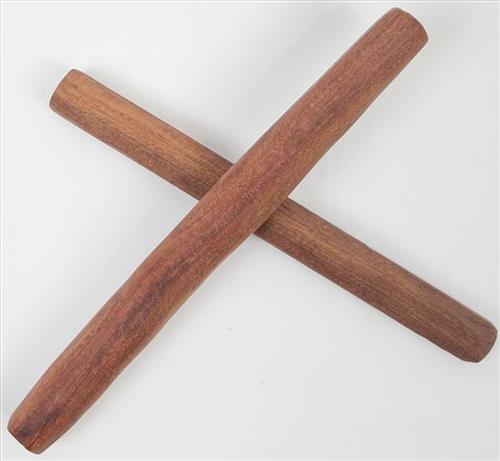
Clapsticks are used in traditional ceremony and dance as a percussion instrument to accompany Mago (didjeridu). Denser woods such as Ironwood or Kerosene wood are preferred due to their crisper clap sound. Clapsticks can be left raw or painted and decorated. Straight timber from younger trees is preferred as it requires less work to make functional.

221382330899


Clapsticks

Wood carving has always been part of Aboriginal culture. Men carved wood for many purposes – tools for hunting or gathering food, axes and knives for building shelters, spears and clubs for protection of their lives and territory, objects for ceremony and to mark sacred sites.

Artists source the timber on country, walking from tree to tree to find the right piece for the desired functional outcome. Once found, it is cut and then brought back to camp to be worked, shaped, sanded and finally finished.

Clapsticks are used in traditional ceremony and dance as a percussion instrument to accompany Mago (didjeridu). Denser woods such as Ironwood or Kerosene wood are preferred due to their crisper clap sound. Clapsticks can be left raw or painted and decorated. Straight timber from younger trees is preferred as it requires less work to make functional.

221382330896


Clapsticks

Wood carving has always been part of Aboriginal culture. Men carved wood for many purposes – tools for hunting or gathering food, axes and knives for building shelters, spears and clubs for protection of their lives and territory, objects for ceremony and to mark sacred sites.

Artists source the timber on country, walking from tree to tree to find the right piece for the desired functional outcome. Once found, it is cut and then brought back to camp to be worked, shaped, sanded and finally finished.

Clapsticks are used in traditional ceremony and dance as a percussion instrument to accompany Mago (didjeridu). Denser woods such as Ironwood or Kerosene wood are preferred due to their crisper clap sound. Clapsticks can be left raw or painted and decorated. Straight timber from younger trees is preferred as it requires less work to make functional.

221382330893


Clapsticks

Wood carving has always been part of Aboriginal culture. Men carved wood for many purposes – tools for hunting or gathering food, axes and knives for building shelters, spears and clubs for protection of their lives and territory, objects for ceremony and to mark sacred sites.

Artists source the timber on country, walking from tree to tree to find the right piece for the desired functional outcome. Once found, it is cut and then brought back to camp to be worked, shaped, sanded and finally finished.

Clapsticks are used in traditional ceremony and dance as a percussion instrument to accompany Mago (didjeridu). Denser woods such as Ironwood or Kerosene wood are preferred due to their crisper clap sound. Clapsticks can be left raw or painted and decorated. Straight timber from younger trees is preferred as it requires less work to make functional.