221382324135


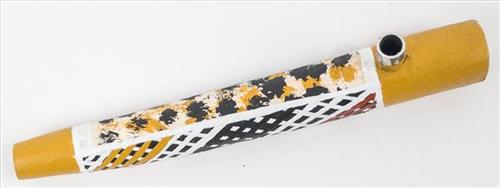
Bush Pipes

This pipe has been hand carved from Moyi (green plum tree), and hollowed out using a burning hot wire. Finished using modern acrylic paints. Cone piece is either from a discarded rifle case, or other similar round tube.

Wood carvings has always been part of Aboriginal culture and Djilpin artists continue this tradition. Men carved wood for many purposes – tools for hunting or gathering food, axes and knives for building shelters, spears and clubs for protection of their lives and territory, objects for ceremony and to mark sacred sites.

Hunting implements include the boomerang, woomera and spear. The woomera is a lever which helps to increase the speed and distance the spear travels. Clapsticks are used as percussion instruments by the Songmen to accompany dancing along with the didgeridoo (mago).

As well as the more functional carvings, artists portray animals and birds in wood, and these carvings are often painted. Ceremonial carvings include spirit creatures including mukuy (devil devils) and mimi.

Some fine mimi figures have been cast in bronze.

221382324134


Didjeridu (Key: D#, Toot: F#)

Key: D#
Toot: F#

Didjeridus from this region are made in the West Arnhem style. Called Mago, they’re different and special and follow the tradition made famous by Beswick’s Mago Master, elder David Blanasi.

Ghunmarn didjeridus are sourced on country, and hand cut from Woolybutt trees. Artists travel considerable distances on foot to find the right woolybutt tree naturally hollowed out by termites. Good instruments are hand-cut and taken back to camp to be worked, shaped, sanded, tuned and then finally painted.

These are top quality musical instruments, highly regarded worldwide, and still used in ceremony and performance today. Featuring traditional designs handed painted with a Jarlk grass brush.


Most Ghunamrn didjeridus are high pitch D, low pitch D, F, C or G. The longer the dij the lower the pitch, a shorter didj will give a higher sound.

221382324133


Clapsticks

Wood carving has always been part of Aboriginal culture. Men carved wood for many purposes – tools for hunting or gathering food, axes and knives for building shelters, spears and clubs for protection of their lives and territory, objects for ceremony and to mark sacred sites.

Artists source the timber on country, walking from tree to tree to find the right piece for the desired functional outcome. Once found, it is cut and then brought back to camp to be worked, shaped, sanded and finally finished.

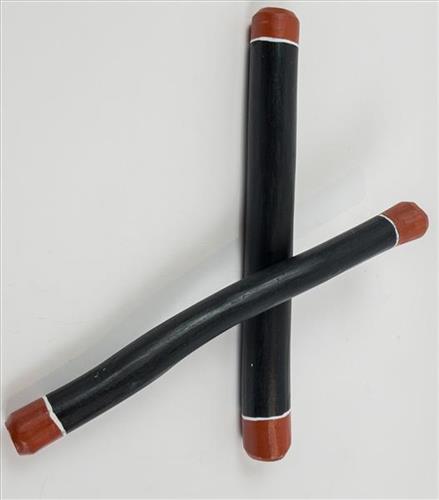
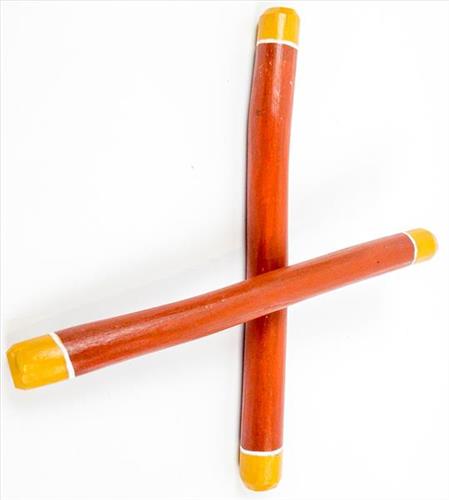
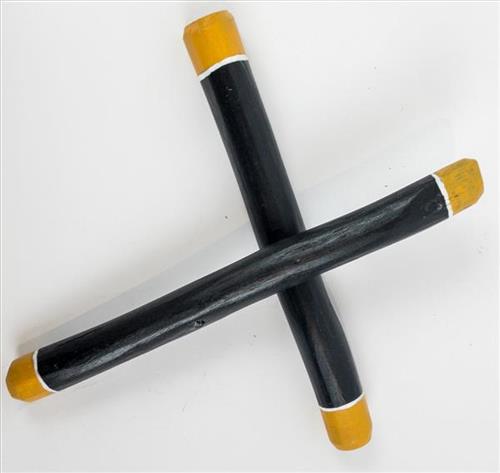
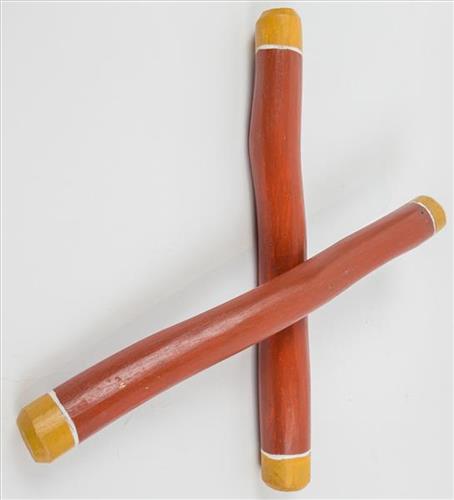
Clapsticks are used in traditional ceremony and dance as a percussion instrument to accompany Mago (didjeridu). Denser woods such as Ironwood or Kerosene wood are preferred due to their crisper clap sound. Clapsticks can be left raw or painted and decorated. Straight timber from younger trees is preferred as it requires less work to make functional.

221382324132


Clapsticks

Wood carving has always been part of Aboriginal culture. Men carved wood for many purposes – tools for hunting or gathering food, axes and knives for building shelters, spears and clubs for protection of their lives and territory, objects for ceremony and to mark sacred sites.

Artists source the timber on country, walking from tree to tree to find the right piece for the desired functional outcome. Once found, it is cut and then brought back to camp to be worked, shaped, sanded and finally finished.

Clapsticks are used in traditional ceremony and dance as a percussion instrument to accompany Mago (didjeridu). Denser woods such as Ironwood or Kerosene wood are preferred due to their crisper clap sound. Clapsticks can be left raw or painted and decorated. Straight timber from younger trees is preferred as it requires less work to make functional.

221382324131


Clapsticks

Wood carving has always been part of Aboriginal culture. Men carved wood for many purposes – tools for hunting or gathering food, axes and knives for building shelters, spears and clubs for protection of their lives and territory, objects for ceremony and to mark sacred sites.

Artists source the timber on country, walking from tree to tree to find the right piece for the desired functional outcome. Once found, it is cut and then brought back to camp to be worked, shaped, sanded and finally finished.

Clapsticks are used in traditional ceremony and dance as a percussion instrument to accompany Mago (didjeridu). Denser woods such as Ironwood or Kerosene wood are preferred due to their crisper clap sound. Clapsticks can be left raw or painted and decorated. Straight timber from younger trees is preferred as it requires less work to make functional.

221382324128


Clapsticks

Wood carving has always been part of Aboriginal culture. Men carved wood for many purposes – tools for hunting or gathering food, axes and knives for building shelters, spears and clubs for protection of their lives and territory, objects for ceremony and to mark sacred sites.

Artists source the timber on country, walking from tree to tree to find the right piece for the desired functional outcome. Once found, it is cut and then brought back to camp to be worked, shaped, sanded and finally finished.

Clapsticks are used in traditional ceremony and dance as a percussion instrument to accompany Mago (didjeridu). Denser woods such as Ironwood or Kerosene wood are preferred due to their crisper clap sound. Clapsticks can be left raw or painted and decorated. Straight timber from younger trees is preferred as it requires less work to make functional.

221382324795


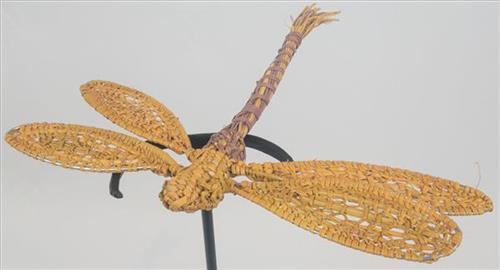
Woven Dragonfly

This finely crafted hand woven dragonfly is a cheerful reminder of the real dry season dragonflies.

Signalling in the dry season, dragonflies are ubiquitous with dry winds, cool nights and saying goodbye to the wet season! Our senior fibre artists are continuing to expand their techniques and range with dragonflies and other complex woven forms. Each are unique, hand woven and coloured using natural bush dyes.

Pandanus fibre art is labour intensive requiring a high level of care and fine needlework. Finished works are both functional and beautiful. Women collect pandanus by pulling from the top of a pandanus tree, stripping then dying the leaves using natural bush colour.

221382324793


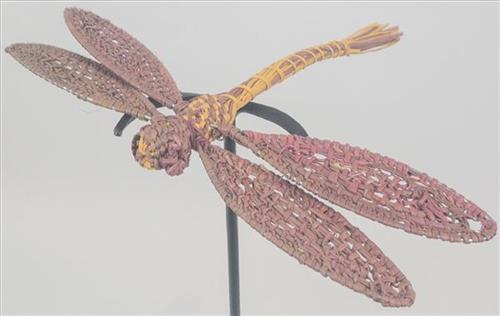
Woven Dragonfly

This finely crafted hand woven dragonfly is a cheerful reminder of the real dry season dragonflies.

Signalling in the dry season, dragonflies are ubiquitous with dry winds, cool nights and saying goodbye to the wet season! Our senior fibre artists are continuing to expand their techniques and range with dragonflies and other complex woven forms. Each are unique, hand woven and coloured using natural bush dyes.

Pandanus fibre art is labour intensive requiring a high level of care and fine needlework. Finished works are both functional and beautiful. Women collect pandanus by pulling from the top of a pandanus tree, stripping then dying the leaves using natural bush colour.

221382324792


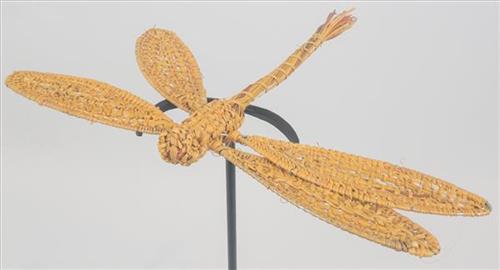
Woven Dragonfly

This finely crafted hand woven dragonfly is a cheerful reminder of the real dry season dragonflies.

Signalling in the dry season, dragonflies are ubiquitous with dry winds, cool nights and saying goodbye to the wet season! Our senior fibre artists are continuing to expand their techniques and range with dragonflies and other complex woven forms. Each are unique, hand woven and coloured using natural bush dyes.

Pandanus fibre art is labour intensive requiring a high level of care and fine needlework. Finished works are both functional and beautiful. Women collect pandanus by pulling from the top of a pandanus tree, stripping then dying the leaves using natural bush colour.

221382324791


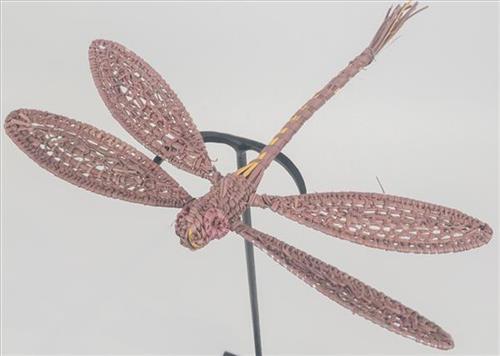
Woven Dragonfly

This finely crafted hand woven dragonfly is a cheerful reminder of the real dry season dragonflies.

Signalling in the dry season, dragonflies are ubiquitous with dry winds, cool nights and saying goodbye to the wet season! Our senior fibre artists are continuing to expand their techniques and range with dragonflies and other complex woven forms. Each are unique, hand woven and coloured using natural bush dyes.

Pandanus fibre art is labour intensive requiring a high level of care and fine needlework. Finished works are both functional and beautiful. Women collect pandanus by pulling from the top of a pandanus tree, stripping then dying the leaves using natural bush colour.