221382322678


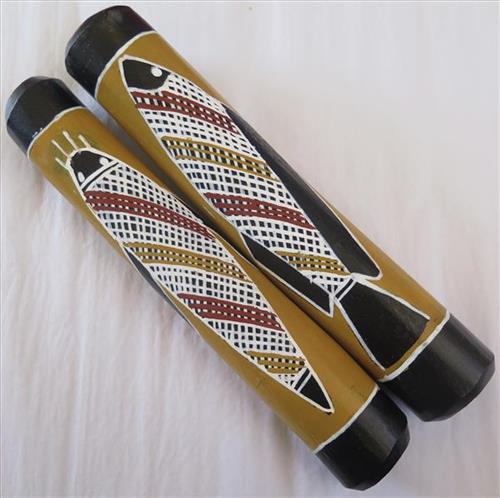
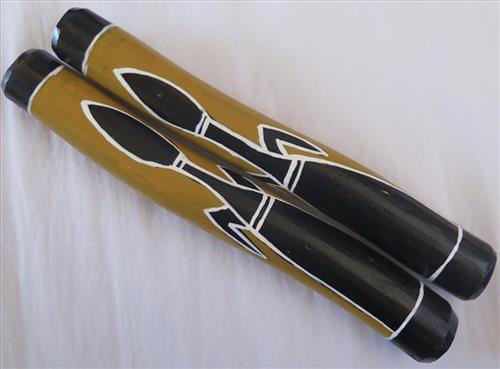
Clapsticks

Wood carving has always been part of Aboriginal culture. Men carved wood for many purposes – tools for hunting or gathering food, axes and knives for building shelters, spears and clubs for protection of their lives and territory, objects for ceremony and to mark sacred sites.

Artists source the timber on country, walking from tree to tree to find the right piece for the desired functional outcome. Once found, it is cut and then brought back to camp to be worked, shaped, sanded and finally finished.

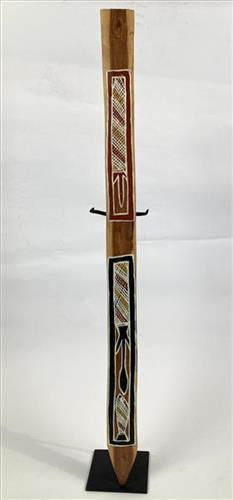
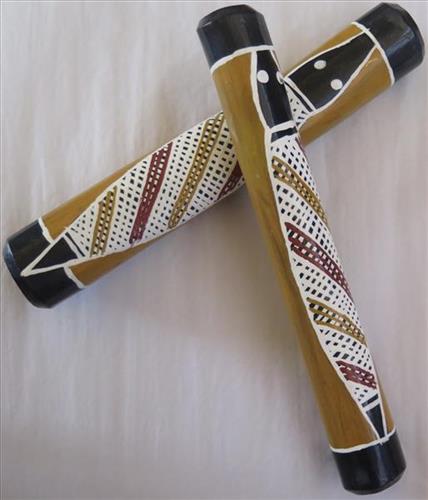
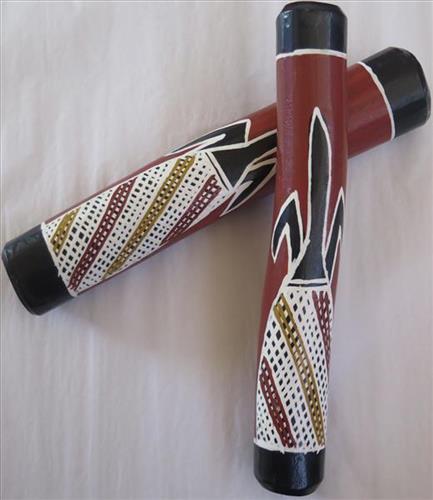
Clapsticks are used in traditional ceremony and dance as a percussion instrument to accompany Mago (didjeridu). Denser woods such as Ironwood or Kerosene wood are preferred due to their crisper clap sound. Clapsticks can be left raw or painted and decorated. Straight timber from younger trees is preferred as it requires less work to make functional.
221382322661


Clapsticks

Wood carving has always been part of Aboriginal culture. Men carved wood for many purposes – tools for hunting or gathering food, axes and knives for building shelters, spears and clubs for protection of their lives and territory, objects for ceremony and to mark sacred sites.

Artists source the timber on country, walking from tree to tree to find the right piece for the desired functional outcome. Once found, it is cut and then brought back to camp to be worked, shaped, sanded and finally finished.

Clapsticks are used in traditional ceremony and dance as a percussion instrument to accompany Mago (didjeridu). Denser woods such as Ironwood or Kerosene wood are preferred due to their crisper clap sound. Clapsticks can be left raw or painted and decorated. Straight timber from younger trees is preferred as it requires less work to make functional.
221382322659


Clapsticks

Wood carving has always been part of Aboriginal culture. Men carved wood for many purposes – tools for hunting or gathering food, axes and knives for building shelters, spears and clubs for protection of their lives and territory, objects for ceremony and to mark sacred sites.

Artists source the timber on country, walking from tree to tree to find the right piece for the desired functional outcome. Once found, it is cut and then brought back to camp to be worked, shaped, sanded and finally finished.

Clapsticks are used in traditional ceremony and dance as a percussion instrument to accompany Mago (didjeridu). Denser woods such as Ironwood or Kerosene wood are preferred due to their crisper clap sound. Clapsticks can be left raw or painted and decorated. Straight timber from younger trees is preferred as it requires less work to make functional.
221382322656


Clapsticks

Wood carving has always been part of Aboriginal culture. Men carved wood for many purposes – tools for hunting or gathering food, axes and knives for building shelters, spears and clubs for protection of their lives and territory, objects for ceremony and to mark sacred sites.

Artists source the timber on country, walking from tree to tree to find the right piece for the desired functional outcome. Once found, it is cut and then brought back to camp to be worked, shaped, sanded and finally finished.

Clapsticks are used in traditional ceremony and dance as a percussion instrument to accompany Mago (didjeridu). Denser woods such as Ironwood or Kerosene wood are preferred due to their crisper clap sound. Clapsticks can be left raw or painted and decorated. Straight timber from younger trees is preferred as it requires less work to make functional.
221382322639


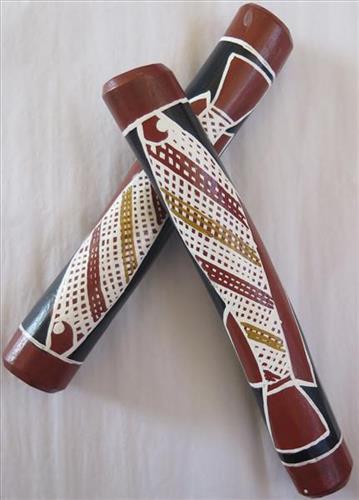
Clapsticks

Wood carving has always been part of Aboriginal culture. Men carved wood for many purposes – tools for hunting or gathering food, axes and knives for building shelters, spears and clubs for protection of their lives and territory, objects for ceremony and to mark sacred sites.

Artists source the timber on country, walking from tree to tree to find the right piece for the desired functional outcome. Once found, it is cut and then brought back to camp to be worked, shaped, sanded and finally finished.

Clapsticks are used in traditional ceremony and dance as a percussion instrument to accompany Mago (didjeridu). Denser woods such as Ironwood or Kerosene wood are preferred due to their crisper clap sound. Clapsticks can be left raw or painted and decorated. Straight timber from younger trees is preferred as it requires less work to make functional.
22134004727


Status: Stock


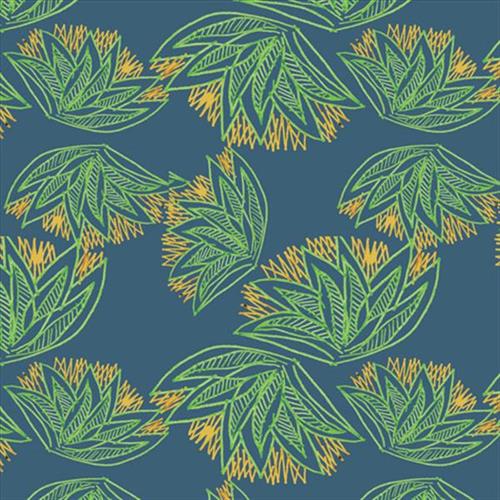
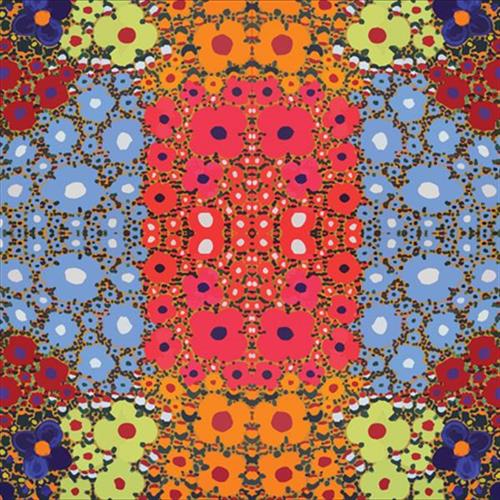
Nitmiluk Range, Lilies by Augustina Kennedy

Lilies by Augustina Kennedy

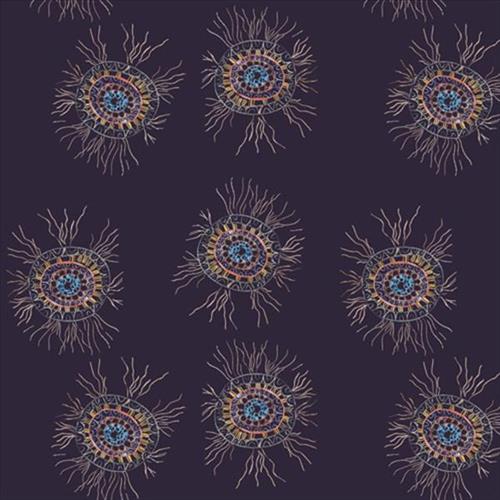
The Nitmiluk Range is a collaboration between the Banatjarl Strongbala Wimun Grup and Djilpin Arts. The range features scarves and sarongs in designs by Djilpin’s artists at Beswick, offered exclusively through the Nitmiluk Gift Shop. This collaboration promotes local Aboriginal enterprises on Jawoyn Country, supporting training, development and strengthens the connections between our communities in the Katherine Region. A percentage of your purchase is paid direct to the Artist.

The Nitmiluk Range Sarong features digitally printed designs by Djilpin artists from Beswick Community. Printed on Modal, a super soft biofabric sourced from beech trees (also known as Viscose), the fabric features a diamond weave for durability on a generous wrap of 1 x 2 metres.

Material: Modal (Viscose)

Size 100cm x 200cm

22134004725


Status: Stock


Nitmiluk Range, Pandanus Mat by Loretta George

Pandanus Mat by Loretta George

The Nitmiluk Range is a collaboration between the Banatjarl Strongbala Wimun Grup and Djilpin Arts. The range features scarves and sarongs in designs by Djilpin’s artists at Beswick, offered exclusively through the Nitmiluk Gift Shop. This collaboration promotes local Aboriginal enterprises on Jawoyn Country, supporting training, development and strengthens the connections between our communities in the Katherine Region. A percentage of your purchase is paid direct to the Artist.


The Nitmiluk Range Sarong features digitally printed designs by Djilpin artists from Beswick Community. Printed on Modal, a super soft biofabric sourced from beech trees (also known as Viscose), the fabric features a diamond weave for durability on a generous wrap of 1 x 2 metres.

Material: Modal (Viscose)

Size 100cm x 200cm

221382285147


Goannas

Gapu is a series of limited edition fine prints created in a long standing a collaboration between Basil Hall Editions and Beswick artists. Gapu Series XI uses, for  the first time, the Collograph technique and features 23 prints by 14 senior and emerging artists from Beswick.  Gapu (Water) features life and cultural practice around the water ways of both Beswick and the ancestral homelands of the artists, from hairy yams to woven string bags, sitting ducks on the billabong to fish hiding in the lily roots, ceremonial dilly bags to the mythical Mimis that share country.

Editions are limited to 30 prints, printed on Hahnemuhle paper.

221382319759


Decorative Nula Nula

Wood carving has always been part of Aboriginal culture and Djilpin artists continue this tradition. Men carved wood for many purposes – tools for hunting or gathering food, axes and knives for building shelters, spears and clubs for protection of their lives and territory, objects for ceremony and to mark sacred sites.

Hunting implements include the boomerang, woomera and spear. The woomera is a lever which helps to increase the speed and distance the spear travels. Clapsticks are used as percussion instruments by the Songmen to accompany dancing along with the didgeridoo (mago).

As well as the more functional carvings, artists portray animals and birds in wood, and these carvings are often painted. Ceremonial carvings include spirit creatures including mukuy (devil devils) and mimi.

Some fine mimi figures have been cast in bronze.

22134004726


Status: Stock


Nitmiluk Range, Billabong by Angelina George

Billabong Flowers by Angelina George

The Nitmiluk Range is a collaboration between the Banatjarl Strongbala Wimun Grup and Djilpin Arts. The range features scarves and sarongs in designs by Djilpin’s artists at Beswick, offered exclusively through the Nitmiluk Gift Shop. This collaboration promotes local Aboriginal enterprises on Jawoyn Country, supporting training, development and strengthens the connections between our communities in the Katherine Region. A percentage of your purchase is paid direct to the Artist.

The Nitmiluk Range Sarong features digitally printed designs by Djilpin artists from Beswick Community. Printed on Modal, a super soft biofabric sourced from beech trees (also known as Viscose), the fabric features a diamond weave for durability on a generous wrap of 1 x 2 metres.

Material: Modal (Viscose)

Size 100cm x 200cm