221382311732


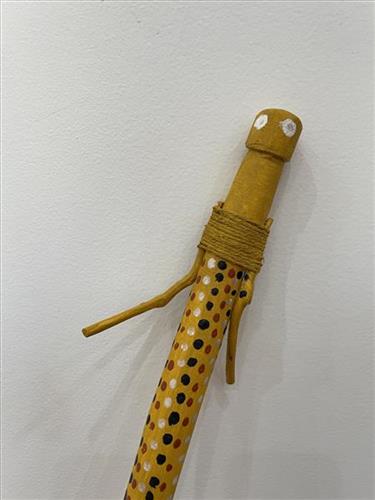
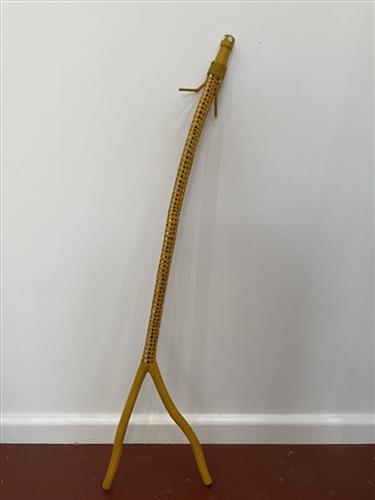
Mukuy Spirit Figures

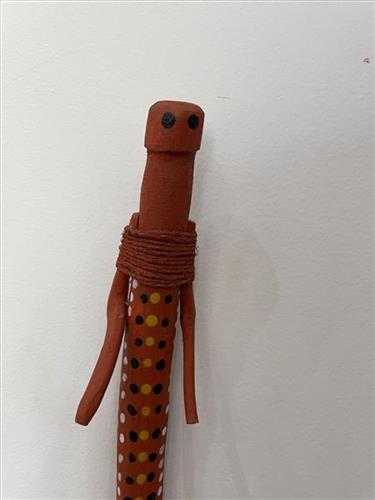
These finely crafted figures represent Mukuy Spirit creatures. The Mukuy belong in Yirritja country called Galanbirni. At night you might hear them playing the Didjeridu. The Mukuy travel around a lot and are often found in sacred places. They are mysterious, sometimes playful and sometimes cheeky characters, often referred to as Devil Devil. Mukuy figures tell the stories of country, culture and spiritual beliefs.
221382311729


Mukuy Spirit Figures

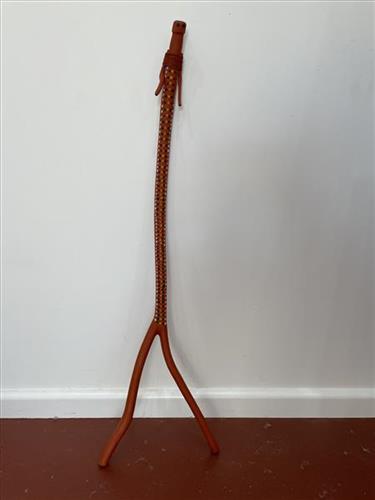
These finely crafted figures represent Mukuy Spirit creatures. The Mukuy belong in Yirritja country called Galanbirni. At night you might hear them playing the Didjeridu. The Mukuy travel around a lot and are often found in sacred places. They are mysterious, sometimes playful and sometimes cheeky characters, often referred to as Devil Devil. Mukuy figures tell the stories of country, culture and spiritual beliefs.
221382273316


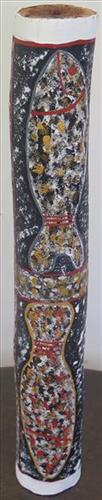
Fish

Bernadette’s painted logs are often offcuts from mako or didjeridu manufacture. Rather than wasting the pieces or relegating them to the fire, Bernadette collects these, sands them smooth and then experiments with different painting techniques.

Painted using a combination of brushes; handmade traditional Jarlk grass reed brush harvested from local billabongs and wet areas, along with modern paintbrushes. Bernadette sometimes paints using a stippling effect (modern paintbrush), a modern panting style (fish using a modern brush for example), raark (fine line work using a jarlk brush), or dots (using the end of a jarlk brush).

Painted entirely using modern acrylic paints.

221376230221


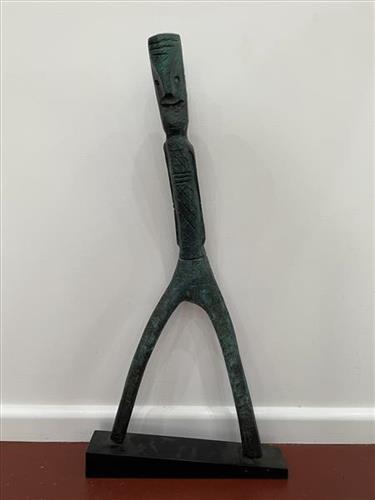
Mimi Spirit Bronze & Steel Base (ed. 5 of 6)

Wood carving has always been part of Aboriginal culture and Djilpin artists continue this tradition. Men carved wood for many purposes – tools for hunting or gathering food, axes and knives for building shelters, spears and clubs for protection of their lives and territory, objects for ceremony and to mark sacred sites.

Hunting implements include the boomerang, woomera and spear. The woomera is a lever which helps to increase the speed and distance the spear travels. Clapsticks are used as percussion instruments by the Songmen to accompany dancing along with the didgeridoo (mago).

As well as the more functional carvings, artists portray animals and birds in wood, and these carvings are often painted. Ceremonial carvings include spirit creatures including mukuy (devil devils) and mimi.

Some fine mimi figures have been cast in bronze.

221380617400


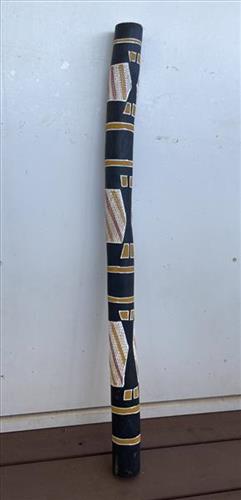
Mako (Key F, Toot B)

Key: F
Toot: B

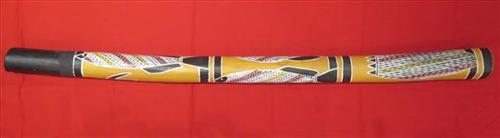
Didjeridus from this region are made in the West Arnhem style. Called Mago, they’re different and special and follow the tradition made famous by Beswick’s Mago Master, elder David Blanasi.Ghunmarn didjeridus are hand cut by Aboriginal people on Aboriginal land. They are drilled out naturally by termites, not by machines. Top quality musical instruments, they are used in ceremony and performance and feature traditional designs handed painted with a grass brush. Supplied with natural sugar-bag wax mouthpieces, these are the genuine article.Didjeridus from Ghunmarn Culture Centre are hand-cut from the woolybutt tree and naturally termite eaten. Some cheaper didjerdius can be drilled out by machine. If you want to be sure yours is termite-eaten look inside, if it is a bit rough the termites have been at work, smooth interiors are a sign of drilling. Ghunmarn artists travel considerable distances on foot to find the just right woolybutt tree. Good instruments are hand-cut and taken back to camp to be worked, shaped, sanded and tuned.Most Ghunamrn didjeridus are high pitch D, low pitch D, F, C or G. The longer the dij the lower the pitch, a shorter didj will give a higher sound.

221382209989


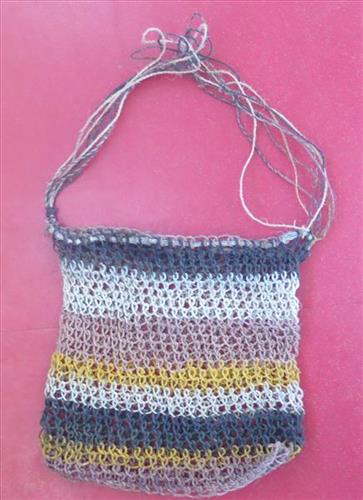
Bush String Bag

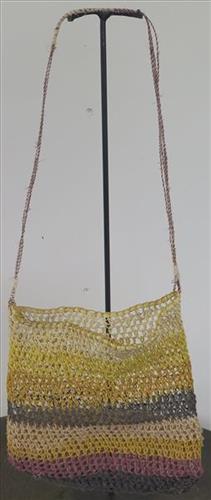
Bush String Bags are vastly more labour intensive than Pandanus fibre art. Depending on the size, literally hundreds of hours can go into making a bush string bag.

Artists collect Anputput (Kurrajong, sounds like “but-but”), and then steam the logs in a fire. Bark is peeled off and the outer darker skin discarded. The softer inner fibre is mashed and separated into usable strips which has a lace-like visual look.

From here the strips are rolled – usually on a leg or thigh – and spun into the string form. This alone is very time consuming as the artist needs to create the material from which she weaves.

At this point natural bush colour is boiled and the string added to give it colouring. Only now with a dyed and functionally formed piece of string can the artist begin to create loops, weaving row upon row to create a dilly bag.

221382213024


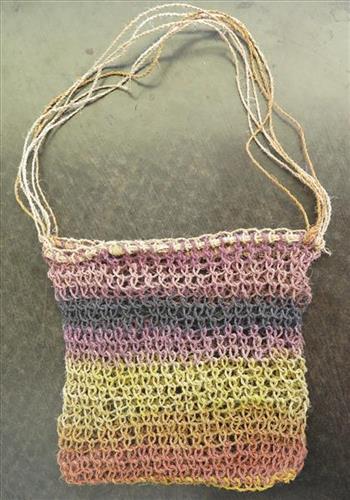
Bush String Bag

Bush String Bags are vastly more labour intensive than Pandanus fibre art. Depending on the size, literally hundreds of hours can go into making a bush string bag.

Artists collect Anputput (Kurrajong, sounds like “but-but”), and then steam the logs in a fire. Bark is peeled off and the outer darker skin discarded. The softer inner fibre is mashed and separated into usable strips which has a lace-like visual look.

From here the strips are rolled – usually on a leg or thigh – and spun into the string form. This alone is very time consuming as the artist needs to create the material from which she weaves.

At this point natural bush colour is boiled and the string added to give it colouring. Only now with a dyed and functionally formed piece of string can the artist begin to create loops, weaving row upon row to create a dilly bag.

221382218022


Bush String Bag

Bush String Bags are vastly more labour intensive than Pandanus fibre art. Depending on the size, literally hundreds of hours can go into making a bush string bag.

Artists collect Anputput (Kurrajong, sounds like “but-but”), and then steam the logs in a fire. Bark is peeled off and the outer darker skin discarded. The softer inner fibre is mashed and separated into usable strips which has a lace-like visual look.

From here the strips are rolled – usually on a leg or thigh – and spun into the string form. This alone is very time consuming as the artist needs to create the material from which she weaves.

At this point natural bush colour is boiled and the string added to give it colouring. Only now with a dyed and functionally formed piece of string can the artist begin to create loops, weaving row upon row to create a dilly bag.

221382234593


Mako (Key F#, Toot G#)

Key: F#
Toot: G#

Didjeridus from this region are made in the West Arnhem style. Called Mago, they’re different and special and follow the tradition made famous by Beswick’s Mago Master, elder David Blanasi.

Ghunmarn didjeridus are sourced on country, and hand cut from Woolybutt trees. Artists travel considerable distances on foot to find the right woolybutt tree naturally hollowed out by termites. Good instruments are hand-cut and taken back to camp to be worked, shaped, sanded, tuned and then finally painted.

These are top quality musical instruments, highly regarded worldwide, and still used in ceremony and performance today. Featuring traditional designs handed painted with a Jarlk grass brush.


Most Ghunamrn didjeridus are high pitch D, low pitch D, F, C or G. The longer the dij the lower the pitch, a shorter didj will give a higher sound.

221382251826


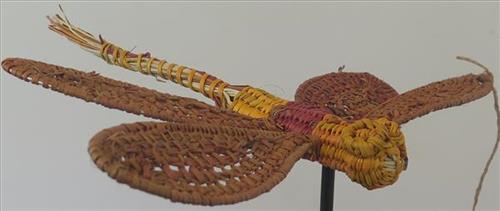
Woven Dragonfly

This finely crafted hand woven dragonfly is a cheerful reminder of the real dry season dragonflies.

Signalling in the dry season, dragonflies are ubiquitous with dry winds, cool nights and saying goodbye to the wet season! Our ridiculously talented pandanus artists are continuing to push their skills and techniques with these cute dragonflies a fine example of this. Each are unique, hand woven and coloured using natural bush dyes.

Pandanus fibre art is labour intensive requiring a high level of care and fine needlework. Finished works are both functional and beautiful. Women collect pandanus by pulling from the top of a pandanus tree, stripping then dying the leaves using natural bush colour.