221382188469


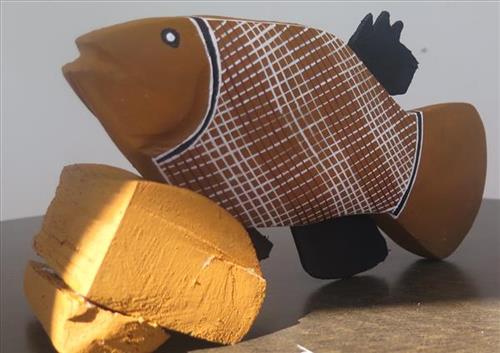
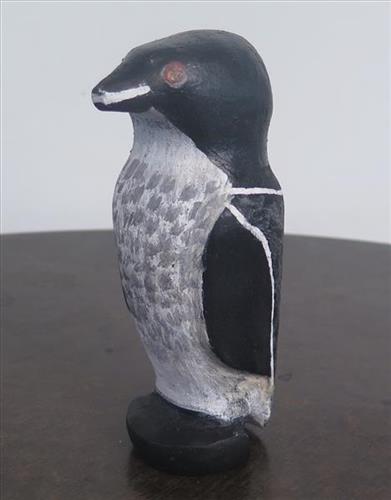
Barra and Diving Duck

Djilpin Arts is a not for profit Aboriginal Corporation that promotes the maintenance, development and transmission of traditional cultural knowledge systems.

Djilpin Arts specialises in art, live cultural performance, digital media, and produced the popular performance event – the Walking With Spirits Festival as well as Concerts on Country.

Djilpin Arts operates the Ghunmarn Culture Centre – home of the Blanasi Collection and offers fine arts & crafts for sale. Djilpin Arts operates an outlet in Katherine – Shed 5, where all works are sourced from Ghunmarn Culture Centre. Ghunmarn Culture Centre is in the Wugularr (Beswick) community of South East Arnhem Land.

All artworks are made by local artists living in the community. Artwork reflects the traditional songs and stories that have been passed down through the generations with a contemporary edge.  Fibre art is a special feature of Djilpin Arts as is its Gapu Series of fine art prints.
221382188466


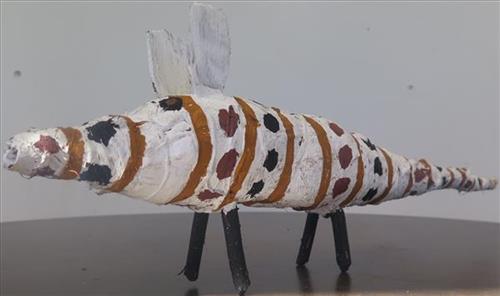
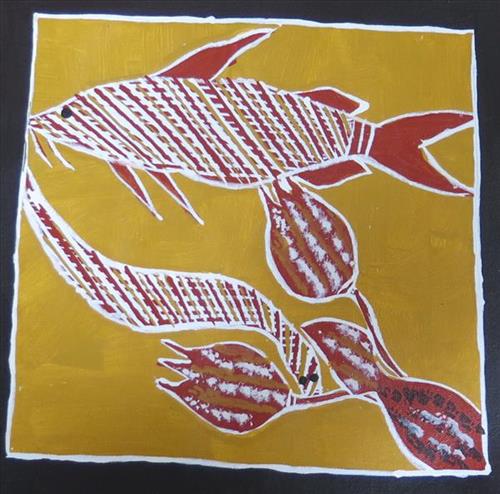
Catfish and Filesnake

Djilpin Arts is a not for profit Aboriginal Corporation that promotes the maintenance, development and transmission of traditional cultural knowledge systems.

Djilpin Arts specialises in art, live cultural performance, digital media, and produced the popular performance event – the Walking With Spirits Festival as well as Concerts on Country.

Djilpin Arts operates the Ghunmarn Culture Centre – home of the Blanasi Collection and offers fine arts & crafts for sale. Djilpin Arts operates an outlet in Katherine – Shed 5, where all works are sourced from Ghunmarn Culture Centre. Ghunmarn Culture Centre is in the Wugularr (Beswick) community of South East Arnhem Land.

All artworks are made by local artists living in the community. Artwork reflects the traditional songs and stories that have been passed down through the generations with a contemporary edge.  Fibre art is a special feature of Djilpin Arts as is its Gapu Series of fine art prints.
221382189314


Gecko File Snake and Long Tom

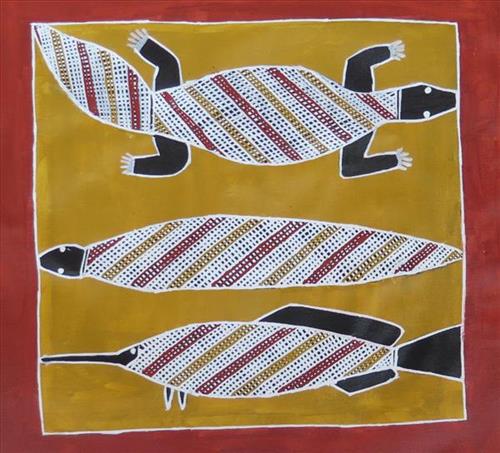
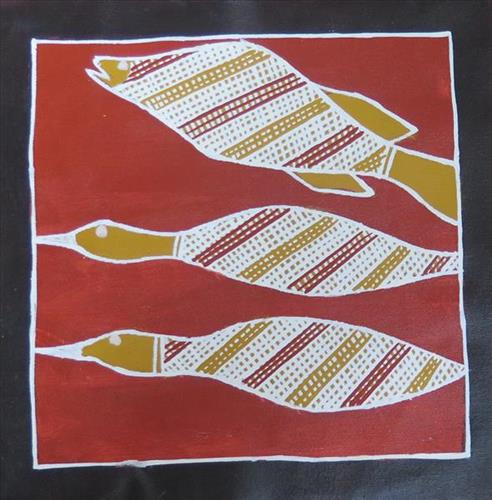
This piece by local custodian Frankie “Tango” Lane depicts three animals.

At top is a gecko, commonly found in houses or “kamps”.

At the middle is a file snake, or “quiet snake”. These snakes are found in billabongs and are tasty tucker. They are not poisonous.

At the bottom is a long tom. These are in most creeks around Beswick, and while tasty have a lot of bones. Because of this they are more often used as bait for larger species.

Painting has been completed using a handmade Jarlk reed brush harvested from local billabongs and wet areas. Raark or fine line work is in Yirritja style and consists of three or four lines before alternating colour.

221382204734


Mimi dancing

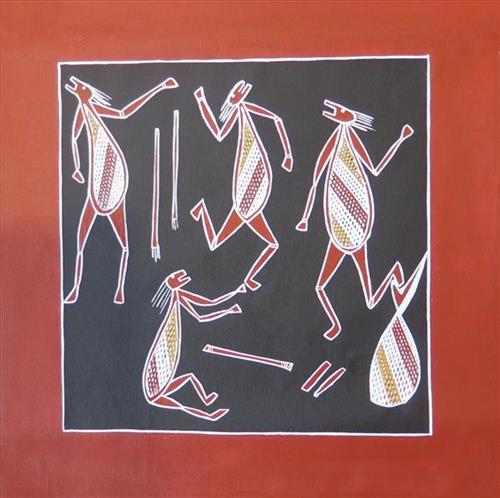
This painting depicts four Mimi spirits dancing. Also included are some bush tools such as two spears, a mako or didgeridoo, clap sticks and a dilly bag.

Painting has been completed using a handmade Jarlk brush harvested from local billabongs and wet areas. Raark or fine line work is in Yirritja style and consists of three or four lines before alternating colours.

221382213026


Goanna

This carving by Harry Malibirr is depicts a local source of bush tucker, the goanna. It is made from kurrajong wood and painted with acrylic paint. The paintwork is finished with traditional rarrk (fine line cross-hatching).

Wood carving has always been part of Aboriginal culture and Djilpin artists continue this tradition. Men carved wood for many purposes – tools for hunting or gathering food, axes and knives for building shelters, spears and clubs for protection of their lives and territory, objects for ceremony and to mark sacred sites.

Hunting implements include the boomerang, woomera and spear. The woomera is a lever which helps to increase the speed and distance the spear travels. Clapsticks are used as percussion instruments by the Songmen to accompany dancing along with the didgeridoo (mago).

As well as the more functional carvings, artists portray animals and birds in wood, and these carvings are often painted. Ceremonial carvings include spirit creatures including mukuy (devil devils) and mimi.

Some fine mimi figures have been cast in bronze.

221382221748


Archer (Rifle) Fish

Wood carving has always been part of Aboriginal culture and Djilpin artists continue this tradition. Men carved wood for many purposes – tools for hunting or gathering food, axes and knives for building shelters, spears and clubs for protection of their lives and territory, objects for ceremony and to mark sacred sites.

Hunting implements include the boomerang, woomera and spear. The woomera is a lever which helps to increase the speed and distance the spear travels. Clapsticks are used as percussion instruments by the Songmen to accompany dancing along with the didgeridoo (mago).

As well as the more functional carvings, artists portray animals and birds in wood, and these carvings are often painted. Ceremonial carvings include spirit creatures including mukuy (devil devils) and mimi.

Some fine mimi figures have been cast in bronze.

221382221741


Yok – Bandicoot

This handmade Yok sculpture is crafted from a combination of paperbark bound with black wattle bark. Internally speargrass makes up the body or stuffing, while externally the piece is finished in natural ochre sourced from long distances away. Ochre is ground, and then bonded onto the sculpture using a fixative and modern paintbrush. Ears are carved from a piece of Kurrajong.

Yok, or bandicoot is Clinton’s dreaming and an important part of his identity.

221382225196


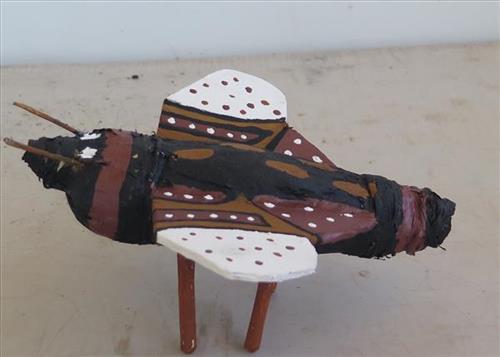
Sugar Bag Bee

This handmade Sugarbag Bee sculpture is crafted from a combination of paperbark bound with black wattle bark. Internally speargrass makes up the body or stuffing, while externally the piece is finished in natural ochre sourced from long distances away. Ochre is ground, and then bonded onto the sculpture using a fixative and modern paintbrush. Wings, legs and antennae are carved from Put-Put or Kurrajong.

221382247483


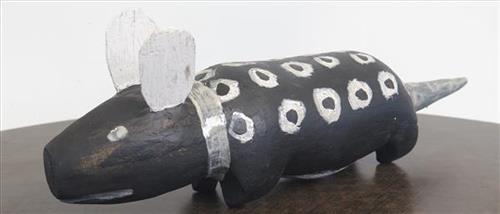
Bush Rat

Wood carving has always been part of Aboriginal culture and Djilpin artists continue this tradition. Men carved wood for many purposes – tools for hunting or gathering food, axes and knives for building shelters, spears and clubs for protection of their lives and territory, objects for ceremony and to mark sacred sites.

Hunting implements include the boomerang, woomera and spear. The woomera is a lever which helps to increase the speed and distance the spear travels. Clapsticks are used as percussion instruments by the Songmen to accompany dancing along with the didgeridoo (mago).

As well as the more functional carvings, artists portray animals and birds in wood, and these carvings are often painted. Ceremonial carvings include spirit creatures including mukuy (devil devils) and mimi.

Some fine mimi figures have been cast in bronze.

221382247482


Bird

Wood carving has always been part of Aboriginal culture and Djilpin artists continue this tradition. Men carved wood for many purposes – tools for hunting or gathering food, axes and knives for building shelters, spears and clubs for protection of their lives and territory, objects for ceremony and to mark sacred sites.

Hunting implements include the boomerang, woomera and spear. The woomera is a lever which helps to increase the speed and distance the spear travels. Clapsticks are used as percussion instruments by the Songmen to accompany dancing along with the didgeridoo (mago).

As well as the more functional carvings, artists portray animals and birds in wood, and these carvings are often painted. Ceremonial carvings include spirit creatures including mukuy (devil devils) and mimi.

Some fine mimi figures have been cast in bronze.

Carved from Kurrajong, finished in Ochre paint.