221382180477


SugarBag Harvest

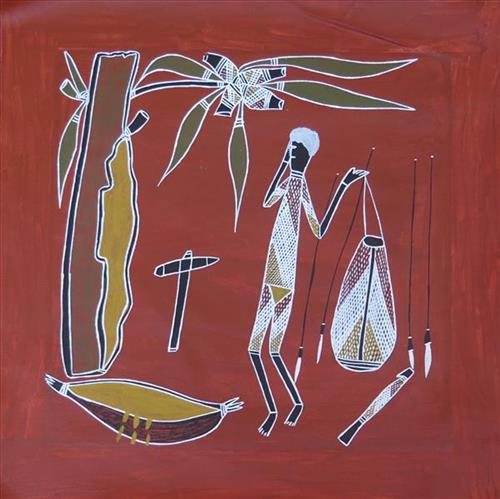
This painting depicts a Wagilak man harvesting Gugu, or sugar bag (native bush honey). The man is depicted with a dillybag, bondock or spear thrower, multiple spears and a bush axe. Above the man are some leaves and gum nuts, which when flowering are an indicator that the sugar bag is ready for harvesting. The hollow log features a “nose” or entry to the hive at the top of the cut open section. Honey is richly flowing out of the coolamon at the base of the hollow log.

Gugu is a highly prized bush tucker, and everything from the hive is used.

Painting has been completed using a mixture of modern paintbrushes along with a handmade grass reed brush called Jarlk. Jarlk are found in surrounding billabongs and wet areas, and shaped to create the fine line work. Fine line work on the body of the man, dilly bag, gum nuts and bondock are in Yirritja style and consist of multiple lines before alternating colour. Modern acrylic paint has been used.
22134004737


Status: Stock


Waterlily & Datdum by Julie Ashley

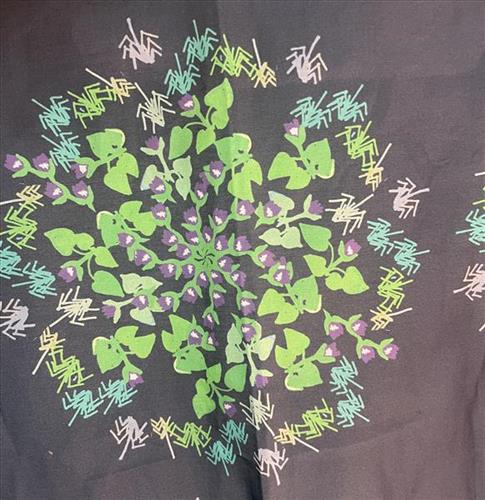
“This scarf him waterlily. All the purple one that flower… datdum. All that is grass… weed around the waterlily and billabong” – Julie.

Based on original artwork sketched by Julie and designed in Wugularr / Beswick, Arnhem Land, NT.

Silk and cotton blend for breathable comfort, the Djilpin scarf is perfect for everyday use. A wearable artwork investment evoking the spirit of Arnhem Land, perfect for summer or winter.

Silk Cotton blend. 44cm x 175cm. Designed in Wugularr / Beswick, Arnhem Land. 

22134004215


Status: Stock


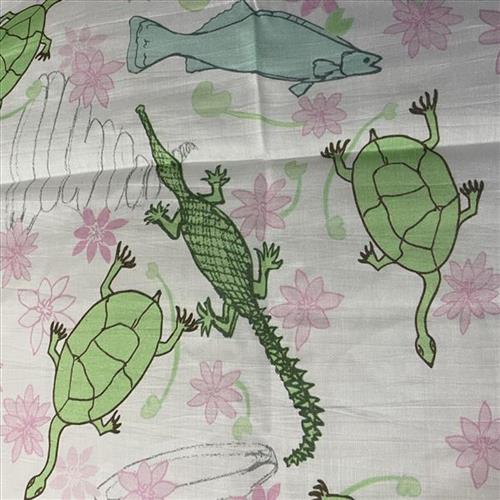
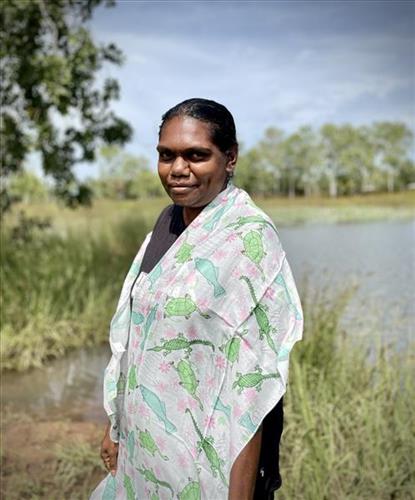
Turtle, Fish & Croc by Aileen Bulumbara

“When I was young and little I asked where is my country? I asked my Dad and Aunty. Your country is Barunga and Beswick. I am traditional owner for Beswick. This is a story from Beswick. In Beswick area there are a lot of barramundi. Waterlilies too because Beswick is billabong country. Lots of turtle in the river. Willy willy and crocodile are my totem, my dreaming. I want to make my family proud” – Aileen.

Based on original artwork sketched by Aileen in 2022 and designed in Wugularr / Beswick, Arnhem Land, NT.

Crafted with the luxury of silk but blended with viscose for breathable comfort, the Djilpin scarf is perfect for everyday use. A wearable artwork investment evoking the spirit of Arnhem Land, perfect for summer or winter.

Silk Viscose blend. 46cm x 180cm. Designed in Wugularr / Beswick, Arnhem Land. 

22134004213


Status: Stock


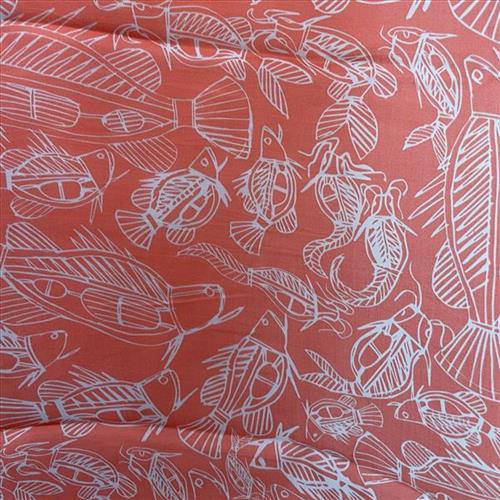
Fish by Peter Lindsay

Featuring artwork by Peter depicting the different types of fish found in the fresh waterways that provide an important food source.

Crafted with the luxury of silk but blended with viscose for breathable comfort, the Djilpin scarf is perfect for everyday use. A wearable artwork investment evoking the spirit of Arnhem Land, perfect for summer or winter.

Silk Viscose blend. 46cm x 180cm. Designed in Wugularr / Beswick, Arnhem Land. 

22134004214


Status: Stock


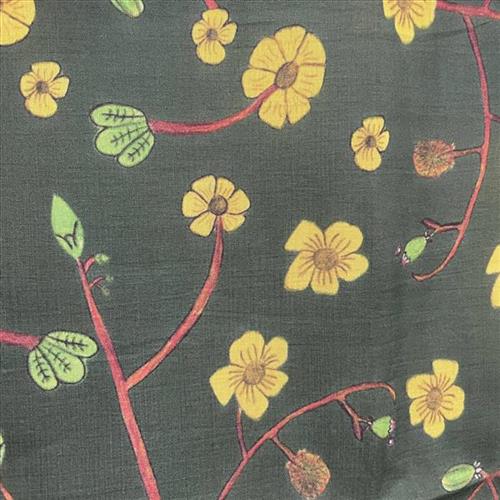
Kapok by Qatisha Forbes

Featuring artwork by Qatisha of the yellow Kapok flower. After the flowers come green fruit and is a Jawoyn indicator for crocodile eggs. When the seeds crack the eggs are hatching. You’ll start to see baby crocodiles. You can eat the flowers and small fruit, the wood is used for carving and seed fluff used for bed stuffing.

Crafted with the luxury of silk but blended with viscose for breathable comfort, the Djilpin scarf is perfect for everyday use. A wearable artwork investment evoking the spirit of Arnhem Land, perfect for summer or winter.

Silk Viscose blend. 46cm x 180cm. Designed in Wugularr / Beswick, Arnhem Land. 

221382299669


Goanna Song line

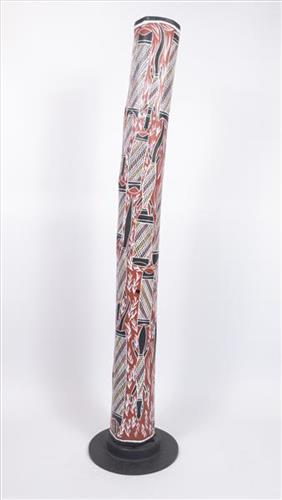
The Lorrkon or bone pole coffin ceremony was the final ceremony in a sequence of mortuary rituals celebrated by the people of Arnhem Land. This ceremony involves the placing of the deceased’s bones into a hollow log until it slowly decayed over many years. The log is made from a termite hollowed Stringy bark tree (Eucalyptus tetradonta) and is decorated with totemic emblems.

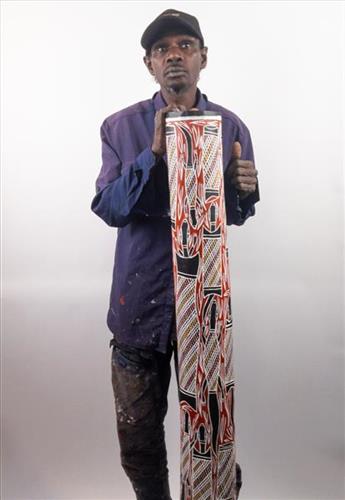
This Lorrkon tells the story of goanna, hiding among hollowed out logs. Also visible are plants around the hollow logs. Harry holds a songline story for the goanna and takes pride in creating light weight lorrkon that tell his songline stories. 

Story has been painted using a mixture of modern paintbrushes along with a handmade Jarlk grass reed brush. Jarlk is found among billabongs and wet areas, and hand shaped to create the fine line work called Raark. Raark is in Yirritja style and consists of multiple lines before alternating colour.

Timber used is Woolybutt, native to the Arnhem region, and has been sanded smooth to create a lighter Lorrkon.


221382303125


Woven Mat

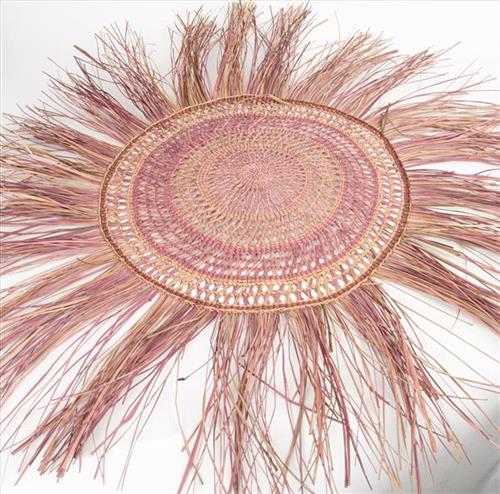
Fibre Art is an ancient Aboriginal women’s craft that is still made today using the same techniques as their ancestors. Making fibre art is labour intensive and much care and fine needlework is required to ensure the finished object is both functional and beautiful. Fibre art from the Ghunmarn Culture Centre includes dilly bags, floor mats, bush fans, woven creatures found in the landscape, plants such as yams (bush potato), baskets, place mats, and spirit figures such as mermaids and Mukuy’s.Natural pandanus fibre (Mukarra), is used to make much of the fibre art produced by the artists of Djilpin Arts. Women collect the pandaus by pulling from the top of the pandanus tree, then stripping and drying the leaves before they are dyed with natural bush colour collected from the Beswick surrounds.

221382303122


3 Prong Fish Spear

Wood carving has always been part of Aboriginal culture and Djilpin artists continue this tradition. Men carved wood for many purposes – tools for hunting or gathering food, axes and knives for building shelters, spears and clubs for protection of their lives and territory, objects for ceremony and to mark sacred sites.

Hunting implements include the boomerang, woomera and spear. The woomera is a lever which helps to increase the speed and distance the spear travels. Clapsticks are used as percussion instruments by the Songmen to accompany dancing along with the didgeridoo (mago).

As well as the more functional carvings, artists portray animals and birds in wood, and these carvings are often painted. Ceremonial carvings include spirit creatures including mukuy (devil devils) and mimi.

Some fine mimi figures have been cast in bronze.

221382303120


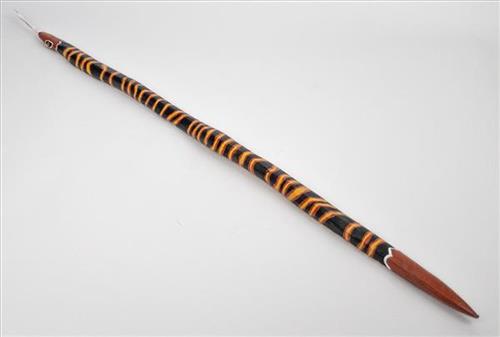
Snake

Wood carving has always been part of Aboriginal culture and Djilpin artists continue this tradition. Men carved wood for many purposes – tools for hunting or gathering food, axes and knives for building shelters, spears and clubs for protection of their lives and territory, objects for ceremony and to mark sacred sites.

Hunting implements include the boomerang, woomera and spear. The woomera is a lever which helps to increase the speed and distance the spear travels. Clapsticks are used as percussion instruments by the Songmen to accompany dancing along with the didgeridoo (mago).

As well as the more functional carvings, artists portray animals and birds in wood, and these carvings are often painted. Ceremonial carvings include spirit creatures including mukuy (devil devils) and mimi.

Some fine mimi figures have been cast in bronze.

221382303119


Bondock (woomera)

Wood carving has always been part of Aboriginal culture and Djilpin artists continue this tradition. Men carved wood for many purposes – tools for hunting or gathering food, axes and knives for building shelters, spears and clubs for protection of their lives and territory, objects for ceremony and to mark sacred sites.

Hunting implements include the boomerang, woomera and spear. The woomera is a lever which helps to increase the speed and distance the spear travels. Clapsticks are used as percussion instruments by the Songmen to accompany dancing along with the didgeridoo (mago).

As well as the more functional carvings, artists portray animals and birds in wood, and these carvings are often painted. Ceremonial carvings include spirit creatures including mukuy (devil devils) and mimi.

Some fine mimi figures have been cast in bronze.