221382300680


Emu + Man

Bernadette’s painted logs are often offcuts from mako or didjeridu manufacture. Rather than wasting the pieces or relegating them to the fire, Bernadette collects these, sands them smooth and then experiments with different painting techniques.

Painted using a combination of brushes; handmade traditional Jarlk grass reed brush harvested from local billabongs and wet areas, along with modern paintbrushes. Bernadette sometimes paints using a stippling effect (modern paintbrush), a modern panting style (fish using a modern brush for example), raark (fine line work using a jarlk brush), or dots (using the end of a jarlk brush).

Painted entirely using modern acrylic paints. Painting represents emu and man foot track.

221382300679


Dingo + Man

Bernadette’s painted logs are often offcuts from mako or didjeridu manufacture. Rather than wasting the pieces or relegating them to the fire, Bernadette collects these, sands them smooth and then experiments with different painting techniques.

Painted using a combination of brushes; handmade traditional Jarlk grass reed brush harvested from local billabongs and wet areas, along with modern paintbrushes. Bernadette sometimes paints using a stippling effect (modern paintbrush), a modern panting style (fish using a modern brush for example), raark (fine line work using a jarlk brush), or dots (using the end of a jarlk brush).

Painted entirely using modern acrylic paints. Painting represents dingo and man foot track.

221382300668


Dingo, Kangaroo + Man

Bernadette’s painted logs are often offcuts from mako or didjeridu manufacture. Rather than wasting the pieces or relegating them to the fire, Bernadette collects these, sands them smooth and then experiments with different painting techniques.

Painted using a combination of brushes; handmade traditional Jarlk grass reed brush harvested from local billabongs and wet areas, along with modern paintbrushes. Bernadette sometimes paints using a stippling effect (modern paintbrush), a modern panting style (fish using a modern brush for example), raark (fine line work using a jarlk brush), or dots (using the end of a jarlk brush).

Painted entirely using modern acrylic paints.

221382300631


Woven Mat

Fibre Art is an ancient Aboriginal women’s craft that is still made today using the same techniques as their ancestors. Making fibre art is labour intensive and much care and fine needlework is required to ensure the finished object is both functional and beautiful. Fibre art from the Ghunmarn Culture Centre includes dilly bags, floor mats, bush fans, woven creatures found in the landscape, plants such as yams (bush potato), baskets, place mats, and spirit figures such as mermaids and Mukuy’s.Natural pandanus fibre (Mukarra), is used to make much of the fibre art produced by the artists of Djilpin Arts. Women collect the pandaus by pulling from the top of the pandanus tree, then stripping and drying the leaves before they are dyed with natural bush colour collected from the Beswick surrounds.

221382300626


Woven Mat

Fibre Art is an ancient Aboriginal women’s craft that is still made today using the same techniques as their ancestors. Making fibre art is labour intensive and much care and fine needlework is required to ensure the finished object is both functional and beautiful. Fibre art from the Ghunmarn Culture Centre includes dilly bags, floor mats, bush fans, woven creatures found in the landscape, plants such as yams (bush potato), baskets, place mats, and spirit figures such as mermaids and Mukuy’s.Natural pandanus fibre (Mukarra), is used to make much of the fibre art produced by the artists of Djilpin Arts. Women collect the pandaus by pulling from the top of the pandanus tree, then stripping and drying the leaves before they are dyed with natural bush colour collected from the Beswick surrounds.

221382301350


Nula Nula

Wood carving has always been part of Aboriginal culture and Djilpin artists continue this tradition. Men carved wood for many purposes – tools for hunting or gathering food, axes and knives for building shelters, spears and clubs for protection of their lives and territory, objects for ceremony and to mark sacred sites.

Hunting implements include the boomerang, woomera and spear. The woomera is a lever which helps to increase the speed and distance the spear travels. Clapsticks are used as percussion instruments by the Songmen to accompany dancing along with the didgeridoo (mago).

As well as the more functional carvings, artists portray animals and birds in wood, and these carvings are often painted. Ceremonial carvings include spirit creatures including mukuy (devil devils) and mimi.

Some fine mimi figures have been cast in bronze.

221382300634


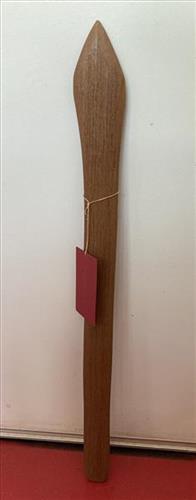
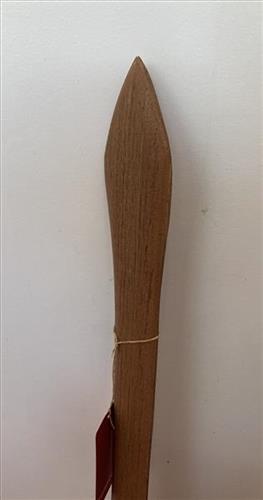
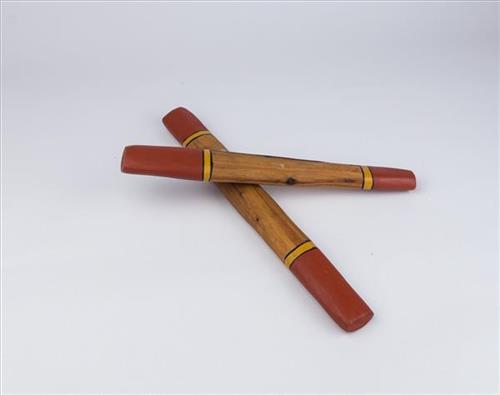
Clapsticks

Wood carving has always been part of Aboriginal culture. Men carved wood for many purposes – tools for hunting or gathering food, axes and knives for building shelters, spears and clubs for protection of their lives and territory, objects for ceremony and to mark sacred sites.

Artists source the timber on country, walking from tree to tree to find the right piece for the desired functional outcome. Once found, it is cut and then brought back to camp to be worked, shaped, sanded and finally finished.

Clapsticks are used in traditional ceremony and dance as a percussion instrument to accompany Mako (didjeridu). Denser woods such as Ironwood or Kerosene wood are preferred due to their crisper clap sound. Clapsticks can be left raw or painted and decorated. Straight timber from younger trees is preferred as it requires less work to make functional.

221382299507


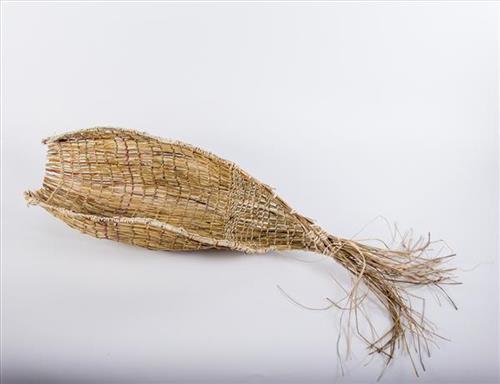
Yam Sluice

Cheeky yams are a highly prized bush tucker which requires careful preparation before it can be safely eaten. This pandanus yam sluice was used in part of this preparation.

Cheeky yams are round in shape, with heart shaped leaves above ground. Once found, the skin is removed and the flesh of the yam is finely sliced. These fine slices need to be washed in running water overnight before they can be cooked and eaten. This sluice is used to safely contain the yam pieces, allowing it to be washed with continuous fresh water.

Sluice has been constructed from processed pandanus fibres, mostly natural in colour. A few strands of coloured pandanus, dyed using natural bush colours have also been used.

221382300648


Woven Dragonfly

This finely crafted hand woven dragonfly is a cheerful reminder of the real dry season dragonflies.

Signalling in the dry season, dragonflies are ubiquitous with dry winds, cool nights and saying goodbye to the wet season! Our ridiculously talented pandanus artists are continuing to push their skills and techniques with these cute dragonflies a fine example of this. Each are unique, hand woven and coloured using natural bush dyes.

Pandanus fibre art is labour intensive requiring a high level of care and fine needlework. Finished works are both functional and beautiful. Women collect pandanus by pulling from the top of a pandanus tree, stripping then dying the leaves using natural bush colour.