221382445441


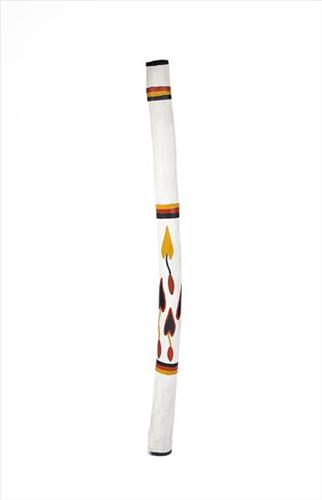
Dijeridu – White with Water Lily

Wood carving has always been part of Aboriginal culture and Djilpin artists continue this tradition. Men carved wood for many purposes – tools for hunting or gathering food, axes and knives for building shelters, spears and clubs for protection of their lives and territory, objects for ceremony and to mark sacred sites.

Hunting implements include the boomerang, woomera and spear. The woomera is a lever which helps to increase the speed and distance the spear travels. Clapsticks are used as percussion instruments by the Songmen to accompany dancing along with the didgeridoo (mago).

As well as the more functional carvings, artists portray animals and birds in wood, and these carvings are often painted. Ceremonial carvings include spirit creatures including mukuy (devil devils) and mimi.

Some fine mimi figures have been cast in bronze.
221382445438


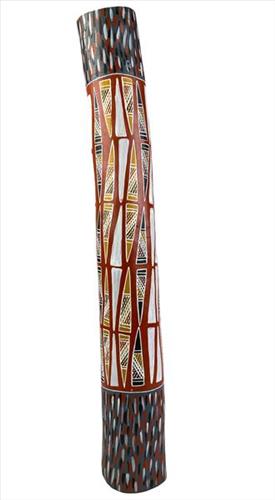
Little Lorrkon / Hollow Log

Wood carving has always been part of Aboriginal culture and Djilpin artists continue this tradition. Men carved wood for many purposes – tools for hunting or gathering food, axes and knives for building shelters, spears and clubs for protection of their lives and territory, objects for ceremony and to mark sacred sites.

Hunting implements include the boomerang, woomera and spear. The woomera is a lever which helps to increase the speed and distance the spear travels. Clapsticks are used as percussion instruments by the Songmen to accompany dancing along with the didgeridoo (mago).

As well as the more functional carvings, artists portray animals and birds in wood, and these carvings are often painted. Ceremonial carvings include spirit creatures including mukuy (devil devils) and mimi.

Some fine mimi figures have been cast in bronze.
221382445436


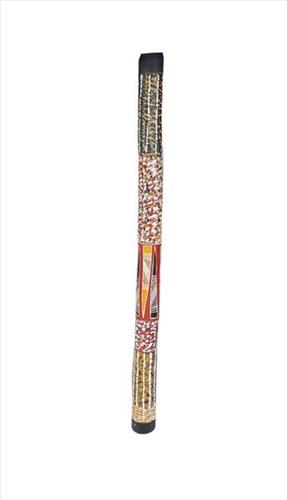
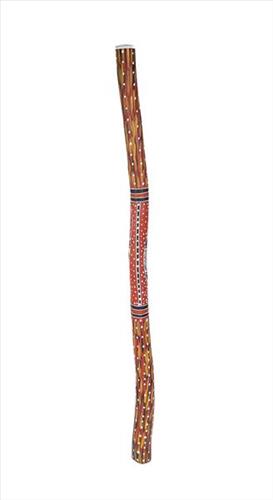
Didjeridu

Didjeridus from this region are made in the West Arnhem style. Called Mago, they’re different and special and follow the tradition made famous by Beswick’s Mago Master, elder David Blanasi.

Ghunmarn didjeridus are sourced on country, and hand cut from Woolybutt trees. Artists travel considerable distances on foot to find the right woolybutt tree naturally hollowed out by termites. Good instruments are hand-cut and taken back to camp to be worked, shaped, sanded, tuned and then finally painted.

These are top quality musical instruments, highly regarded worldwide, and still used in ceremony and performance today. Featuring traditional designs handed painted with a Jarlk grass brush.


Most Ghunamrn didjeridus are high pitch D, low pitch D, F, C or G. The longer the dij the lower the pitch, a shorter didj will give a higher sound.

221382445435


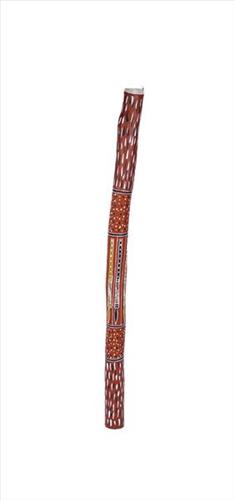
Didjeridu with Stone Spear

This didjeridu was cut by Frankie Lane and painted by Harry Malibirr.

Didjeridus from this region are made in the West Arnhem style. Called Mago, they’re different and special and follow the tradition made famous by Beswick’s Mago Master, elder David Blanasi.

Ghunmarn didjeridus are sourced on country, and hand cut from Woolybutt trees. Artists travel considerable distances on foot to find the right woolybutt tree naturally hollowed out by termites. Good instruments are hand-cut and taken back to camp to be worked, shaped, sanded, tuned and then finally painted.

These are top quality musical instruments, highly regarded worldwide, and still used in ceremony and performance today. Featuring traditional designs handed painted with a Jarlk grass brush.


Most Ghunamrn didjeridus are high pitch D, low pitch D, F, C or G. The longer the dij the lower the pitch, a shorter didj will give a higher sound.

221382445434


Didjeridu with Dimbuka

This didjeridu was cut by Frankie ‘Tango’ Lane and painted by Harry Malibirr.

Didjeridus from this region are made in the West Arnhem style. Called Mago, they’re different and special and follow the tradition made famous by Beswick’s Mago Master, elder David Blanasi.

Ghunmarn didjeridus are sourced on country, and hand cut from Woolybutt trees. Artists travel considerable distances on foot to find the right woolybutt tree naturally hollowed out by termites. Good instruments are hand-cut and taken back to camp to be worked, shaped, sanded, tuned and then finally painted.

These are top quality musical instruments, highly regarded worldwide, and still used in ceremony and performance today. Featuring traditional designs handed painted with a Jarlk grass brush.


Most Ghunamrn didjeridus are high pitch D, low pitch D, F, C or G. The longer the dij the lower the pitch, a shorter didj will give a higher sound.

221382444677


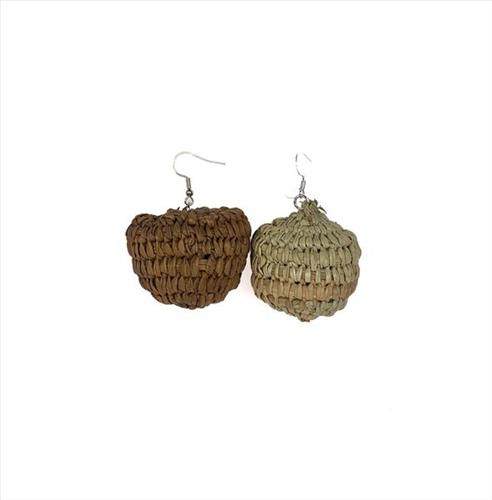
Pandnus Earrings Odd Pair

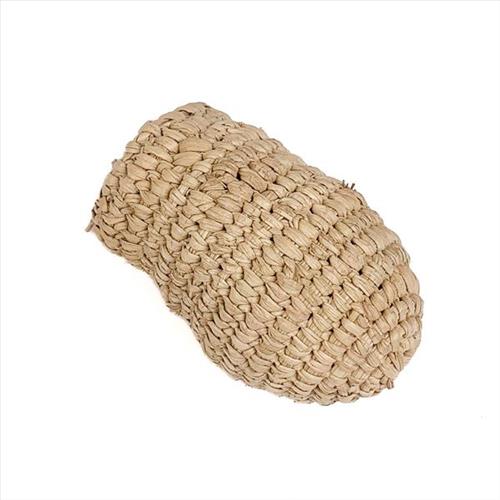
Fibre Art is an ancient Aboriginal women’s craft that is still made today using the same techniques as their ancestors. Making fibre art is labour intensive and much care and fine needlework is required to ensure the finished object is both functional and beautiful. Fibre art from Ghunmarn Culture Centre includes dilly bags, floor mats, bush fans, woven creatures found in the landscape, plants such as yams (bush potato), baskets, place mats, and spirit figures such as mermaids and Mukuys. Natural pandanus fibre (Mukarra), is used to make much of the fibre art produced by the artists of Djilpin Arts. Women collect the pandanus by pulling from the top of the pandanus tree, then stripping and drying the leaves before they are dyed with natural bush colour collected from the Beswick surrounds.

221382444676


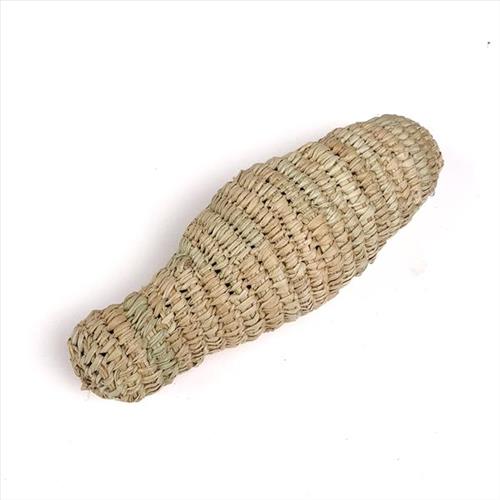
Bush Yam

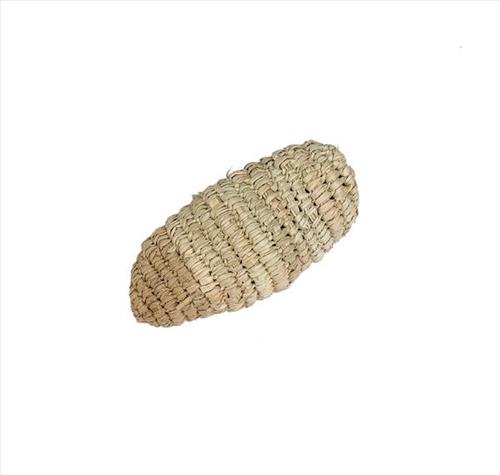
Fibre Art is an ancient Aboriginal women’s craft that is still made today using the same techniques as their ancestors. Making fibre art is labour intensive and much care and fine needlework is required to ensure the finished object is both functional and beautiful. Fibre art from Ghunmarn Culture Centre includes dilly bags, floor mats, bush fans, woven creatures found in the landscape, plants such as yams (bush potato), baskets, place mats, and spirit figures such as mermaids and Mukuys. Natural pandanus fibre (Mukarra), is used to make much of the fibre art produced by the artists of Djilpin Arts. Women collect the pandanus by pulling from the top of the pandanus tree, then stripping and drying the leaves before they are dyed with natural bush colour collected from the Beswick surrounds.

221382444675


Bush Yam

Fibre Art is an ancient Aboriginal women’s craft that is still made today using the same techniques as their ancestors. Making fibre art is labour intensive and much care and fine needlework is required to ensure the finished object is both functional and beautiful. Fibre art from Ghunmarn Culture Centre includes dilly bags, floor mats, bush fans, woven creatures found in the landscape, plants such as yams (bush potato), baskets, place mats, and spirit figures such as mermaids and Mukuys. Natural pandanus fibre (Mukarra), is used to make much of the fibre art produced by the artists of Djilpin Arts. Women collect the pandanus by pulling from the top of the pandanus tree, then stripping and drying the leaves before they are dyed with natural bush colour collected from the Beswick surrounds.

221382444674


Bush Yam

Fibre Art is an ancient Aboriginal women’s craft that is still made today using the same techniques as their ancestors. Making fibre art is labour intensive and much care and fine needlework is required to ensure the finished object is both functional and beautiful. Fibre art from Ghunmarn Culture Centre includes dilly bags, floor mats, bush fans, woven creatures found in the landscape, plants such as yams (bush potato), baskets, place mats, and spirit figures such as mermaids and Mukuys. Natural pandanus fibre (Mukarra), is used to make much of the fibre art produced by the artists of Djilpin Arts. Women collect the pandanus by pulling from the top of the pandanus tree, then stripping and drying the leaves before they are dyed with natural bush colour collected from the Beswick surrounds.

221382444673


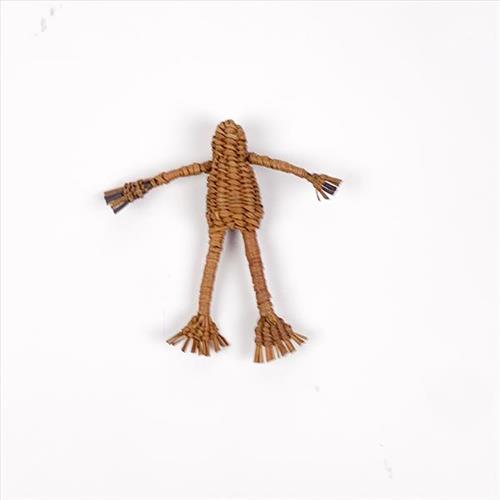
Mukuy Spirit Figures

These finely crafted woven figures represent Mukuy Spirit creatures. The Mukuy belong in Yirritja country called Galanbirni. At night you might hear them playing the Didjeridu. The Mukuy travel around a lot and are often found in sacred places. They are mysterious, sometimes playful and sometimes cheeky characters, often referred to as Devil Devil. Mukuy figures tell the stories of country, culture and spiritual beliefs.