221282388134


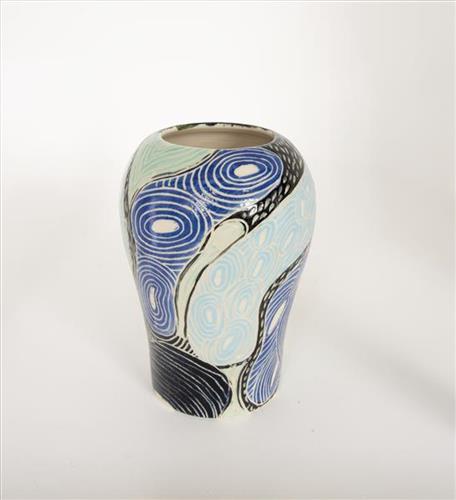
Tjala / Honey Ant

Tjala or honey ants live in nests about a metre underground beneath mulga trees, and they are a highly favoured food source. The tjala tunnels that lead down to the ants’ nests are called nyinantu, and the larvae are called ipilyka-ipilyka. After the rain when the ground is soft the women go digging for tjala by looking for the drill holes under the trees. They then use shovels and crowbars to dig down following the tunnels to find the tjala inside. Anangu suck the delicious rich honey-like liquid from the distended abdomen of the tjala. The story of the tjala is told across the Northern Territory into South Australia and is an important link between Anangu mythology and inter-dependence on the environment.
221282388133


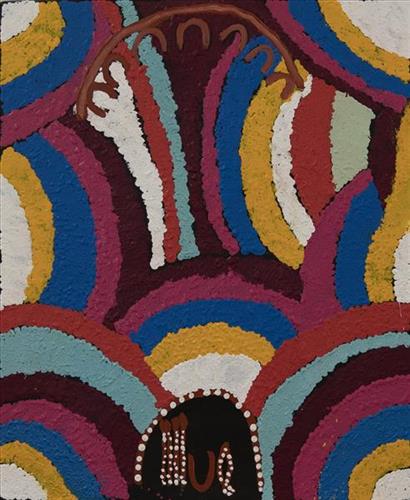
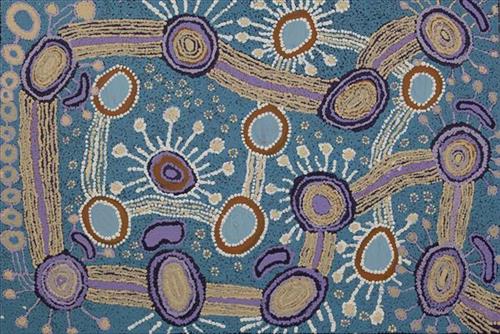
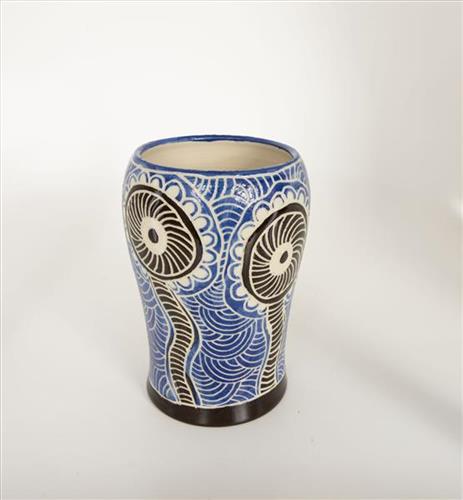
Piltati

There were two sisters who married two brothers and they all lived together. One day the women went wandering and they went such a long way that they forgot about their husbands. Back at the camp, the two husbands were thinking, ‘Where are our wives?’ and they decided to go looking for them. One brother said to the other, ‘What should we become to go looking for them?’ and the other brother said ‘Why don’t we become Rainbow Serpents?’ And they travelled in the sky looking down for their wives. Finally they see them hunting for carpet snakes and they put something in the hole where the women were digging. The women find it and then dig another hole and once again the men have put something in there. And this is how the men lure the women back to Piltati where the men make the sisters transform into Wanampi, swallow them and keep .them in their throats. All four of them live together in the waterhole and still live there today.

221282388132


Ngayuku Walka / My Design

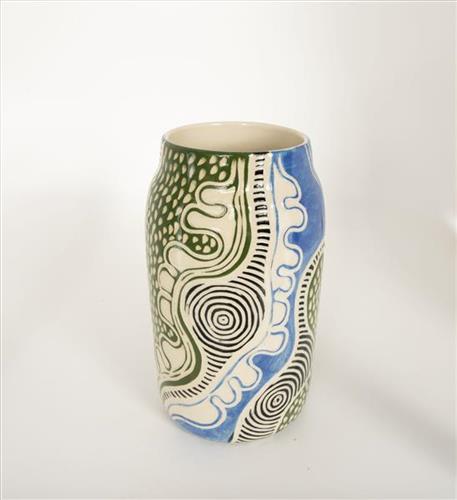
Walka means design or pattern. Artists use this title to describe artworks that are pattern based rather than descriptive or telling a story.

221282388013


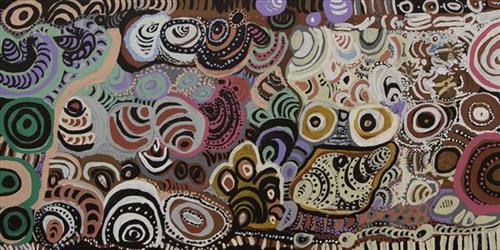
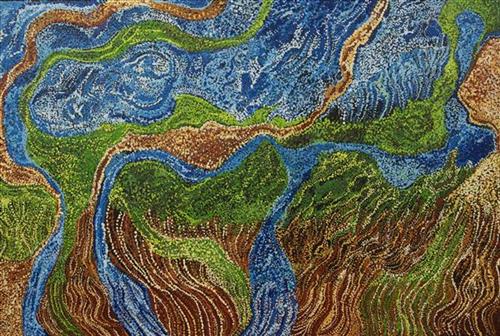
Ngayuku Ngura – My Country

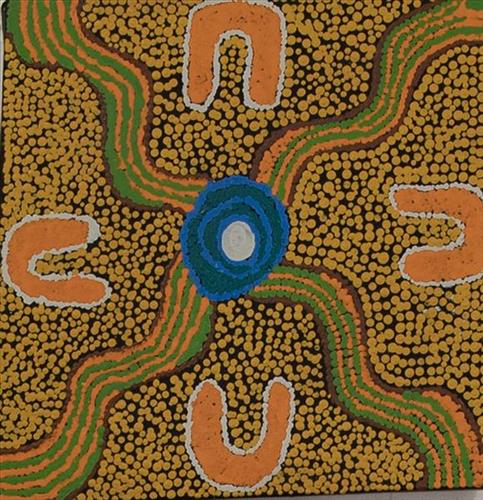
Artists use this title when they are depicting their Country. It might be a representation of a particular place or of different aspects of that area. The artist uses a combination of colour and design to indicate variations in the landscape. Inspiration is drawn from all elements of Country and might include bush tucker, water holes, meeting places, rock formation, birds or animals.

221282388005


Ngayuku Ngura – My Country

Artists use this title when they are depicting their Country. It might be a representation of a particular place or of different aspects of that area. The artist uses a combination of colour and design to indicate variations in the landscape. Inspiration is drawn from all elements of Country and might include bush tucker, water holes, meeting places, rock formation, birds or animals.

221282388337


Tjakura Tjukurpa – Lexie’s Story

This Tjukurpa is from Lexie’s grandfather’s homeland called Kunytjanu, located just south of Pipalyatjara near the SA border with WA. It’s a story about tjakura, the great desert skink, a small orange lizard found across the APY Lands. 

 Tjakura has a lot of grandchildren looking after him. One day, a long time ago, he saw too many strangers, an army coming from Mutitjulu. They came and found the tjakura and they killed him. All the kids made a cemetery there for the tjakura. This is a really big story that goes from Kunytjanu to Aralya.

221282388324


Minyma Kutjara (Two Women Near Ernabella)

There are many stories about the two sisters (Minyma Kutjara). This part of the story is siginificant to the women of Ernabella. There was a gathering of minyma mingkiri (mouse women) at a hill called Yunanpa, which is near Ngarutjara (to the north of Ernabella). They are all collecting bushfoods together when the two sisters decide to go travelling. They travel to several water places to the north and east of Ernabella including Alalka. They keep going until they get to Wamitjara, a waterhole near Kenmore park. Here they come across a man sleeping. They hit him over the head with their wana (digging stick) and knock him unconscious. Then they tie up his arms and legs and head towards Alice Springs, carrying him between them. They sing and dance sacred women’s stories all the way. They leave him at Stuart’s Well, and continue on to Alice Springs to meet up with a large group of women.

221282388989


Tali / Sand dune

This design is inspired by the red sand dunes that are found throughout the central desert. There is a large red sand dune near Ernabella named Wamikata which is a popular place for looking for maku (witchetty grubs) and for teaching Milpatjunanyi (telling stories in the sand) to children.

221282388966


Minyma Kutjara (Two Women Near Ernabella)

There are many stories about the two sisters (Minyma Kutjara). This part of the story is siginificant to the women of Ernabella. There was a gathering of minyma mingkiri (mouse women) at a hill called Yunanpa, which is near Ngarutjara (to the north of Ernabella). They are all collecting bushfoods together when the two sisters decide to go travelling. They travel to several water places to the north and east of Ernabella including Alalka. They keep going until they get to Wamitjara, a waterhole near Kenmore park. Here they come across a man sleeping. They hit him over the head with their wana (digging stick) and knock him unconscious. Then they tie up his arms and legs and head towards Alice Springs, carrying him between them. They sing and dance sacred women’s stories all the way. They leave him at Stuart’s Well, and continue on to Alice Springs to meet up with a large group of women.