Ngayuku Walka / My Design
Walka means design or pattern. Artists use this title to describe artworks that are pattern based rather than descriptive or telling a story.
Walka means design or pattern. Artists use this title to describe artworks that are pattern based rather than descriptive or telling a story.
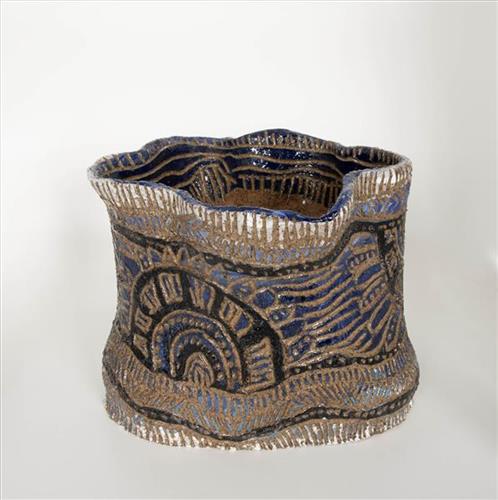
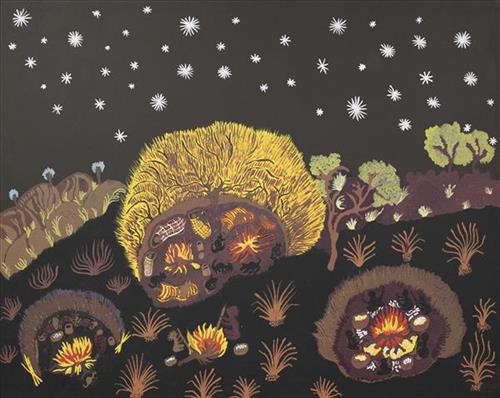
Piltati is Elizabeth’s great-grandfather’s country and her dreaming story. Two brothers were married to two sisters and they all lived together. One day the two men go out hunting, looking for malu (kangaroo). They travel everywhere and find nothing. They start to worry – what are we going to do, there is no meat on this land. One brother says, maybe we should turn into something. They start to think about what they should turn into. Maybe firewood? No, the firewood burns. Maybe emu or a bird? No, people eat them.
They do a lot of talking and decide they should turn into wanampi (rainbow serpents). A lot of smoke starts to come out of the ground, it is very scary and then the men become wanampi. They travel into the land, towards a rockhole.
Meanwhile, the two women are waiting for their husbands to return from their hunting trip. They wait a very long time. They keep going on with their lives, collecting bush tucker, waiting…but the men never come back. So they decide to set out to find their husbands. One day they come across a hole in the ground. They start digging. Digging, digging, digging they follow the tunnel inside the ground. They are so frantically digging they accidently hit one of the wanampi in the back. The wanampi chase the ladies and eat one of them and one woman gets away.
Now the wanampi still live in the waterhole called Piltati. The wanampi live there today and provide rain for the bush tucker to grow and provide meat on the land.
Status: Stock
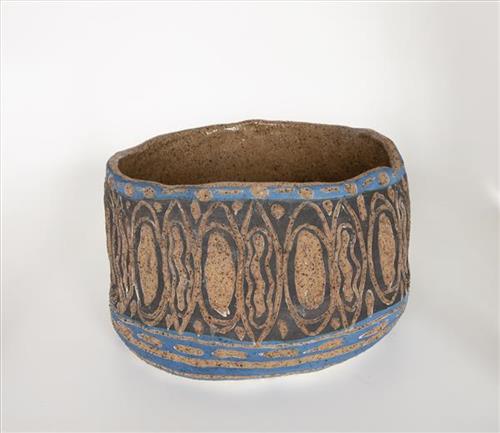
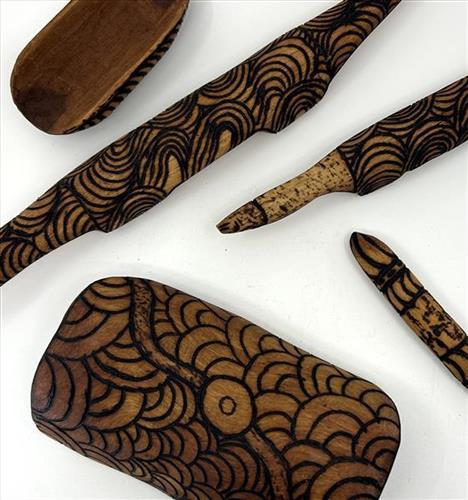
Punu are wood carvings by Anangu (Central and Western Desert Aboriginal people), they are hand carved and decorated with walka, patterns burnt into the wood with heated wire.
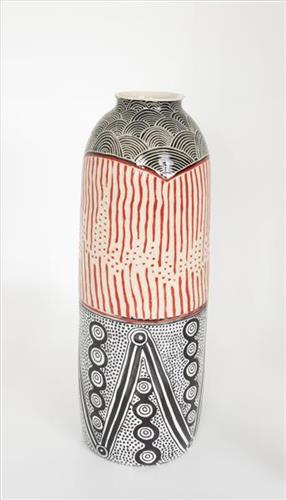
Walka means design or pattern. Artists use this title to describe artworks that are pattern based rather than descriptive or telling a story.
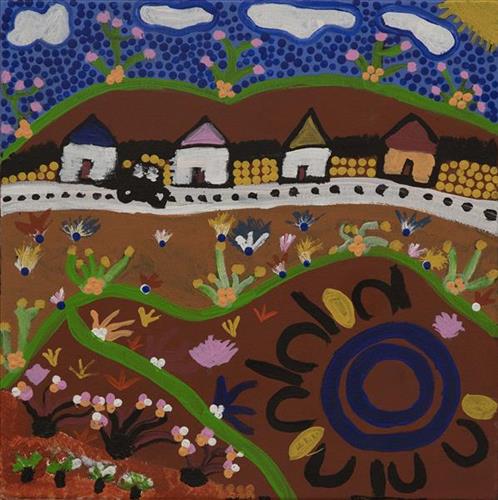
Artists use this title when they are depicting their Country. It might be a representation of a particular place or of different aspects of that area. The artist uses a combination of colour and design to indicate variations in the landscape. Inspiration is drawn from all elements of Country and might include bush tucker, water holes, meeting places, rock formation, birds or animals.
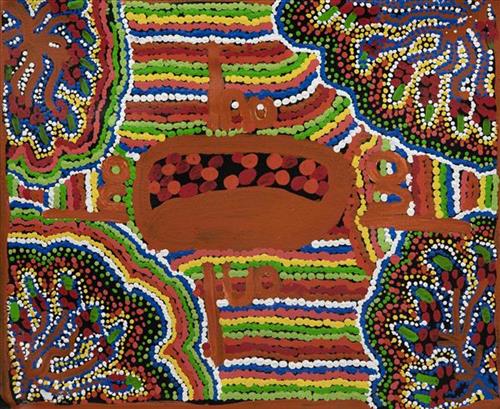
Artists use this title when they are depicting their Country. It might be a representation of a particular place or of different aspects of that area. The artist uses a combination of colour and design to indicate variations in the landscape. Inspiration is drawn from all elements of Country and might include bush tucker, water holes, meeting places, rock formation, birds or animals.
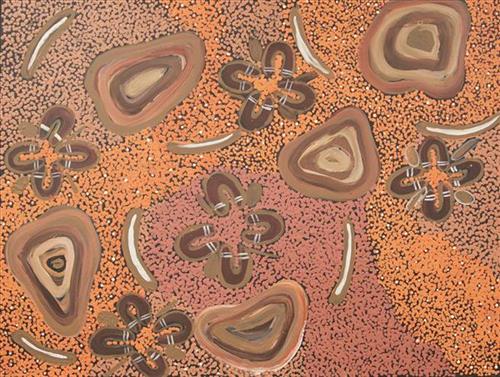
Artists use this title when they are depicting their Country. It might be a representation of a particular place or of different aspects of that area. The artist uses a combination of colour and design to indicate variations in the landscape. Inspiration is drawn from all elements of Country and might include bush tucker, water holes, meeting places, rock formation, birds or animals.
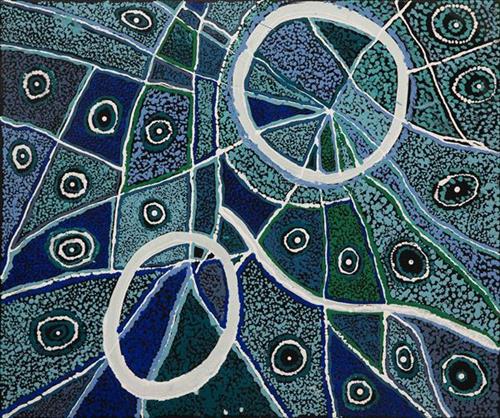
There were two sisters who married two brothers and they all lived together. One day the women went wandering and they went such a long way that they forgot about their husbands. Back at the camp, the two husbands were thinking, ‘Where are our wives?’ and they decided to go looking for them. One brother said to the other, ‘What should we become to go looking for them?’ and the other brother said ‘Why don’t we become Rainbow Serpents?’ And they travelled in the sky looking down for their wives. Finally they see them hunting for carpet snakes and they put something in the hole where the women were digging. The women find it and then dig another hole and once again the men have put something in there. And this is how the men lure the women back to Piltati where the men make the sisters transform into Wanampi, swallow them and keep .them in their throats. All four of them live together in the waterhole and still live there today.
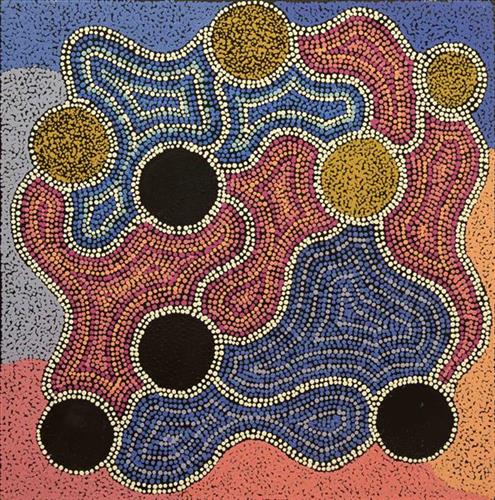
Artists use this title when they are depicting their Country. It might be a representation of a particular place or of different aspects of that area. The artist uses a combination of colour and design to indicate variations in the landscape. Inspiration is drawn from all elements of Country and might include bush tucker, water holes, meeting places, rock formation, birds or animals.