225482310820


Lulgardi (Boab Tree)

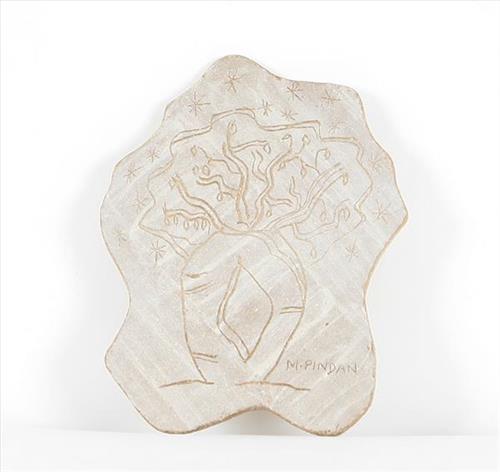
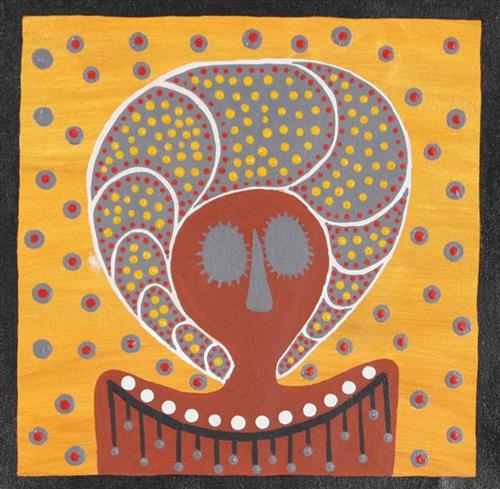
The boab tree is special us – we can eat the nuts, the young roots are also delicious, and we make string from the bark. It is also part of our flood story, the Dumbi story. You get good shade from it, and we carve the nuts to make beautiful objects. It helps us to earn money and it’s a beautiful tree. The boab belongs to our country, here in the Western Kimberley. You don’t find it in other places like Broome. The last boab tree is just over the NT border. In this painting the boab tree represents our land, our traditional area. I have put the three Wandjinas Rimijmudda (Wunumbul) Namarali (Wororra) Wanalirri (Ngarinyin) representing the three tribes of Mowanjum on the tree, because it lives in the same areas as we do.
225482323963


Wandjina Dreaming

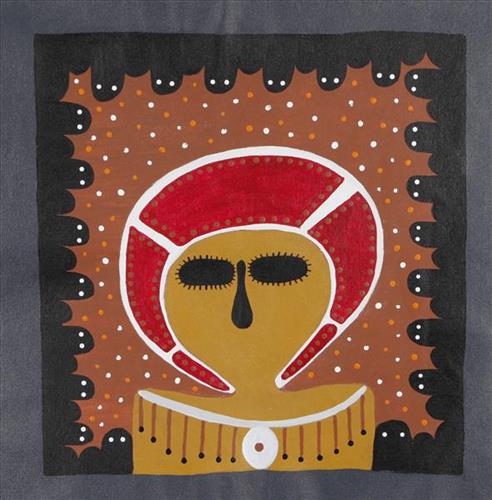
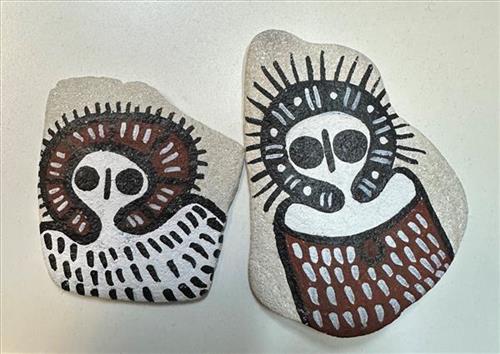
The Wandjina spirit of the Wororra, Ngarinyin and Wunumbul tribe is highly respected by the people of Mowanjum. The Wandjinas brought the law, culture and language. The people of Mowanjum believe that the first Wandjina was called Idjair. He created the first human beings, the Gyorn Gyorn people. Wallungunder (Milky Way) travelled back to Idjair (the first Wandjina) to bring back more Wandjinas to give the Gyorn Gyorn (Bradshaw) people laws to live by. Wallungunder also created Ungud spirits which often appear in Mowanjum people. Every person at Mowanjum has an Ungud or Totem. It’s given before birth by the father or the grandfather through dreams, and represents a living animal. The three Wandjinas which represent the three language groups of Mowanjum are Namarali for the Worora people, Wodjin or Wanalirri for the Ngarinyin people, and Rimijmarra for the Wunumbul people. Each family group at Mowanjum has a Wandjina which guides them through their lives. The Wandjinas are most active as cloud spirits during the monsoon period, bringing rain to the entire Kimberley region. The Wandjinas facial characteristics can represent many climatic features. The eyes of the Wandjina can represent thunderstorms and even cyclones. The bigger and darker the eyes, the more powerful the Wandjina is said to be. The haloes and lines around the face represent different cloud formations and lightning. The line between the eyes resembles a nose, but it is actually a power line which is used to transfer energy. Small brush marks on the Wandjinas body usually represent rain drops. Wandjinas can be represented with either four or five fingers. When depicted with only head and shoulders the Wandjina is said to be floating in space or in the form of a cloud or storm. A full-bodied Wandjina is said to be walking the Earth. The rounded feature in the upper chest area can represent the heart of the Wandjina or a large pearl shell that was worn by tribal leaders.

225482352804


Wandjina & Ungud (cloud and rain spirits & totem)

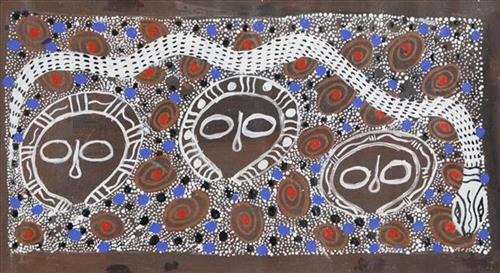
The Wandjina is the creator spirit that belongs to us (the Wororra, Ngarinyin and Wunumbul people). He is the one that created everything, he also gave us our culture, law and songs and even the dreaming of each child before they are born.

The Ungud Snake story is about two young boys who didn’t listen to their elders or believe in them. There is a big waterhole an in it lies a large Ungud Snake. The old people told the kids not to go near that waterhole, but these boys thought the elders were tricking them so they wanted to find out for themselves. So they went to the waterhole and built a hideout from branches with small holes so that they can see ( just in case the elders told the truth) they looked at the billabong and it was calm. They banged two sticks together to make clapping noise and then they saw all the lilypads starting to move apart on the water and large logs came up from out of the water, then came bubbles and after a huge head coming out of the water to have a look around for who had been making all the noise. He hadn’t seen annone so he went back down and the lilypads went flat and the water went calm. Those two boys ran back to the camp and told the elders that they were right , there was a snake and the elders told them that they should have listened in the first place. The Ungud Snake also was the chosen animal in helping with the creation of mother earth, creating rivers, gorges, stream’s and helped with the formation of the earth. Still today it lives in these dark deep water hole’s in our country which doesn’t want to be disturbed.


225482352796


Wandjina & Ungud (cloud and rain spirits & totem)

The Wandjina is the creator spirit that belongs to us (the Wororra, Ngarinyin and Wunumbul people). He is the one that created everything, he also gave us our culture, law and songs and even the dreaming of each child before they are born.

The Ungud Snake story is about two young boys who didn’t listen to their elders or believe in them. There is a big waterhole an in it lies a large Ungud Snake. The old people told the kids not to go near that waterhole, but these boys thought the elders were tricking them so they wanted to find out for themselves. So they went to the waterhole and built a hideout from branches with small holes so that they can see ( just in case the elders told the truth) they looked at the billabong and it was calm. They banged two sticks together to make clapping noise and then they saw all the lilypads starting to move apart on the water and large logs came up from out of the water, then came bubbles and after a huge head coming out of the water to have a look around for who had been making all the noise. He hadn’t seen annone so he went back down and the lilypads went flat and the water went calm. Those two boys ran back to the camp and told the elders that they were right , there was a snake and the elders told them that they should have listened in the first place. The Ungud Snake also was the chosen animal in helping with the creation of mother earth, creating rivers, gorges, stream’s and helped with the formation of the earth. Still today it lives in these dark deep water hole’s in our country which doesn’t want to be disturbed.


225482333997


Boab Nut

Ngarinyin, Woddorda  (Worrorra) and Wunambal are the three main languages of the North Kimberley language families. The Boab Tree is known by Wurnambal people as Jungurri, in  Woddorda as Jungurim and in Ngarinyin as Jungulan jirri, Larrgari jirri and Malawudi jirri.

Boab or Larrgardi Trees (lt.: Adansonia Gregorii) – is an Australian native species only found in the Kimberley region of Western Australia. They are very recognisable due to their unusual shape – reminding one of a full-bodied bottle. Some trees are more then 1500 years old and can hold more than 100,000 litres of water in their trunks.

Every part of the tree is used either as a food-resource, as medicine or otherwise. Almost every part of the tree is edible from the young leaves and tubers to the internal fruit pods and seeds.

The tree produces beautiful large fragrant yellow flowers. Inside the fruit pod the fruit is naturally dried on the tree itself. This is the only fruit in the world that does this.

Indigenous artists carve designs into shell of the boab nut or paint it with different designs and children use it as a rattle. The designs on the nuts vary from Wandjina’s to different animals, like the Brolga, turtles, and fish to people’s faces and landscapes.

“Boab nut Carving was a way of expressing ones artistic skills. Aboriginal people across the Kimberley Region of Western Australia was carving along time ago it started with our ancestors.”

225482333989


Boab nut

Ngarinyin, Woddorda  (Worrorra) and Wunambal are the three main languages of the North Kimberley language families. The Boab Tree is known by Wurnambal people as Jungurri, in  Woddorda as Jungurim and in Ngarinyin as Jungulan jirri, Larrgari jirri and Malawudi jirri.

Boab or Larrgardi Trees (lt.: Adansonia Gregorii) – is an Australian native species only found in the Kimberley region of Western Australia. They are very recognisable due to their unusual shape – reminding one of a full-bodied bottle. Some trees are more then 1500 years old and can hold more than 100,000 litres of water in their trunks.

Every part of the tree is used either as a food-resource, as medicine or otherwise. Almost every part of the tree is edible from the young leaves and tubers to the internal fruit pods and seeds.

The tree produces beautiful large fragrant yellow flowers. Inside the fruit pod the fruit is naturally dried on the tree itself. This is the only fruit in the world that does this.

Indigenous artists carve designs into shell of the boab nut or paint it with different designs and children use it as a rattle. The designs on the nuts vary from Wandjina’s to different animals, like the Brolga, turtles, and fish to people’s faces and landscapes.

“Boab nut Carving was a way of expressing ones artistic skills. Aboriginal people across the Kimberley Region of Western Australia was carving along time ago it started with our ancestors.”

225481838939


Wodoi & Djingun (spotted nightjar & owlet nightjar)

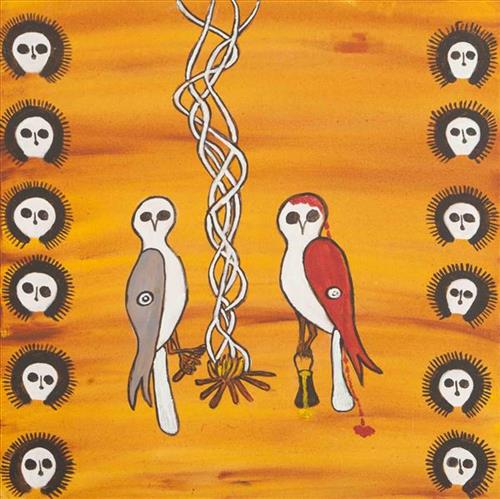
Wodoi and Djingun are two birds which represent the two skin types (clans or moieties) to which all Wandjina people belong. Woody and Djingun were fighting over sugar bags (bush honey). Djingun hit Wodoi and the blood from Wodoi flowed crimson, to represent red ochre. Wodoi then retaliated and struck Djingun, whose blood was much paler. This represents white ochre. Both birds then realised that their fighting was pointless and shared the honey. All the while the Wandjinas were watching and passed this story on to the people to show that different tribes can get on together. Today at Mowanjum the law of Wodoi and Djingun is still very strong. A Wodoi person must always marry someone from the Djingun moiety and vice-versa. In this way the people believe that the bloodlines will stay strong and help keep the spirit of the Wandjina alive.

225481846658


Wandjinas (cloud and rain spirits)

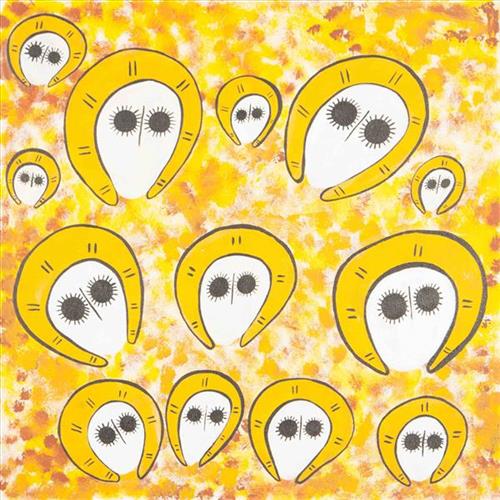
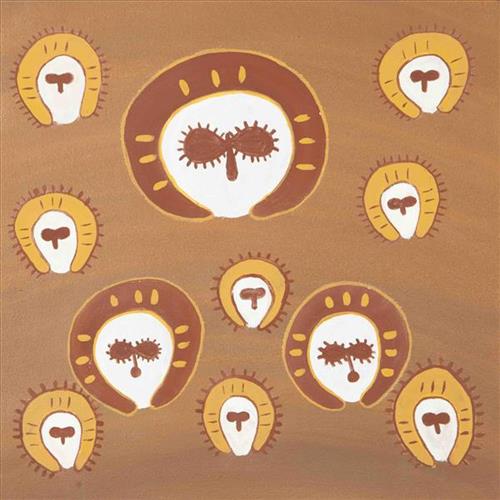
Where you see a lot of Wandjinas they represent the laws of trees, rivers, rocks, bush fruit, animals and all of creation. The Wandjinas give the law on how we have to treat and use these creations. These customs are carried on today. The Wandjina spirits are highly respected by the Worrora, Ngarinyin and Wunumbul people who live at Mowanjum and up the Gibb River Road to Kalumburru in the North West Kimberley region of Western Australia.

225481881743


Wandjinas (cloud and rain spirits)

Where you see a lot of Wandjinas they represent the laws of trees, rivers, rocks, bush fruit, animals and all of creation. The Wandjinas give the law on how we have to treat and use these creations. These customs are carried on today. The Wandjina spirits are highly respected by the Worrora, Ngarinyin and Wunumbul people who live at Mowanjum and up the Gibb River Road to Kalumburru in the North West Kimberley region of Western Australia.