114182407674


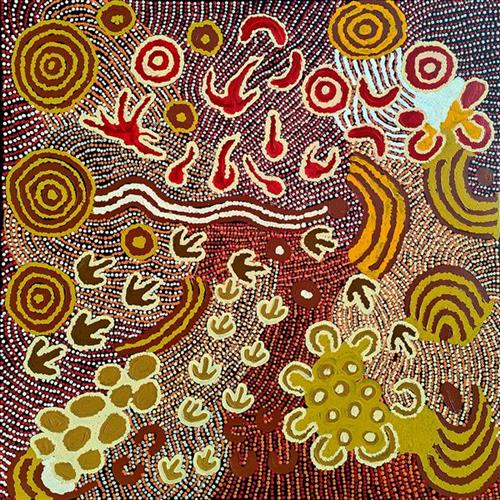
Kungkarrangkalpa (Seven Sisters) – Kuru Ala

Kuru Ala is a important women’s sites associated with the Kungkarrangkalpa (Seven Sisters) Tjukurrpa (Dreaming / story) across the Western and Central Deserts. Located south, west of Papulankutja (Blackstone), the site holds deep cultural, spiritual, and ceremonial significance for women in the Ngaanyatjarra Lands.

In the sky, Wati Nyiru is associated with Orion’s Belt, while the sisters become the star cluster known widely as the Pleiades. Many desert families still track these stars seasonally, tying sky and Country together in the story.

This place marks a key moment in the Seven Sisters story, where the sisters rested, gathered strength, and cared for one another while escaping the persistent pursuit of Wati Nyiru. The surrounding caves, rock formations, and ground features are recognised as physical evidence of the ancestral events that took place here during the Tjukurrpa.

Across many desert communities, the Seven Sisters Tjukurrpa follows the travels of the sisters as they move through Country, constantly evading Nyiru, who uses magic to disguise himself in many forms — bush foods, trees, and even animals — in an attempt to catch them. At Kuru Ala, the sisters stop to protect and heal the eldest sister before continuing their journey eastward.

Today, Kuru Ala remains an active cultural site, cared for and visited by women with ties to this Country. The story is still taught, sung, and remembered. The paintings created by artists of Papulankutja and Mantamaru reflect both the ancestral narrative and the living landscape, mapping the caves, water sources, and pathways the sisters travelled.


114182403665


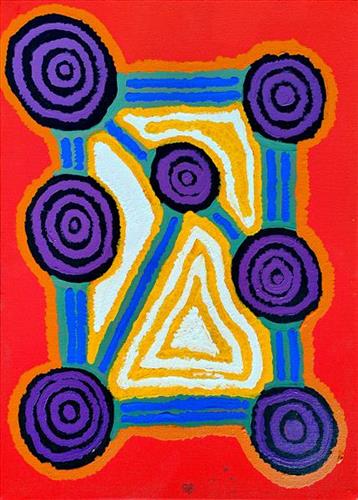
Minyma Kutjarra – (Two Sisters)

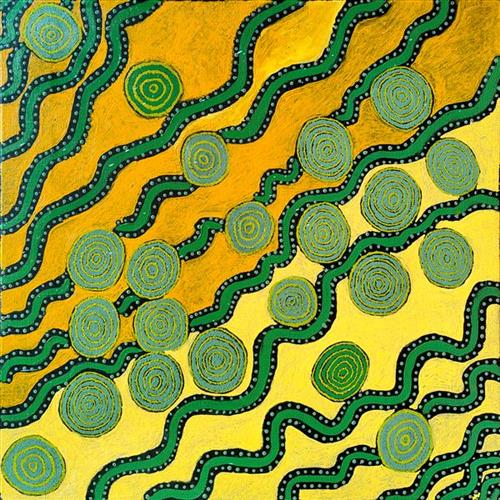
‘Minyma Kutjara’ (Two Ladies), is a popularly depicted story by women from the Ngaanyatjarra Lands. The painting has different chapters depending on where the artist is from and the inherited story of their ancestors.  we see the ladies sitting together at their camp situated among the sand hills. They are surrounded by an abundance of desert flowers and fruits. The painting is a reflection on the lush nature of the land that was so many years ago. When there is rain coming to the lands it makes everyone so pleased as it indicates good foraging and hunting.

114182403664


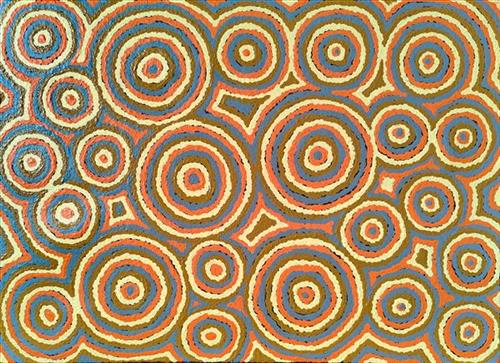
Kungkarrangkalpa (Seven Sisters)

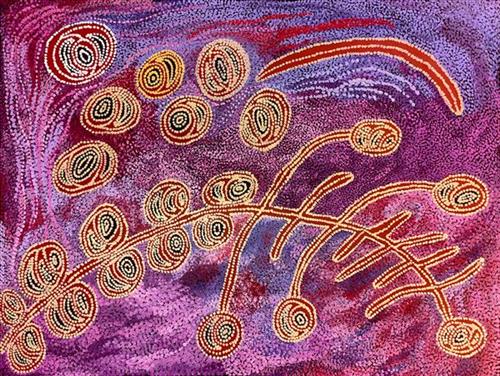
‘Kungkarrangkalpa’ (The Seven Sisters or Pleaides) is significant Tjukurrpa (dreamtime). Its origins you may be familiar with in astronomy and its connection to ‘Wati Nyiru’ (Magic Man or Orion).  The roots of this dreaming stems across indigenous groups around the world. The Australian Aboriginal songline is one part to the whole dreaming which can be traced all around the world. The ladies of the Ngaanyatjarra Lands depict their significant chapter and understanding of the journey of the sisters. The different versions of this story depend on where you live and the significance’s of local Tjukurrpa places.

Nyiru fell in love with the sisters but he was of the wrong skin group to marry, but he still pursued them on their journey. The sisters travel across the land to escape Nyiru’s unwanted attentions, but he is persistent and always finds them. There are significant land forms which can be sited today that evidence this dreaming. As Nyiru is chasing the sisters he tries to catch them by using magic to turn into the most tempting kampurarrpa (bush tomato) and the most beautiful Yirli (wild fig tree), for them to eat and camp under. However, the sisters are knowledgeable of his magic and too clever for Nyiru who they outwit again and again. They go hungry and run through the night rather than be caught by him. As the journey continues, Nyiru gets so frustrated at the wit of the sisters that he uses his magic to make the oldest sister sick to try and get closer to her. The other sisters rescue the big sister and nurse her back to health. It is said he also captures the youngest sister, but with the help of the oldest sister, she escapes back to her sisters who are waiting for her. Eventually, the sisters fly into the sky to escape Nyiru, forming the constellation. Nyiru felt lonely, longing for the sisters who were so far away. Nyiru used his magic to go to the sky, forever in pursuit.

114182404021


Maime Butler’s Parrupi Nganunrti Jurkurrpa

This is Maime Butler birth place. It is part of the story of that Turkey that came all the way from Walutjarra
Once in the time, when the turkey people lived in the Blackstone area the people had no fire. While all the people shivered in the winter, one young man would stand on top of the range at Walutjarra and stretch out his hands in every direction to see if he could feel some warmth. One day he did feel warmth coming from the north, he flew off in that direction hoping to find the source of the heat to bring it back to his people. He went all the way to a place north of Tjukurla where he saw people with a fire on the ground below. He stole the people’s fire by trickery but they set off after him and he was unable to return to Blackstone but had to keep flying onwards. His pursuers chased him all the way to the Great Australian Bight where he dived into the sea to escape them.

114182404020


Kungkarrangkalpa (Seven Sisters)

‘Kungkarrangkalpa’ (The Seven Sisters or Pleaides) is significant Tjukurrpa (dreamtime). Its origins you may be familiar with in astronomy and its connection to ‘Wati Nyiru’ (Magic Man or Orion).  The roots of this dreaming stems across indigenous groups around the world. The Australian Aboriginal songline is one part to the whole dreaming which can be traced all around the world. The ladies of the Ngaanyatjarra Lands depict their significant chapter and understanding of the journey of the sisters. The different versions of this story depend on where you live and the significance’s of local Tjukurrpa places.

Nyiru fell in love with the sisters but he was of the wrong skin group to marry, but he still pursued them on their journey. The sisters travel across the land to escape Nyiru’s unwanted attentions, but he is persistent and always finds them. There are significant land forms which can be sited today that evidence this dreaming. As Nyiru is chasing the sisters he tries to catch them by using magic to turn into the most tempting kampurarrpa (bush tomato) and the most beautiful Yirli (wild fig tree), for them to eat and camp under. However, the sisters are knowledgeable of his magic and too clever for Nyiru who they outwit again and again. They go hungry and run through the night rather than be caught by him. As the journey continues, Nyiru gets so frustrated at the wit of the sisters that he uses his magic to make the oldest sister sick to try and get closer to her. The other sisters rescue the big sister and nurse her back to health. It is said he also captures the youngest sister, but with the help of the oldest sister, she escapes back to her sisters who are waiting for her. Eventually, the sisters fly into the sky to escape Nyiru, forming the constellation. Nyiru felt lonely, longing for the sisters who were so far away. Nyiru used his magic to go to the sky, forever in pursuit.

114182404395


My Grandfather’s Country

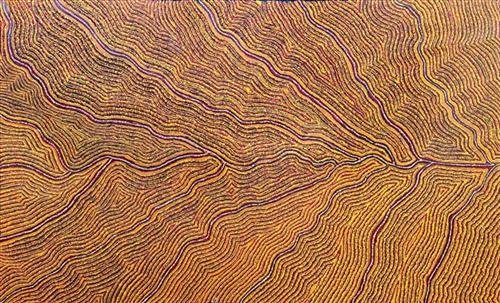
This painting depicts Sharon’s Grandfather’s Country, located within Witjira National Park near the border of the Northern Territory and South Australia, just south of Finke. The area is rich with waterholes, trees, and salt lakes — a beautiful place full of life.

Sharon first saw her Grandfather’s Country from above during a small plane flight over Aputula in 2008. From that moment, she began painting the landscape from memory, experimenting with the forms and patterns she observed from the air. Her paintings map the surface of Aputula, tracing the movement of rivers, salt pans, and desert features with intricate topographical detail. Through this process, Sharon expresses a deep emotional and cultural connection to her family’s land.

114182403247


Lukarrara Tjukurrpa – Margie Leo

In this artwork Margie has painted Lukarrara Tjukurrpa (Desert Fringe Rush Seed Dreaming). This Tjukurrpa comes from a place north of Yuendumu in the Northern Territory where Margie is from.

114182403246


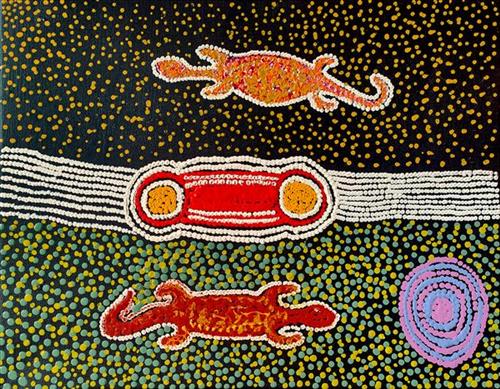
Wati Kutjarra

This is the story of two powerful magicians who came to the Ngaanyatjarra Lands from far away to the west;

‘These two men are always together, always camping together. They do all sorts of tricks when they travel across the lands as they stop from place to place. When they reached ‘Wirtapi Wara’ (Long Black or Blackstone Range) they argued about which way to go around. One went around the south side and the other the north side.

At a distance it seemed they didn’t recognise each other or perhaps they were just pretending not to recognise each other! It is also said that at Papulankutja they tricked each other by changing their appearance at the same time so they had no chance to recognise each other. The name Papulankutja comes from the Ngaanyatjarra word meaning, ‘to stare without recognising each other’.

‘They usually took the form of goanna but they could turn into other animals as well. Finally, when they got to Kaltukatjara (Docker River) they had become so arrogant that without realising they walked straight into some local men’s business even though they were warned by the local women. The goanna men led themselves blindly to their fate”.

114182403245


My Grandfather’s Country

This painting depicts Sharon’s Grandfather’s Country, located within Witjira National Park near the border of the Northern Territory and South Australia, just south of Finke. The area is rich with waterholes, trees, and salt lakes — a beautiful place full of life.

Sharon first saw her Grandfather’s Country from above during a small plane flight over Aputula in 2008. From that moment, she began painting the landscape from memory, experimenting with the forms and patterns she observed from the air. Her paintings map the surface of Aputula, tracing the movement of rivers, salt pans, and desert features with intricate topographical detail. Through this process, Sharon expresses a deep emotional and cultural connection to her family’s land.

114182403244


Kungkarrangkalpa (Seven Sisters)

‘Kungkarrangkalpa’ (The Seven Sisters or Pleaides) is significant Tjukurrpa (dreamtime). Its origins you may be familiar with in astronomy and its connection to ‘Wati Nyiru’ (Magic Man or Orion).  The roots of this dreaming stems across indigenous groups around the world. The Australian Aboriginal songline is one part to the whole dreaming which can be traced all around the world. The ladies of the Ngaanyatjarra Lands depict their significant chapter and understanding of the journey of the sisters. The different versions of this story depend on where you live and the significance’s of local Tjukurrpa places.

Nyiru fell in love with the sisters but he was of the wrong skin group to marry, but he still pursued them on their journey. The sisters travel across the land to escape Nyiru’s unwanted attentions, but he is persistent and always finds them. There are significant land forms which can be sited today that evidence this dreaming. As Nyiru is chasing the sisters he tries to catch them by using magic to turn into the most tempting kampurarrpa (bush tomato) and the most beautiful Yirli (wild fig tree), for them to eat and camp under. However, the sisters are knowledgeable of his magic and too clever for Nyiru who they outwit again and again. They go hungry and run through the night rather than be caught by him. As the journey continues, Nyiru gets so frustrated at the wit of the sisters that he uses his magic to make the oldest sister sick to try and get closer to her. The other sisters rescue the big sister and nurse her back to health. It is said he also captures the youngest sister, but with the help of the oldest sister, she escapes back to her sisters who are waiting for her. Eventually, the sisters fly into the sky to escape Nyiru, forming the constellation. Nyiru felt lonely, longing for the sisters who were so far away. Nyiru used his magic to go to the sky, forever in pursuit.