111582400543


Untitled

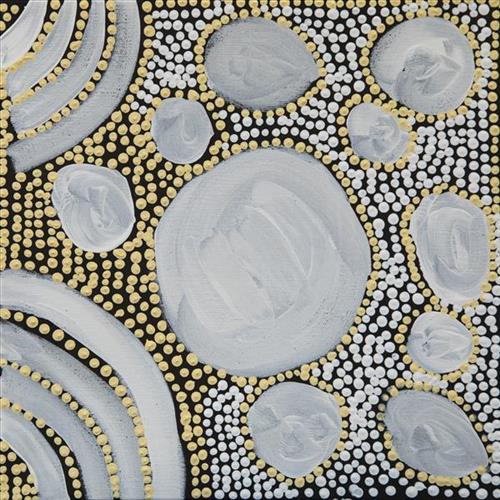
“When Martu paint, it’s like a map. Martu draw story on the ground and on the canvas, and all the circle and line there are the hunting areas and different waters and tracks where people used to walk, and [some you] can’t cross, like boundaries. So nowadays you see a colourful painting and wonder what it is, but that’s how Martu tell story long ago. It’s not just a lovely painting, it’s a story and a songline and a history and everything that goes with it.” 

– Ngalangka Nola Taylor and Joshua Booth

This work portrays an area of Country that can be interpreted in multiple ways. Firstly, the image may be read as an aerial representation of a particular location known to the artist- either land that they or their family travelled, from the pujiman (traditional, desert dwelling) era to now. During the pujiman period, Martu would traverse very large distances annually in small family groups, moving seasonally from water source to water source, and hunting and gathering bush tucker as they went. At this time, one’s survival depended on their intimate knowledge of the location of resources; thus physical elements of Country, such as sources of kapi (water), tali (sandhills), different varieties of warta (trees, vegetation), ngarrini (camps), and jina (tracks) are typically recorded with the use of a use of a system of iconographic forms universally shared across the desert. 

An additional layer of meaning in the work relates to more intangible concepts; life cycles based around kalyu (rain, water) and waru (fire) are also often evident. A thousands of year old practice, fire burning continues to be carried out as both an aid for hunting and a means of land management today. As the Martu travelled and hunted they would burn tracts of land, ensuring plant and animal biodiversity and reducing the risk of unmanageable, spontaneous bush fires. The patchwork nature of regrowth is evident in many landscape works, with each of the five distinctive phases of fire burning visually described with respect to the cycle of burning and regrowth.  

Finally, metaphysical information relating to a location may also be recorded; Jukurrpa (Dreaming) narratives chronicle the creation of physical landmarks, and can be referenced through depictions of ceremonial sites, songlines, and markers left in the land. Very often, however, information relating to Jukurrpa is censored by omission, or alternatively painted over with dotted patterns.
11154008970


Status: Stock


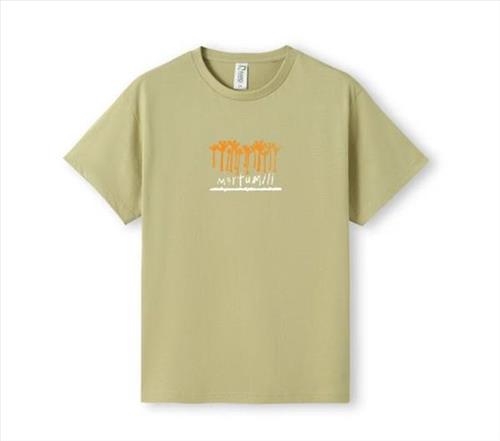
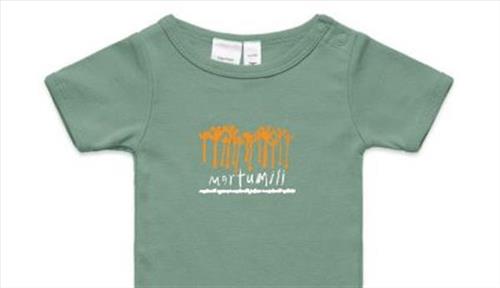
Martumili Logo- Infant, Sage

Baby/ toddler T-shirt featuring Martumili Artists logo

Regular fit , Crew neck with buttons at neck, Mid weight, 190 GSM, 100% cotton rib, preshrunk to minimise shrinkage 

Sizes (Months) : 0-3, 3-6, 6-12, 12-18, 18-24

The Martumili Artists logo was created in 2006 during a workshop, where artists collectively voted on the final design, incorporating Yunkurra Billy Atkins’ ‘Martumili’ text and Ngamaru Bidu’s painting of warta (trees). ‘Martumili’ translates to owned by the Martu people, signifying the Martu people’s ownership of the paintings, stories, and artist spaces associated with Martumili Artists.


11154008969


Status: Stock


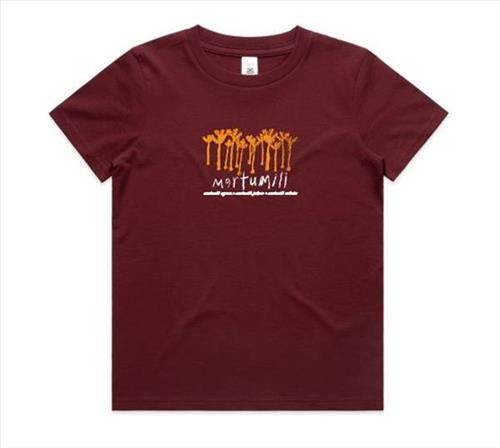
Martumili Logo- Kids, Burgundy

Kids T-shirt featuring Martumili Artists logo

Mid weight, 180 GSM, 28-singles, 100% combed cotton (marles 15% viscose)
Construction
Neck ribbing, side seamed, shoulder to shoulder tape, double needle hems, preshrunk to minimise shrinkage.
 
Sizes 2, 4 ,6

11154008968


Status: Stock


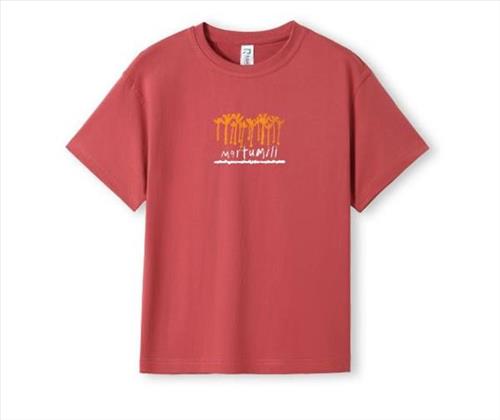
Martumili Logo- Kids, Earth

Kids T-shirt featuring Martumili Artists logo

190-195 gsm
100% cotton kids tee with spandex ribbing
side seamed
double stitches
Regular fit

Sizes 00, 2, 4 ,6

11154008967


Status: Stock


Martumili Logo- Kids, Khaki

Kids T-shirt featuring Martumili Artists logo

The Ramo Kids Earth Care Tee is a regular fit, 100% combed cotton t-shirt that features neck ribbing, side seams and an easy-tear label for easy relabelling. It is available in a variety of colours and sizes to suit all styles.


Sizes 00, 2, 4 ,6

11154008870


Status: Stock


Handwoven woven raffia necklace with beading

 Handwoven woven raffia necklace with beading assorted designs

111582393504


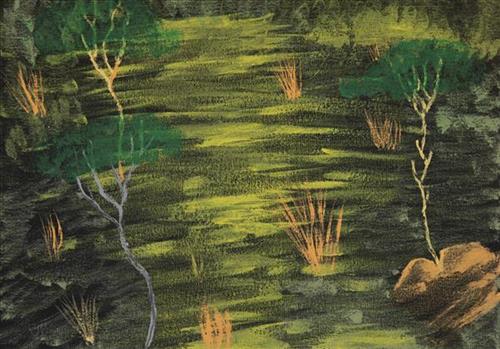
Travelling along the road

This work portrays an area known to the artist, painted here from memory. During the pujiman (traditional, desert dwelling) era one’s survival depended on their intimate knowledge of the location of resources; thus physical elements of Country, such as sources of kapi (water), tali (sandhills), and different varieties of warta (trees, vegetation) were carefully observed and remembered. Today, this relationship with Country remains equally strong, despite the movement of Martu out of the desert and into remote Aboriginal communities, towns and cities.

Also visible may be traces of life cycles based around kalyu (rain, water) and waru (fire). A thousands of year old practice, fire burning continues to be carried out as both an aid for hunting and a means of land management today. As the Martu travelled and hunted they would burn tracts of land, ensuring plant and animal biodiversity and reducing the risk of unmanageable, spontaneous bush fires. The patchwork nature of regrowth is visible in many landscape works, with each of the five distinctive phases of fire burning visually described with respect to the cycle of burning and regrowth.  

Finally, metaphysical information relating to a location may also be recorded; Jukurrpa (Dreaming) narratives chronicle the creation of physical landmarks, and can be referenced through depictions of ceremonial sites, songlines, and markers left in the land. 

111582393462


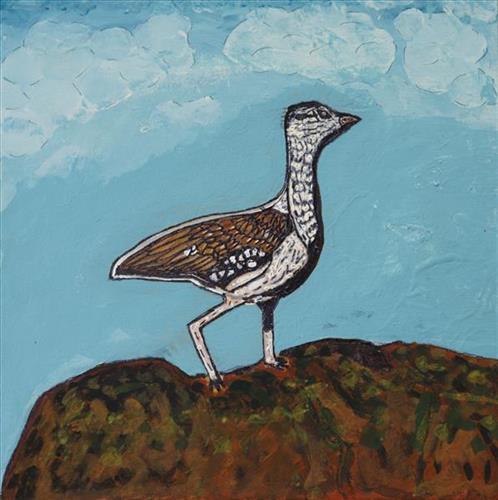
Kipara (Australian bustard, bush turkey)

Kipara (Australian Bustard, bush turkey) are ground-dwelling, large, speckled grey-brown birds found in the plains of the Western Desert and across northern Australia. Kipara fly long distances in the search of food, and were once widespread among the plains of Australia. However, following colonisation they have become increasingly rare. Kipara often travel in groups, and walk slowly, picking at food such as jinyjiwirrily (wild gooseberry, desert raisin), and are usually found at twilight and after dark. 

Kipara are known by Martu to be attracted to burn areas in the nyurnma (freshly burnt) and waru-waru (green shoots and young plants are sprouting from burnt areas) stages. Traditionally, kipara were stalked and then wounded whilst taking off using a karli (boomerang). Today, kipara are generally hunted with rifles from vehicles, enabling a close range approach. 

During the pujiman (traditional, desert dwelling) period, Martu would traverse very large distances annually in small family groups, moving seasonally from water source to water source, and hunting and gathering bush tucker as they went. Whilst desert life has moved away from mobile hunter-gatherer subsistence throughout the course of the twentieth century, bush tucker continues to be a significant component of the modern Martu diet. Hunting and gathering bush tucker remains equally valuable as an important cultural practice that is passed on intergenerationally. Though hunting and gathering implements have been modernised, methods of harvesting, tracking and the use of fire burning to drive animals from their retreats are still commonly practiced today. 

111582393447


Mulyamiji

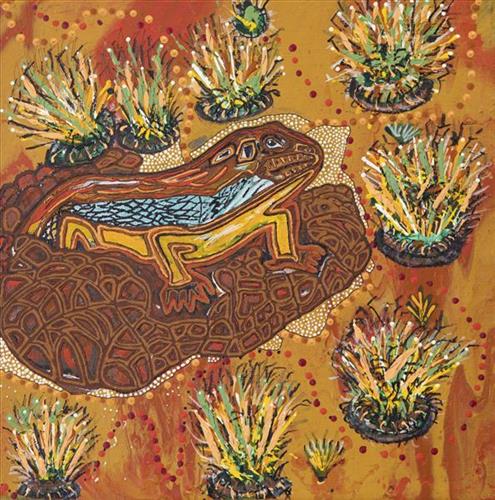
The Mulyamiji or Great Desert Skink is a large burrowing skink found across Martu country, with reddish-brown scales and a yellow underbelly. Traditionally a food source during pujiman (traditional, desert dwelling) times and deeply connected with lore and Jukurrpa (Dreamtime) stories, mulyamiji are now a threatened species. Martu work extensively across the Western Desert through the KJ (Kanyirninpa Jukurrpa) ranger program to monitor, survey and preserve mulyamiji along with many other threatened species.

111582393446


Bidyadanga Reef

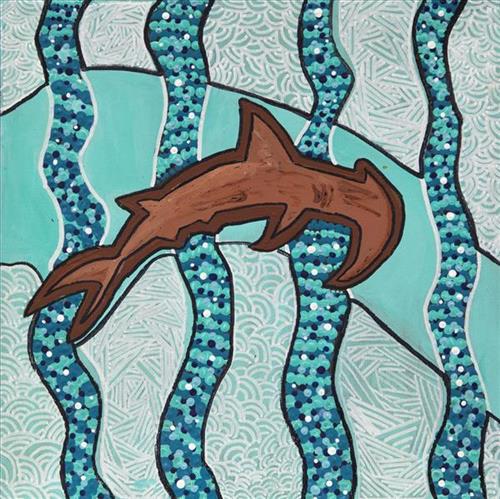
Bidyadanga is a community located on the Kimberley coast in Western Australia, where the Great Sandy Desert meets the sea. The word Bidyadanga is derived from pijarta/ bidyada (emu watering hole).