111582372797


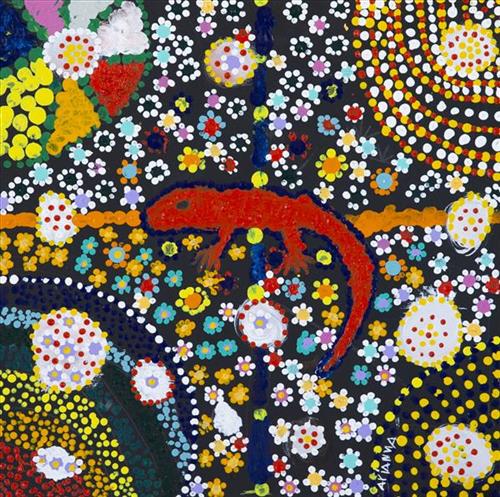
Mulyamiji (Great Desert Skink)

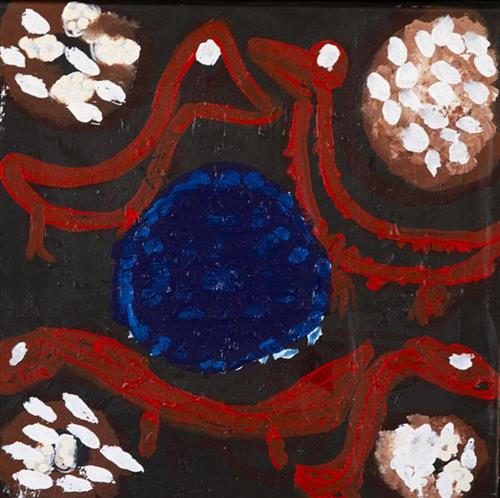
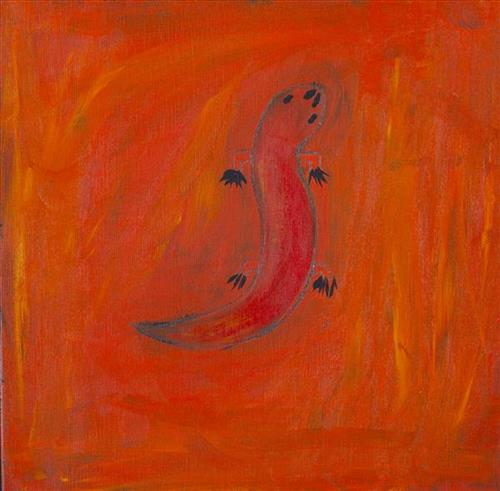
“This painting is about the Muyaminji, Great Desert Skink, I chose to paint this because it is the best animal.” – Arianna Williams

Arianna is painting a Mulyamiji (Great Desert Skink) while learning from Carol Williams about local endangered species.

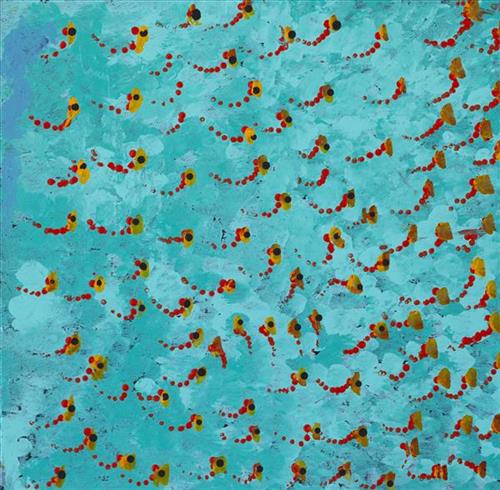
“This painting is of the Mulyamiji and the big clayplan out there – those red, white and yellow dots are the flowers that grow next to the claypan.”

“They go inside, and when they poo they go outside, that’s how they keep their home clean. That’s how we find them when we go out looking for them.”– Carol Williams

111582372796


Mulyamiji (Great Desert Skink)

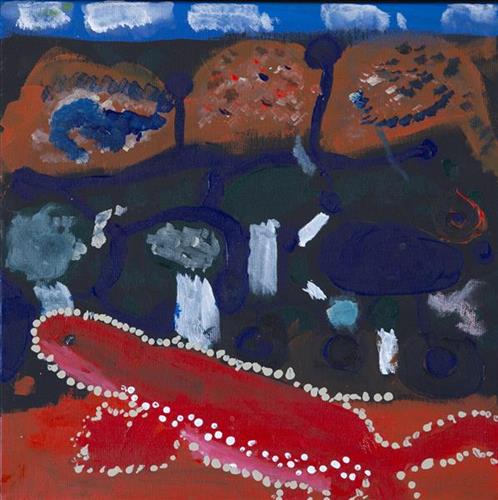
Rowan is painting a Mulyamiji (Great Desert Skink) while learning from Carol Williams about local endangered species.

“This painting is of the Mulyamiji and the big clayplan out there – those red, white and yellow dots are the flowers that grow next to the claypan.”

“They go inside, and when they poo they go outside, that’s how they keep their home clean. That’s how we find them when we go out looking for them.”– Carol Williams

111582372794


Mulyamiji (Great Desert Skink)

Keyarhn is painting a Mulyamiji (Great Desert Skink) while learning from Carol Williams about local endangered species.

“This painting is of the Mulyamiji and the big clayplan out there – those red, white and yellow dots are the flowers that grow next to the claypan.”

“They go inside, and when they poo they go outside, that’s how they keep their home clean. That’s how we find them when we go out looking for them.”– Carol Williams

111582372791


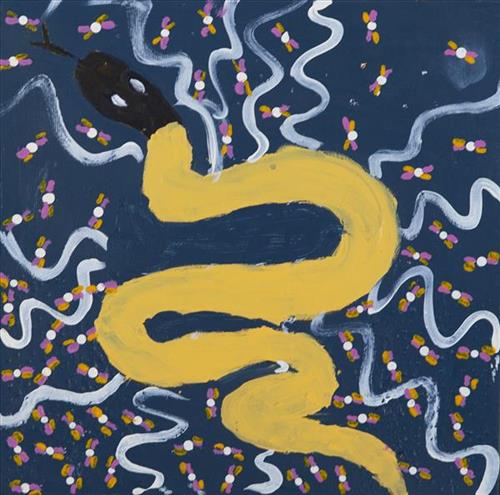
Snake

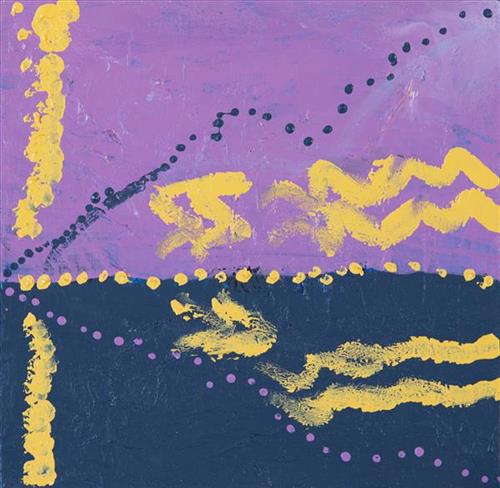
“Purple is the hill, purple one. Yellow, is all the snakes and black is the water. The snakes going to drink the water, painting is of Parnngurr East direction River.” – Uweisha Williams

The Western Desert term jila is used interchangeably to describe springs considered to be ‘living’ waters and snakes, both of which play a central role in Martu culture and Jukurrpa (Dreaming).

During the pujiman (traditional, desert dwelling) period, knowledge of water sources was critical for survival, and today Martu Country is still defined in terms of the location of water sources. Of the many permanent springs in Martu Country, very few are ‘living waters’; waters inhabited by jila (powerful ancestral beings). Before they became snakes, these beings were men who made rain, formed the land and introduced cultural practices like ceremonies and ritual songs. Some of the men travelled the desert together, visiting one another, but they all ended their journeys at their chosen spring alone, transformed into a snake. These important springs are named after their jila inhabitant, guarding their waters. 

Some of the jila snakes are known by Martu as quiet and benevolent, others as dangerous and ‘cheeky’. Regardless of the nature of the inhabitant snake, jila sites must be entered respectfully; particular rituals are practiced, such as lighting fires, sweeping the ground with branches, approaching in single file, and calling out to the site’s jila to announce one’s arrival and introduce people who are new to the jila. Those who do not follow these guidelines are in danger of becoming sick, or even being killed.
111582372789


Mulyamiji (Great Desert Skink)

Kaysten is painting a Mulyamiji (Great Desert Skink) while learning from Carol Williams about local endangered species.

“This painting is of the Mulyamiji and the big clayplan out there – those red, white and yellow dots are the flowers that grow next to the claypan.”

“They go inside, and when they poo they go outside, that’s how they keep their home clean. That’s how we find them when we go out looking for them.”– Carol Williams

111582372838


Jila (snake, living water)

The Western Desert term jila is used interchangeably to describe springs considered to be ‘living’ waters and snakes, both of which play a central role in Martu culture and Jukurrpa (Dreaming).

During the pujiman (traditional, desert dwelling) period, knowledge of water sources was critical for survival, and today Martu Country is still defined in terms of the location of water sources. Of the many permanent springs in Martu Country, very few are ‘living waters’; waters inhabited by jila (powerful ancestral beings). Before they became snakes, these beings were men who made rain, formed the land and introduced cultural practices like ceremonies and ritual songs. Some of the men travelled the desert together, visiting one another, but they all ended their journeys at their chosen spring alone, transformed into a snake. These important springs are named after their jila inhabitant, guarding their waters. 

Some of the jila snakes are known by Martu as quiet and benevolent, others as dangerous and ‘cheeky’. Regardless of the nature of the inhabitant snake, jila sites must be entered respectfully; particular rituals are practiced, such as lighting fires, sweeping the ground with branches, approaching in single file, and calling out to the site’s jila to announce one’s arrival and introduce people who are new to the jila. Those who do not follow these guidelines are in danger of becoming sick, or even being killed.
111582372793


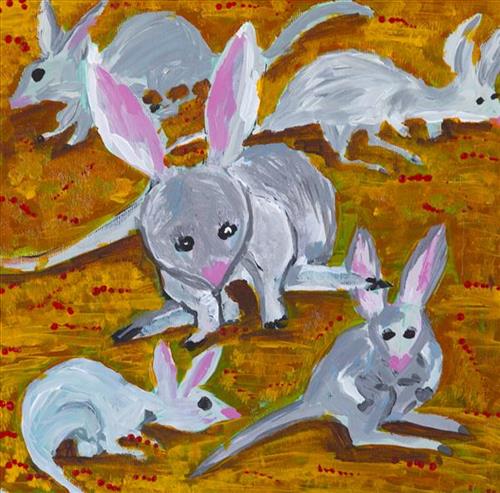
Mankarr (Greater Bilby)

“The old people use to eat the animals and we’re working with the KJ [Kanyirninpa Jukurrpa] ranger mob to protect them.”

– Carol Williams

Mankarr (greater bilby) is an omnivorous desert-dwelling mammal found in a range of arid habitats across northwestern and central Australia, including rocky soils, shrublands, woodlands and spinifex regions. Its fur is usually grey or white, and it has a long, sharp nose and long pinkish ears. At the time of European colonisation of Australia, there were two species. The lesser bilby became extinct in the 1950s, and while the greater bilby has survived, it remains a threatened species.

Since European colonisation of Australia, one hundred native Australian animal species have become extinct, with many others at the risk of extinction. As described by Carol, the preservation and conservation of the mangkarr is managed as part of the Kanyirninpa Jukurrpa ranger program.

111582372792


Lunki (witchetty grub)

Lunki (witchetty grubs) are the large, pinkish white, wood eating larvae of several moth species. During the pujiman (traditional, desert dwelling) era, lunki were a reliable food source, forming a staple of the Martu diet, and today they remain equally popular. Lunki are eaten either raw or cooked in hot ashes, with a raw nutty taste that becomes creamy when cooked. Though they are available through the year, lunki are particularly prevalent in late wantajarra (cool season). They are found in the trunks and roots of several tree species including acacia, tinjirla (coolabah), and yurungkura (red river gum). 

Martu forage for lunki by creating a small incision in the bark of a tree where the lunki is located, which is then used as the entry point for the insertion of a small hook, typically fashioned from a stick but sometimes using wire. Typically, lunki is collected incidentally during hunting trips or resting stops, and is a relatively relaxing, sociable activity. 

During the pujiman period, Martu would traverse very large distances annually in small family groups, moving seasonally from water source to water source, and hunting and gathering bush tucker as they went. Whilst desert life has moved away from mobile hunter-gatherer subsistence throughout the course of the twentieth century, bush tucker continues to be a significant component of the modern Martu diet. Hunting and gathering bush tucker remains equally valuable as an important cultural practice that is passed on intergenerationally. Though hunting and gathering implements have been modernised, methods of harvesting, tracking and the use of fire burning to drive animals from their retreats are still commonly practiced today.

111582372992


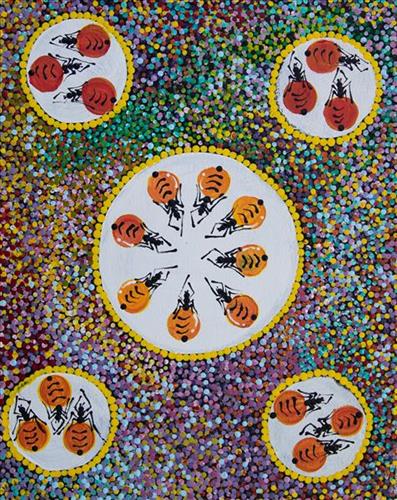
Wuukurta (Honey Ants)

Wuukurta (honey ants) are found in a variety of arid or semiarid environments, with nests of up to two metres deep and more than two metres across. Wuukurta are a highly sought after bush tucker, known otherwise as ‘bush lollies’ due to their sweet, honey like taste. They are eaten whilst still alive by holding the head and legs between two fingers and biting off the thorax. Martu dig for wuukurta nests through the seasons, but they are known to be especially abundant following the rains.

During the pujiman (traditional, desert dwelling) period, Martu would traverse very large distances annually in small family groups, moving seasonally from water source to water source, and hunting and gathering bush tucker as they went. Whilst desert life has moved away from mobile hunter-gatherer subsistence throughout the course of the twentieth century, bush tucker continues to be a significant component of the modern Martu diet. Hunting and gathering bush tucker remains equally valuable as an important cultural practice that is passed on intergenerationally. Though hunting and gathering implements have been modernised, methods of harvesting, tracking and the use of fire burning to drive animals from their retreats are still commonly practiced today.

111582372985


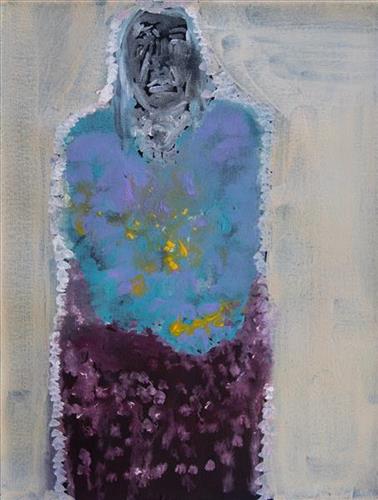
Wanti Yuu

How did you get to this style of painting?

“Do you mean, what have I done with my life? (chuckles to herself) To me these paintings are a sense of energy. So if I see someone and they’re happy, I paint a happy vibe. Cos their spirit is happy. And sometimes it’s hard because on the outside they’re real happy but on the inside they’re real sad. Sometimes you do stuff (like a painting) and it adds up later on. But I still don’t know what it means and don’t know where my style comes from because it’s both the path I walk on and the cracks in the dirt. It’s like looking at a landscape but I haven’t been there yet. Maybe I’ll get there one day. I believe things happen for a reason.”

– Sylvia Wilson