Screen print
Tamisha and Montana experimentation with screenprinting techniques as part of the artworker-training trip to Melbourne in 2019 at Negative Press studio.
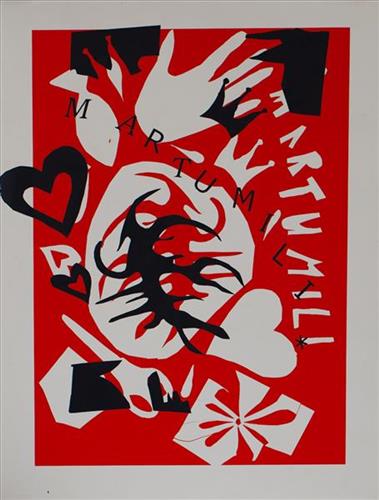
Tamisha and Montana experimentation with screenprinting techniques as part of the artworker-training trip to Melbourne in 2019 at Negative Press studio.
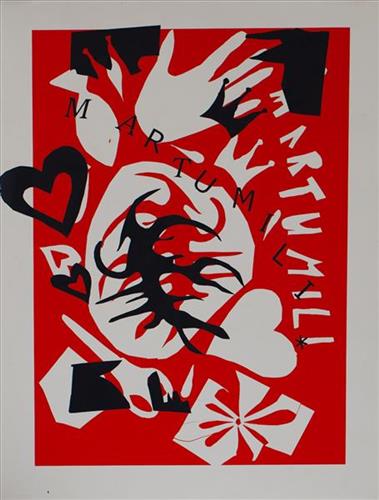
Tamisha and Montana experimentation with screenprinting techniques as part of the artworker-training trip to Melbourne in 2019 at Negative Press studio.
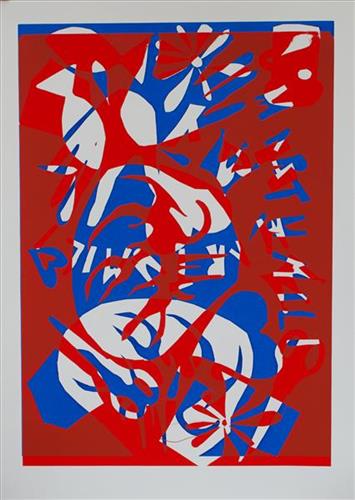
Tamisha and Montana experimentation with screenprinting techniques as part of the artworker-training trip to Melbourne in 2019 at Negative Press studio.
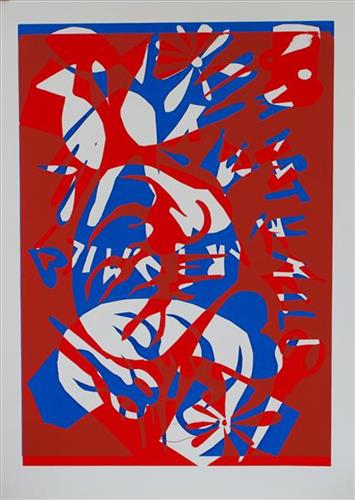
Tamisha and Montana experimentation with screenprinting techniques as part of the artworker-training trip to Melbourne in 2019 at Negative Press studio.
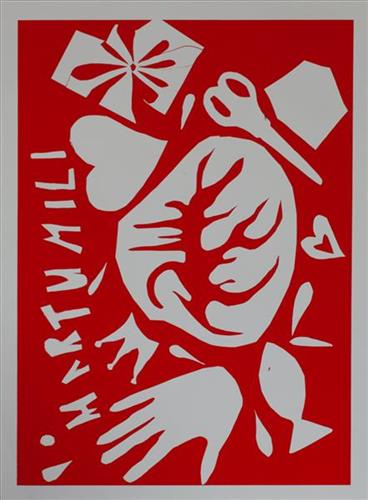
Tamisha and Montana experimentation with screenprinting techniques as part of the artworker-training trip to Melbourne in 2019 at Negative Press studio.
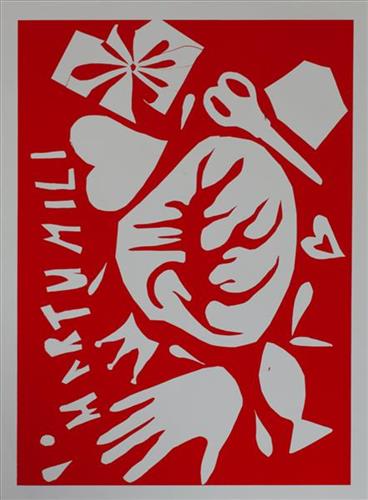
Tamisha and Montana experimentation with screenprinting techniques as part of the artworker-training trip to Melbourne in 2019 at Negative Press studio.
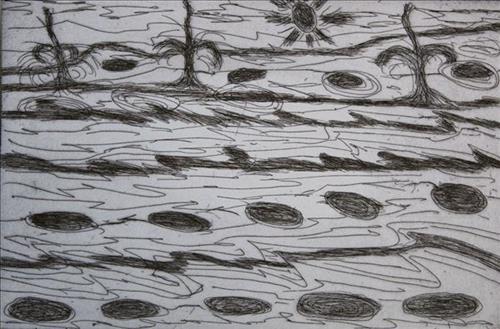
Pija was born in the desert, near Kunawarritji Community (also known as Well 33 on the Canning Stock Route). This artwork illustrates the sandhills and the vegetation that grows in the desert around Kunawarritji.
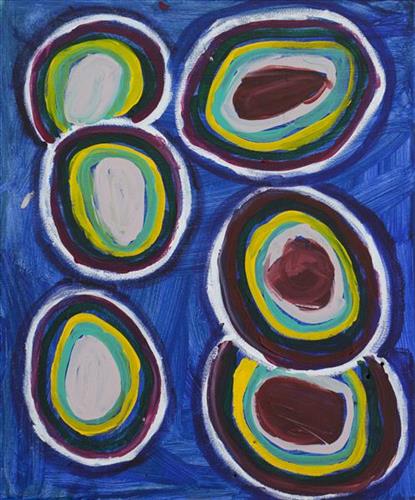
This painting represents an area of the Artist’s country east of the Community of Jigalong. While growing up at Jigalong mission, the artist returned to her home every weekend to hunt and camp.
Dada is recognised as a great authority in Jigalong and is particularly knowledgeable about Country in that area. Many of her paintings have a hovering, vibrating quality that is thoroughly grounded in Country, jukurrpa (dreaming) and history, even while it challenges stereotypes of ‘traditional’ desert paintings.
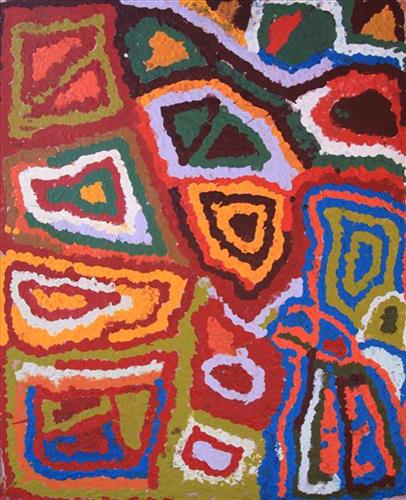
This is Mitutu’s Country- her ‘ngurra’ (home Country, camp). People identify with their ngurra in terms of specific rights and responsibilities, and the possession of intimate knowledge of the physical and cultural properties of one’s Country. Painting ngurra, and in so doing sharing the Jukurrpa (Dreaming) stories and physical characteristics of that place, has today become an important means of cultural maintenance. Mitutu’s ngurra encompasses her birthplace, Yirajarra soak, located close to Lake Auld and just north of Tiwa (Canning Stock Route Well 26), and the Country that her family walked in the pujiman (traditional, desert-dwelling) era, around the Karlamilyi (Rudall River) region.
Portrayed in this work are features of Mitutu’s family’s ngurra, such as the gorges and rivers, dominant permanent red tali (sandhills), warta (trees, vegetation), and the individually named water sources they camped at. Rock holes, waterholes, soaks and springs were all extremely important sites for Martu people during the pujiman period, and are generally depicted with circular forms.
The encyclopaedic knowledge of the location, quality and seasonal availability of the hundreds of water bodies found in one’s Country sustained Martu as they travelled across their Country, hunting and gathering, visiting family, and fulfilling ceremonial obligations. They would traverse very large distances annually, visiting specific areas in the dry and wet season depending on the availability of water and the corresponding cycles of plant and animal life on which hunting and gathering bush tucker was reliant. As they travelled and hunted they would also burn areas of Country, generating a greater diversity of plant and animal life.
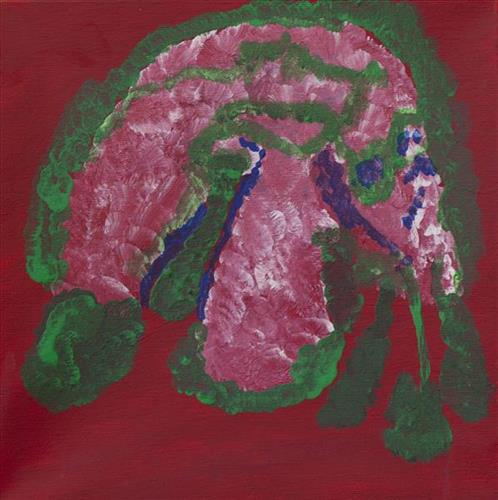
This work portrays an area known intimately to the artist, painted here in exquisite detail from memory. During the pujiman (traditional, desert dwelling) era one’s survival depended on their intimate knowledge of the location of resources; thus physical elements of Country, such as sources of kapi (water), tali (sandhills), and different varieties of warta (trees, vegetation) were carefully observed and remembered. Today, this relationship with Country remains equally strong, despite the movement of Martu out of the desert and into remote Aboriginal Communities, towns and cities.
Also visible may be traces of life cycles based around kalyu (rain, water) and waru (fire). A thousands of year old practice, fire burning continues to be carried out as both an aid for hunting and a means of land management today. As the Martu travelled and hunted they would burn tracts of land, ensuring plant and animal biodiversity and reducing the risk of unmanageable, spontaneous bush fires. The patchwork nature of regrowth is visible in many landscape works, with each of the five distinctive phases of fire burning visually described with respect to the cycle of burning and regrowth.
Finally, metaphysical information relating to a location may also be recorded; jukurrpa (dreaming) narratives chronicle the creation of physical landmarks, and can be referenced through depictions of ceremonial sites, songlines, and markers left in the land.