111582434472


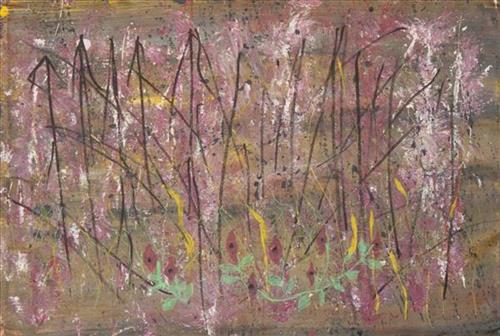
Untitled

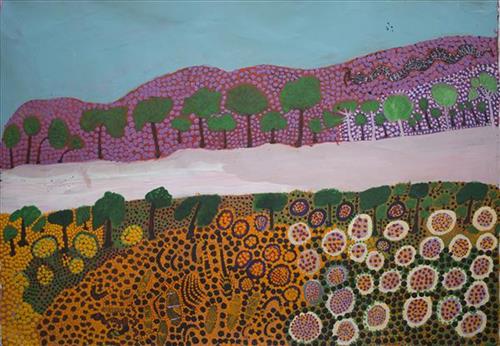
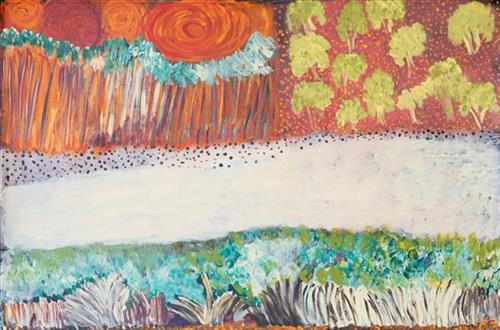
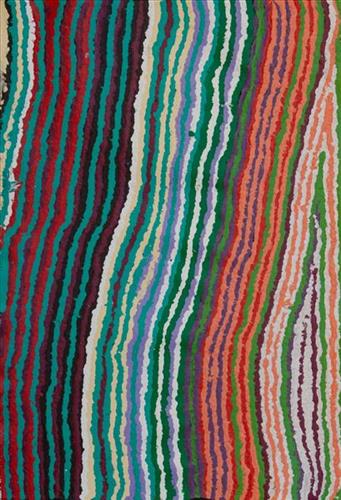
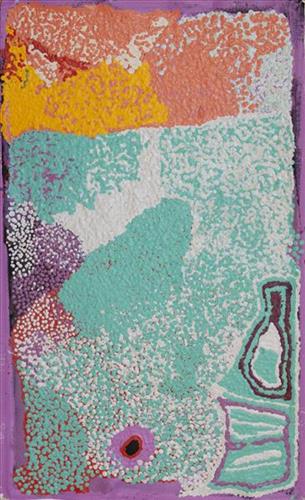
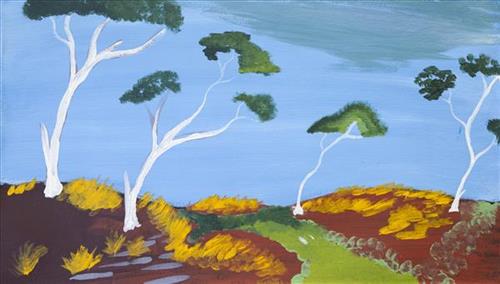
This site forms part of Blake Wilberforce’s ngurra (home Country, camp). People identify with their ngurra in terms of specific rights and responsibilities, and the possession of intimate knowledge of the physical and cultural properties of one’s Country. Painting ngurra, and in so doing sharing the Jukurrpa (Dreaming) stories and physical characteristics of that place, has today become an important means of cultural maintenance.

Blake enjoys painting at night to relax before bed and is family to fellow Martumili Artists Jason Tinker (dec.) and Peter Tinker Pija. As a young child, Blake travelled all the way from Kalgoorlie to Irrungadji, and remembers going gold detecting in the early morning with family before the heat set in.

Younger Martu artists often start painting alongside their parents, grandparents, and extended family, which fosters an organic learning process. This not only involves mastering painting techniques but also understanding specific locations, family histories, traditional ways of life, bush tucker, and Jukurrpa (Dreaming). Over time, with encouragement from their peers, they develop their own distinct styles and explore unique painting techniques and subject matter. In this work Blake brings a contemporary, evolving perspective to their work.
111582434470


Puntawarri

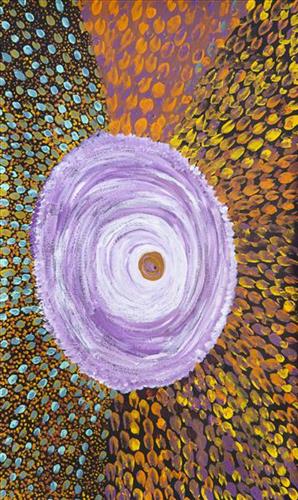
“All around is sandhills and lakes on every side. You can see the grass, but the lakes are all dry. In the middle is Puntawarri waterhole. That’s the jila (snake) place, two jila. They nyupa (spouses), they darlings, man and woman. They sleeping near to Puntawarri. It’s a hole in the ground- that jila will come out of the ground and all the dust will go everywhere. All the dust going everywhere, the dust that flies up when the jila flies up out of its hole. The jila isn’t in that place anymore. It’s gone now but that jila used to stop there.” 

 – Helen Dale Samson

Puntawarri is an important cultural area located on the middle stretches of the Canning Stock Route and east of the Jigalong Mission (now Jigalong Aboriginal community). It is also the site of an abandoned community, a waterhole, creek and lake. Puntawarri’s close proximity to Jigalong Mission made it a popular site for Martu to visit during the ‘mission days’. Dale was born at Jigalong Mission, and continues to live in the community now located there today. Though she grew up in the dormitory at Jigalong, she spent her weekends and holidays in the bush, camping at sites such as Puntawarri with her extended family. Once married, she lived around Puntawarri, walking and hunting in the surrounding Country.

For many Martu, like Dale’s family, Jigalong Mission was the site where their pujiman (traditional, desert dwelling) lifestyle came to an end from the late 1940s as they transitioned to a life as stockmen and women working in cattle stations in the Pilbara region and beyond. In the wake of the extreme and prolonged drought of the 1960s, the last of the remaining pujimanpa (desert dwellers) were forced to move to missions like Jigalong, where a supply of food and water was assured. There, many Martu were reunited with family members that had already moved in from the desert.

The waterhole at Puntawarri is said to be populated by several kinds of ancestral jila, as referred to by Dale in her account. However the site is best known for its association with the Ngayurnangalku, fearsome ancestral cannibal beings. During the Jukurrpa (Dreaming) the Ngayurnangalku came together from all over the desert, first stopping near Puntawarri on their travels to Kumpupirntily (Kumpupintily, Lake Disappointment). At Kumpupirntily, they had a big meeting to debate whether or not they would continue to live as cannibals, and eventually came to the decision to stop eating people. That night, a female baby cannibal was born to the eastern Ngayurnangalku on the red sandhills at Puntawarri, where she continues to live today as the ‘big mummy’ Ngayurnangalku. Following protocol, the baby also had to be consulted by the group. She determined that the Ngayurnangalku should continue to eat people. Her decision divided the group, and from this point the group from the east continued to live as ‘bad’ cannibals at Kumpupirntily, while the group from the west became ‘good’, thereafter consuming only animals.

11154009534


Status: Stock


Minyi Puru

Noreena Kadibil is a First Nations Artist, a proud Kartujarra woman, currently residing on Martu Country (Western Australia).

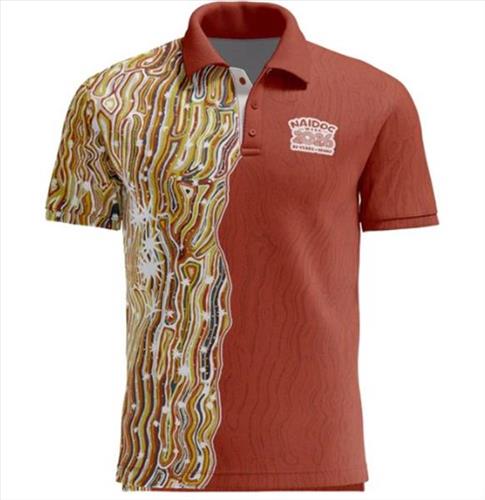
The 2026 theme marks five decades of NAIDOC as a nationally recognised movement celebrating First Nations culture, resilience and community leadership. It reflects on the journey and the role NAIDOC continues to play in building respect, understanding and a shared future.

Minyipuru, or Jakulyukulyu (Seven Sisters), is a central Jukurrpa (Dreaming) narrative for Martu and other First Nations peoples, associated with the seasonal Pleiades star constellation. Relayed through song, dance, stories and paintings, Minyipuru serves as a creation narrative and a source of knowledge relating to the physical properties of the land, and an embodiment of Aboriginal cultural laws. When Martumili Artists was established in 2005, this was the first Jukurrpa story the artists agreed to paint for a broader public.

Beginning in Roebourne on the west coast of Western Australia, the story evolves as it moves eastward across the land, following a group of women as they walk, dance, and even fly from waterhole to waterhole. As they travel, the women camp, sing, wash, dance and gather food, leaving markers in the landscape and creating landforms that remain to this day, such as groupings of rocks and trees, grinding stones and seeds. Throughout their journey, the women are pursued by a lustful old man, Yurla, while interactions with other animals, groups of men, and spirit beings are also chronicled.

111580610029


Jilukurru (Killagurra Springs, Canning Stock Route, Well 17)

“We were there long time as kid, playing around. I been walking around here, young fella. There’s big water there, running water. Water there belongs to that jila (snake), he belongs to there. That jila makes you scared if you’re a stranger messing around in the water. The water will go right up, and you better get out from there!

Wati Kujarra (Two Goanna Men). Youngfella, poor bugger. [Here at] Jilukurru, sitting down this side you can see their ngarnkurrpa (beards) right in the hill there. That’s their main place. He been youngfella them two, chasing all the kangaroo. They gone away from Jilukurru Country, long way away, right to Roebourne, to that lake there. They not coming back, they gone one way.

This is my Country, good Country. Long way away on the Canning Stock Route. We used to stop there [and] go hunting. No road then, we walking around. No car, only camels.”

– Yunkurra Billy Atkins

Yunkurra’s Country encompasses some of the most important and dangerous sites in the Western Desert, including Jilukurru (Killagurra Springs, Canning Stock Route Well 17) and Kumpupirntily (Kumpupintily, Lake Disappointment). Jilukurru is a yinta (permanent spring) located in a complex of gorges and valleys yapurra (west) of Kumpupirntily. Jilukurru lies in the heart of Yunkurra’s ngurra (home Country, camp); he grew up in this area. This spring was an important site for meetings during the pujiman (traditional, desert dwelling) era. 

As Yunkurra describes, Jilukurru is also sacred for its relation to the Jukurrpa (Dreaming) narrative of the Wati Kujarra. For this reason, access to the site is respectfully restricted. Wati Kujarra is one of the key foundational narratives for Western Desert people. Half men, half goanna, the Wati Kujarra were responsible for the creation of many land features in Martu Country and beyond as they travelled, hunted and burned Country together. Wati Kujarra is a ngurlu (sacred, taboo) men’s story, and much of the content is only shared with initiated men.

At Jilukurru, the Wati Kujarra lived for a time. Here they also trimmed their ngarnkurrpa. On one of the rocky headlands of the range system, the form of the two men can be seen, with their long beards rolling down the escarpment. After the Wati Kujarra left Jilukurru the site became home to an ancestral jila.

111582430575


Purnumalarra

Purnumalarra is a waterhole located along the Karlamilyi River (Rudall River). According to two of the central Martu Jukurrpa (Dreaming) narratives, the Karlamilyi River and its surrounds were created by the ancestral beings Jila Kujarra (Two Snakes) and the Wati Kujarra (Two Goanna Men) as they travelled across the lands.

Jila Kujarra is one of the key Jukurrpa narratives for the Martu. Though the story belongs to Warnman people, it is shared across the Western Desert with several other language groups. The narrative centres on the travels of two snakes as they are pursued by the Niminjarra, spiritual ancestors of the Warnman people.

111582431898


Untitled

This is Yikartu’s Country- her ‘ngurra’ (home Country, camp). People identify with their ngurra in terms of specific rights and responsibilities, and the possession of intimate knowledge of the physical and cultural properties of one’s Country. Painting ngurra, and in so doing sharing the Jukurrpa (Dreaming) stories and physical characteristics of that place, has today become an important means of cultural maintenance. 

Yikartu’s ngurra encompasses the Country that she and her family walked in the pujiman (traditional, desert-dwelling) era. Yikartu was born at Lalyipuka. She grew up, walked and hunted primarily within Yulparija Country, north of Manyjilyjarra Country, and through to the Percival Lakes area, at the northern boundary of the Martu homelands. She continued to live nomadically before eventually deciding to move to Jigalong Mission along with many other relatives following an extreme and prolonged drought in the 1960s. 

Portrayed in this work are features of Yikartu’s ngurra, such as the dominant permanent red tali (sandhills), warta (trees, vegetation), and the individually named water sources she and her family camped at. These include Yulpu, Yimiri, Kupankurlu, Kurturrara, Wirnpa, Jurnpanja, Rulu-rulu, Taparl-taparl, Wirrkujapayi, Tayiku and Puntita. Rock holes, waterholes, soaks and springs were all extremely important sites for Martu people during the pujiman period, and are generally depicted with circular forms. 

The encyclopaedic knowledge of the location, quality and seasonal availability of the hundreds of water bodies found in one’s Country sustained Martu as they travelled across their Country, hunting and gathering, visiting family, and fulfilling ceremonial obligations. They would traverse very large distances annually, visiting specific areas in the dry and wet season depending on the availability of water and the corresponding cycles of plant and animal life on which hunting and gathering bush tucker was reliant. As they travelled and hunted they would also burn areas of Country, generating a greater diversity of plant and animal life.

111582431896


Untitled

This is Yikartu’s Country- her ‘ngurra’ (home Country, camp). People identify with their ngurra in terms of specific rights and responsibilities, and the possession of intimate knowledge of the physical and cultural properties of one’s Country. Painting ngurra, and in so doing sharing the Jukurrpa (Dreaming) stories and physical characteristics of that place, has today become an important means of cultural maintenance. 

Yikartu’s ngurra encompasses the Country that she and her family walked in the pujiman (traditional, desert-dwelling) era. Yikartu was born at Lalyipuka. She grew up, walked and hunted primarily within Yulparija Country, north of Manyjilyjarra Country, and through to the Percival Lakes area, at the northern boundary of the Martu homelands. She continued to live nomadically before eventually deciding to move to Jigalong Mission along with many other relatives following an extreme and prolonged drought in the 1960s. 

Portrayed in this work are features of Yikartu’s ngurra, such as the dominant permanent red tali (sandhills), warta (trees, vegetation), and the individually named water sources she and her family camped at. These include Yulpu, Yimiri, Kupankurlu, Kurturrara, Wirnpa, Jurnpanja, Rulu-rulu, Taparl-taparl, Wirrkujapayi, Tayiku and Puntita. Rock holes, waterholes, soaks and springs were all extremely important sites for Martu people during the pujiman period, and are generally depicted with circular forms. 

The encyclopaedic knowledge of the location, quality and seasonal availability of the hundreds of water bodies found in one’s Country sustained Martu as they travelled across their Country, hunting and gathering, visiting family, and fulfilling ceremonial obligations. They would traverse very large distances annually, visiting specific areas in the dry and wet season depending on the availability of water and the corresponding cycles of plant and animal life on which hunting and gathering bush tucker was reliant. As they travelled and hunted they would also burn areas of Country, generating a greater diversity of plant and animal life.

111582431895


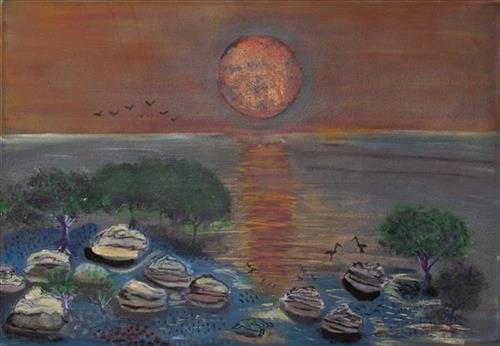
Sunset at Chinaman Road

Fishing area for Nyanagumarta & Karajarri peoples on Djimmarkuii (Chinaman Road). One afternoon I caught the sun setting. I will always remember it dipping into the ocean. I keep the memory in my heart.

111582431894


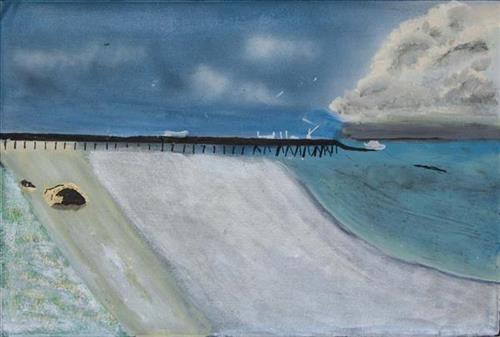
Broome Jetty

The Broome Jetty was a time depot for all communities to their loading stores, because there was no truck transport by road ,only by ship.