111582120107


Kulyakartu

“My Country, Kulyakartu. I grew up there, from little boy to big boy grew up there.”

 – Muuki Taylor

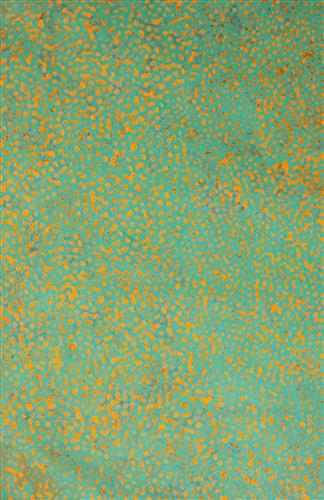
This painting depicts Kulyakartu, Muuki’s ngurra (home Country, camp). Kulyakartu is located in the far north of the Martu homelands, near the Percival Lakes region of Western Australia’s Great Sandy Desert. Muuki has extensive knowledge of the Country in this region, where he grew up living traditionally during the pujiman (traditional, desert dwelling) days with his family. Kulyakartu is mostly grass Country where there is very good hunting. In particular parnajarrpa (goanna), wild cats, and lunki (witchetty grub) are found in abundance here. There is no permanent water source in Kulyakartu, so Muuki’s family would walk here annually following the wantajarra (wet season). During the yalijarra (hot, dry season) they would head south again to more permanent water.

Muuki paints Kulyakartu in all its different seasonal stages. Often visible in his work is the patchwork nature of regrowth subsequent to the practice of waru (fire) burning that assists with hunting, regenerates growth, and encourages greater diversity in plant and animal life. This mosaic patterning is aligned with the five distinct Martu cyclical phases of burning and regrowth. First is nyurnma (freshly burnt Country) when Muuki is “making waru”. Following nyurnma are the rains and subsequent waru-waru, when young, bright green plants start to grow. Nyukura occurs between one and three years after burning, when plants have matured and are fruiting and seeding. Manguu is “when him finished”, four to six years post burning, and when spinifex has matured to the point that it can be burned once again. Finally, kunarka signifies the time when spinifex and other plant species have become old growth, and pose a risk of destructive bushfires.

111582120622


Home, Kaalpa

DESART PHOTOGRAPHY PRIZE

RETURNING UNSOLD WORKS (EDITION NUMBERS) TO ART CENTRES AND FUTURE SALES/PRINTING PROCEDURES

For each successful entry for the photography prize, Desart will print one photograph, to be catalogued as an AP (Artist’s Proof). This image will be framed and shown in the exhibition and then retained by Desart (catalogued on SAM for our ‘Collection’).

Desart manages sales for the first month of the exhibition. During this time, Desart will retain 30% of the public sale price to recoup framing, printing, freight and general exhibition costs. The artist will be paid 70% of the public price. Art Centres must invoice Desart for this.

Desart will create catalogue numbers on SAM for an edition of 10 works, but these 10 works will only be printed on demand if the image sells.

The works are priced so that they are part of a finite edition – that is, no more than 10 will ever be produced. It is essential that everyone honours even this after the exhibition to retain the integrity and value of the work as a limited edition. If the artist wishes to alter the image, they could potentially create a ‘second state’ to sell, but the original photograph is capped at an edition of 10 only.

After the first month, any unsold ‘works’ (which are actually catalogue numbers rather than physical works) are returned to the art centre for any future sales.

For this Desart will provide each art centre with a report of sales. The art centre will the need to catalogue these in their own system (SAM) using the remaining edition numbers.

Below is our contact (Richard at Darkstar) and all prints should be printed there, to the same specifications, in order to retain the integrity and identical nature of the edition of photographs.

darkstardigital.com.au

Richard Crampton: 0408 849 276

rcrampton@darkstardigital.com.au

Shop 3, 138 Botany Rd, Alexandria, NSW 2015

Images are sent by drop box including thumbnails and print size should be specified as A2, A3 or A4. For consistency the works need to be printed on white cotton rag paper. Printing costs can be found on the website:

http://darkstardigital.com.au/pricing/

Richard is prepared to send the works straight to the purchaser or back to the art centre but you will need to factor in packing and shipping costs (he will let you know how much). Sydney clients are often happy to go and pick the work up.


111582120604


Untitled

DESART PHOTOGRAPHY PRIZE

RETURNING UNSOLD WORKS (EDITION NUMBERS) TO ART CENTRES AND FUTURE SALES/PRINTING PROCEDURES

For each successful entry for the photography prize, Desart will print one photograph, to be catalogued as an AP (Artist’s Proof). This image will be framed and shown in the exhibition and then retained by Desart (catalogued on SAM for our ‘Collection’).

Desart manages sales for the first month of the exhibition. During this time, Desart will retain 30% of the public sale price to recoup framing, printing, freight and general exhibition costs. The artist will be paid 70% of the public price. Art Centres must invoice Desart for this.

Desart will create catalogue numbers on SAM for an edition of 10 works, but these 10 works will only be printed on demand if the image sells.

The works are priced so that they are part of a finite edition – that is, no more than 10 will ever be produced. It is essential that everyone honours even this after the exhibition to retain the integrity and value of the work as a limited edition. If the artist wishes to alter the image, they could potentially create a ‘second state’ to sell, but the original photograph is capped at an edition of 10 only.

After the first month, any unsold ‘works’ (which are actually catalogue numbers rather than physical works) are returned to the art centre for any future sales.

For this Desart will provide each art centre with a report of sales. The art centre will the need to catalogue these in their own system (SAM) using the remaining edition numbers.

Below is our contact (Richard at Darkstar) and all prints should be printed there, to the same specifications, in order to retain the integrity and identical nature of the edition of photographs.

darkstardigital.com.au

Richard Crampton: 0408 849 276

rcrampton@darkstardigital.com.au

Shop 3, 138 Botany Rd, Alexandria, NSW 2015

Images are sent by drop box including thumbnails and print size should be specified as A2, A3 or A4. For consistency the works need to be printed on white cotton rag paper. Printing costs can be found on the website:

http://darkstardigital.com.au/pricing/

Richard is prepared to send the works straight to the purchaser or back to the art centre but you will need to factor in packing and shipping costs (he will let you know how much). Sydney clients are often happy to go and pick the work up.


111582120583


The Watch Out

DESART PHOTOGRAPHY PRIZE

RETURNING UNSOLD WORKS (EDITION NUMBERS) TO ART CENTRES AND FUTURE SALES/PRINTING PROCEDURES

For each successful entry for the photography prize, Desart will print one photograph, to be catalogued as an AP (Artist’s Proof). This image will be framed and shown in the exhibition and then retained by Desart (catalogued on SAM for our ‘Collection’).

Desart manages sales for the first month of the exhibition. During this time, Desart will retain 30% of the public sale price to recoup framing, printing, freight and general exhibition costs. The artist will be paid 70% of the public price. Art Centres must invoice Desart for this.

Desart will create catalogue numbers on SAM for an edition of 10 works, but these 10 works will only be printed on demand if the image sells.

The works are priced so that they are part of a finite edition – that is, no more than 10 will ever be produced. It is essential that everyone honours even this after the exhibition to retain the integrity and value of the work as a limited edition. If the artist wishes to alter the image, they could potentially create a ‘second state’ to sell, but the original photograph is capped at an edition of 10 only.

After the first month, any unsold ‘works’ (which are actually catalogue numbers rather than physical works) are returned to the art centre for any future sales.

For this Desart will provide each art centre with a report of sales. The art centre will the need to catalogue these in their own system (SAM) using the remaining edition numbers.

Below is our contact (Richard at Darkstar) and all prints should be printed there, to the same specifications, in order to retain the integrity and identical nature of the edition of photographs.

darkstardigital.com.au

Richard Crampton: 0408 849 276

rcrampton@darkstardigital.com.au

Shop 3, 138 Botany Rd, Alexandria, NSW 2015

Images are sent by drop box including thumbnails and print size should be specified as A2, A3 or A4. For consistency the works need to be printed on white cotton rag paper. Printing costs can be found on the website:

http://darkstardigital.com.au/pricing/

Richard is prepared to send the works straight to the purchaser or back to the art centre but you will need to factor in packing and shipping costs (he will let you know how much). Sydney clients are often happy to go and pick the work up.

111582120582


The Watch Out

DESART PHOTOGRAPHY PRIZE

RETURNING UNSOLD WORKS (EDITION NUMBERS) TO ART CENTRES AND FUTURE SALES/PRINTING PROCEDURES

For each successful entry for the photography prize, Desart will print one photograph, to be catalogued as an AP (Artist’s Proof). This image will be framed and shown in the exhibition and then retained by Desart (catalogued on SAM for our ‘Collection’).

Desart manages sales for the first month of the exhibition. During this time, Desart will retain 30% of the public sale price to recoup framing, printing, freight and general exhibition costs. The artist will be paid 70% of the public price. Art Centres must invoice Desart for this.

Desart will create catalogue numbers on SAM for an edition of 10 works, but these 10 works will only be printed on demand if the image sells.

The works are priced so that they are part of a finite edition – that is, no more than 10 will ever be produced. It is essential that everyone honours even this after the exhibition to retain the integrity and value of the work as a limited edition. If the artist wishes to alter the image, they could potentially create a ‘second state’ to sell, but the original photograph is capped at an edition of 10 only.

After the first month, any unsold ‘works’ (which are actually catalogue numbers rather than physical works) are returned to the art centre for any future sales.

For this Desart will provide each art centre with a report of sales. The art centre will the need to catalogue these in their own system (SAM) using the remaining edition numbers.

Below is our contact (Richard at Darkstar) and all prints should be printed there, to the same specifications, in order to retain the integrity and identical nature of the edition of photographs.

darkstardigital.com.au

Richard Crampton: 0408 849 276

rcrampton@darkstardigital.com.au

Shop 3, 138 Botany Rd, Alexandria, NSW 2015

Images are sent by drop box including thumbnails and print size should be specified as A2, A3 or A4. For consistency the works need to be printed on white cotton rag paper. Printing costs can be found on the website:

http://darkstardigital.com.au/pricing/

Richard is prepared to send the works straight to the purchaser or back to the art centre but you will need to factor in packing and shipping costs (he will let you know how much). Sydney clients are often happy to go and pick the work up.

111582120581


The Watch Out

DESART PHOTOGRAPHY PRIZE

RETURNING UNSOLD WORKS (EDITION NUMBERS) TO ART CENTRES AND FUTURE SALES/PRINTING PROCEDURES

For each successful entry for the photography prize, Desart will print one photograph, to be catalogued as an AP (Artist’s Proof). This image will be framed and shown in the exhibition and then retained by Desart (catalogued on SAM for our ‘Collection’).

Desart manages sales for the first month of the exhibition. During this time, Desart will retain 30% of the public sale price to recoup framing, printing, freight and general exhibition costs. The artist will be paid 70% of the public price. Art Centres must invoice Desart for this.

Desart will create catalogue numbers on SAM for an edition of 10 works, but these 10 works will only be printed on demand if the image sells.

The works are priced so that they are part of a finite edition – that is, no more than 10 will ever be produced. It is essential that everyone honours even this after the exhibition to retain the integrity and value of the work as a limited edition. If the artist wishes to alter the image, they could potentially create a ‘second state’ to sell, but the original photograph is capped at an edition of 10 only.

After the first month, any unsold ‘works’ (which are actually catalogue numbers rather than physical works) are returned to the art centre for any future sales.

For this Desart will provide each art centre with a report of sales. The art centre will the need to catalogue these in their own system (SAM) using the remaining edition numbers.

Below is our contact (Richard at Darkstar) and all prints should be printed there, to the same specifications, in order to retain the integrity and identical nature of the edition of photographs.

darkstardigital.com.au

Richard Crampton: 0408 849 276

rcrampton@darkstardigital.com.au

Shop 3, 138 Botany Rd, Alexandria, NSW 2015

Images are sent by drop box including thumbnails and print size should be specified as A2, A3 or A4. For consistency the works need to be printed on white cotton rag paper. Printing costs can be found on the website:

http://darkstardigital.com.au/pricing/

Richard is prepared to send the works straight to the purchaser or back to the art centre but you will need to factor in packing and shipping costs (he will let you know how much). Sydney clients are often happy to go and pick the work up.

111582120623


Home, Kaalpa

DESART PHOTOGRAPHY PRIZE

RETURNING UNSOLD WORKS (EDITION NUMBERS) TO ART CENTRES AND FUTURE SALES/PRINTING PROCEDURES

For each successful entry for the photography prize, Desart will print one photograph, to be catalogued as an AP (Artist’s Proof). This image will be framed and shown in the exhibition and then retained by Desart (catalogued on SAM for our ‘Collection’).

Desart manages sales for the first month of the exhibition. During this time, Desart will retain 30% of the public sale price to recoup framing, printing, freight and general exhibition costs. The artist will be paid 70% of the public price. Art Centres must invoice Desart for this.

Desart will create catalogue numbers on SAM for an edition of 10 works, but these 10 works will only be printed on demand if the image sells.

The works are priced so that they are part of a finite edition – that is, no more than 10 will ever be produced. It is essential that everyone honours even this after the exhibition to retain the integrity and value of the work as a limited edition. If the artist wishes to alter the image, they could potentially create a ‘second state’ to sell, but the original photograph is capped at an edition of 10 only.

After the first month, any unsold ‘works’ (which are actually catalogue numbers rather than physical works) are returned to the art centre for any future sales.

For this Desart will provide each art centre with a report of sales. The art centre will the need to catalogue these in their own system (SAM) using the remaining edition numbers.

Below is our contact (Richard at Darkstar) and all prints should be printed there, to the same specifications, in order to retain the integrity and identical nature of the edition of photographs.

darkstardigital.com.au

Richard Crampton: 0408 849 276

rcrampton@darkstardigital.com.au

Shop 3, 138 Botany Rd, Alexandria, NSW 2015

Images are sent by drop box including thumbnails and print size should be specified as A2, A3 or A4. For consistency the works need to be printed on white cotton rag paper. Printing costs can be found on the website:

http://darkstardigital.com.au/pricing/

Richard is prepared to send the works straight to the purchaser or back to the art centre but you will need to factor in packing and shipping costs (he will let you know how much). Sydney clients are often happy to go and pick the work up.


111582120621


Home, Kaalpa

DESART PHOTOGRAPHY PRIZE

RETURNING UNSOLD WORKS (EDITION NUMBERS) TO ART CENTRES AND FUTURE SALES/PRINTING PROCEDURES

For each successful entry for the photography prize, Desart will print one photograph, to be catalogued as an AP (Artist’s Proof). This image will be framed and shown in the exhibition and then retained by Desart (catalogued on SAM for our ‘Collection’).

Desart manages sales for the first month of the exhibition. During this time, Desart will retain 30% of the public sale price to recoup framing, printing, freight and general exhibition costs. The artist will be paid 70% of the public price. Art Centres must invoice Desart for this.

Desart will create catalogue numbers on SAM for an edition of 10 works, but these 10 works will only be printed on demand if the image sells.

The works are priced so that they are part of a finite edition – that is, no more than 10 will ever be produced. It is essential that everyone honours even this after the exhibition to retain the integrity and value of the work as a limited edition. If the artist wishes to alter the image, they could potentially create a ‘second state’ to sell, but the original photograph is capped at an edition of 10 only.

After the first month, any unsold ‘works’ (which are actually catalogue numbers rather than physical works) are returned to the art centre for any future sales.

For this Desart will provide each art centre with a report of sales. The art centre will the need to catalogue these in their own system (SAM) using the remaining edition numbers.

Below is our contact (Richard at Darkstar) and all prints should be printed there, to the same specifications, in order to retain the integrity and identical nature of the edition of photographs.

darkstardigital.com.au

Richard Crampton: 0408 849 276

rcrampton@darkstardigital.com.au

Shop 3, 138 Botany Rd, Alexandria, NSW 2015

Images are sent by drop box including thumbnails and print size should be specified as A2, A3 or A4. For consistency the works need to be printed on white cotton rag paper. Printing costs can be found on the website:

http://darkstardigital.com.au/pricing/

Richard is prepared to send the works straight to the purchaser or back to the art centre but you will need to factor in packing and shipping costs (he will let you know how much). Sydney clients are often happy to go and pick the work up.


111582120620


Home, Kaalpa

DESART PHOTOGRAPHY PRIZE

RETURNING UNSOLD WORKS (EDITION NUMBERS) TO ART CENTRES AND FUTURE SALES/PRINTING PROCEDURES

For each successful entry for the photography prize, Desart will print one photograph, to be catalogued as an AP (Artist’s Proof). This image will be framed and shown in the exhibition and then retained by Desart (catalogued on SAM for our ‘Collection’).

Desart manages sales for the first month of the exhibition. During this time, Desart will retain 30% of the public sale price to recoup framing, printing, freight and general exhibition costs. The artist will be paid 70% of the public price. Art Centres must invoice Desart for this.

Desart will create catalogue numbers on SAM for an edition of 10 works, but these 10 works will only be printed on demand if the image sells.

The works are priced so that they are part of a finite edition – that is, no more than 10 will ever be produced. It is essential that everyone honours even this after the exhibition to retain the integrity and value of the work as a limited edition. If the artist wishes to alter the image, they could potentially create a ‘second state’ to sell, but the original photograph is capped at an edition of 10 only.

After the first month, any unsold ‘works’ (which are actually catalogue numbers rather than physical works) are returned to the art centre for any future sales.

For this Desart will provide each art centre with a report of sales. The art centre will the need to catalogue these in their own system (SAM) using the remaining edition numbers.

Below is our contact (Richard at Darkstar) and all prints should be printed there, to the same specifications, in order to retain the integrity and identical nature of the edition of photographs.

darkstardigital.com.au

Richard Crampton: 0408 849 276

rcrampton@darkstardigital.com.au

Shop 3, 138 Botany Rd, Alexandria, NSW 2015

Images are sent by drop box including thumbnails and print size should be specified as A2, A3 or A4. For consistency the works need to be printed on white cotton rag paper. Printing costs can be found on the website:

http://darkstardigital.com.au/pricing/

Richard is prepared to send the works straight to the purchaser or back to the art centre but you will need to factor in packing and shipping costs (he will let you know how much). Sydney clients are often happy to go and pick the work up.


111582120619


Home, Kaalpa

DESART PHOTOGRAPHY PRIZE

RETURNING UNSOLD WORKS (EDITION NUMBERS) TO ART CENTRES AND FUTURE SALES/PRINTING PROCEDURES

For each successful entry for the photography prize, Desart will print one photograph, to be catalogued as an AP (Artist’s Proof). This image will be framed and shown in the exhibition and then retained by Desart (catalogued on SAM for our ‘Collection’).

Desart manages sales for the first month of the exhibition. During this time, Desart will retain 30% of the public sale price to recoup framing, printing, freight and general exhibition costs. The artist will be paid 70% of the public price. Art Centres must invoice Desart for this.

Desart will create catalogue numbers on SAM for an edition of 10 works, but these 10 works will only be printed on demand if the image sells.

The works are priced so that they are part of a finite edition – that is, no more than 10 will ever be produced. It is essential that everyone honours even this after the exhibition to retain the integrity and value of the work as a limited edition. If the artist wishes to alter the image, they could potentially create a ‘second state’ to sell, but the original photograph is capped at an edition of 10 only.

After the first month, any unsold ‘works’ (which are actually catalogue numbers rather than physical works) are returned to the art centre for any future sales.

For this Desart will provide each art centre with a report of sales. The art centre will the need to catalogue these in their own system (SAM) using the remaining edition numbers.

Below is our contact (Richard at Darkstar) and all prints should be printed there, to the same specifications, in order to retain the integrity and identical nature of the edition of photographs.

darkstardigital.com.au

Richard Crampton: 0408 849 276

rcrampton@darkstardigital.com.au

Shop 3, 138 Botany Rd, Alexandria, NSW 2015

Images are sent by drop box including thumbnails and print size should be specified as A2, A3 or A4. For consistency the works need to be printed on white cotton rag paper. Printing costs can be found on the website:

http://darkstardigital.com.au/pricing/

Richard is prepared to send the works straight to the purchaser or back to the art centre but you will need to factor in packing and shipping costs (he will let you know how much). Sydney clients are often happy to go and pick the work up.