Status: Stock
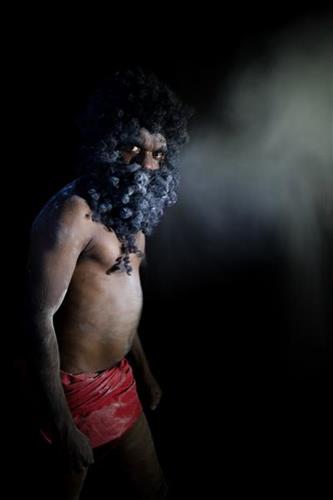
Desart Photograph – Black Magic Spiritual Man
“This is a mystery healing man, walk around healing people, looking after the sick (nyanta) people. [He] comes once a full moon then disappears.”
– Richard Mandijalu
Status: Stock
“This is a mystery healing man, walk around healing people, looking after the sick (nyanta) people. [He] comes once a full moon then disappears.”
– Richard Mandijalu

Status: Stock
“This is my sister holding bush gum. We found this in a tree near my house on the other side of the road. We collect gum all the time because it’s good for your liver and is sweet like honey.”
– Montana Clause
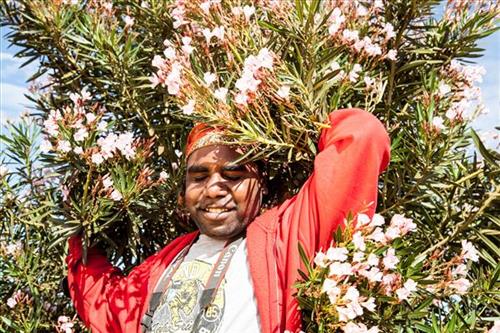
Status: Stock
“This is Bumba feeling happy. He’s smart, he’s good and he’s pukurlpa (happy)”
– Judith Anya Samson
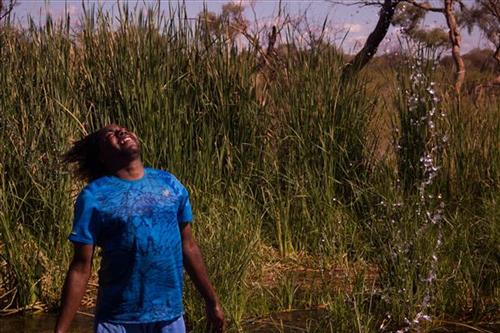
Status: Stock
“Green everywhere – the water is coming from a pipe. Corban was swimming. It’s too hot! Corban is feeling cool from the cold water. We go here when it’s a bit hot in the car with family.”
– Janita Angie Simpson
Status: Stock
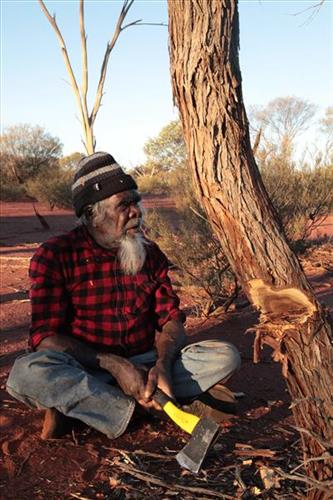
“One afternoon we went out with my jamu (grandfather). We went to the other side of Capricorn. We follow the dirt track to get the wood to make a real boomerang. We wanted to get the right wood to show everyone this is how it’s done. People buy fake boomerangs from the airport and it’s harming our culture. It’s hurting our people, seeing fake art sell. This here is how I learned from my elders. My grandfather sitting down here is a spiritual and cultural leader for young Martu.”
– Ignatius Taylor (Hamzah)
Status: Stock
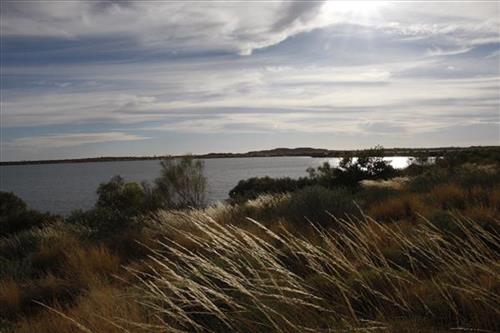
“This is a special place for all the Martu. It’s a gathering place. This is wher my grandfather got taken away from my grandmother by the cannibal.”
-Cyril Whyoulter
Wantili is a large round jurnu (soak) and lyinji (claypan) near Well 25 on the Canning Stock Route. The area is dominated by claypans surrounded by tuwa (sandhills). Following rain the typically dry claypans are filled with water, with the overflow from nearby waterholes flowing to Wantili. At that time, Wantili becomes an important place for obtaining fresh water for drinking and bathing. Wantili is significant for the fact that at this site Kartujarra, Manyjilyjarra, Putujarra and Warnman people would all come together for ceremonies. Manyjiwa (stones used by women for grinding seeds) from these times can still be found there today.
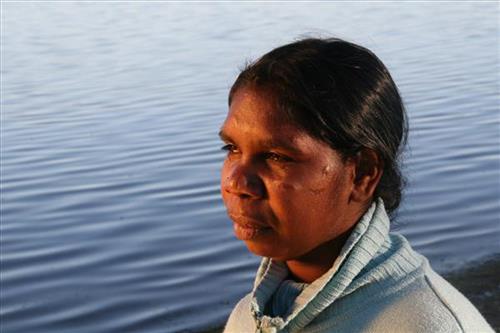
Status: Stock
“This is Janita. This photo shows the dam in the background, the dam is from the mine. Strong and with pukurlpa (happy, joyful) and smiling inside her heart. Palya (good)!”
– Corban Clause Williams
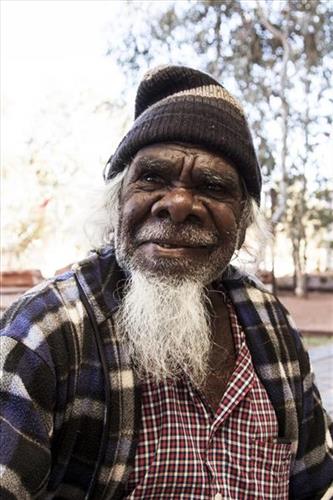
Status: Stock
“This is Wokka, he’s my grandfather. He’s a loving and caring person and in this photo here he was so excited about Desart and taking these photos. It was taken at Martumili. He goes there every day.”
– Alysha Taylor
Status: Stock
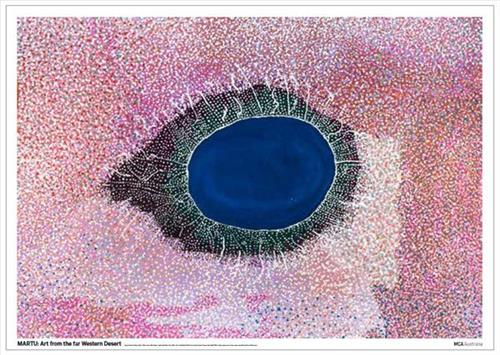
Poster from the 2014 MCA exhibition ‘Martu Art from the Far Western Desert’, featuring a detailed section from the collaborative Martumili Artists painting, ‘Mukurtu’, by sisters Nyanjilpayi Nancy Chapman, May Mayiwalku Chapman and Marjorie Yates.
“This one Mukurtu, spring water yinta (permanent spring). Nana mili (belong), Daddy, sister, brother’s ngurra (home country). We walk around here long time [ago]”.
Mukurtu is an important yinta (spring water) that is in the middle of a salt warla (lake), it is situated kayili (north) of Tiwa (Well 26) on the Canning Stock Route. In order to access the fresh water at the site the yinta must first be cleared by removing the warta (shrubs) growing around its edges. Surrounding this area are many lyinji (clay pans) scattered all around.
When the artist was young she travelled around this area with her two mommies, her daddy and her sisters. There is a lot of tuwa (sand hills) all around the outside of the lake and lots of grass. The grass that grows in this area is called Kukurlyul. There is lots of rabbits there now, good meat and lots of other good tucker around.
Status: Stock
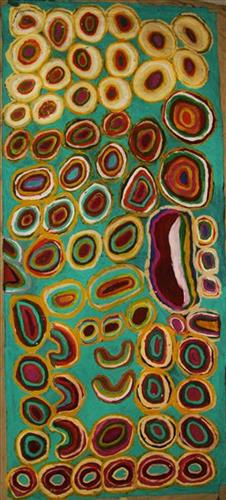
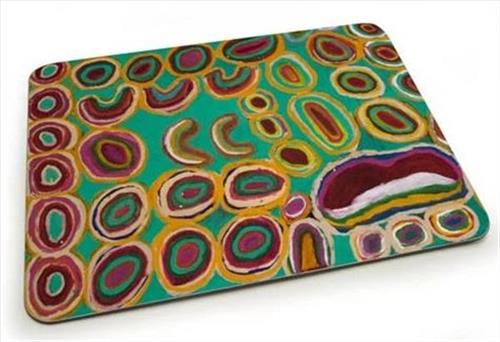
Individual tablemat made in heat, stain and scratch resistant melamine with 3.2mm hardboard and cork backing, featuring the collaborative artwork ‘Puntawarri, Jilakurru and Kumpupirntily” by Martumili Artists, and grandmother and granddaughter, Dadda Samson and Judith Samson.
Puntawarri, Jilakurru and Kumpupirntily are sites in Dadda’s ngurra (home country), which she has painted here with her granddaughter, Judith. Puntawarri is an important cultural area, on the middle stretches of the Canning Stock Route and east of the Jigalong Aboriginal Community, where the artists now live with their family. It is also the site of a now abandoned community, and a creek and lake. Jilakurra (Well 17 on the Canning Stock Route) is a permanent spring, and was a major meeting and ceremonial site in the pujiman (bush dwelling) era. Located here are many significant engravings and rock art, much of which are sacred to Martu people. Kumpupirntily (Lake Disappointment) is a large warla (salt lake) and one of the most sacred and dangerous sites in the far Western Desert. This is where the Ngayurnangalku (cannibal beings) live beneath the lake, surfacing only to feed on human flesh.