Status: Stock
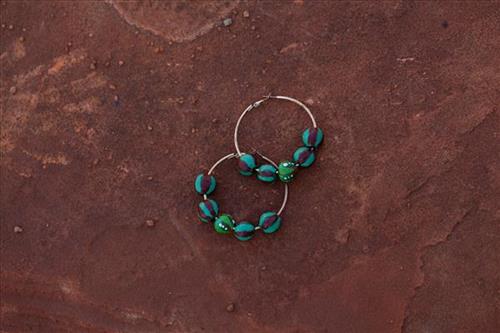
Hand painted seed earrings
Hand painted earrings made with locally collected nuts. Note that earrings will vary in colour and design painted on nut as this item is individually handmade.
Status: Stock
Hand painted earrings made with locally collected nuts. Note that earrings will vary in colour and design painted on nut as this item is individually handmade.
Status: Stock
Hand painted earrings made with locally collected nuts. Note that earrings will vary in colour and design painted on nut as this item is individually handmade.
Status: Stock
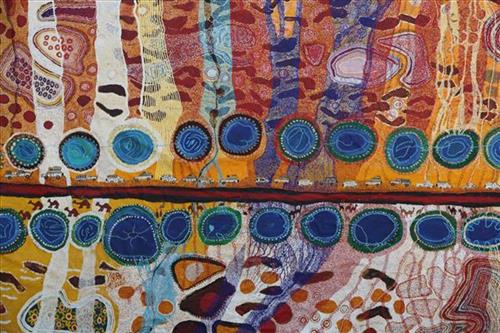
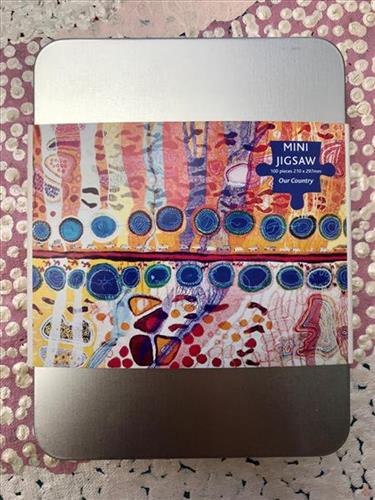
100 piece jigsaw puzzle (210mm x 297mm x 1.5mm jigsaw only, packaged size: 167mm x 125mm x 16mm) supplied in a tin with wraparound sleeve, featuring the collaborative painting ‘Our Country’ by Martumili Artists Kumpaya Girgirba, Kathleen Sorensen, Judith Samson, Sonia Williams, Natasha Williams, Noreena Kadibil, Thelma Judson, Karnu Nancy Taylor, Marjorie Yates, and Noelene Girgirba.
Work on this painting commenced at Parnngurr Community in September 2011. The canvas was rolled out, and Judith Samson under Kumpaya’s instruction painted the road and waterholes. Kumpaya soon jumped in and started painting with Judith, later being joined by several more artists.The painting was worked on at Parnngurr on and off for two weeks and finally completed by Kumpaya and Kathleen after ten days of nonstop painting to complete the detail.
The painting depicts the Canning Stock Route and the wells along it, more importantly it illustrates the artists intimate knowledge of their country; the use of fire to manage county, vast sand hills and underground water sources, the jukurrpa (dreaming).
“There’s minyi puru (seven sisters) all through this painting, the seven sisters stopped all through this country, at all of the waterholes. The Jina (feet) show where Martu walked in pujiman, all through the desert, we still walk through our country, now there are lots of Toyotas on the CSR, tourists, Martu and the Martu rangers working on the country to look after it. You can see the pattern waru (Fire) makes on country and how much water there is in the desert, Martu know how to find this water, not just the water in CSR wells. Kunawarritji is the big waterhole; it’s my home, its lovely country.”
– Kumpaya Girgaba
Status: Stock
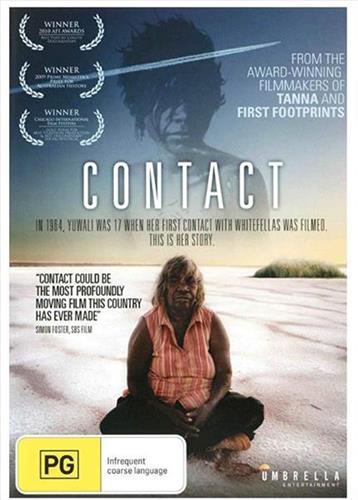
‘Contact’ is constructed around one of the most extraordinary pieces of footage in Australian history: The moment when a group of Martu women and children walk in from their nomadic existence of millennia in the desert into the universe of European modernity. Remarkably, participants from both the Aboriginal and European sides are alive to tell their story. The film centres on Yuwali, the beautiful 17-year-old girl we see making that giant leap on the 24th of September 1964. Now 62, vibrant and with gorgeous infectious laugh, Yuwali still remembers life before contact, when her tribe flourished in one of the most hostile environments on the planet. Her group of twenty were the last remnant Aboriginal mob still living traditionally, without any contact or knowledge of modern Australia, in the remote Great Sandy Desert. A huge space rocket test–Blue Streak–was to be fired in May 1964 at their home in the Percival Lakes. The authorities sent in patrol officers to evacuate anyone living there to protect them from rocket debris. The days counting down to blast off drive the narrative of the film. Back at the Lakes, Yuwali gives a riveting account as she and her group are chased hundreds of kilometres around the desert trying to escape the ‘devilmen’ in the ‘rocks that move’ (four wheel drives). The climax is both extraordinary and emotional.
Status: Stock
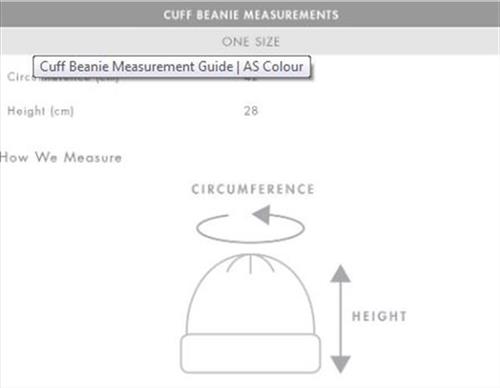
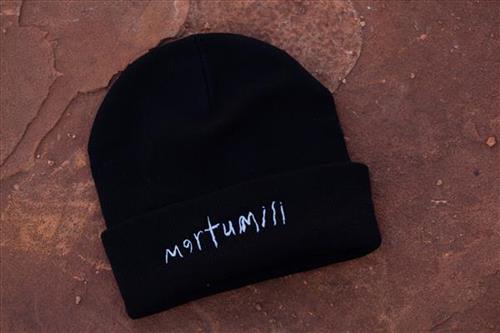
Tight knit Beanie with embroidered Martumili Artists logo.
100% acrylic, One size fits all
Available in Black
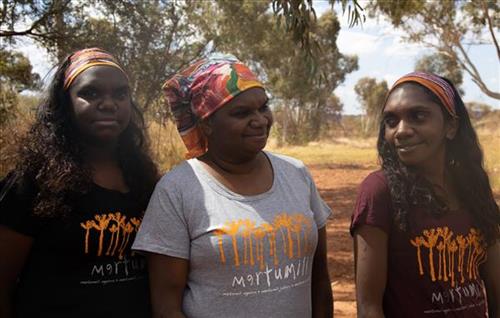
The Martumili Artists logo was created in 2006 during a workshop, where artists collectively voted on the final design, incorporating Yunkurra Billy Atkins’ ‘Martumili’ text and Ngamaru Bidu’s painting of warta (trees). ‘Martumili’ translates to owned by the Martu people, signifying the Martu people’s ownership of the paintings, stories, and artist spaces associated with Martumili Artists.
Status: Stock
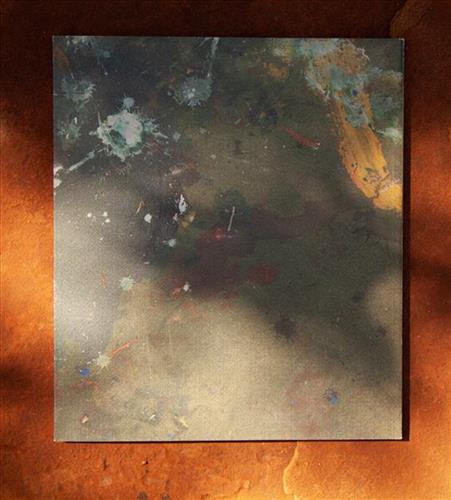
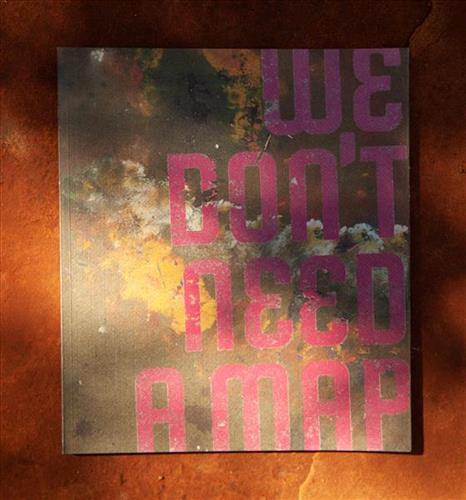
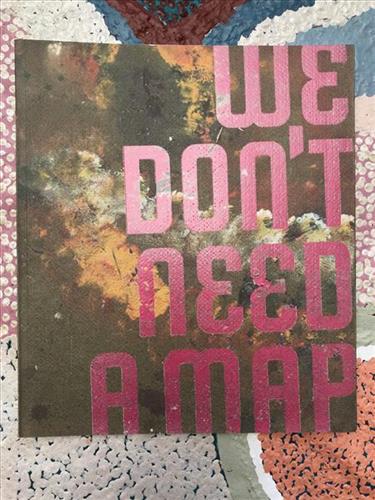
Catalogue from the seminal ‘We don’t need a map’ exhibition, a celebration of the lively and enduring culture of the Martu – the traditional owners of a vast area of WA’s Western Desert.
This remarkable exhibition includes the work of more than 30 artists and is an exploration of the Martu people, their way of life, the way they care for country and belong to it. As well as illustrating the distinct contemporary visual language of the Martu, this landmark event broke down barriers by bringing together Martu and other artists to collaborate and exhibit together. Featuring works comprising stunning paintings, cutting-edge new media collaborations, finely wrought objects, and aerial desert photography.
Status: Stock
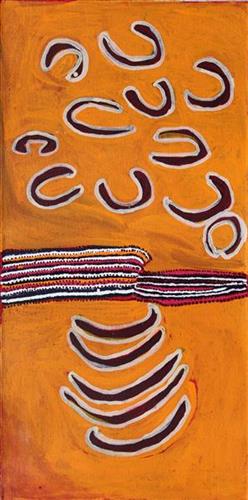
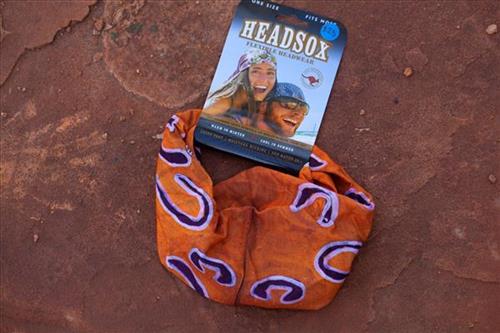
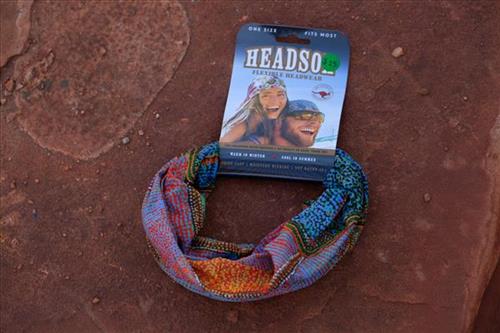
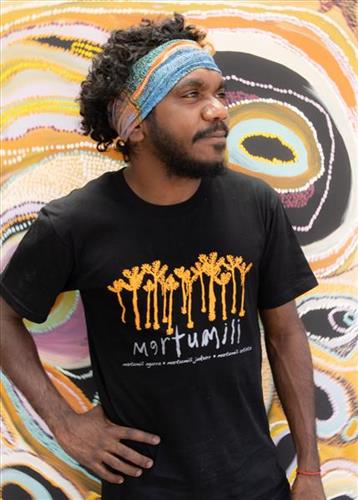
Flexible moisture wicking headwear that can be worn in 12 ways, printed with Martumili Artist Nyanjilpayi Nancy Chapman’s painting, ‘Parnkarl Minyipuru Jukurrpa’ (Seven Sisters’dreaming at Parnkarl).
This painting depicts a part of the Minyi Puru (Seven Sisters) story at Parnkarl. Minyipuru is an important jukurrpa (dreamtime) story about seven sisters that are travelling through the desert, running away from Yurla, a lustful old man. The man chases the wanti(women) all the way from Roebourne on the west coast, right through Martu country before flying east across Australia. Along the way they stop at many significant sites to camp, sing, dance and collect bush tucker, leaving markers in the landscape along the way. The many events and interactions with Yurla chronicled through the story create a culturally rich narrative that is associated with the Pleiades star constellation.
Status: Stock
Flexible moisture wicking headwear that can be worn in 12 ways, printed with Martumili Artist Minyawe Miller’s painting, ‘Karlamilyi River’.
Karlamilyi is Minyawe’s ngurra (home country). Also known as Rudall River National Park, it is situated in between the communities of Parnngurr and Punmu and is a very beautiful and important area. Rudall River runs through Karlamilyi into Nyayartakujarra (Lake Dora), a very large salt warla (lake). Karlamilyi is Warnman country, and lies in the very heart of the Martu homelands.
Status: Stock
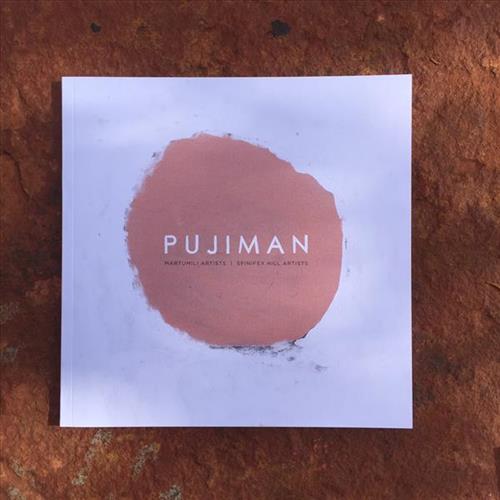
Exhibition catalogue from Pujiman, a major collaboration between Pilbara based Art Centres Martumili Artists and Spinifex Hill Artists. In this exhibition the last of the pujiman (desert born) generation are brought together with their younger artists. Featuring animation, film, and drawing, as well as the painting practice that has been the foundation of both art centres, Pujiman showcases the powerful contemporary Indigenous arts practice of the Pilbara.
Status: Stock
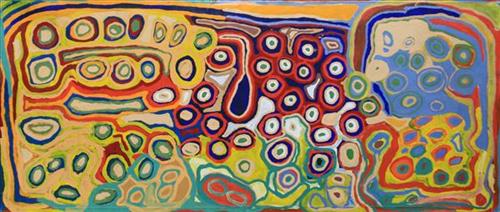
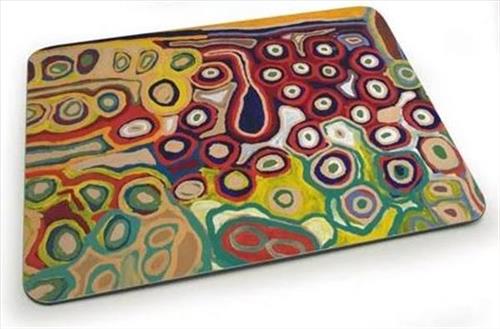
Individual tablemat made in heat, stain and scratch resistant melamine with 3.2mm hardboard and cork backing, featuring a detailed section from the collaborative work ‘Kun Kun’ by Martumili Artists Nora Nungabar, Nora Wompi, Bugai Whyoulter and Kumpaya Girgaba.
The central water in this painting is Kuny Kuny (Kun Kun), an important women’s site belonging to the Marlu Jukurrpa (Kangaroo Dreaming). This Jukurrpa is also significant within men’s law and contains elements restricted to initiated men and women.
Despite the title, there are 57 named sites in this painting, 11 of which are Canning Stock Route wells. These are places where the artists lived, where family members were born and died, and where ancestral beings left their power.