111581809233


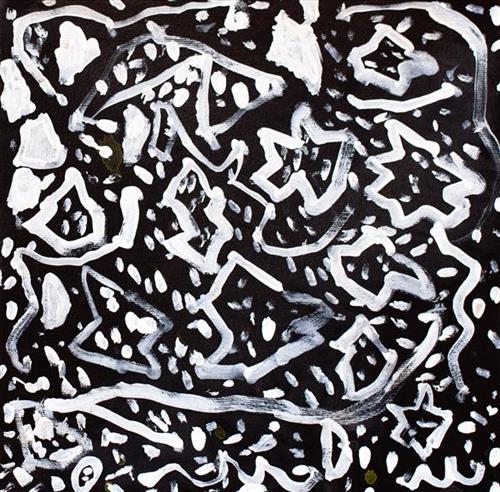
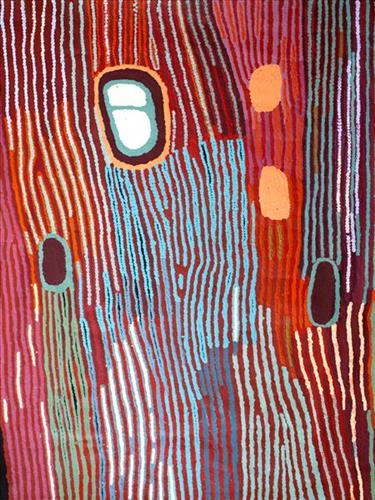
Wilarra

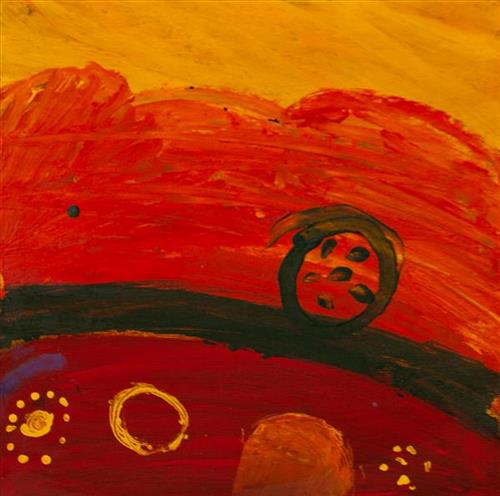
“Two Rockholes other side Punmu- Kayili (North) all the way keep going Kakarra (East), long way. Dingomili ngurra (Dingo’s home). Big one is Willarra. Dingos all stay in that place together, wild one [dingo] became a quiet one. All the dingos come from that place. Make a kuna (faeces), go home. Kirl Kirl (Well 36), Pinlankujarra and Karrarrngarri claypan are here too”

Wilarra, the site depicted in this painting, lies on the edge of a large salt lake, Nyayartakujarra (Lake Dora), near Punmu community.  A distinctive group of small salt water pools are clustered together here. The water from these pools is known for its’ powerful healing properties, and the pools are still visited today by Martu to bathe cuts and sores. 

Wilarra is also a term for ‘moon’ in Manyjillyjarra, and through the site’s jukurrpa (Dreamtime story), the site is united with the moon in significance. It is said that at Wilarra, the moon called to a family of dingoes; a mother, father and their large litter of dingo pups. The dingoes gathered at Wilarra, where the moon cared for them and created a windbreak for the family to shelter. “They scratched there in the salt lake and made those pools. They lay down there and had a sleep.” After a time, the dingoes continued travelling eastward toward the rising moon until they reached Kinyu (Well 35 on the Canning Stock Route), where they remained until all of the dingo pups had grown up. The moon asked the sun where it was going, and the sun replied it was also travelling east. From Kinyu the family travelled further east with the moon.
111581809223


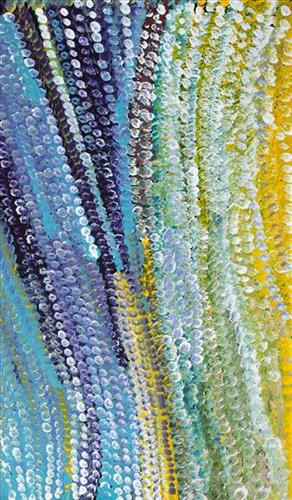
Untitled

This is Bugai’s Country- her ‘ngurra’ (home Country, camp). People identify with their ngurra in terms of specific rights and responsibilities, and the possession of intimate knowledge of the physical and cultural properties of one’s Country. Painting ngurra, and in so doing sharing the Jukurrpa (Dreaming) stories and physical characteristics of that place, has today become an important means of cultural maintenance. 

Bugai’s ngurra encompasses the Country that she and her family walked in the pujiman (traditional, desert-dwelling) era. At this time Bugai travelled nomadically with her own and other family groups, most notably the Bidu family. The Country they traversed encompassed an enormous tract of land, with an aerial distance of more than 600 kilometres, from present day Balfour Downs Station to Kunawarritji (Canning Stock Route Well 33). Bugai was born at Pulkinya. She grew up, walked and hunted primarily around Parnngurr, Punmu, Kun Kun (Kuny-kuny) and Kunawarritji. As a young woman Bugai travelled with her husband through the Karlamily (Rudall River) region and up and down the Canning Stock Route, where she first met cattle drovers. She continued to live nomadically before eventually deciding to move to Jigalong Mission along with many other relatives following an extreme and prolonged drought in the 1960s. 

Portrayed in this work are features of Bugai’s ngurra, such as the striking salt lakes, dominant permanent red tali (sandhills), warta (trees, vegetation), and the individually named water sources Bugai and her family camped at. These include Parnngurr, Martilirri, Wangkakalu, Kurta-kurta (Camel Rock), Pimurlu, Jilkupuka (Canning Stock Route Well 21), Kaalpa (Canning Stock Route Well 23), Kartarru (Canning Stock Route Well 24), Wantili (Warntili, Canning Stock Route Well 25), Tiwa (Canning Stock Route Well 26), Partujarrapirri, Raarki (Canning Stock Route Well 27), Wuranu (Canning Stock Route Well 29), Juntu- juntu (Canning Stock Route Well 30), and Kunawarritji. Rock holes, waterholes, soaks and springs were all extremely important sites for Martu people during the pujiman period, and are generally depicted with circular forms. 

The encyclopaedic knowledge of the location, quality and seasonal availability of the hundreds of water bodies found in one’s Country sustained Martu as they travelled across their Country, hunting and gathering, visiting family, and fulfilling ceremonial obligations. They would traverse very large distances annually, visiting specific areas in the dry and wet season depending on the availability of water and the corresponding cycles of plant and animal life on which hunting and gathering bush tucker was reliant. As they travelled and hunted they would also burn areas of Country, generating a greater diversity of plant and animal life.

111581831570


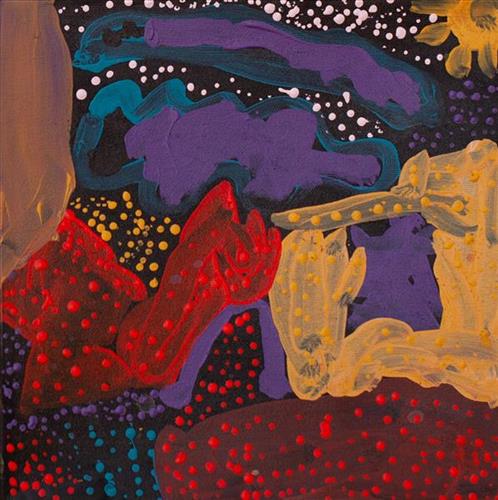
Untitled

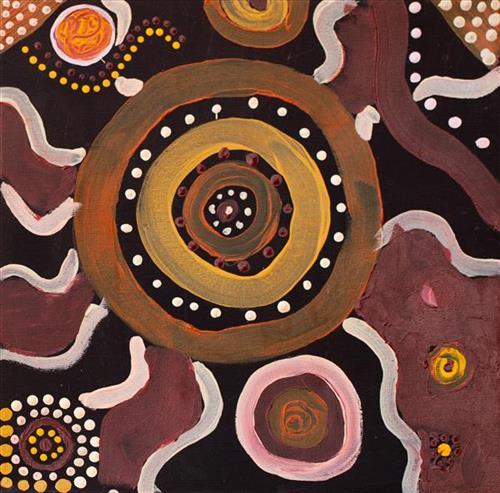
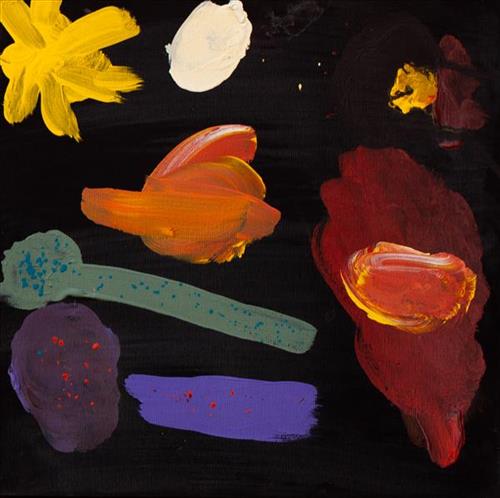
This canvas was painted as part of the Martumili Kuulkaja (Martu Schools) exhibition, a project designed to engage and celebrate the schools of the remote Martu communities.


This painting portrays physical elements of Martu Country, such as the dominant tali (sandhills), warta (trees, vegetation), and water sources. Rock holes, waterholes, soaks and springs were all extremely important sites for Martu people during the pujiman (nomadic bush) era, with many important jukurrpa (dreamtime stories) chronicling the creation of these landmarks. In the past the Martu lived nomadically, moving from water source to water source, and hunting and gathering bush tucker as they went. They would traverse very large distances annually, visiting specific areas in the dry and wet season depending on the availability of water. As they travelled and hunted they would also burn areas of country creating a larger diversity of plant and animal life.

111581831569


Untitled

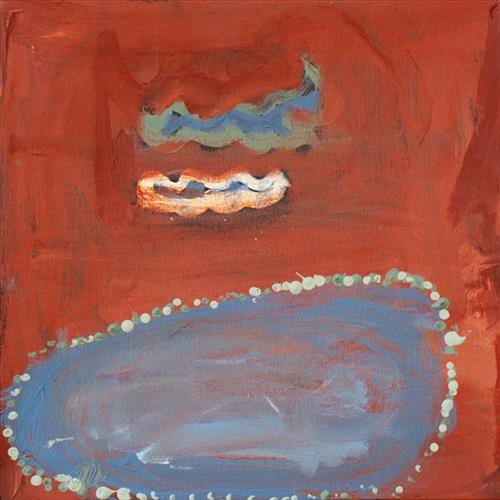
This canvas was painted as part of the Martumili Kuulkaja (Martu Schools) exhibition, a project designed to engage and celebrate the schools of the remote Martu communities.


This painting portrays physical elements of Martu Country, such as the dominant tali (sandhills), warta (trees, vegetation), and water sources. Rock holes, waterholes, soaks and springs were all extremely important sites for Martu people during the pujiman (nomadic bush) era, with many important jukurrpa (dreamtime stories) chronicling the creation of these landmarks. In the past the Martu lived nomadically, moving from water source to water source, and hunting and gathering bush tucker as they went. They would traverse very large distances annually, visiting specific areas in the dry and wet season depending on the availability of water. As they travelled and hunted they would also burn areas of country creating a larger diversity of plant and animal life.

111581831568


Untitled

This canvas was painted as part of the Martumili Kuulkaja (Martu Schools) exhibition, a project designed to engage and celebrate the schools of the remote Martu communities.


This painting portrays physical elements of Martu Country, such as the dominant tali (sandhills), warta (trees, vegetation), and water sources. Rock holes, waterholes, soaks and springs were all extremely important sites for Martu people during the pujiman (nomadic bush) era, with many important jukurrpa (dreamtime stories) chronicling the creation of these landmarks. In the past the Martu lived nomadically, moving from water source to water source, and hunting and gathering bush tucker as they went. They would traverse very large distances annually, visiting specific areas in the dry and wet season depending on the availability of water. As they travelled and hunted they would also burn areas of country creating a larger diversity of plant and animal life.

111581831567


Untitled

This canvas was painted as part of the Martumili Kuulkaja (Martu Schools) exhibition, a project designed to engage and celebrate the schools of the remote Martu communities.


This painting portrays physical elements of Martu Country, such as the dominant tali (sandhills), warta (trees, vegetation), and water sources. Rock holes, waterholes, soaks and springs were all extremely important sites for Martu people during the pujiman (nomadic bush) era, with many important jukurrpa (dreamtime stories) chronicling the creation of these landmarks. In the past the Martu lived nomadically, moving from water source to water source, and hunting and gathering bush tucker as they went. They would traverse very large distances annually, visiting specific areas in the dry and wet season depending on the availability of water. As they travelled and hunted they would also burn areas of country creating a larger diversity of plant and animal life.

111581831566


Untitled

This canvas was painted as part of the Martumili Kuulkaja (Martu Schools) exhibition, a project designed to engage and celebrate the schools of the remote Martu communities.


This painting portrays physical elements of Martu Country, such as the dominant tali (sandhills), warta (trees, vegetation), and water sources. Rock holes, waterholes, soaks and springs were all extremely important sites for Martu people during the pujiman (nomadic bush) era, with many important jukurrpa (dreamtime stories) chronicling the creation of these landmarks. In the past the Martu lived nomadically, moving from water source to water source, and hunting and gathering bush tucker as they went. They would traverse very large distances annually, visiting specific areas in the dry and wet season depending on the availability of water. As they travelled and hunted they would also burn areas of country creating a larger diversity of plant and animal life.

111581831565


Sun, rock, trees – Martu farm

This canvas was painted as part of the Martumili Kuulkaja (Martu Schools) exhibition, a project designed to engage and celebrate the schools of the remote Martu communities.

111581831564


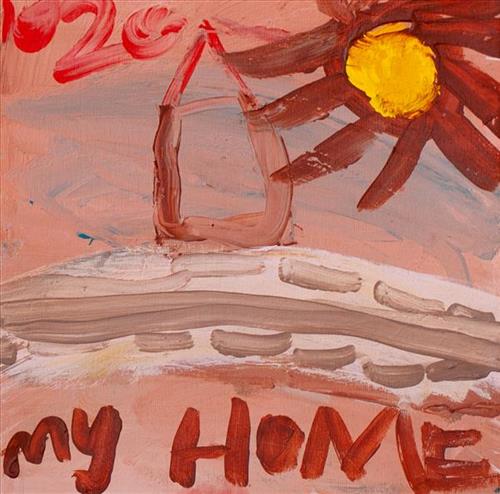
My Home

This canvas was painted as part of the Martumili Kuulkaja (Martu Schools) exhibition, a project designed to engage and celebrate the schools of the remote Martu communities.

111581831563


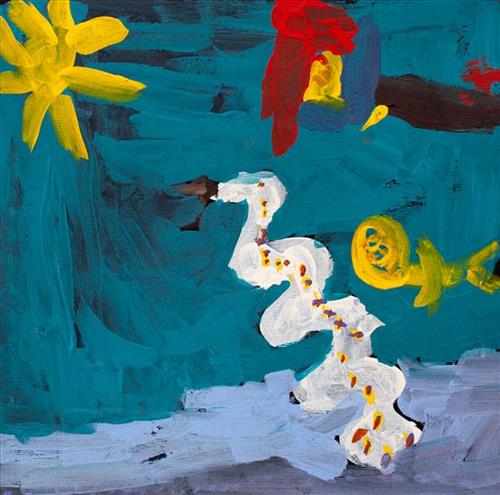
Two snakes and grass on the side of the ocean

This canvas was painted as part of the Martumili Kuulkaja (Martu Schools) exhibition, a project designed to engage and celebrate the schools of the remote Martu communities.