116182292992


Titjikala Eagle Story

This is Tapatjatjaka, Titjikala means ‘eagle from the clay pan’, and that’s the clay pan on the way into town. It’s sacred. This is the story of the Irretye – Wedge tailed Eagle, who flew overhead and saw a little boy sitting there crying. The boy’s mother just walked away from him to go hunting. Left him there crying. All that boy’s crying brought the Eagle. He heard him, saw him down there on his own. Eagle fly down. The boy climbed on the back of the Eagle, who took him away. They been fly away. That little boy never been seen again. The Eagle stole the little boy and took him away to another place. This happened just near these cattle yards, and the water tank that are part of the old Maryvale Station. Tapatjatjaka is another name for Titjikala community. The Eagle Dreaming is significant to the region and people. The community is also known as Maryvale and Tapatjatjaka. 

116182303817


Walu way, this side

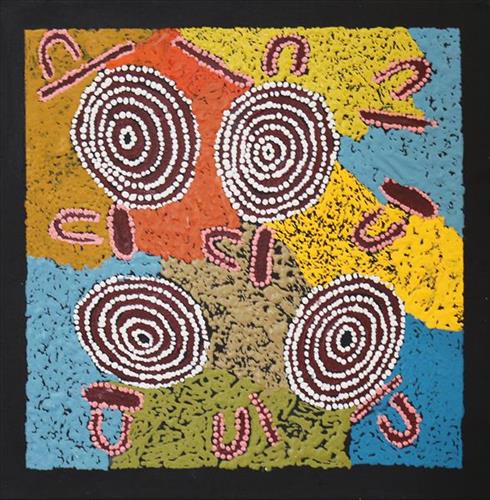
They were sitting down talking yarns, separate. That’s Walu way, this side of Walu (Petermann Ranges). That middle wati said ‘I was here when I was little boy with grandfather and we look round for hunting. We spear one kangaroo. Go back home. We bin had a good feed. When I grow up young fella then I saw them young fella and I joined in with them. Look around for woman. And we used to stay separate. No trouble then.’

116182322708


Memory Hill

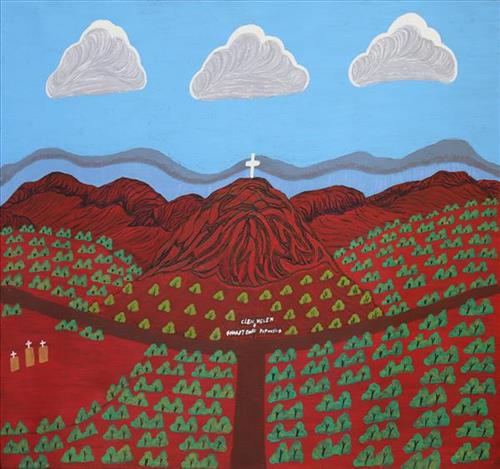
On the road to Haasts Bluff and Papunya turn off, they built a big cross on memory hill. Lots of people go to see it, lots of tourists driving by. 

116182337234


Wardapi Jukurrpa

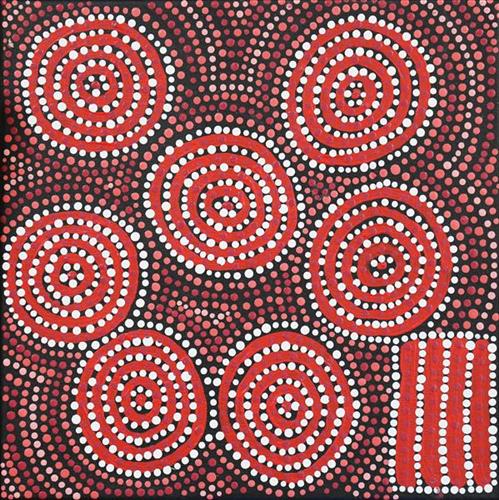
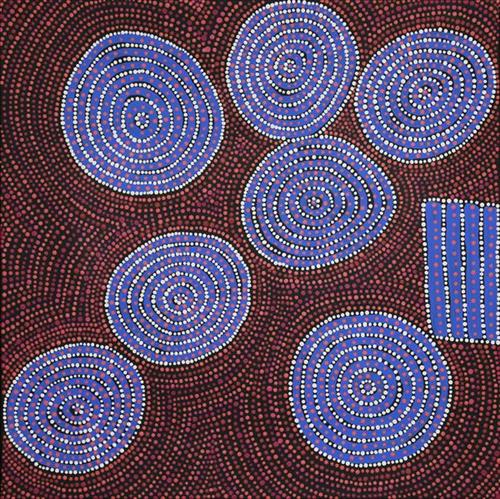
‘This painting is about the way women hunt Wardapi – that sand goanna. He digs holes in the dunes, makes his nest deep inside. Many of the holes all join up. Women hunt Wardapi in the dunes by digging out the holes. Sometimes cover one, and Wardapi runs out other one. Need to hunt him together. Find all the holes. Dig them at the same time. Someone going to get him that way.’

The Wardapi Jukurrpa [Varanus Gouldii Goanna] belongs to the Spencer Sisters. It comes from Yarripilangku [aka Yinyiripalangu], south-west of Yuendumu. A group of Warlpiri Karnta [women] are sitting down in a circle when a Japangardi Wati [man] from Puturlu [Mt Theo], called Wamaru came upon them. He wants to take one of them, named Yurlkurinyi, of Nungarrayi skin, which is the wrong skin for him. He takes the Nungarrayi woman up a hill, where they make love. In response, the earth on top of the hill turns to Ngunjungunju [white ochre], and yellow and red ochre. The yellow is for Karnta and the red for Wati. The ochre is used by Warlpiri people for love magic and ceremonial decoration. The Wati turns all the Karnta and himself into Wardapi, aka Varanus Gouldii goannas. This Jukurrpa belongs to the Napaljarri/Japaljarri and Nungarrayi /Jungarrayi subsections, and the Japanangka/Napanangka, Japangardi/Napangardi subsections of Puturlu. The women are often represented by ‘U’ shapes. Concentric circles may illustrate Wardapi holes, or their droppings left behind them, and Wardapi tracks are usually represented by ‘W’ shapes and wavy lines.

116182339691


Puli Murpu and Ultukunpa/Kaliny-Kalinypa Tjukurpa

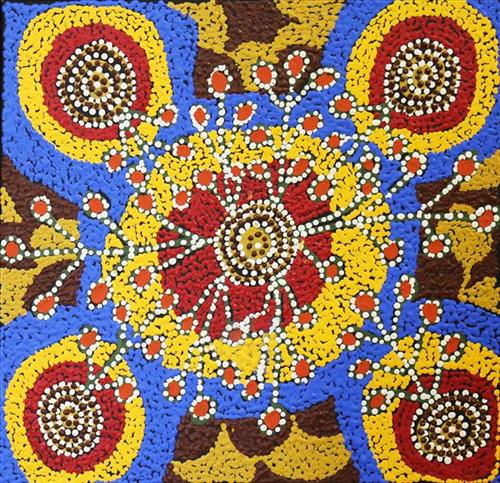
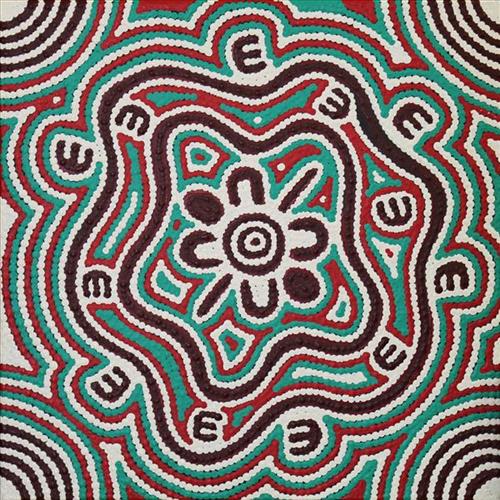
Puli Murpu refers to the Musgrave Ranges behind Amata Community, where rockholes fill after rain. Also after rain, Kaliny-Kalinypa [Honey Grevillea], also called Ultukunpa, flower on the sandy plains. The nectar is used to make a cherished sweet drink by soaking blossoms in a billy can of water, or simply by sucking the nectar from the blossoms. Morning is the best time to collect.

116182339654


Wardapi Jukurrpa

‘This painting is about the way women hunt Wardapi – that sand goanna. He digs holes in the dunes, makes his nest deep inside. Many of the holes all join up. Women hunt Wardapi in the dunes by digging out the holes. Sometimes cover one, and Wardapi runs out other one. Need to hunt him together. Find all the holes. Dig them at the same time. Someone going to get him that way.’

The Wardapi Jukurrpa [Varanus Gouldii Goanna] belongs to the Spencer Sisters. It comes from Yarripilangku [aka Yinyiripalangu], south-west of Yuendumu. A group of Warlpiri Karnta [women] are sitting down in a circle when a Japangardi Wati [man] from Puturlu [Mt Theo], called Wamaru came upon them. He wants to take one of them, named Yurlkurinyi, of Nungarrayi skin, which is the wrong skin for him. He takes the Nungarrayi woman up a hill, where they make love. In response, the earth on top of the hill turns to Ngunjungunju [white ochre], and yellow and red ochre. The yellow is for Karnta and the red for Wati. The ochre is used by Warlpiri people for love magic and ceremonial decoration. The Wati turns all the Karnta and himself into Wardapi, aka Varanus Gouldii goannas. This Jukurrpa belongs to the Napaljarri/Japaljarri and Nungarrayi /Jungarrayi subsections, and the Japanangka/Napanangka, Japangardi/Napangardi subsections of Puturlu. The women are often represented by ‘U’ shapes. Concentric circles may illustrate Wardapi holes, or their droppings left behind them, and Wardapi tracks are usually represented by ‘W’ shapes and wavy lines.

116182340599


Wardapi Jukurrpa, Grace Spencer

‘This painting is about the way women hunt Wardapi – that sand goanna. He digs holes in the dunes, makes his nest deep inside. Many of the holes all join up. Women hunt Wardapi in the dunes by digging out the holes. Sometimes cover one, and Wardapi runs out other one. Need to hunt him together. Find all the holes. Dig them at the same time. Someone going to get him that way.’

The Wardapi Jukurrpa [Varanus Gouldii Goanna] belongs to the Spencer Sisters and their offspring. Grace is their brother’s daughter. It comes from Yarripilangku [aka Yinyiripalangu], south-west of Yuendumu a site belonging to the Spencer sister’s father, Grace’s grandfather. A group of Warlpiri Karnta [women] are sitting down in a circle when a Japangardi Wati [man] from Puturlu [Mt Theo], called Wamaru came upon them. He wants to take one of them, named Yurlkurinyi, of Nungarrayi skin, which is the wrong skin for him. He takes the Nungarrayi woman up a hill, where they make love. In response, the earth on top of the hill turns to Ngunjungunju [white ochre], and yellow and red ochre. The yellow is for Karnta [Women] and the red for Wati [Men]. The ochre is used by Warlpiri people for love magic and ceremonial decoration. The Wati turns all the Karnta and himself into Wardapi, aka Varanus Gouldii goannas. This Jukurrpa belongs to the Napaljarri/Japaljarri and Nungarrayi /Jungarrayi subsections, and the Japanangka/Napanangka, Japangardi/Napangardi subsections of Puturlu. The women are often represented by ‘U’ shapes. Concentric circles may illustrate Wardapi holes, or their droppings left behind them, and Wardapi tracks are usually represented by ‘W’ shapes and wavy lines.

116182340913


Two stories

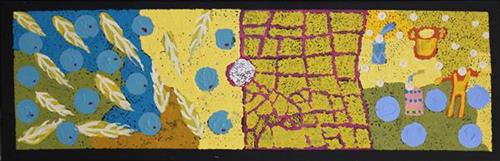
Maggie has painted the collection of Minkulpa (bush tobacco) and bush medicine. The white dots in the middle of the painting as ashes, the ashes collected from a special tree and are mixed with the bush tobacco before being placed into the inside of the mouth. The grid represents a blanket where the minkulpa is collected and dried out in the sun. The final section of the painting represents making jumper and beanies out of wool. The basket depicted is to take the jumper and beanie home again. 

116182340912


Inma – Three Sisters Ceremony

‘This one Inma – Three Sisters Ceremony – painted up dancing close – all painted with ochre – white feather bound to forehead.’