116182190459


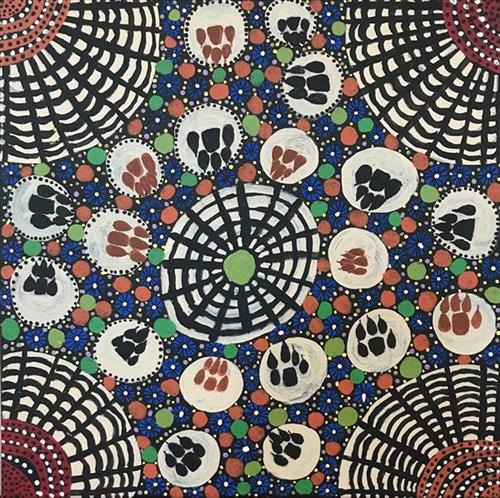
Dog Dreaming, Mt Charlotte

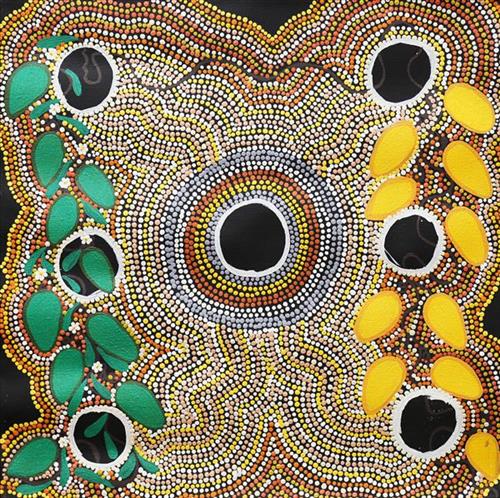
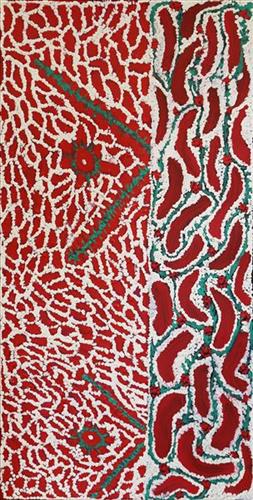
Dog Dreaming, Mt Charlotte down near Titjikala. The Hugh River runs through there. The circles are the waterholes in the middle of the riverbed. The river is really wide, but usually all dry on top, except for these special waterhole and the rocks and flowers. All the boulders are Papa (Dogs aka Dingoes) and their puppies. Big mob of them there. Stranger can’t come near, or Papa grab them. They got to throw stone into water. Got to sing out first, and then they can swim. If they don’t, Papa take them. Papa protect that place. It belongs to him. It’s very special place for families, who sit down and picnic, swim, and play along the banks of the river. The sand dune at the base of Mt Charlotte and the big and small boulders are all part of that Dreaming. It’s beautiful.

116182300878


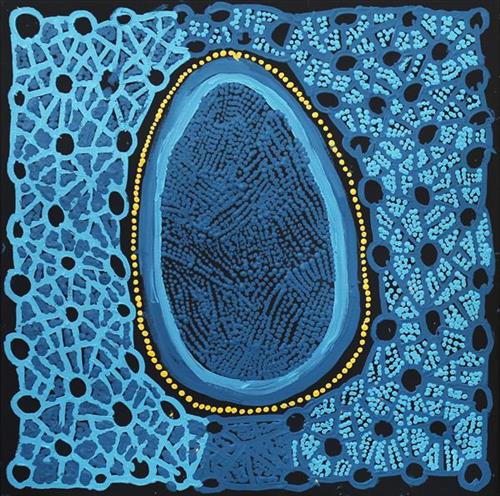
Swimming at Haasts Bluff

This is a memory from Doris’s past. Doris talks of the times when she was a young girl in the bush, swimming and hunting with her friends at Ikuntji (Haasts Bluff). She talks of sand hills where the young people would wander naked looking for water, “chasing” the water until they found a water hole. The young men and women would swim together and make love by the water hole. Eventually, Doris explains, the young people fall in love and are married. Doris is remembering the traditional tools and weapons that were used by her and her friends in the bush. Doris depicts Kali (boomerang), wana (digging stick), puli (grinding stone), kutitji (shield), kulata (spear) and kantikanti (hitting stick).

116182302937


Kungka Tjuta

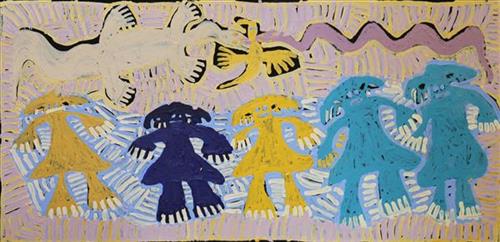
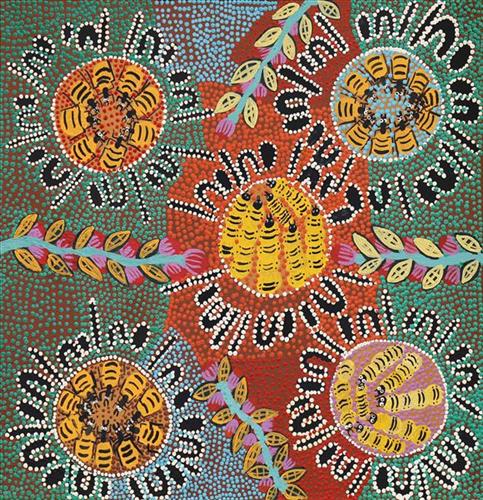
In this story Doris paints an assortment of important women in her life, each of them a representation and not strictly assigned to the individual. There is Doris’ two mothers, her sister and herself. In a display of their resilience they are shown surrounded by an abundance of bush tucker.

116182308323


Women Collecting Bush Food

Women talking about collecting bush food – where the best places are and the best times, whether seasonal or dependent on rain events – All the women sit with their digging sticks and piti’s [coolamons] around the hearth to talk about these aspects of collecting bush food.

116182322435


Women Collecting Bush Food

Women talking about collecting bush food – where the best places are and the best times, whether seasonal or dependent on rain events – All the women sit with their digging sticks and piti’s [coolamons] around the hearth to talk about these aspects of collecting bush food.

116182322427


Wardapi Jukurrpa

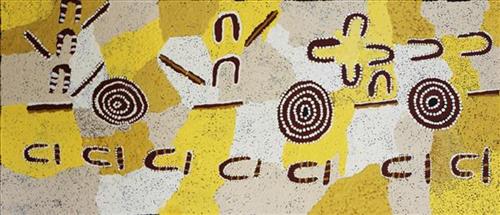
‘This painting is about the way women hunt Wardapi – that sand goanna. He digs holes in the dunes, makes his nest deep inside. Many of the holes all join up. Women hunt Wardapi in the dunes by digging out the holes. Sometimes cover one, and Wardapi runs out other one. Need to hunt him together. Find all the holes. Dig them at the same time. Someone going to get him that way.’

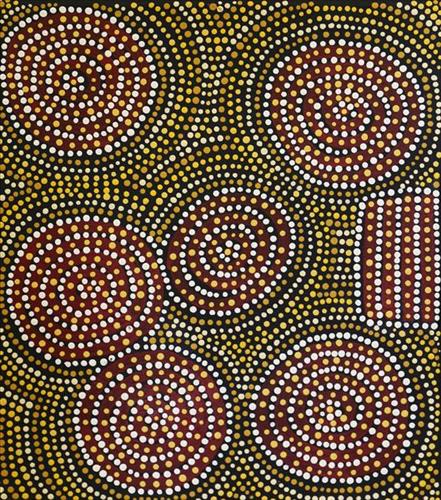
The Wardapi Jukurrpa [Varanus Gouldii Goanna] belongs to the Spencer Sisters. It comes from Yarripilangku [aka Yinyiripalangu], south-west of Yuendumu. A group of Warlpiri Karnta [women] are sitting down in a circle when a Japangardi Wati [man] from Puturlu [Mt Theo], called Wamaru came upon them. He wants to take one of them, named Yurlkurinyi, of Nungarrayi skin, which is the wrong skin for him. He takes the Nungarrayi woman up a hill, where they make love. In response, the earth on top of the hill turns to Ngunjungunju [white ochre], and yellow and red ochre. The yellow is for Karnta and the red for Wati. The ochre is used by Warlpiri people for love magic and ceremonial decoration. The Wati turns all the Karnta and himself into Wardapi, aka Varanus Gouldii goannas. This Jukurrpa belongs to the Napaljarri/Japaljarri and Nungarrayi /Jungarrayi subsections, and the Japanangka/Napanangka, Japangardi/Napangardi subsections of Puturlu. The women are often represented by ‘U’ shapes. Concentric circles may illustrate Wardapi holes, or their droppings left behind them, and Wardapi tracks are usually represented by ‘W’ shapes and wavy lines.

116182322679


Wayanu and Mangarta

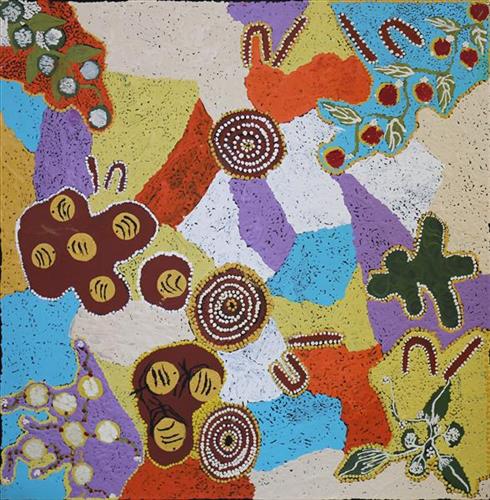
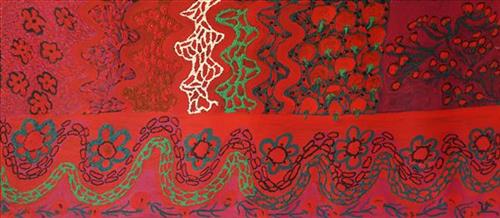
Mangarta or Bush tomato (lower left) and Wayanu or bush plum, bush peach or Quandong, along the edge. They growing amongst different bush flowers. Always go looking for them with family during their season. Everyone’s got their favourite places. I showed my family where to go get them out bush (near homelands). Spring is good season for them.