22174001059


Status: Stock


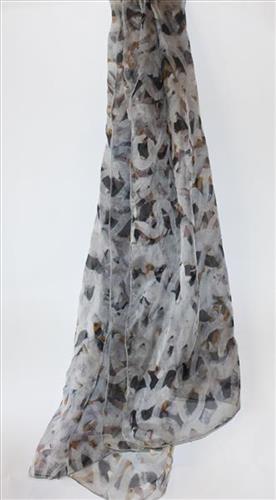
Kittey Malarvie – Milkwater – Silk Chiffon

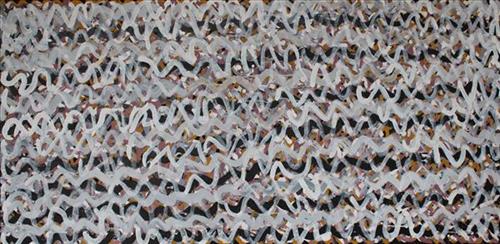
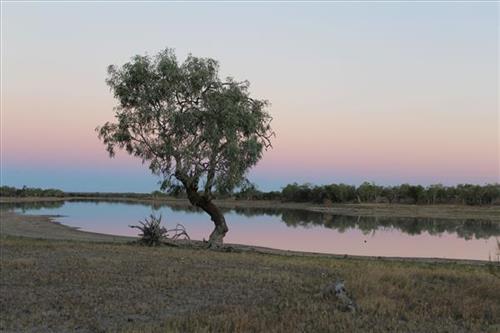
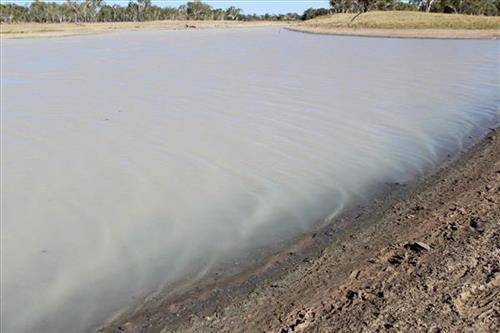
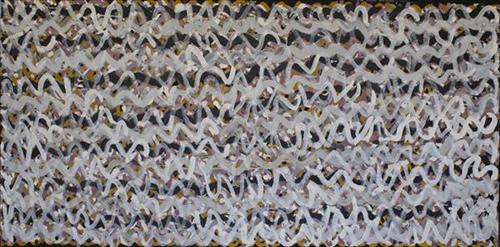
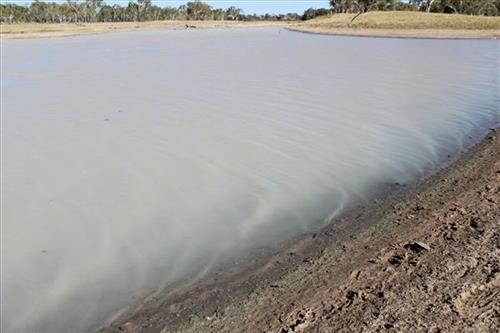
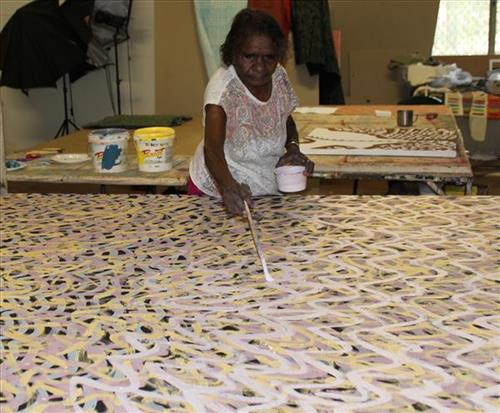
Senior artist, Kittey Malarvie’s traditional Country is the desert landscape around Sturt Creek, south west of Kununurra and north of the Great Sandy Desert.  Layers of intersecting lines map the country along the river banks and interpret the transition of the seasons across a remarkable place of black soil and water the colour of milk.  In this artwork Malarvie depicts a meditation on the multifaceted play of wind and light on water.  The stormy crescendo of wind and waves stirs the dark river bed and the rainbow serpent who resides beneath. “…the rainbow snake stays there, he keeps the water there until the rain comes.”

Made in Australia
22174001058


Status: Stock


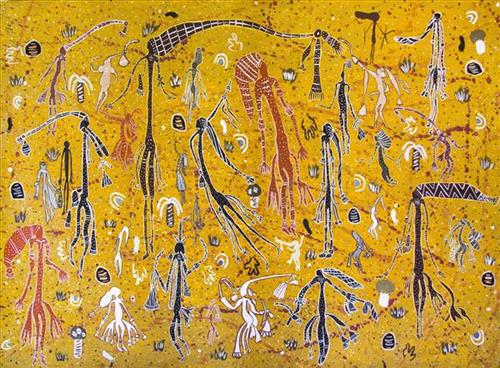
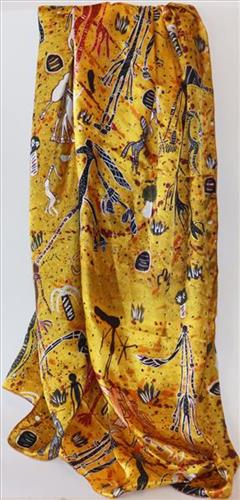
Betty Bundamurra – Kira Kiro Spirits – Silk Satin

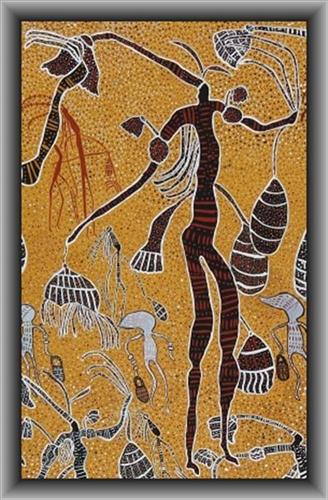
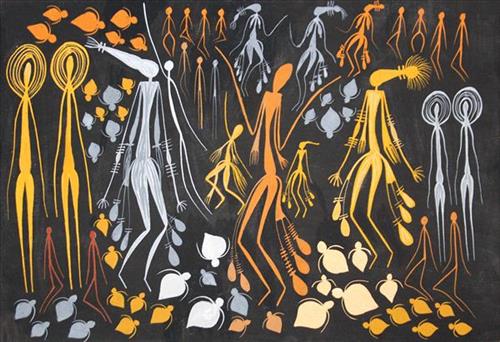
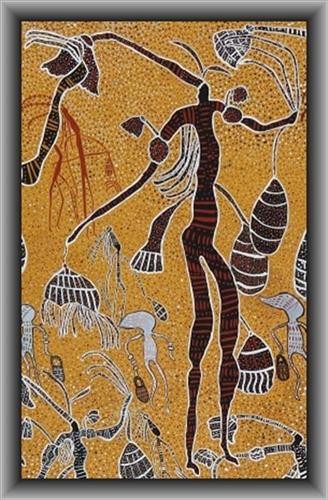
From the time of the beginning – the Dreamtime – called Lalai by Kwini people,  the Kira Kiro  have been the  guardians and assistants of the Wandjina. They are good spirits and are also traditional dancers who sing about the yam and fruits that can be gathered when the wet season rains begin.  The Kira Kiro spirits taught Aboriginal people what food to hunt and gather, and how to use certain plants and trees for medicines.  They taught us how to care for the land and rivers and sea; to not waste food or cut down trees. They taught Aboriginal people about which trees are used for artefacts, where to find natural ochres, to look after rock art and sacred sites and where warriors are buried. The rocks where warriors are buried are painted with white ochre.  From generation to generation we learn the knowledge of the Kira Kiro from our warriors and elders past and present. These stories we are proud of. They were locked in our minds because we didn’t have books to keep for the younger generation. The Bradshaws or Kira Kiro figures are the worlds oldest rock art figures, even older than the Wandjina.

Made in Australia
22174001041


Status: Stock


Judy Mengil Windoong

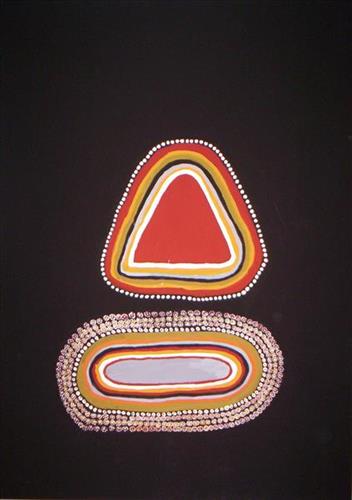
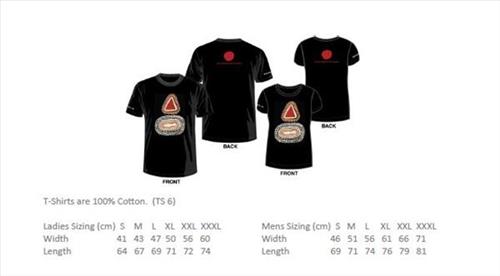
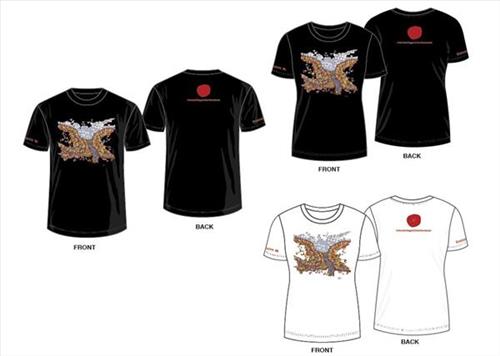
This T-Shirt design is a detail from the painting “Windoong”

In this painting the artist represents an area of her father’s country near Mulligan along the Bullo River in the Northern Territory. “This is my father’s country. I learnt it from the old man – Paddy Carlton. At this place there is a hill and a billabong from a “dreaming” story. The night bird – Curlew ate too much raw tucker from the billabong and flew to a place where he vomited and that made that hill Windoong – that’s this painting.”

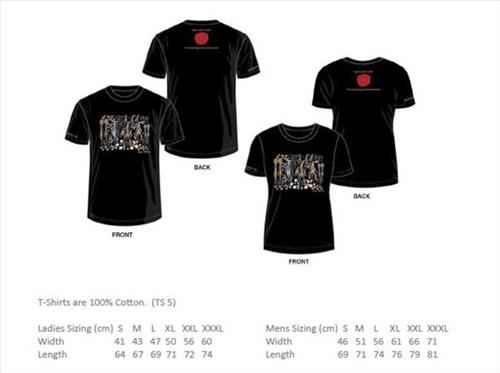
100% cotton – Screen printed in Australia
22173999626


Status: Stock


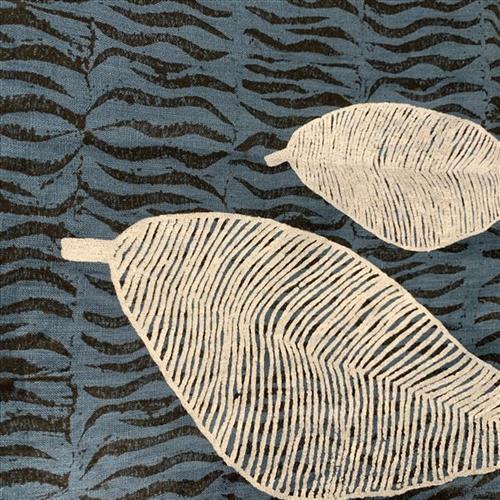
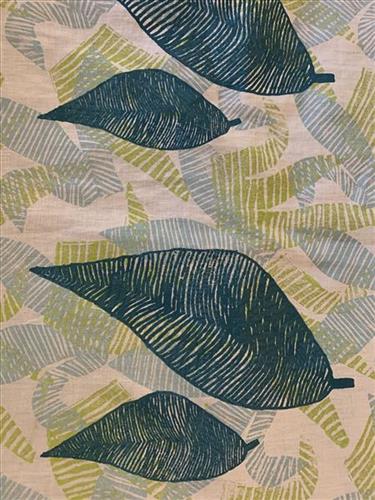
Warlarring White Gum Leaf -linen -Dora Griffiths

Dora has designed textile based on the leaf of a white gum tree, Warlarring.

Hand block printed and screen printed linen

22173973712


Status: Stock


Jemma Unghango – Dancing Spirits

Jemma was born at Kalumburu and was brought up by the Benedictine nuns at the mission. Jemma worked in the gardens, the kitchen and bakery, and illustrated Father Anscar McPhee’s 2011 book, A hero in the night time of the Dreaming: the story of Penda Gudje. Jemma’s favourite subjects for painting include Wandjina and Kira Kiro figures.

Jemma was recently selected for Revealed, Emerging and New Indigenous Artists Western Australia 2019 at Fremantle Art Centre.
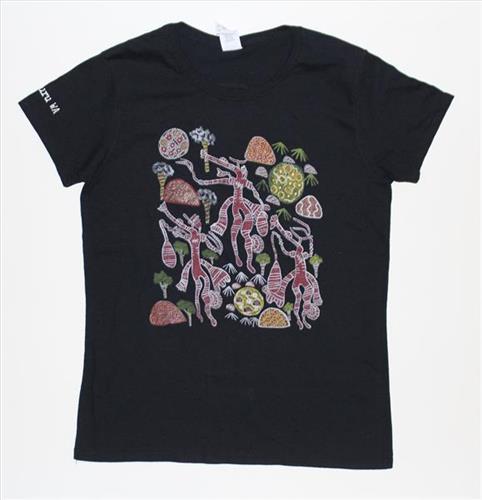
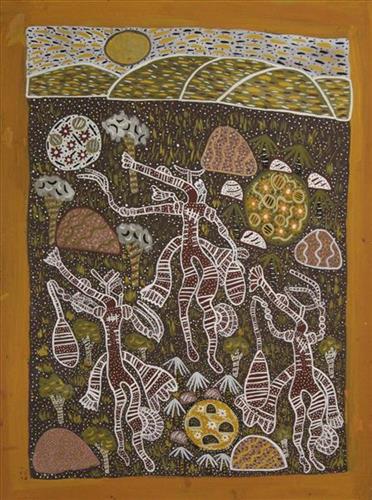
This T-Shirt design is a detail from the painting “Dancing People”

Dancing and ceremony, teaching the younger generation. The Kira Kiro dance with Ero Uru of the Kulari people, the Saltwater people. The small Jimi Warlay are the good spirits that look after you in the bush. The Ancestors lived in the bush, long time ago, and still walk with us on the land.

100% cotton.  Screen printed in Australia.

22173972627


Status: Stock


Ben Ward Mens S

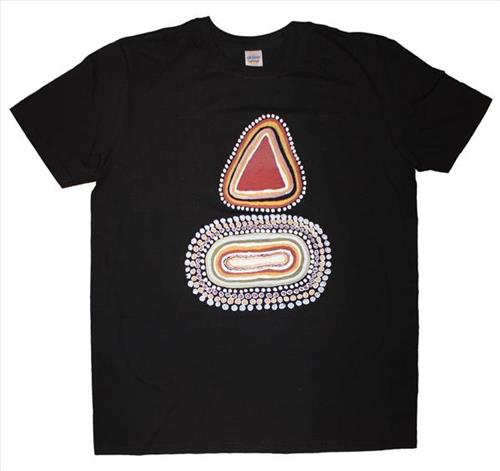
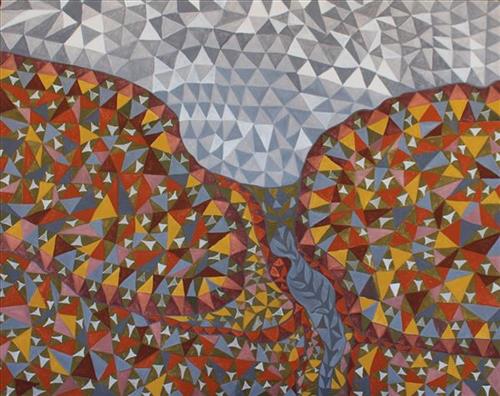
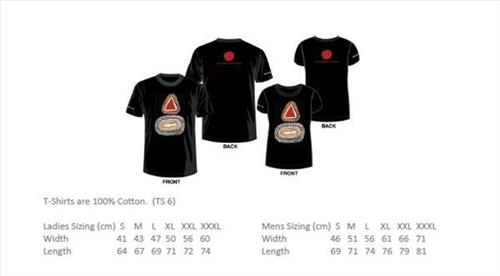
In this image senior artist Ben Ward depicts Thompson Springs, located in Yardungall Country (Dingo Springs) in the East Kimberley. Thompson Springs is a site belonging to the Eagle and the White Crane Dreaming. In this particular work a spring is depicted bubbling up between two rock formations. The blue and white triangles towards the top are the sky and clouds. The white triangles are the gum trees, the green the leaves and the yellow the grasses. The red ochre triangles are the rocks, the orange the sand and the blue in the centre is the spring.

100% cotton T-shirt.

22173742066


Status: Stock


Kira Kiro Wet Season by Betty Bundamurra

This 100% cotton T-Shirt design is a reproduction from the painting “Kira Kiro Wet Season”

The Kira Kiro (Gwion or Bradshaw) figures dance to celebrate the wet season. Waterholes fill up,  Yulu—Bush Flowers grow  abundantly,  Langi—Trees grow tall surrounded by pretty  Aru— Rocks.

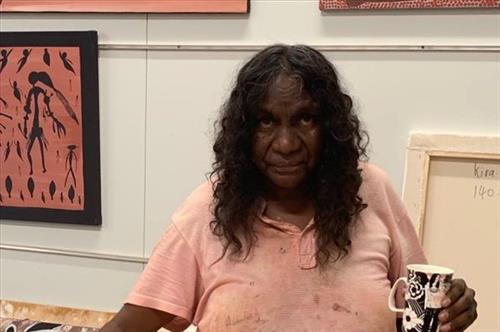
Betty was born at Karunji station where her father was a stockman. She was born in the bush while her parents were on a walkabout. She came to Kalumburu Mission Convent where she was looked after by Ignatia Ganwalla and the nuns at the age of three, after the death of her mother. She worked in the mission baking bread and the Kalumburu school as a teaching aid. Betty has five children and seven grand children and lives happily with her family in Kalumburu.  She has worked as an arts worker at Kira Kiro Arts Centre since 2009.
 

221776381252


Milkwater

Senior artist, Kittey Malarvie’s traditional Country is the desert landscape around Sturt Creek, south west of Kununurra and north of the Great Sandy Desert.  Layers of intersecting lines map the country along the river banks and interpret the transition of the seasons across a remarkable place of black soil and water the colour of milk.  In this artwork Malarvie depicts a meditation on the multifaceted play of wind and light on water.  The stormy crescendo of wind and waves stirs the dark river bed and the rainbow serpent who resides beneath. “…the rainbow snake stays there, he keeps the water there until the rain comes.”

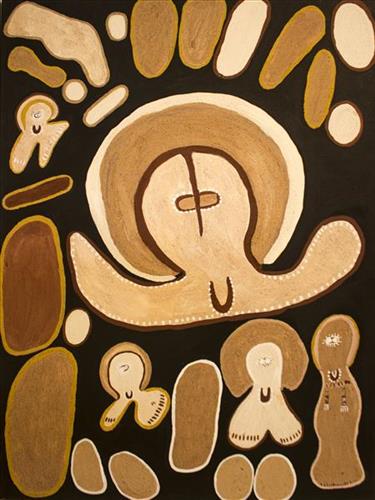
221781782848


Wandjina are ancestral spirits who created country, people and animals in the North West Kimberley before turning themselves into rock paintings. They are sometimes called “lightning man” or “rain maker’ and every year they replenish water holes, creeks and rivers by making the wet season. The Wandjina can be vengeful if people break the law, by making savage storms and cyclones. The predominant white colouring and shape of the Wandjina’s body represents water and clouds. The red pigment area on the chest is the “Tili” (heart) of the Wandjina and represents the “human” part of the Wandjina.