Pilbara Wildflowers
These are the Pilbara wildflower’s that grow on the ground they have a beautiful orange colour blending in the country during flower season.
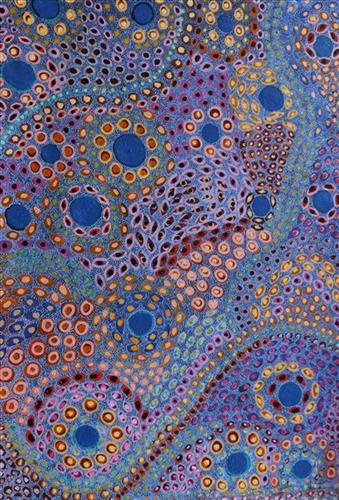
These are the Pilbara wildflower’s that grow on the ground they have a beautiful orange colour blending in the country during flower season.
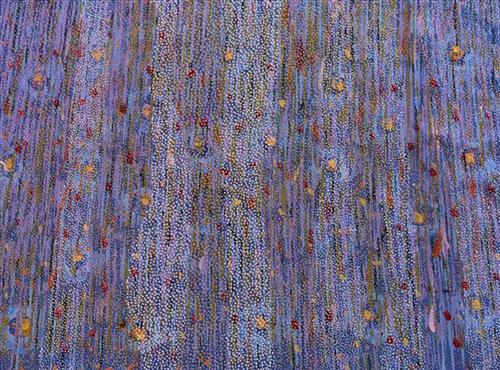
The early morning mist over the water is the smoke from the breakfast fires of the Marrga, the creation spirits. According to Yindjibarndi law, in the beginning the sky was very low. When the creation spirits, Marrga, arose from the ground they raised the sky and the world out of the ocean. This creation story is called Ngurru Nyujunnggama, ‘When the World was Soft’. The Marrga gave names and form to the country and then to all the birds and animals. Finally they created the Ngaardangarli, the Aboriginal people.
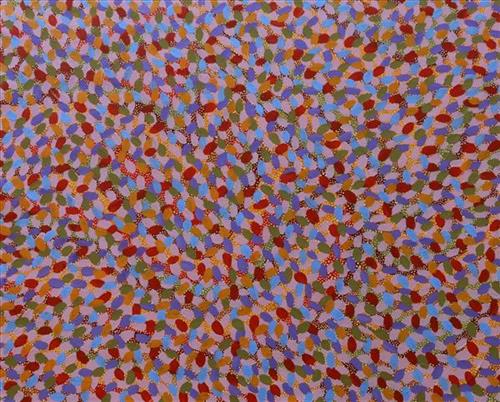
These are the Pilbara wildflower’s that grow on the ground they have a beautiful orange colour blending in the country during flower season.
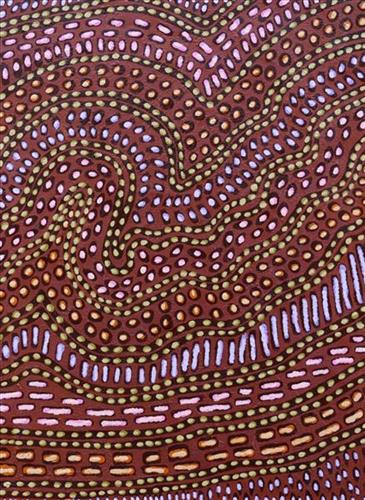
The colours in the background represent the Pilbara landscape with a hint of colour piercing through representing the scattered wildflowers found all across the countryside. You can see the Mulla Mulla, Blue Bells and Spinifex..
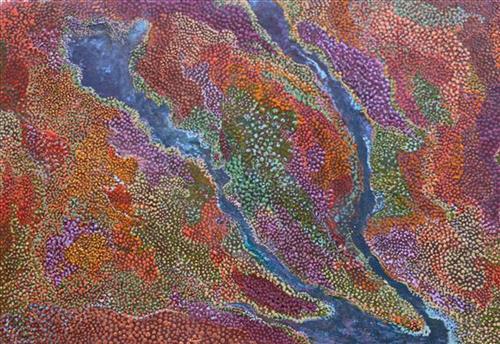
The Pilbara is a land of many beautiful colours. Its beauty blends into the mother earth and against the red, purple hills in the distance. In time and season, the yellow Wattles, Mulla and Sturt Pea bloom and the country comes alive with the wildflowers, watered by the rain and heavy dew during the night. The land and our country also tells a wonderful story about our ancestor’s. They walked and lived on the land always gathering food such as fish from the river, hunting kangaroos & tracking goanna’s and also gathering bush fruits and medicine.
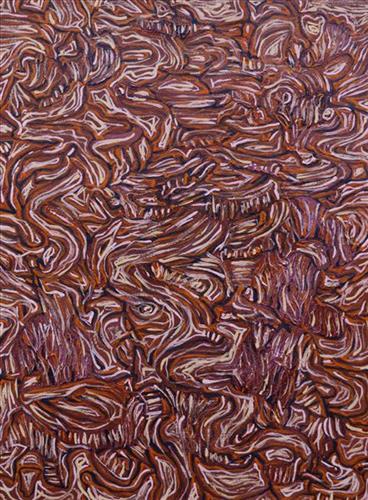
In our country we have many hills of all different shapes and sizes. When driving through country at different times the colours change and some of the hills look like velvet in the evening and morning light .
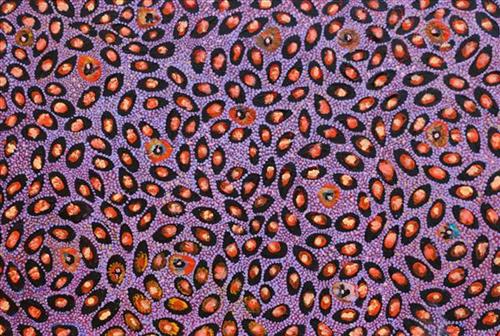
In this painting I have depicted the pods of a shrub which is common in the Pilbara area. It is a smallish bush which comes into seed in September, when the Emu is visible in the Milky Way. This is the time the emu chicks hatch and it is one of their main sources of food. When the pod opens the parent emus feed the little black seeds to their chicks. The seed pod, which is about the size and the shape of a cockroach, turns from orange to yellow, so when all the bushes are in pod at different stages, there is a brilliant display of orange and yellow colours throughout the country. The official name of this annual shrub is Senna notabilis, but, due to the oblong, flat shape and the glossy golden brown colour of its pods, it is known commonly as Cockroach Bush. It has a little round fruit, a berry, that starts of green and turns red when it is ripe, but it’s poisonous. The shrub starts off as a light green colour and then, as it matures, it gets darker. The flowers are a yellowy orange and they, too, get darker with a bit of black as they are fading away.
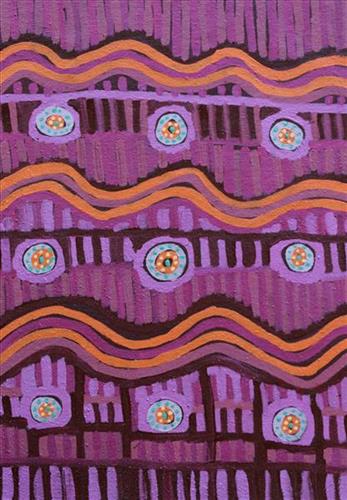
This is the Fortescue Mulla Mulla or ‘Gumbarli’ in Yindjibarndi language. The flower is a purplish colour. It’s not a bush medicine, just a flower that grows in the country, in lines along the roads and everywhere. In this painting, the seeds of the Mulla Mulla are all blowing out. Once the leaves and petals have fallen off, the seeds are blown all through the land to bring flowers again the next year.
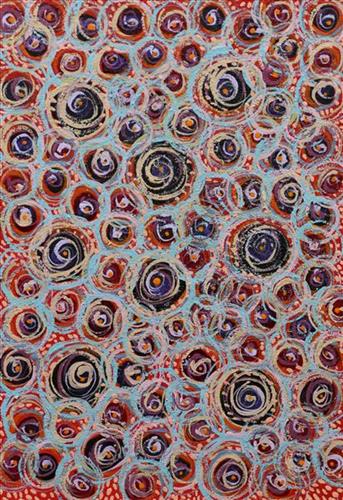
Blue bells are common in the Pilbara. They grow quite tall amongst the other flowers such as sturt pea and mulla mulla flowers. This flower has a prickly stem and every year grows wild in our country.
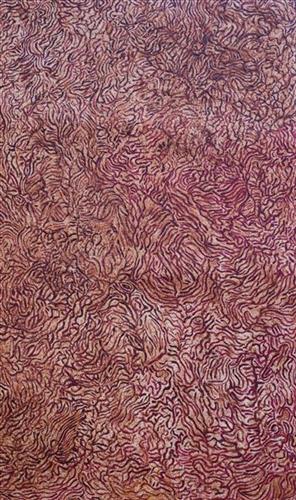
This is the creek bed before the rain comes. You can see the patterns in the sand.