Wet Season
Wet season in the Pilbara fills all the lovely creeks and the rivers flow. It’s a lovely time of the year.
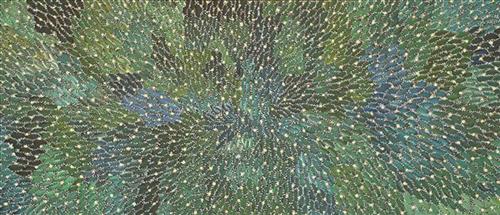
Wet season in the Pilbara fills all the lovely creeks and the rivers flow. It’s a lovely time of the year.
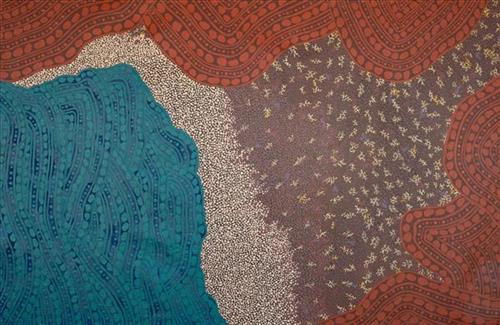
TBA
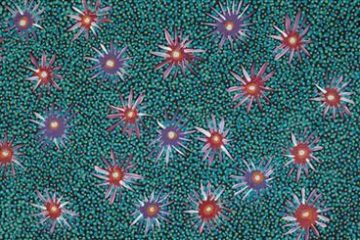
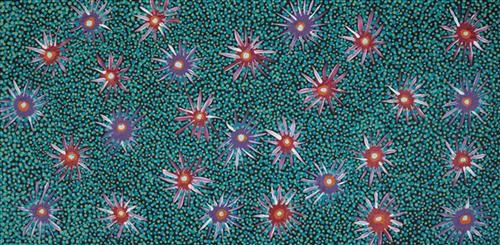
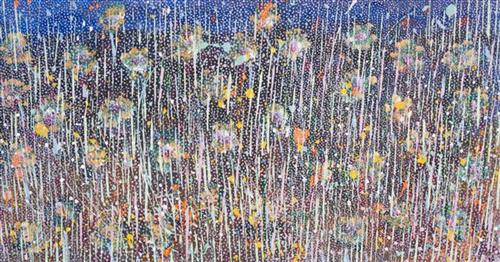
This is the Fortescue Mulla Mulla or ‘Gumbarli’ in Yindjibarndi language. The flower is a purplish colour. It is not a bush medicine, just a flower that grows in the country, in lines along the roads and everywhere. In this painting, the seeds of the Mulla Mulla are all blowing out. Once the leaves and petals have fallen off the seeds are blown all through the land to bring flowers again next year.
The Sturt Pea has a vibrant red flower with a black centre piece. It has a succulent sweet juice that can be eaten.
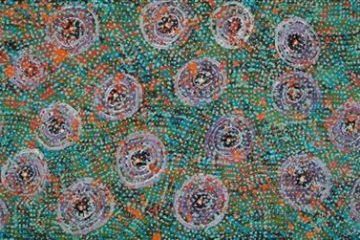
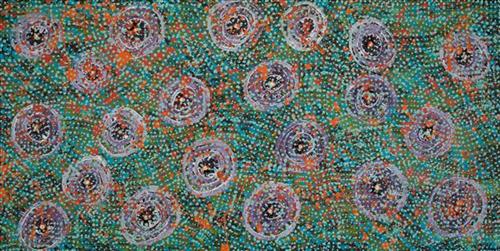
Millstream Lily pond is at the Millstream Homestead.The early settlers brought the water lilies with them and created a beautiful oasis with a large lily pond. This place is a significant site for the Yinjibarndi people and one they like to visit frequently.
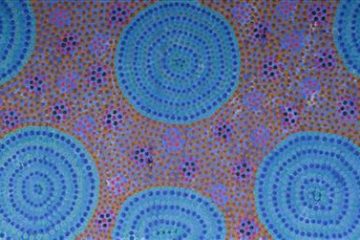
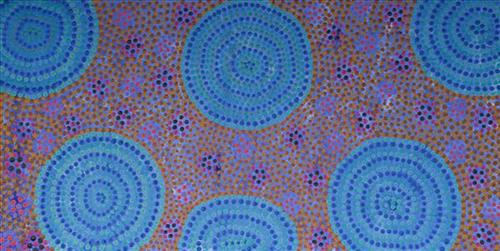
Gumbarli jiruna means Purple Mulla Mulla. Purple mulla mulla is a signature wildflower that is found throughout the Pilbara region of Western Australia.
Purple mulla mulla is represented by pink and purple. blue represents my water holes. ochre brown and yellow represent my country
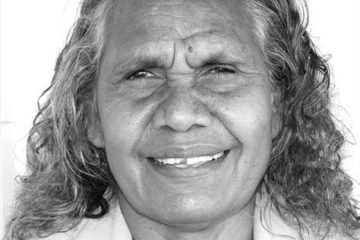
Blue Gum Tree (Ganyji) The Blue Gum Tree, gets its name because of its bluish leaves. In Yindjibarndi language it is called Ganyji, in English, Kanji Bush (Acacia pyrifolia).This painting depicts elements of the bush – its blue leaves and yellow flowers against the red and green of the earth. When the rain comes, or when there has been a heavy dew, the Blue Gum Tree just shimmers in the light. In September, when we are looking for gum from the Blue Gum Tree, we walk through the spinifex country. We pick the gum when it is crystal coloured, and we eat it, or put it into hot water and leave it out in the sun to make it like a toffee. We call it sugar lolly.
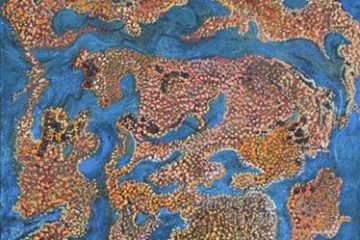
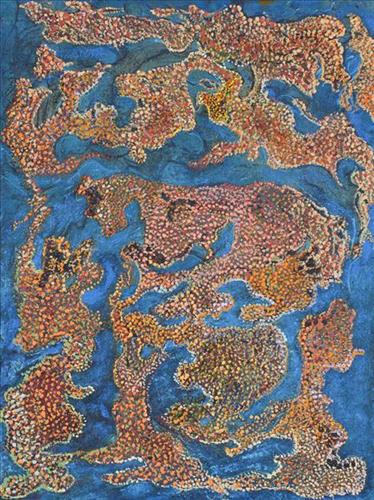
When the tide goes out it leaves all the weeds among the rockholes mixed with all the colourful coral from the ocean.
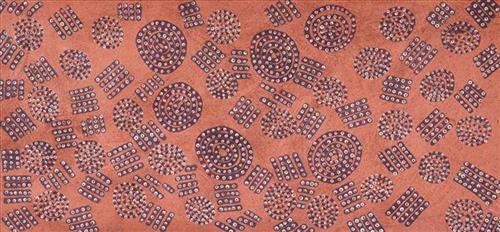
Tribes on Mt Welcome lookout in Roebourne facing their country.
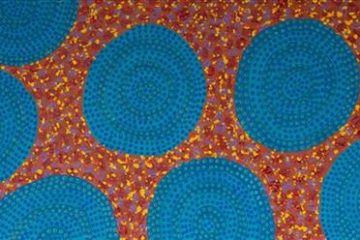
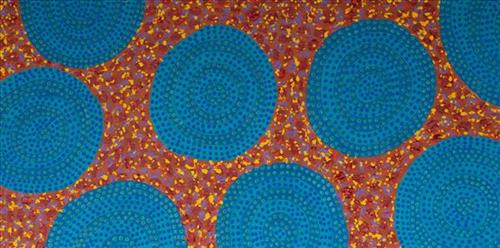
Waterholes surrounded by wildflowers
The early morning mist over the water is the smoke from the breakfast fires of the Marrga, the creation spirits. According to Yindjibarndi law, in the beginning the sky was very low. When the creation spirits, Marrga, arose from the ground they raised the sky and the world out of the ocean. This creation story is called Ngurru Nyujunnggama, ‘When the World was Soft’. The Marrga gave names and form to the country and then to all the birds and animals. Finally they created the Ngaardangarli, the Aboriginal people.