

377814181904492
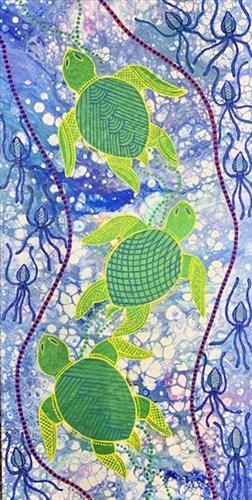
Turtle and Squid

377810481904603
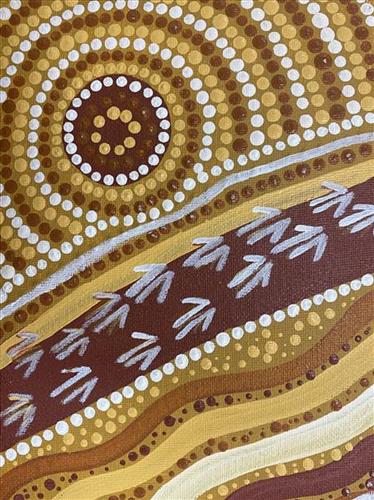
Gurungu (sun) reflecting
The Gurungu (sun) reflecting over Yamaji Country and the rivers
111981904923
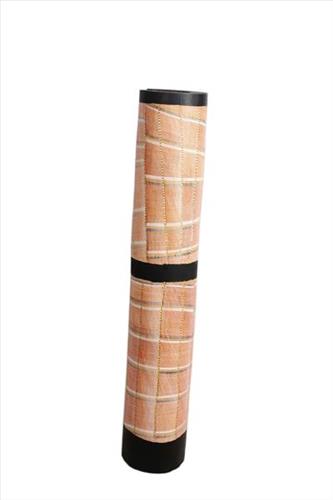
Mardayin Design
This work concerns a major patrimoiety ceremony of a secret and sacred nature called ‘Mardayin’. Much of the meaning of the iconography in the painting is not in the domain of public knowledge. As such, it cannot be explained in detail here.
The painting refers to a site, Kakodbebuldi, which is an outstation in the Dangkorlo clan estate in the Mann River region. Kakodbebuldi is a Mardayin ceremony performance site and is located on a large billabong covered in waterlilies. This place is about 50km south of Maningrida in Central North Arnhem Land.
111981904894
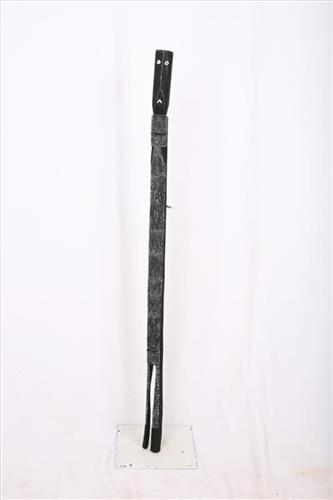
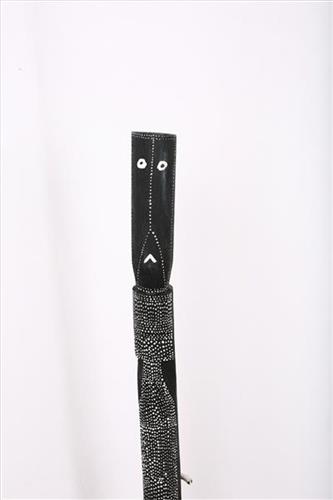
Mimih Spirit
The mimih spirit exists in a realm that runs parallel to and mirrors many facets of human life, also demonstrating the deep sense of time and place understood by Aboriginal and Torres Strait Islander people. Such spirits feature importantly in relation to Aboriginal spirituality, cosmology, social and moral tales as well as ritual. As is true with the multiple mediums employed by artists of West Arnhem Land, the development of artistic style and form is in line with an awareness by the artist that the work produced is predominantly made for a broader audience. Whether show in a national or international context these works communicate and exist in a particular space that is cross-cultural and simultaneously so particular to the Arnhem region.
The mimih sits within a complex and important pedagogical and religious body of knowledge which links Kuninjku people to their distinctive escarpment homelands. Young Kuninjku artists, or apprentices, employ the mimih as an important exercise for the practice of the rarrk technique, as it could be achieved on a smaller surface area before, being attempted in larger scale, on pieces of bark. The mimih serves a purpose for those young artists first learning to carve in a social space of sharing and innovating. The initial mimih manifestation was a large form that almost mirrored the anatomy of a human and at this stage the sculptures have been likened to morkuy carvings visible in eastern Arnhem Land. Contemporaneously, mimih are depicted in a refined, slender, even emaciated form with a broad range of facial expressions giving both individual character to, and denoting the potential volatility and humour that mimih spirits are notable for in their interaction with bininj (humans). The sculptures are frequently carved from the thin trunks of softwoods such as kapok (bombax ceiba or cottonwood) kurrajong, beach hibiscus or leichardt and are painted with earth pigments for their colouring and design.
A leading figure engaging the spirit in visual storytelling was Crusoe Kuningbal, a Kuninjku man, who while traveling was familiarised with carving styles from the east of Arnhem at the mission in Milingimbi pre-dating World War II. This showing a notable connection and interaction of different language groups across such space. As well as travel and the development of art forms being informed by cross cultural dialogues within northern Aboriginal language groups. The mimih became a valued inclusion in performance and public ceremony by Kuninjku people like Kuningbal. At times these ceremonies were performed for extended language groups in the local region.
Now a familiar and broadly depicted figure of iconography, it is important to acknowledge the development of this quite recent sculptural tradition. The depiction of this particular spirit being, once used as an addition to the sharing of song cycles and ceremony, has since been elevated to a prominent form and subject of contemporary sculpture. Variation in the creation of mimih acts as an indication of the individualism of each artist and their stylistic markers. Additionally significant to note is that in the space of the past thirty years the mimih has begun being produced by multiple language groups residing in the Maningrida area including the traditional owners of Maningrida, the Ndjébbana, speaking Kunibidji as well as Gurrgoni people who have strong ties to Kuninjku.
________
*Maningrida Arts & Culture acknowledge the work of many academic and non-academic voices when writing on this topic, it is important to note Luke Taylor, who’s broad research has informed this text.
1881905072
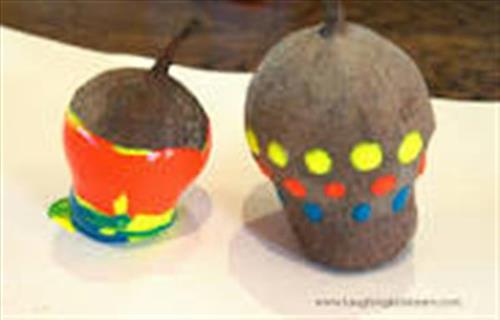
The Big Blue
Gumnuts are awesome

377814181905437
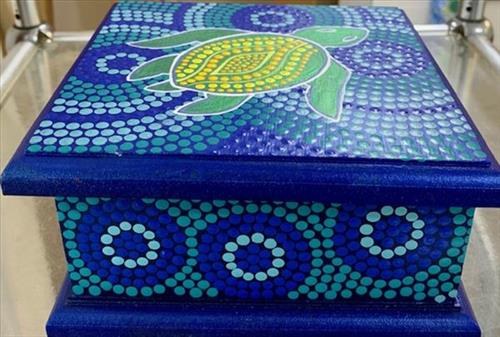
Painted Gift Box – Blue Turtle
Painted Gift Box
111581905552
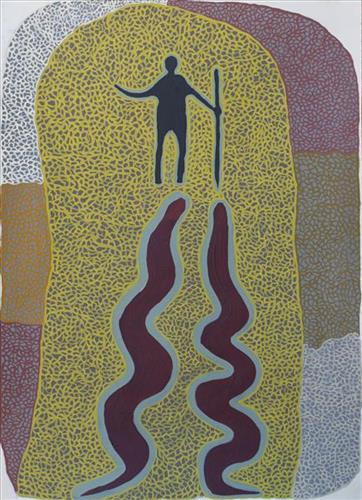
Niminjarra (mother)
“Niminjarra is the two brothers transforming into a snake so they can go back home to Ngayartakujarra (Lake Dora). They were in training for ceremony, those two brothers, but they were kept too long and nobody was there to release them. They waited then they decided to transform into snakes to travel back to where they came from, because their mother was waiting for them. This is Jukurrpa (Dreaming story).
Here the mother is calling and guiding her sons [the Jila Kujarra] towards her. With her wana (women’s spear), she is piercing the lake [Ngayartakujarra (Lake Dora)] to make an entry point to the underground world.”
– Desmond Taylor
The term jukurrpa is often translated in English as the ‘dreaming’, or ‘dreamtime’. It refers generally to the period in which the world was created by ancestral beings, who assumed both human and nonhuman forms. These beings shaped what had been a formless landscape; creating waters, plants, animals, and people. At the same time they provided cultural protocols for the people they created, as well as rules for interacting with the natural environment. At their journey’s end, the ancestral beings transformed themselves into important waters, hills, rocks, and even constellations.
Jila Kujarra (Two Snakes) is one of the key jukurrpa narratives for the Martu. Though the story belongs to Warnman people, it is shared across the Western Desert with several other language groups. The narrative centres on the travels of two snakes as they are pursued by the Niminjarra, spiritual ancestors of the Warnman people. Before transforming themselves into snakes, the Jila Kujarra were young brothers waiting to be released from ceremony at the boundary of Mukurtu, west of Mamunara (Canning Stock Route Well 28). They began travelling home to their mother in the west, but were intercepted by the Niminjarra as they hunted and hurled their spears in front of them. Suddenly the spears of the Niminjarra stuck in the ground and swayed in the air, alerting the Niminjarra to the tracks of the Jila Kujarra.
The Niminjarra started to track the Jila Kujarra, but stopped with their many weapons at Jantuwurujul (or Janturuly) to hunt for wild game. The Jila Kujarra continued to flee, reaching Paji, east of Nyayartakujarra (Lake Dora) before they were again intercepted by the Niminjarra. The Niminjarra believed the snakes had hidden in a cave north of Paji, and tried to smoke them out. Again, the Jila Kujarra eluded their pursuers, this time escaping under the lake at Paji and at the same time creating many small decoy snakes to lead the Niminjarra astray.
Meanwhile, from a nearby hill, two Pukurti (initiates with bundled hair) prophesied that the Niminjarra would kill the Jila Kujarra. The Pukurti tracked the Jila Kujarra through to Nyayartakujarra, where they speared the snakes in the head to hold them down while they returned to Paji to summon the Niminjarra. The Niminjarra made a fire and cooked the snakes at Ngayartakujarra (Lake Dora). The snakes were too long to lay down on leafy branches to be cut up, so the Niminjarra lay down to make a human table. When the Niminjarra cut down the length of the Jila Kujarra, the snake’s bladders were pierced, causing an explosion of scalding hot urine in which the Niminjarra all perished and became black rocks at the site. At the same time, the urine of the Jila Kujarra formed the vast salt lake, Kumpupirntily, which translates to ‘bladder burst’.
The spirits of the Jila Kujarra rose and continued to travel to their mother at Nyayartakujarra. She saw them coming towards her as flaming figures, and called out to them, piercing the surface of the salt lake with her digging stick. There, the mother and her sons entered the ground below Nyayartakujarra, where they remain to this day.
111581905551

Niminjarra (Paji)
“Niminjarra is the two brothers transforming into a snake so they can go back home to Ngayartakujarra (Lake Dora). They were in training for ceremony, those two brothers, but they were kept too long and nobody was there to release them. They waited then they decided to transform into snakes to travel back to where they came from, because their mother was waiting for them. This is Jukurrpa (Dreaming story)
Here the Jila Kujarra are travelling from the East, coming West, gliding over Paji waterhole, near the lake district of Ngayartakujarra (Lake Dora).”
– Desmond Taylor
The term jukurrpa is often translated in English as the ‘dreaming’, or ‘dreamtime’. It refers generally to the period in which the world was created by ancestral beings, who assumed both human and nonhuman forms. These beings shaped what had been a formless landscape; creating waters, plants, animals, and people. At the same time they provided cultural protocols for the people they created, as well as rules for interacting with the natural environment. At their journey’s end, the ancestral beings transformed themselves into important waters, hills, rocks, and even constellations.
Jila Kujarra (Two Snakes) is one of the key jukurrpa narratives for the Martu. Though the story belongs to Warnman people, it is shared across the Western Desert with several other language groups. The narrative centres on the travels of two snakes as they are pursued by the Niminjarra, spiritual ancestors of the Warnman people. Before transforming themselves into snakes, the Jila Kujarra were young brothers waiting to be released from ceremony at the boundary of Mukurtu, west of Mamunara (Canning Stock Route Well 28). They began travelling home to their mother in the west, but were intercepted by the Niminjarra as they hunted and hurled their spears in front of them. Suddenly the spears of the Niminjarra stuck in the ground and swayed in the air, alerting the Niminjarra to the tracks of the Jila Kujarra.
The Niminjarra started to track the Jila Kujarra, but stopped with their many weapons at Jantuwurujul (or Janturuly) to hunt for wild game. The Jila Kujarra continued to flee, reaching Paji, east of Nyayartakujarra (Lake Dora) before they were again intercepted by the Niminjarra. The Niminjarra believed the snakes had hidden in a cave north of Paji, and tried to smoke them out. Again, the Jila Kujarra eluded their pursuers, this time escaping under the lake at Paji and at the same time creating many small decoy snakes to lead the Niminjarra astray.
Meanwhile, from a nearby hill, two Pukurti (initiates with bundled hair) prophesied that the Niminjarra would kill the Jila Kujarra. The Pukurti tracked the Jila Kujarra through to Nyayartakujarra, where they speared the snakes in the head to hold them down while they returned to Paji to summon the Niminjarra. The Niminjarra made a fire and cooked the snakes at Ngayartakujarra (Lake Dora). The snakes were too long to lay down on leafy branches to be cut up, so the Niminjarra lay down to make a human table. When the Niminjarra cut down the length of the Jila Kujarra, the snake’s bladders were pierced, causing an explosion of scalding hot urine in which the Niminjarra all perished and became black rocks at the site. At the same time, the urine of the Jila Kujarra formed the vast salt lake, Kumpupirntily, which translates to ‘bladder burst’.
The spirits of the Jila Kujarra rose and continued to travel to their mother at Nyayartakujarra. She saw them coming towards her as flaming figures, and called out to them, piercing the surface of the salt lake with her digging stick. There, the mother and her sons entered the ground below Nyayartakujarra, where they remain to this day.

377814181905775
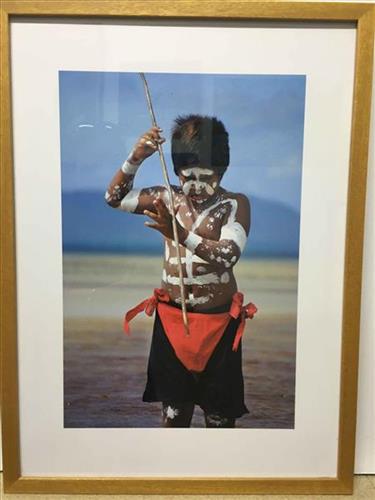
Back in Time 3
A child hunting