
111982006424
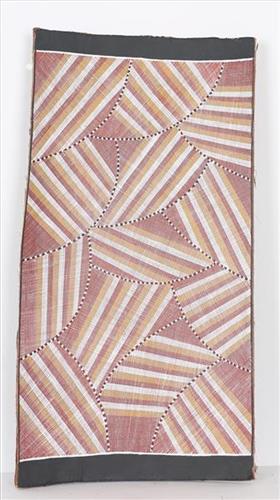
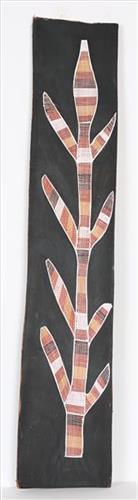
Kunkurra (The Spiralling Wind)
‘Kunkurra’, the spiralling wind is associated with several sites in the Kardbam clan estate. On one level, this painting can be interpreted as a depiction of the kinds of mini-cyclones common during the wet season in Arnhem Land, where the artist lives. In this painting, Kunkurra also relates specifically to a site called Bilwoyinj, near Mankorlod.
At this site, two of the most important Kuninjku creation beings, a father and son known as na-korrkko, are believed to have hunted and eaten a goanna. They left some of the goanna fat behind at the site, which turned into the rock that still stands there today. The word Bilwoyinj, which is the name of this site, also refers to the fat of the goanna. Bilwoyinj site is also a ceremonial ground for a ceremony called Yabbaduruwa, a major ceremony owned by the Yirridja patrimoiety. The Yabbaduruwa ceremony is primarily concerned with initiation, land ownership and promoting the cyclical regeneration of the human and natural worlds.
111982006423
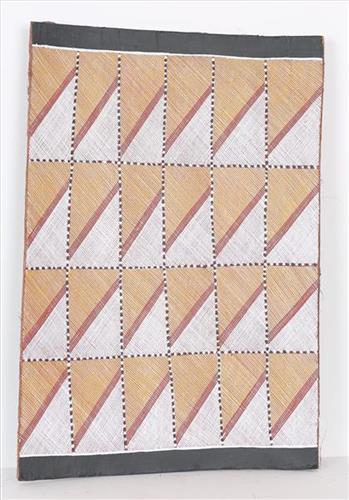
Galawon (Goanna)
This painting depicts two goannas embedded in an intricate depiction of gungara, the mini cyclones common during the wet season in Arnhem Land. Gungara also relates specifically to the Bilwoyinj site. At this site, two of the most important Kuninjku creation beings, a father and son, hunted and ate goanna. They left some goanna fat behind, which turned into the rock that still stands at the site today.
111982006408
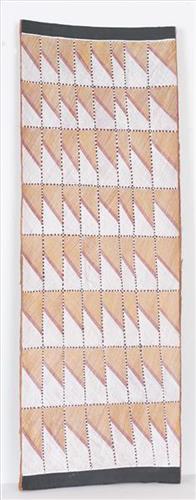
Galawon (Goanna)
This painting depicts two goannas embedded in an intricate depiction of gungara, the mini cyclones common during the wet season in Arnhem Land. Gungara also relates specifically to the Bilwoyinj site. At this site, two of the most important Kuninjku creation beings, a father and son, hunted and ate goanna. They left some goanna fat behind, which turned into the rock that still stands at the site today.
111982006407
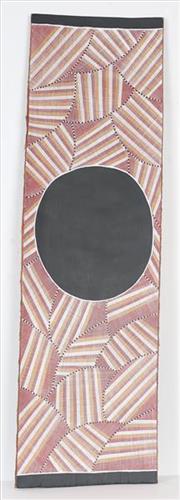
Mandjabugudukguduk
Manjabukudukkurduk refers to a deep black waterhole that has deep spiritual significance as the site where Kuninjku people’s spirit comes into being and returns in death. The artists explains, “When we die our spirit will go back there… so this spirit will live forever, like we are still alive, we’re still living on that country”. It is linked to the Ancestral fish trap, which supports the growth and development of babies. This yirrididja moiety place is a potent site of Djang, Ancestral essence and power, meaning that if it is disturbed Kardbam people become sick and Kunkurra, the destructive cyclonic wind can be activated. Manjabukudukkurduk is also connected to other important songlines of the Kadbam clan estate, including Kalawon (goanna) and Ngalng (yabby).
221782006449
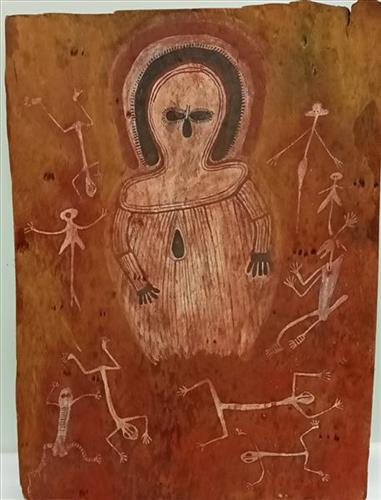
Wandjina and the Jillina ( Bush Woman)
Jillina is the mythical bush woman. The Wandjina is punishing the woman for doing something wrong. So she was by herself away from the tribe. These are the lonely women looking for a man.
221782006448
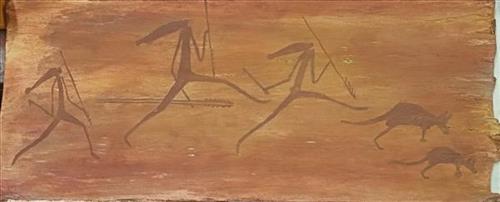
Running Man
This is the running man rock art that you see in the caves near Kalumburu. These are the hunters going out for food.
221782006446
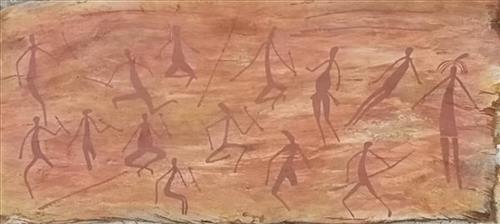
Gathering of the Gwion People
This is the beginning of the people gathering. All sorts of tribes like you see on the rock art around the Kimberley. Some images have pieces washed away by nature like you see it in the rock art.
111582006431

Kulyakartu
“Long time ago I been there. It is my grandmothers, grandfathers, fathers, mothers country, Kulyakartu. I am painting this particular place it keeps me connected, sense of belonging. Tell my grandmothers story through my art. Where she was born, I’m apart of that.
It makes me feel proud painting. Most important is telling the story behind the painting so people can understand where I am coming from. Kulyakartu is our ngurra (home, country, camp). I will continue telling the story through my art.”
– Derrick Butt
This painting depicts Kulyakartu, Derrick’s ancestral ngurra (home Country, camp). Kulyakartu is located in the far north of the Martu homelands, near the Percival Lakes region of Western Australia’s Great Sandy Desert.
Kulyakartu is mostly grass Country where there is very good hunting. In particular parnajarrpa (goanna), wild cats, and lunki (witchetty grub) are found in abundance here. There is no permanent water source in Kulyakartu, so the site was visited annually following the wantajarra (wet season).