11151029270


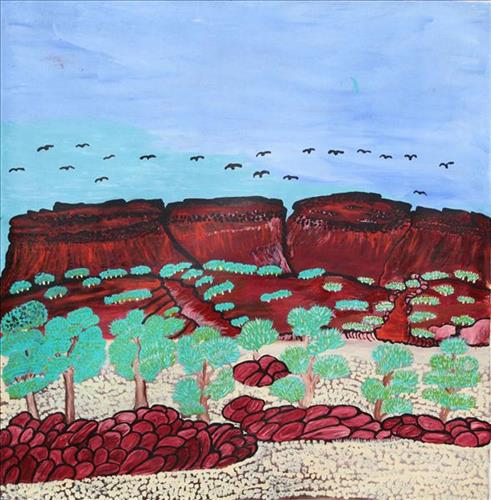
Blue Hills

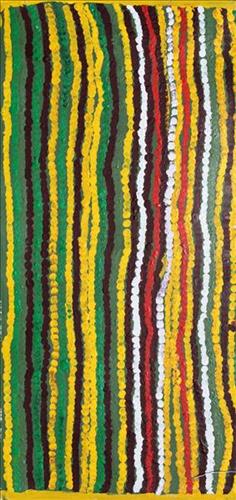
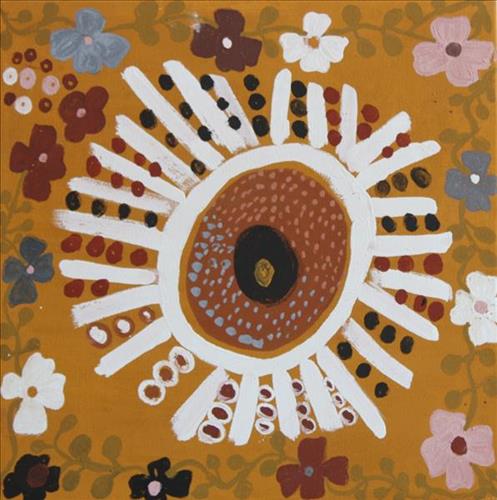
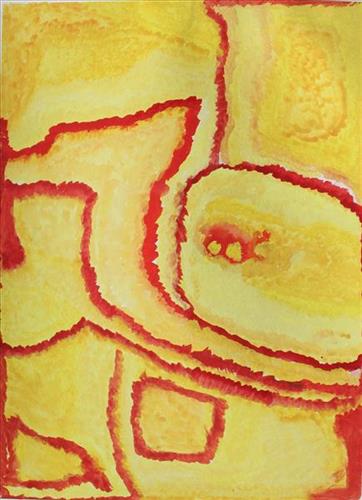
This painting depicts Blue Hills, which is Miriam’s father’s ancestral country. Kajarra (Kadjara) is the Martu name for the Carnarvon Ranges, which are situated in the Little Sandy Desert around 50 kilometres west of Well 5 on the Canning Stock Route. The red granite battlements of Kadjara rise up from spinifex plains and have many permanent waters. Kadjara was an important camping place for Martu walking between Jigalong and Wiluna for Law business up until the late 1960s, as well as Martu who walked the Canning Stock Route into Wiluna. Kadjara can be seen from Blue Hills. Blue Hills, now abandoned, was a small Martu outstation running cattle established after World War II and famously run by Tommy Ingebong, a Putijarra Martu from Wiluna. Many Martu people know of Blue Hills because of its was one of the first land grants to Martu, and because of its stunning views north-west across to Kajarra. Kajarra was the site of the 2008 Birriliburru Native Title Determination.

11151032959


Untitled

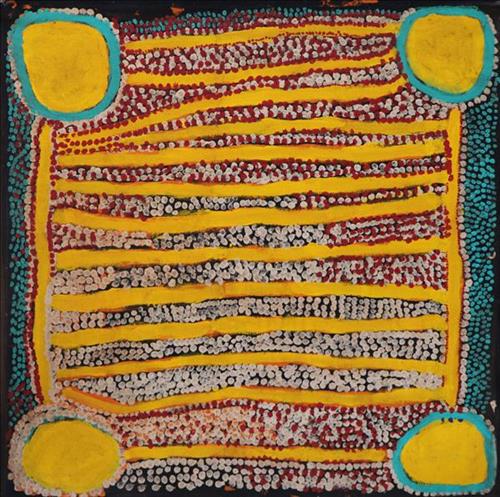
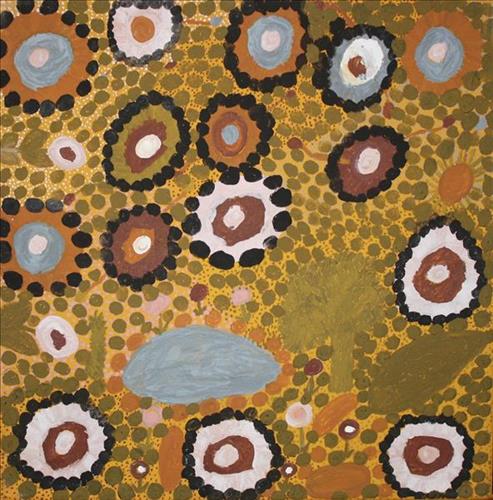
This is Pinyirr’s Country- her ‘ngurra’ (home Country, camp). People identify with their ngurra in terms of specific rights and responsibilities, and the possession of intimate knowledge of the physical and cultural properties of one’s Country. Painting ngurra, and in so doing sharing the Jukurrpa (Dreaming) stories and physical characteristics of that place, has today become an important means of cultural maintenance. 

Pinyirr’s ngurra encompasses the Country that she and her family walked in the pujiman (traditional, desert dwelling) era. At this time Pinyirr travelled nomadically with her own and other family groups, most notably the Bidu family. The Country they traversed encompassed an enormous tract of land, with an aerial distance of more than 600 kilometres, from present day Balfour Downs Station to Kunawarritji (Canning Stock Route Well 33). Pinyirr was born at Jartuti, a soak and claypan located southeast of Martilirri (Canning Stock Route Well 22). She grew up, walked and hunted primarily around Parnngurr, Punmu, Kun Kun (Kuny-kuny) and Kunawarritji. She continued to live nomadically before eventually deciding to move to Jigalong Mission along with many other relatives following an extreme and prolonged drought in the 1960s. 

Portrayed in this work are features of Pinyirr’s ngurra, such as the striking salt lakes, dominant permanent red tali (sandhills), warta (trees, vegetation), and the individually named water sources Pinyirr and her family camped at. These include Parnngurr, Martilirri, Wangkakalu, Kurta-kurta (Camel Rock), Pimurlu, Jilkupuka (Canning Stock Route Well 21), Kaalpa (Canning Stock Route Well 23), Kartarru (Canning Stock Route Well 24), Wantili (Warntili, Canning Stock Route Well 25), Tiwa (Canning Stock Route Well 26), Partujarrapirri, Raarki (Canning Stock Route Well 27), Wuranu (Canning Stock Route Well 29), Juntu- juntu (Canning Stock Route Well 30), and Kunawarritji. Rock holes, waterholes, soaks and springs were all extremely important sites for Martu people during the pujiman period, and are generally depicted with circular forms. 

The encyclopaedic knowledge of the location, quality and seasonal availability of the hundreds of water bodies found in one’s Country sustained Martu as they travelled across their Country, hunting and gathering, visiting family, and fulfilling ceremonial obligations. They would traverse very large distances annually, visiting specific areas in the dry and wet season depending on the availability of water and the corresponding cycles of plant and animal life on which hunting and gathering bush tucker was reliant. As they travelled and hunted they would also burn areas of Country, generating a greater diversity of plant and animal life.
11151032955


Untitled

This is Pinyirr’s Country- her ‘ngurra’ (home Country, camp). People identify with their ngurra in terms of specific rights and responsibilities, and the possession of intimate knowledge of the physical and cultural properties of one’s Country. Painting ngurra, and in so doing sharing the Jukurrpa (Dreaming) stories and physical characteristics of that place, has today become an important means of cultural maintenance. 

Pinyirr’s ngurra encompasses the Country that she and her family walked in the pujiman (traditional, desert dwelling) era. At this time Pinyirr travelled nomadically with her own and other family groups, most notably the Bidu family. The Country they traversed encompassed an enormous tract of land, with an aerial distance of more than 600 kilometres, from present day Balfour Downs Station to Kunawarritji (Canning Stock Route Well 33). Pinyirr was born at Jartuti, a soak and claypan located southeast of Martilirri (Canning Stock Route Well 22). She grew up, walked and hunted primarily around Parnngurr, Punmu, Kun Kun (Kuny-kuny) and Kunawarritji. She continued to live nomadically before eventually deciding to move to Jigalong Mission along with many other relatives following an extreme and prolonged drought in the 1960s. 

Portrayed in this work are features of Pinyirr’s ngurra, such as the striking salt lakes, dominant permanent red tali (sandhills), warta (trees, vegetation), and the individually named water sources Pinyirr and her family camped at. These include Parnngurr, Martilirri, Wangkakalu, Kurta-kurta (Camel Rock), Pimurlu, Jilkupuka (Canning Stock Route Well 21), Kaalpa (Canning Stock Route Well 23), Kartarru (Canning Stock Route Well 24), Wantili (Warntili, Canning Stock Route Well 25), Tiwa (Canning Stock Route Well 26), Partujarrapirri, Raarki (Canning Stock Route Well 27), Wuranu (Canning Stock Route Well 29), Juntu- juntu (Canning Stock Route Well 30), and Kunawarritji. Rock holes, waterholes, soaks and springs were all extremely important sites for Martu people during the pujiman period, and are generally depicted with circular forms. 

The encyclopaedic knowledge of the location, quality and seasonal availability of the hundreds of water bodies found in one’s Country sustained Martu as they travelled across their Country, hunting and gathering, visiting family, and fulfilling ceremonial obligations. They would traverse very large distances annually, visiting specific areas in the dry and wet season depending on the availability of water and the corresponding cycles of plant and animal life on which hunting and gathering bush tucker was reliant. As they travelled and hunted they would also burn areas of Country, generating a greater diversity of plant and animal life.
221776300634


Berkley River Waterhole

Berkley River Waterhole – Mary here has painted her deceased husband’s country on the Berkley.

221776300716


King George Country

King George River Country – “Moray” (Waterhole), “Aru” (Rocks) “Curru” (Northern Cypress Pine) and “Yulu” (Flowers).

221776300710


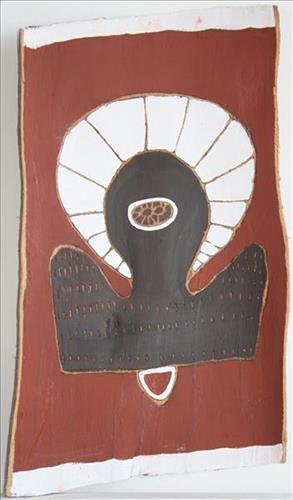
“Wanalirri” the Rainmaker

“Wanalirri” (the Wandjina) are ancestral spirits who created country, people and animals in the North West Kimberley before turning themselves into rock paintings. They are sometimes called “lightning man” or “rain maker” and every year they replenish water holes, creeks and rivers during the wet season. The use of a red pigment, representing blood for the “Tili” (the heart) to show that the Wandjina are partly alive. (Bark has been etched and painted)

11191253010


Wak Wak

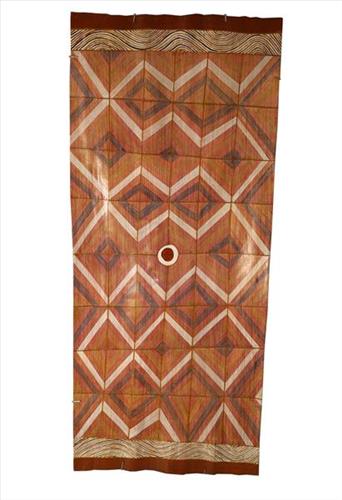
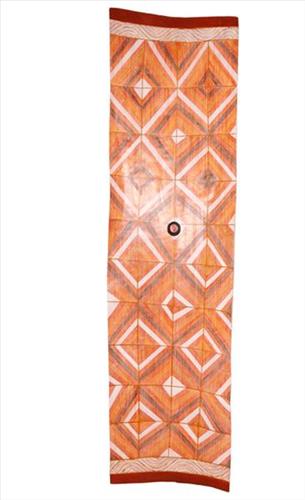
This painting depicts a sacred site at ‘Kurrurldul’, an outstation south of Maningrida.

The ‘rarrk’, or abstract crosshatching, on this work represents the design for the crow totem ancestor called ‘Djimarr’. Today this being exists in the form of a rock, which is permanently submerged at the bottom of Kurrurldul Creek. The ‘Djimarr’ rock in the stream at Kurrurldul is said to move around and call out in a soft hooting tone at night. Both the stone itself and the area around it are considered sacred.

The imagery represents the rock mentioned above at the bottom of Kurrurldul creek, which is the final transmutation of the dreaming ancestor ‘Djimarr’. Finally, the pattern used here is also the crow design used in the sacred ‘Mardayin’ ceremony, which is a large regional patri-moiety ceremony now rarely conducted in central and eastern Arnhem Land.

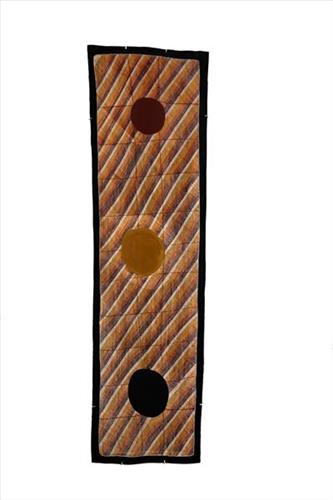
11151253585


Untitled

Mabel was born in the 1920s at Yirajara, which is near Jurntu Jurntu. Her parents were both Warnman people whose country encompassed Tarl and Nayijara. Mabel grew up in the pujiman (bush) way through her teens and as an adult, she walked into Jigalong Mission. She paints her ngurra (home) and her warrarn (country) to teach the young so that they can learn to paint, too.