
Warran
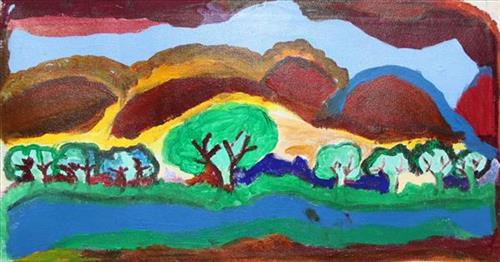
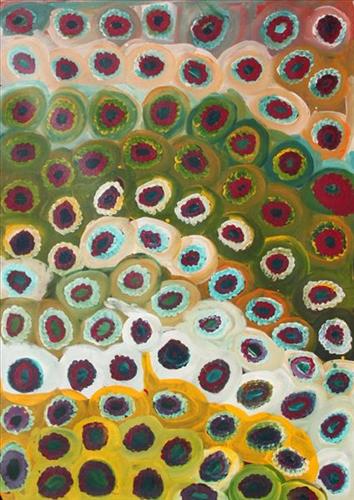
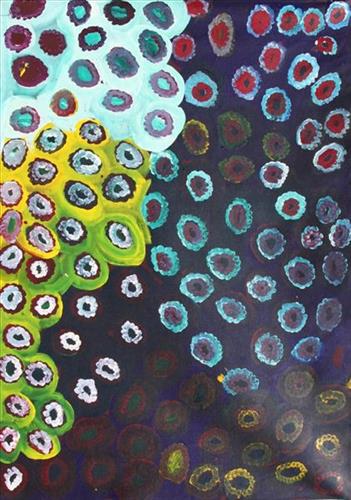
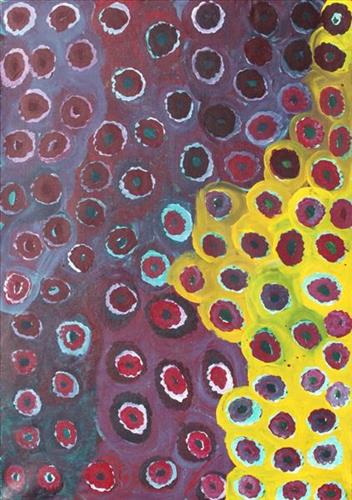
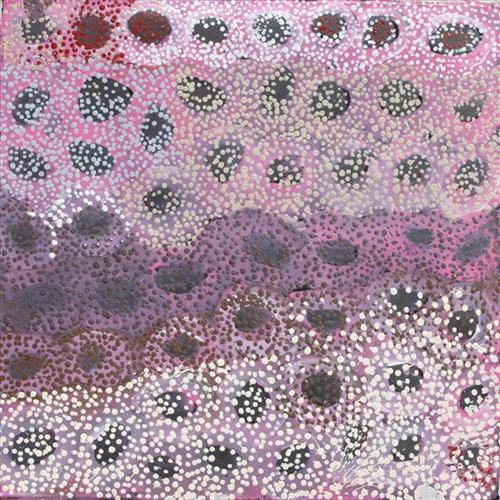
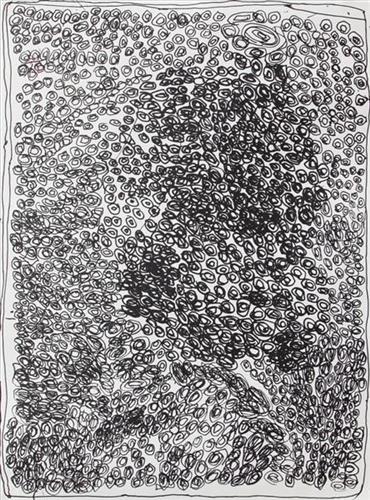
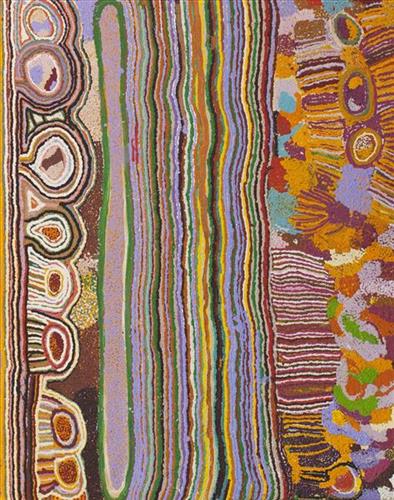
This painting encompasses many different layers of meaning for the artist. It represents an area of the artist’s Warran (country) where he lived and travelled traditionally during the pujiman (bush) days. The lines represent the tali (sand hills) that are prevalent in the Western Desert and the circles or squares represent different water sources. Rock holes, waterholes, soaks and springs were important sites for Martu people during pujiman days. The Martu lived very nomadically, moving from water source to water source, hunting and gathering bush tucker as they went. They would traverse very large distances, visiting some areas in the dry and some in the wet season depending on the availability of water.
As well as the physical characteristics of the land that the artist depicts are a lot of other elements that make up the deep relationship with country that the artist has. Different colours are used to portray different cycles based around kapi (rain) and waru (fire). Fire in particular is very important to Martu and they name all the cycles. Nyurnma means that the country has been freshly burnt, waru-waru is when there are green shoots and young plants, nyukura is when there are mature plants with edible fruit, manguu is when there is mature spinifex that is able to be burnt and kunarka is when there is elderly spinifex that is dying in the middle. There is also a lot of reference made to underground water sources and how they all link together.