111581832326


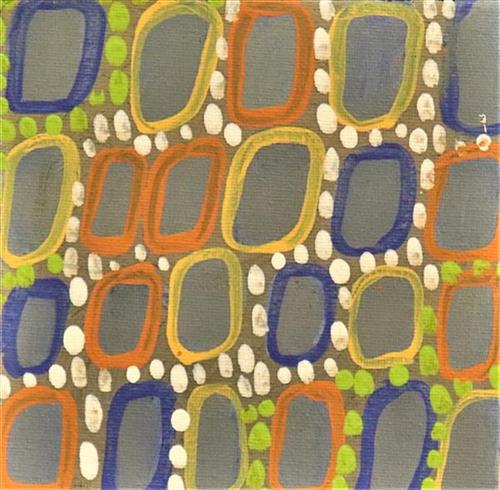
Untitled

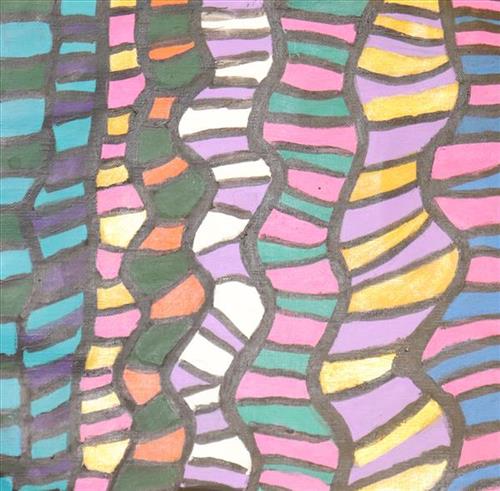
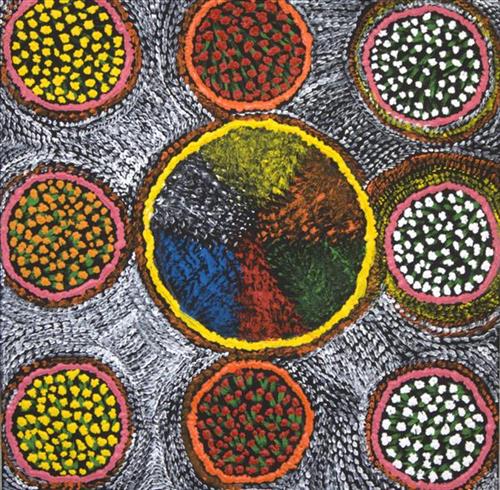
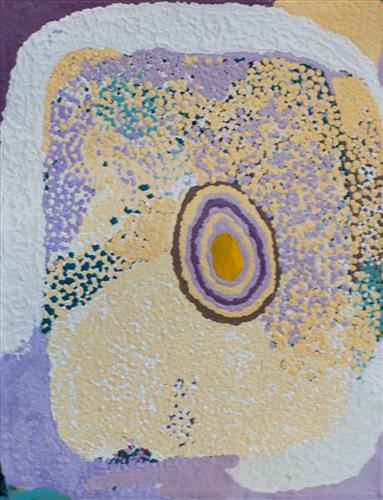
This painting portrays physical elements of Martu Country, such as the dominant tali (sandhills), warta (trees, vegetation), and water sources. Rock holes, waterholes, soaks and springs were all extremely important sites for Martu people during the pujiman (nomadic bush) era, with many important jukurrpa (dreamtime stories) chronicling the creation of these landmarks. In the past the Martu lived nomadically, moving from water source to water source, and hunting and gathering bush tucker as they went. They would traverse very large distances annually, visiting specific areas in the dry and wet season depending on the availability of water. As they travelled and hunted they would also burn areas of country creating a larger diversity of plant and animal life.
111981849401


Namumuyak

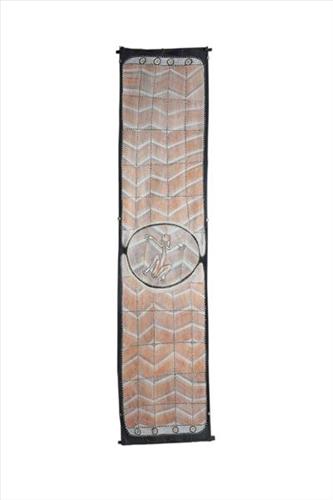
Namumuyak was a man who came from the sea and traveled inland. As he went he put children in their land and gave them their languages and their clan. He also put plants on the land and told bininj which ones they should eat and which ones they should not. So this man Namumuyak went on to Kardbam Clan country, there he put his own image and became a dreaming on the Kardbam country where he remains today.

220381951184


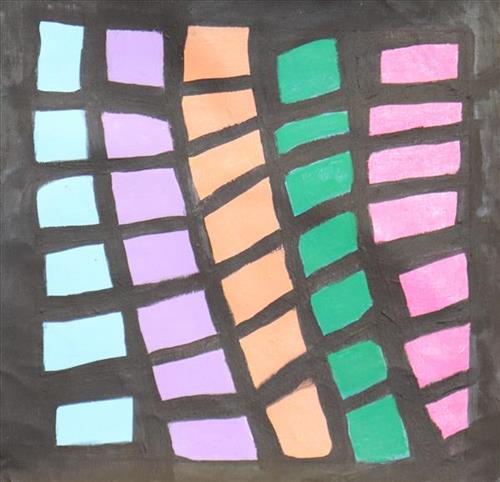
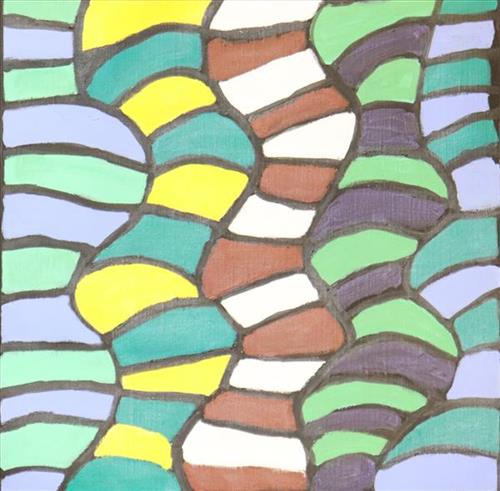
Stepping Stones

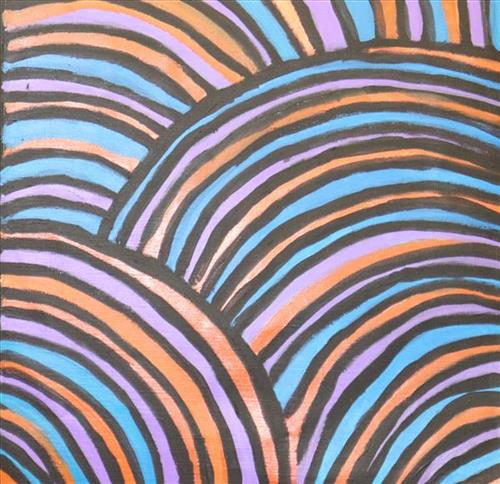
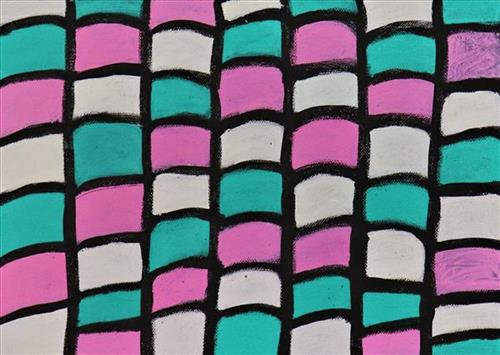
When the world was soft… when everything began… these are the stepping stones as the ancestors walked across the world… long time ago… before we was born… you know… when the world was being made.

220381951183


Munni Munni Hills

When I was a little girl I walked around my parents camps where we grew up, they worked the station. I would look after the station owners children at Munni Munni Hills.

220381951182


Stepping Stones

When the world was soft… when everything began… these are the stepping stones as the ancestors walked across the world… long time ago… before we was born… you know… when the world was being made.

220381951169


Stepping Stones

When the world was soft… when everything began… these are the stepping stones as the ancestors walked across the world… long time ago… before we was born… you know… when the world was being made.

220381984977


Stepping Stones

When the world was soft… when everything began… these are the stepping stones as the ancestors walked across the world… long time ago… before we was born… you know… when the world was being made.

111982052231


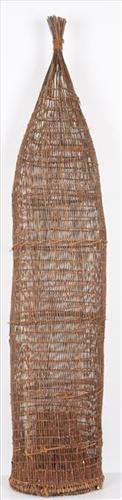
An-gujechiya (Fish Trap)

To make fish traps and fish net fences artists firstly get vine (mirlarl) from the jungle and they put it in water for one night to make it soft. Next they start weaving it; they make rings for the inside to keep the fish trap’s shape. Artists work for three or four weeks on the fish trap. They also make string from kurrajong (burdaga) to attach the hibiscus (bardainy) rings and to tie the conical end of the fish trap. This fish trap is used in saltwater and freshwater. People also use fish net fences called mun-dirra. A long time ago they would put the mun-dirra across rivers and creeks. In the middle they would place the an-gujechiya. They also used small things like sticks, rocks, mud and grass to block the fish from going through. People would then catch fish like saltwater barramundi rajarra, freshwater barramundi (janambal), small black freshwater catfish (buliya), bonefish (an-guwirrpiya), and sand bass (dalakan) in these fish traps.

220382056360


Stepping Stones

When the world was soft… when everything began… these are the stepping stones as the ancestors walked across the world… long time ago… before we was born… you know… when the world was being made.