377810582115975


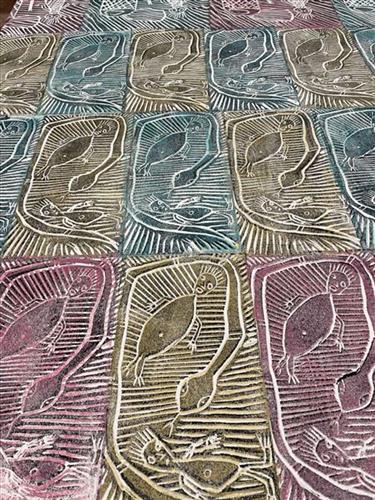
Bawáliba (Stone country Mimih)

‘I’m a screen printer and a lino printer and I’m from Maningrida, NT and my age is 60. I was born here in Maningrida and I schooled here. I have four children but I lost one of them and I have 6 grandchildren. I want to do more screen printing but I prefer the small screens. I prefer lino printing because I like to stand tall and it physically feels better. I quit smoking in 2020 and I would like to tell other women to stop smoking and do more exercise.!’ Lucy Yarawanga This fabric was created using the linocut printing technique. The lino tile has been carved by the artist in Maningrida, and has been printed by hand using a variety of colours and layers. The linocut technique ensures each textile piece is a one-off, limited edition piece. Bábbarra Women’s Centre supports the economic independence of Indigenous women in the Arnhem Land community of Maningrida, Northern Territory, Australia. Designs created by the women at Bábbarra reflect strong cultural knowledge, which is passed down to younger generations through their textile design practice. Oatmeal fabric with black, teal, pink and metallic gold ink
377810582115974


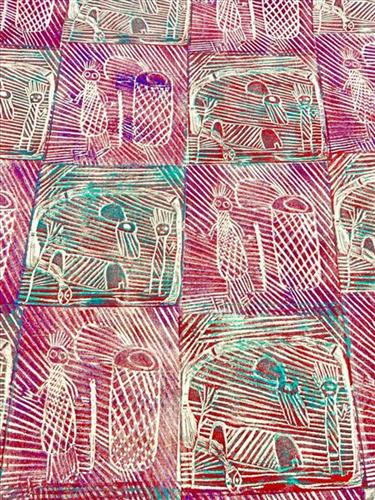
Bawáliba (Spirit Woman)

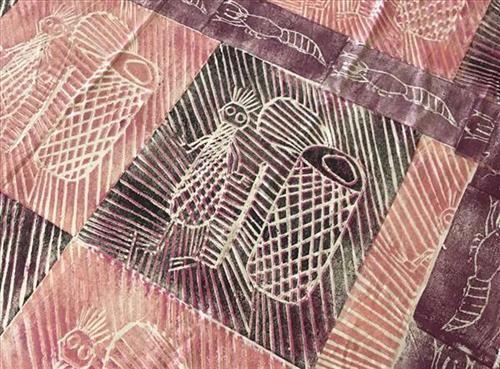
This fabric was created using the linocut printing technique. The lino tile has been carved by the artist in Maningrida, and has been printed by hand using a variety of colours and layers. The linocut technique ensures each textile piece is a one-off, limited edition piece. “This is the Dreaming of my mother and my uncles. These spirits are called Bawáliba. A long time ago they used to go out hunting. That’s in Ranger station near the airport (mum and uncle from further this way to Jingarr). Their homeland. They used to go out hunting with dilly bags and digging sticks. They used to collect a lot of bush foods, and sleep together with one bark shelter. Sometimes they come alive when we sleep, they come in the house when we sleep and peep through the window and we looked them with white clay (gapan) and red cloth tied around. We get up to look but they have disappeared. They are really tall. They are like human beings, like us. They dance and have a lot of hair. They are carrying fish traps and digging sticks. They are good spirits, they protect us and they recognise families. They might knock on the window to remind us they are there looking out for us. You can hear them whisper, sometimes they talk about us and might say, ‘why are they making a house here?’ Then they say to each other, ‘This family are from here, its ok, they are sleeping here for the night’. During the day they turn into stone and they sleep. When you see that green rock, that’s Bawáliba.” Lucy Yarawanga

377810582115969


Bawáliba (Spirit Woman)

This fabric was created using the linocut printing technique. The lino tile has been carved by the artist in Maningrida, and has been printed by hand using a variety of colours and layers. The linocut technique ensures each textile piece is a one-off, limited edition piece. “This is the Dreaming of my mother and my uncles. These spirits are called Bawáliba. A long time ago they used to go out hunting. That’s in Ranger station near the airport (mum and uncle from further this way to Jingarr). Their homeland. They used to go out hunting with dilly bags and digging sticks. They used to collect a lot of bush foods, and sleep together with one bark shelter. Sometimes they come alive when we sleep, they come in the house when we sleep and peep through the window and we looked them with white clay (gapan) and red cloth tied around. We get up to look but they have disappeared. They are really tall. They are like human beings, like us. They dance and have a lot of hair. They are carrying fish traps and digging sticks. They are good spirits, they protect us and they recognise families. They might knock on the window to remind us they are there looking out for us. You can hear them whisper, sometimes they talk about us and might say, ‘why are they making a house here?’ Then they say to each other, ‘This family are from here, its ok, they are sleeping here for the night’. During the day they turn into stone and they sleep. When you see that green rock, that’s Bawáliba.” Lucy Yarawanga

377810582115968


Bawáliba (stone country Mimih)

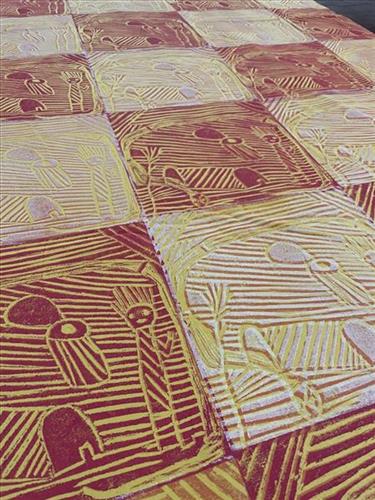
‘I feel good waking up in the morning, knowing I am going to Bábbarra. After work I go home and talk about my printing with all my family, and then I dream about it too. I am always thinking about my designs. They make me feel so proud.” – Lucy Yarawanga This fabric was created using the linocut printing technique. The lino tile has been carved by the artist in Maningrida, and has been printed by hand using a variety of colours and layers. The linocut technique ensures each textile piece is a one-off, limited edition piece. Bábbarra Women’s Centre supports the economic independence of Indigenous women in the Arnhem Land community of Maningrida, Northern Territory, Australia. Designs created by the women at Bábbarra reflect strong cultural knowledge, which is passed down to younger generations through their textile design practice. Bright yellow fabric with red, white and orange ink

377810582115967


Báwaliba

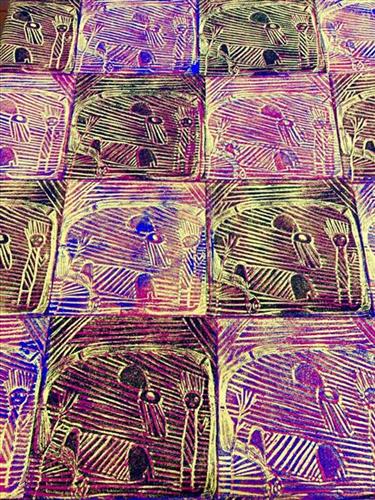
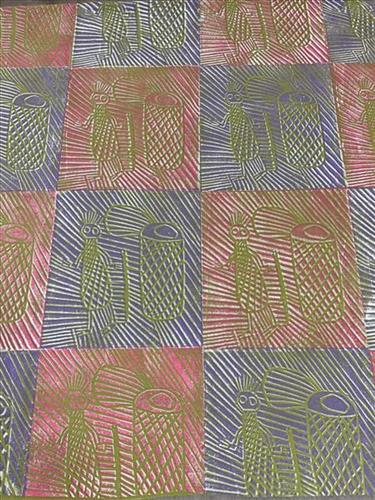
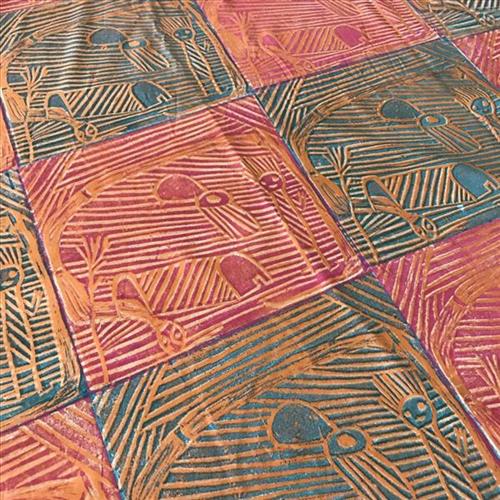
‘I feel good waking up in the morning, knowing I am going to Bábbarra. After work I go home and talk about my printing with all my family, and then I dream about it too. I am always thinking about my designs. They make me feel so proud.” – Lucy Yarawanga. This fabric was created using the linocut printing technique. The lino tile has been carved by the artist in Maningrida, and has been printed by hand using a variety of colours and layers. The linocut technique ensures each textile piece is a one-off, limited edition piece. Bábbarra Women’s Centre supports the economic independence of Indigenous women in the Arnhem Land community of Maningrida, Northern Territory, Australia. Designs created by the women at Bábbarra reflect strong cultural knowledge, which is passed down to younger generations through their textile design practice. This is a very special piece of Linocut printed fabric with bright neon colours. Light green cotton with purple and pink ink.

377810582115965


Mududu (Mud Crab)

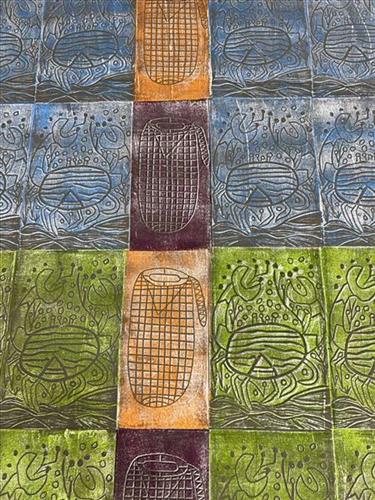
A new design by Lucy celebrating her love of eating mudcrab. Lucy Yarawanga ‘I feel good waking up in the morning, knowing I am going to Bábbarra. After work I go home and talk about my printing with all my family, and then I dream about it too. I am always thinking about my designs. They make me feel so proud.” – Lucy Yarawanga. This is a Lino print textile length hand printed by the women of Arnhem Land. Dark grey cotton with green, blue, purple and orange ink.

377810582115960


Bawáliba (Stone country Mimih)

‘I feel good waking up in the morning, knowing I am going to Bábbarra. After work I go home and talk about my printing with all my family, and then I dream about it too. I am always thinking about my designs. They make me feel so proud.” – Lucy Yarawanga. This fabric was created using the linocut printing technique. The lino tile has been carved by the artist in Maningrida, and has been printed by hand using a variety of colours and layers. The linocut technique ensures each textile piece is a one-off, limited edition piece. Bábbarra Women’s Centre supports the economic independence of Indigenous women in the Arnhem Land community of Maningrida, Northern Territory, Australia. Designs created by the women at Bábbarra reflect strong cultural knowledge, which is passed down to younger generations through their textile design practice. This is a very special piece of Linocut printed fabric with bright neon colours.

377810582115959


Bawaliba & Seaweed

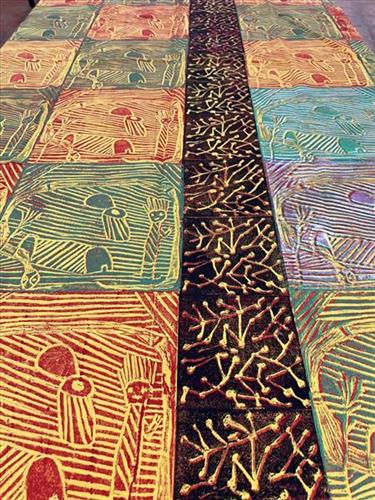
‘I feel good waking up in the morning, knowing I am going to Bábbarra. After work I go home and talk about my printing with all my family, and then I dream about it too. I am always thinking about my designs. They make me feel so proud.” – Lucy Yarawanga. This fabric was created using the linocut printing technique. The lino tile has been carved by the artist in Maningrida, and has been printed by hand using a variety of colours and layers. The linocut technique ensures each textile piece is a one-off, limited edition piece. Bábbarra Women’s Centre supports the economic independence of Indigenous women in the Arnhem Land community of Maningrida, Northern Territory, Australia. Designs created by the women at Bábbarra reflect strong cultural knowledge, which is passed down to younger generations through their textile design practice.

377810582115958


Bawáliba (Spirit Woman) & Rolk

‘This is the Dreaming of my mother and my uncles. These spirits are called Bawáliba. A long time ago they used to go out hunting. That’s in Ranger station near the airport (mum and uncle from further this way to Jingarr). Their homeland. They used to go out hunting with dilly bags and digging sticks. They used to collect a lot of bush foods, and sleep together with one bark shelter. Sometimes they come alive when we sleep, they come in the house when we sleep and peep through the window and we looked them with white clay (gapan) and red cloth tied around. We get up to look but they have disappeared. They are really tall. They are like human beings, like us. They dance and have a lot of hair. They are carrying fish traps and digging sticks. They are good spirits, they protect us and they recognise families. They might knock on the window to remind us they are there looking out for us. You can hear them whisper, sometimes they talk about us and might say, ‘why are they making a house here?’ Then they say to each other, ‘This family are from here, its ok, they are sleeping here for the night’. During the day they turn into stone and they sleep. When you see that green rock, that’s Bawáliba.’ Lucy Yarawanga A beautiful piece of fabric hand printed using the linocut technique. Black, pink and purple ink has been applied.

377810582115955


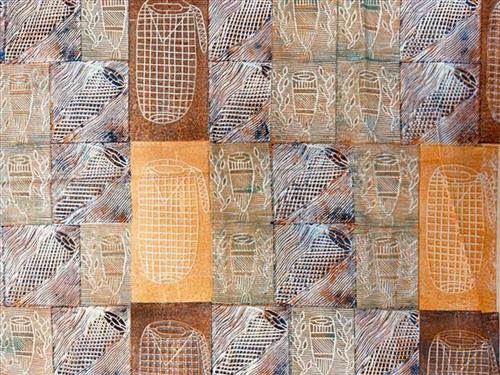
Mandjabu & Kunmadj (fish trap and pandanus mat)

With permission from the lino artists Raylene Bonson and Abigail Namundja, Lucy has incorporated her own advanced use of colour to print this fabric. Bronze, brown, orange and olive tones on a white base fabric. This fabric was created using the linocut printing technique. The lino tile has been carved by the artist in Maningrida, and has been printed by hand using a variety of colours and layers. The linocut technique ensures each textile piece is a one-off, limited edition piece. Bábbarra Women’s Centre supports the economic independence of Indigenous women in the Arnhem Land community of Maningrida, Northern Territory, Australia. Designs created by the women at Bábbarra reflect strong cultural knowledge, which is passed down to younger generations through their textile design practice.