111982144298


Ngaldadmurrng

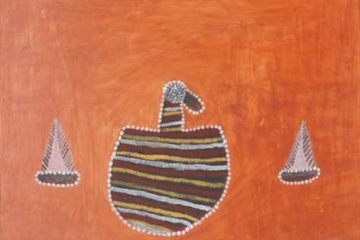
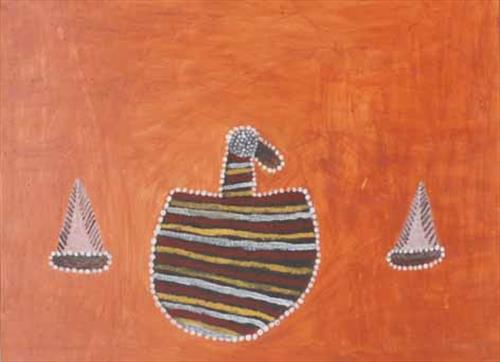
This is a painting of ngaldadmurrng ‘Saratoga fish’ (Scleropages jardini) sometimes also called the Northern Spotted Barramundi.

Saratoga are commonly found in creeks, rivers and billabongs around the artist’s clan estate. The animal depicted is on one level easy to recognise and it’s meaning is easily accessible. On a deeper level the animal is depicted with intense rarrk ‘cross hatched’ infill, which creates a reference to Mardayin ceremonial mysticism. 

Saratoga makes their nests on the bottom of riverbeds in the sand by digging with their tails and fins and lay eggs into these depressions. During mortuary rituals the Kuninjku imitate these nests in sand sculpture. At the end of funerals all those who have attended the funeral are required to stand in the ‘saratoga’s nests’ and they are doused with water to be cleansed from the polluting effects of the deceased. A large meteorite crater near Mumeka in the Liverpool River district is said to be the nest of the saratoga which now stands in the landscape as djang ‘a sacred site’. 

In painting this image Marawarr is continuing a long tradition of figurative artistic practice carried out by Arnhem Land.


377810582144266


Djomi

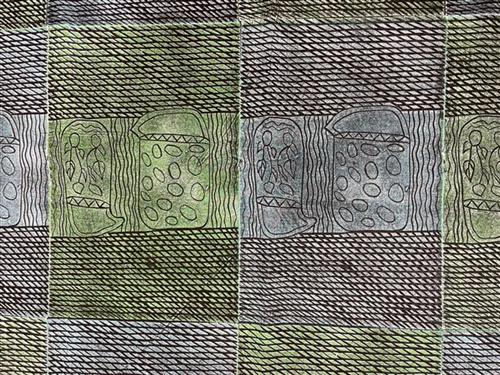
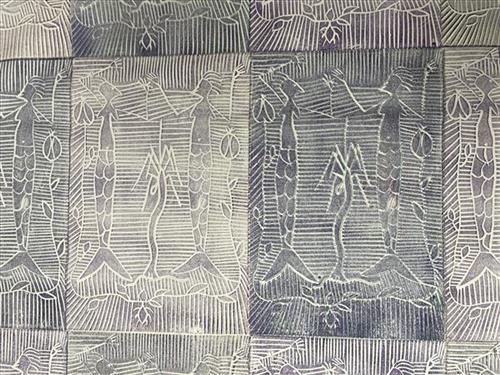
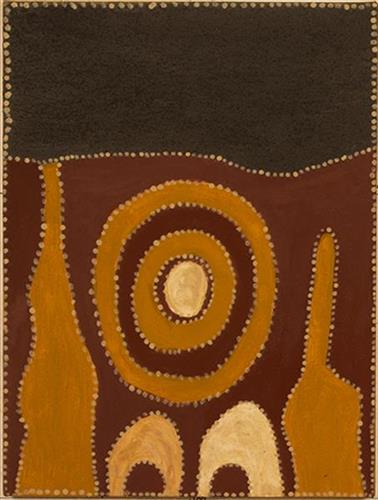
This design depicts the story of the artist’s ancestral dreaming, the Djomi fresh water spirit mermaid.

The Djomi figure is a mermaid like spirit with fish tail that lives in the fresh water stream that flows out to the sea cliff near Maningrida. Djomi is a known to be a very powerful fertility symbol.

‘If you go there you can get pregnant easily. Djomi has babies, and they can give others babies too. The Djomi spirit is so powerful, that women can end up with multiple babies at once, twins or sometimes even more. The Djomi spirits lay eggs near the sacred freshwater stream in Maningrida. Inside the eggs are human babies as well as young Djomi.

Men do not go near that swamp, because Djomi is so powerful that men might get pregnant there too. So men, they are too scared of that Djomi. When we visit the Djomi freshwater spring, we can hear young Djomi crying. They sound like normal babies crying, those Djomi spirits. They are looking for a mother.

This Djomi is my dreaming, I got permission from my djunguys to paint this Djomi design. For me I always ask my djunguy permission to paint, because that is our cultural way.

This design also depicts the fresh water lily leaves, and seaweed from the base of the sea floor.

111982144203


Mat

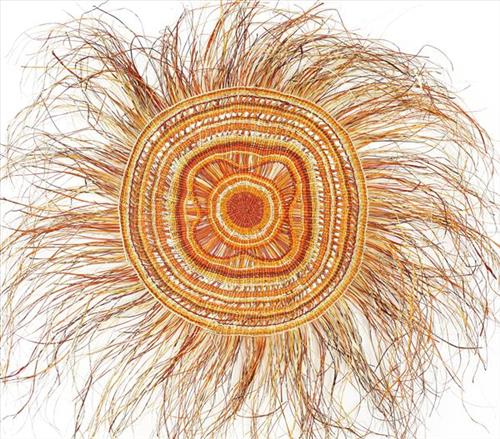
Mats can vary greatly. Artists commonly use a mix of naturally dyed and undyed fibre to create a striking variation of coloured bands. Some artists also incorporate different types of looping to produce different patterns and textured finishes. Each type of mat, fibre bag, basket and dilly bag has its own name in the various languages spoken in the Maningrida region.

11154002220


Status: Stock


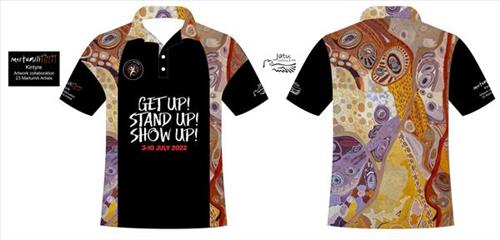
‘Kintyre’ 2022 NAIDOC T-shirt

“Young and old gotta do ‘im togther- old people gotta learn the young fellas about that place. Country. Martumili (belonging to Martu).”

 – Wokka Taylor

Produced to be a part of FORM’s Tracks We Share project, Martu artists embarked the creation of a large-scale collaborative painting depicting the Country and stories of Kintyre. Martu filmmaker and FORM project officer Curtis Taylor, FORM project officer Greg Taylor/Annie McLoughlin and Martumili staff and artists travelled to Parnngurr to attend an intense period of art making and conversation. Under the tutelage and direction from their elders, young artists laid the groundwork for the painting, with elders adding layers of details and knowledge to these foundations. Created by 23 artists over 18 months, the resulting artwork brings together stories of jukurrpa (dreaming), pre-colonial Martu life, personal histories, and contemporary mining interference with the important site of Kintyre, located within the heart of Martu Country- Karlamilyi national park.

Martu artists were part of the Western Desert Lands Aboriginal Corporation (WDLAC) 2021 AGM in Newman and unveiled the 5x3metre collaborative ‘Kintyre’ artwork to Martu Native Title holders and their families.  This was part of the Martu discussion about making a native title claim over Karlamilyi National park. Martu used the ‘Kintyre’ artwork to tell stories of great cultural importance and personal significance about this ngurra (Country, homeland), and to tell WDLAC to keep going with its work on getting this country back into Martu hands. The following day, Martu Elders and leaders showed and explained the ‘Kintyre’ work to WA Minister for Aboriginal Affairs, Hon Stephen Dawson.  Martu and WDLAC signed a shared statement of intent with the Minister, binding the Government and Martu to work together for Martu native title over Karlamilyi, as well as housing and community development reforms for Punmu, Kunawarritji and Parnngurr.

Kintyre is a claypan located just north of the Karlamilyi (Rudall River) region. During the pujiman (traditional, desert dwelling) era, the site was a popular camping ground in the wantajarra (wet season), when the claypan filled with kapi (water). Today Kintyre is best known for its substantial uranium deposits, and the area has been developed for mining. Protest from traditional land owners in combination with a declining uranium market have resulted in the project being put on hold for the time being.

1106920424


NGAWALE

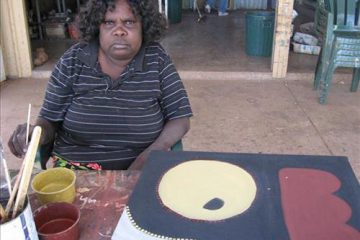
“Dijan the Ngawalil, that woomera, for spear and Jimbala sitting next to him on Darrajayin. He sitting up there, Dreamtime. He that rock. I should of painted three long rocks on top. Only one and short I put him! Jimbirla, that white stone, for spear you know?”

The eagle Warranany, made these two on the side, and he said to his sister the crow Wangkarnal, “I’m tired and knocked up from making these jimbirla, you make him now.”

That Wangkarnal said, “I can’t do ‘em. I don’t know how to make that Jimbirlia.”

The eagle chucked all the flakes at his sister because she wouldn’t do the work. That’s why that crow has white eyes, because his brother, the eagle, got wild at him.

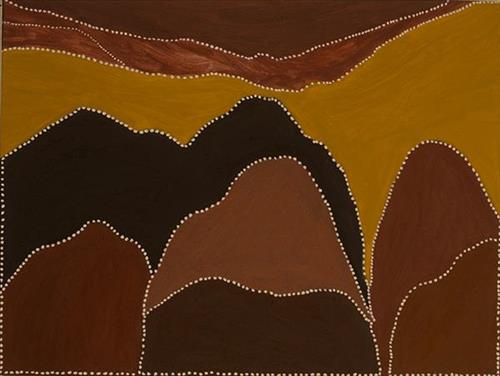
Mabel has painted the Ngawale (Woomera) Dreamtime site on her traditional country, Darrajayin. On top of the central rock is the woomera she is talking about. On Darrajayin you can go to this hill and see the woomera rock. Beside the hill are Jimbala (white quartz rock), which are used as spear heads. 

11061037792


JALMUNJI BLUE HOLE – DWAYNE JESSELL

                     Jalmunyji Bottom side of Blue Hole

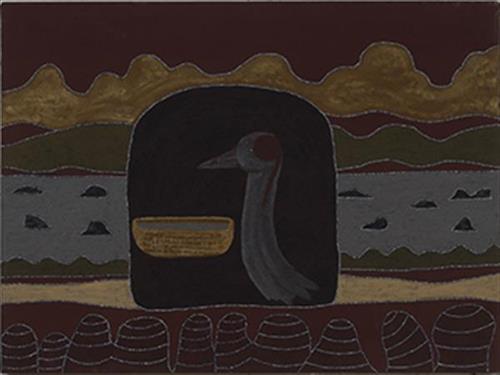
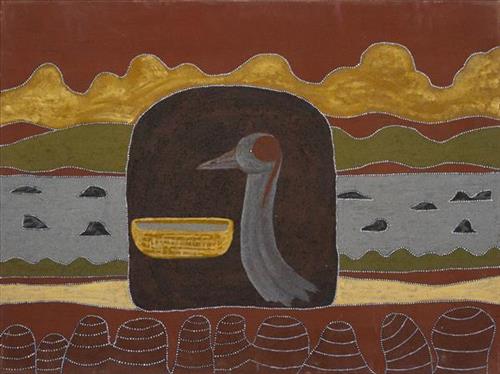
There was a large water hole for alot of people to drink. One day the brolga got so thirsty for that water that he went with his coolamen and started collecting all those water from them people main source (water hole) he was traveling back and fourth every day, until the water was dry, til he got the last load of water in his coolamen, that’s when keritanji the frilled neck lizard saw him. He raced to get his spear and started throughing it at him, he kept on missing him, til old Jirra-kiny the frog came wuth his boomarang, he then threw his boomarang with his left arm but missed. He goy another boomarang and threw with his right arm and he hit the coolamen off the brolgas arms and the spilt back down the ground on the very river where it sits today. It’s called Jalmunji.


When ever you go to that place today, you’ll see a big black rock in the middle of the river, that’s the brolga and there’s water all around there.