110681512240


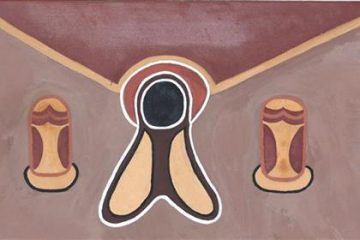
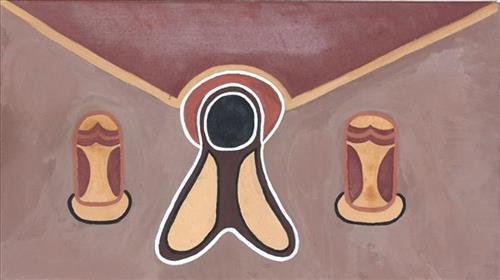
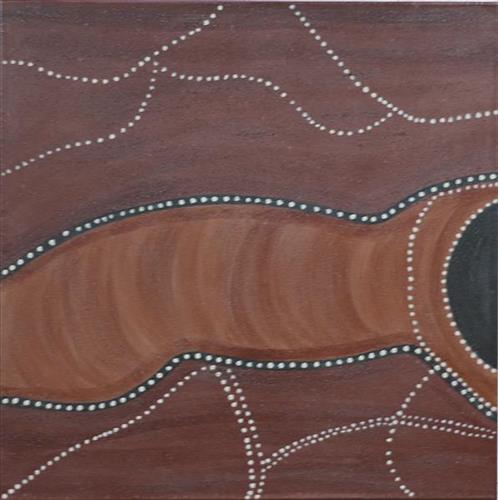
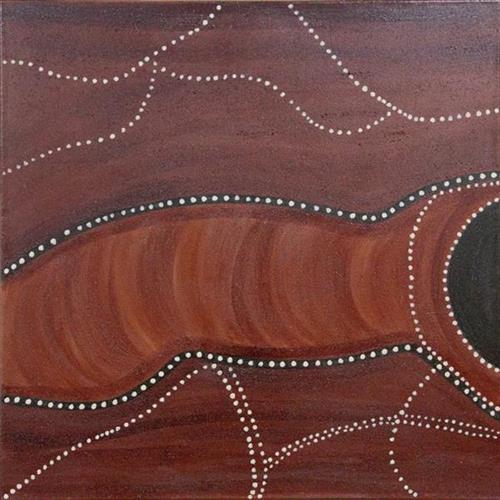
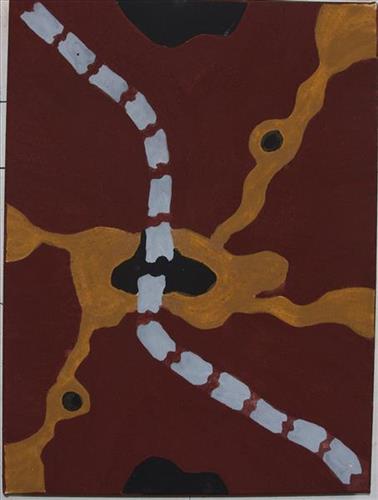
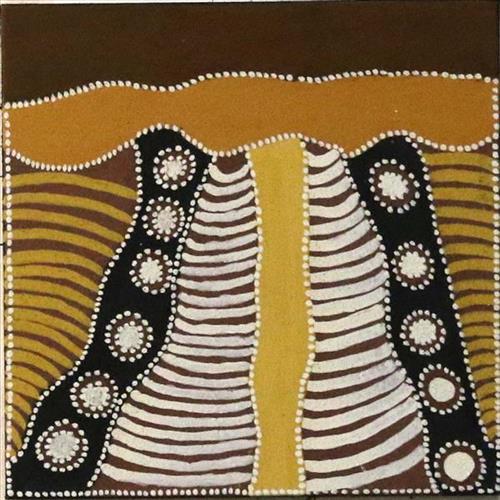
This is another one of Phyillis’s Gemerre artwork –

The vertical or horizontal lines that feature in Phyllis Thomas’ Gemerre works represent scarification marks made on the body during ceremony. During such ceremonies incisions are made on a participants arm, leg, chest or stomach, ash is rubbed into the incisions to encourage scar tissue to grow and accentuate the mark. Gemerre signify that a person has gone through a particular right or has been identified as having specific skills. Gemerre form part of an individuals identity, the scars protect a person as they let ancestors know who the person is and what they bring with them. Across her chest Phyllis carries her own Gemerre that was given to her by her elders when she was a young women.  

Phyllis says; ‘This is them scars that the old people used to cut across their bodies. Their leg, arm and stomach. This keep ’em safe when going across rivers, so that the Rainbow Serpent doesn’t get you.’
110681643636


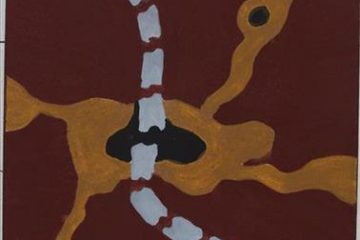
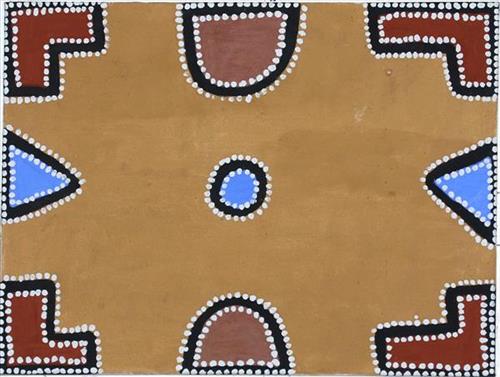
Stony Creek

Rammey Ramsey is a senior Gija man of Joongoora skin, whose ancestral Country lies to the west of Bedford Downs near Elgee Cliffs. Ramsey says:

“This is my place called Stony Creek, it is part of Warlawoon Country. They named me Warlawoon for my Country here. There is a Dreamtime waterhole there (shown in the middle, in blue), a place where many fish live.

This is my mother and father’s Country. I own that Country from my mother and father. Lots of people used to live here with my parents.”

Ramsey now lives in Bow River. His work is forever infused with the memory of Warlawoon Country together with a longing for Country his work teases out the complexities of Gija world-views and the impact of pastoral occupation on his land.

110681933375


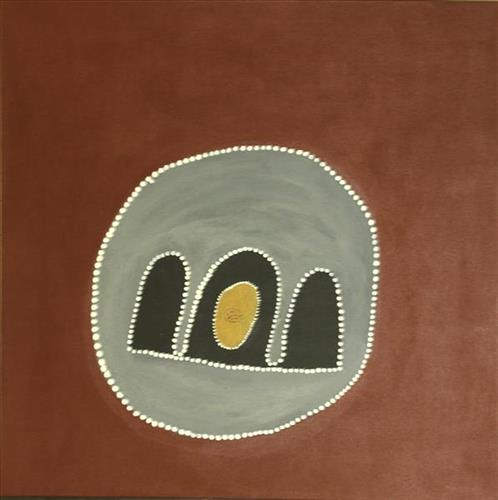
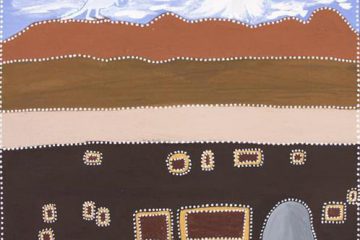
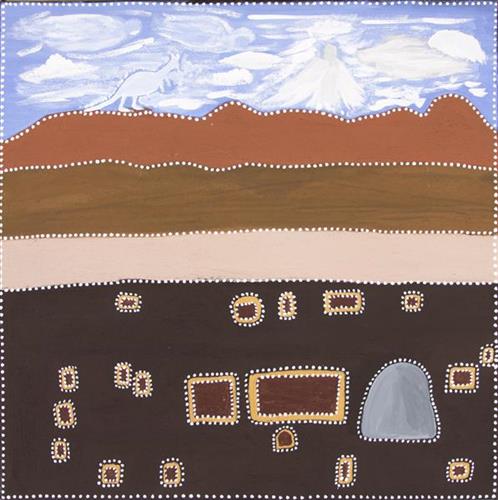
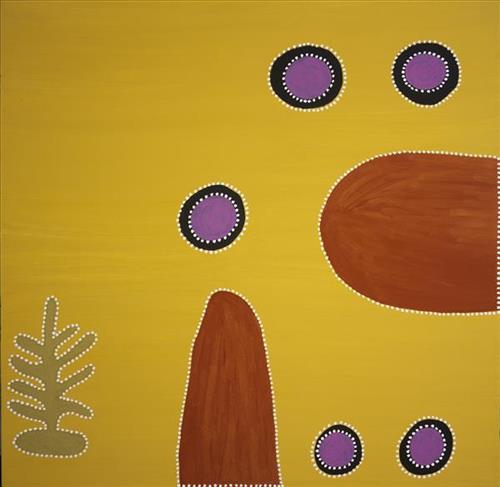
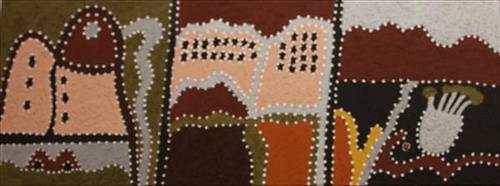
Texas Rock Hole

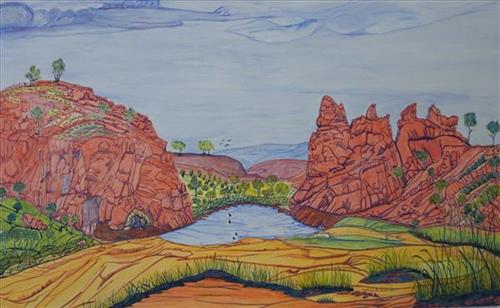
“This place is right near the homestead at Texas.” Charlene was born and grew up at Warmun Community however she has spent many holidays camping out with her family at Texas Station. Here they would fish and visit significant sites. Charlene’s mother and father, as well as grandmother and grandfather had lived and worked on Texas Station up until ‘equal wages’ were introduced in 1968. 

Charlene explains; “I got that half rock hole there [right of canvas] and the two hill on each side. There is more rock hole all the way up, starting with this good size one here.”  

Charlene’s family are the traditional owners for the country that Texas Station sit’s on.