377810582188826


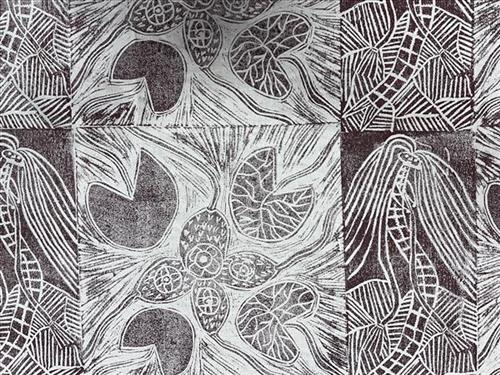
Yawkyawk dja Wayuk

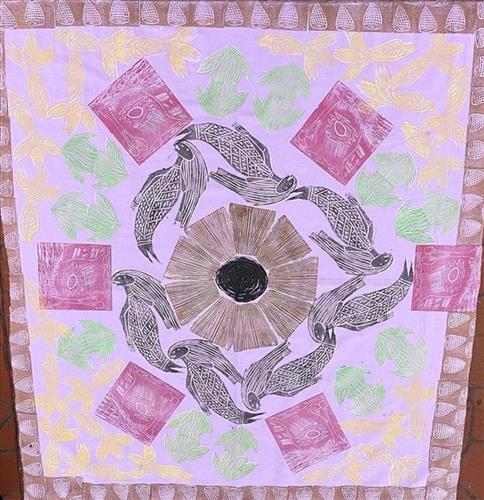
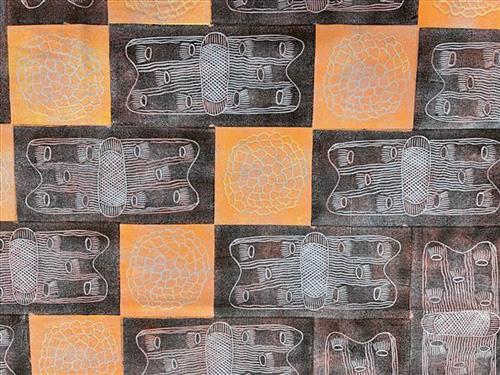
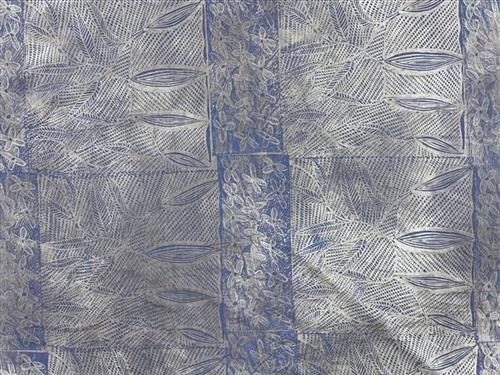
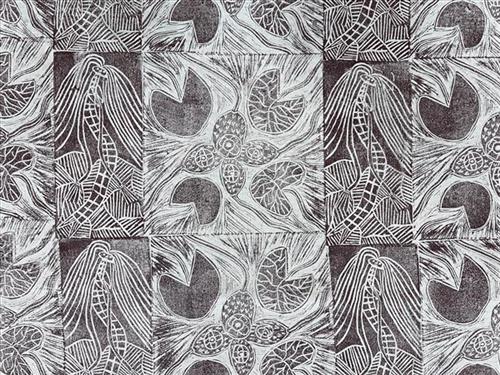
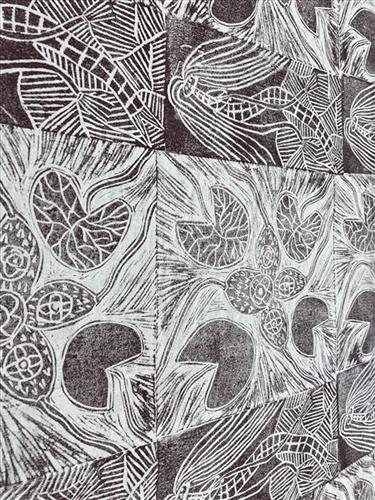
Deborah Wurrkidj is a Kuninjku artist from the Kurulk clan whose country lies around the outstation of Mumeka in central Arnhem Land. This image depicts a female water spirit, (yawkyawk) with wayuk (waterlily)  from a creek in the rock country near Yikkarakal. The Yawkyawk is a story of the Duwa moiety that Deborah learnt to paint from her father.

‘Yawkyawk are water spirits (mermaids) and also young women. This design is yawkyawk in the billabong near Yikkarakal. Yawkyawk move like women, the one on the left is the old woman and on the right is the young woman. They are mother and daughter.

Sometimes you can hear yawkyawk talking at night. My grandmother told me a story that they heard those yawkyawk and when they looked out with their torch at night, all the women saw the yawkyawk tails flapping and disappearing in the water. The water is very cold in that billabong and the sand is soft, you might fall down there in the mud. There are also wayuk (water lilies) in this design, and other grasses. Sometimes when they are cold, the yawkyawk get out of the water to lie in the sun, but when they hear our footsteps they quickly jump back in.’ Deborah Wurrkidj
377810582188818


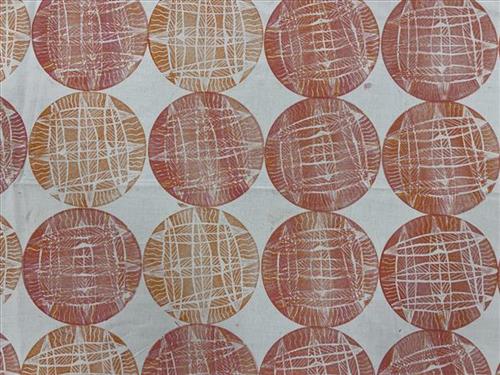
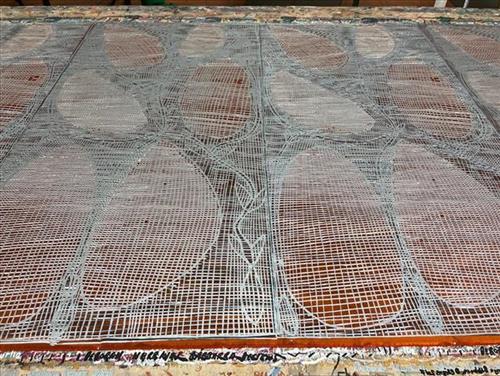
Kunwardde dja Karrbarda (Rocks and Yam Vine)

Susan Marawarr is a Kuninjku artist from the Kurulk clan whose country lies around the outstation of Mumeka in central Arnhem Land. In this design, she has depicted karrbarda (long yam) on her traditional country, the kunwardde (stone country).

The large stones represent the kunwardde rocky outcrops, which are elevated above the flat floodplains. The vines creeping around the large rocks are from the karrbarda. Women dig up karrbarda with kungarrndutj (digging sticks) and they are then cooked in the ashes of the fire to be eaten.

These yams are purple on the saltwater side of country and on inland freshwater country they are white. Karrbarda are an important manme (bush food) that are collected during the wet and dry seasons.

377810582189007


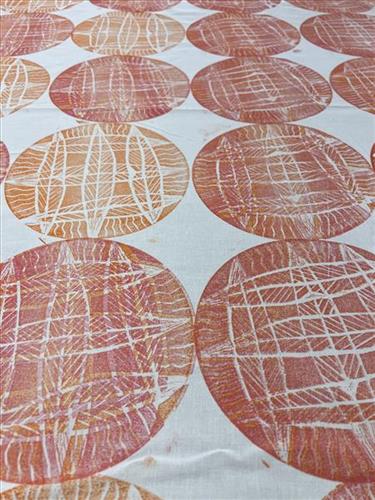
Yawkyawk – Janet Marawarr

‘Yawkyawk swim underneath the rock. They always stay there. When the sun comes out they come out from underneath the river, make themselves warm. They sit and they look around. When they sit, they cry to themselves. Ngaldjorlhbo (mother of everything) she created them – yawkyawk and the other one [Ngalng].

The Mimih one is a long way from the stone country. He is from my uncles country Bardijokhang. My uncle is the famous artist Crusoe Kurddal and he carves and paints Mimih.  

Sometimes yawkyawk sit inside the rock. Sometimes they go out to find the food manme and the mankung (sugarbag). Also they can sing inside the rock cave. Sometimes yawkyawk will see the big rain. When the big rain comes they start looking and when the rain comes they go inside and hide themselves.

Some yawkyawk stay on the dry land in a special place inland from Bardijolhwang.

Some of the stones get stuck on the breasts of the yawkyawk.

There are two yawkyawk in this artwork. One, the wet season yawkyawk has a round face and long hair. The dry season yawkyawk has short hair. There are lots of different yawkyawk in the water.

In my fabric they are all coming together with the grass trees and leaves and the blowing wind. Some of the leaves will fall onto the water. All the round shapes are kunred (rocky country) with dry grass.

This country is called Gamadery (sp), which is located near Mankorlod and Korlobididah, Arnhem Land.’ 

Janet Marawarr 2022


377810582189000


Kunkurra (Spiral Wind)

‘My designs, they are all alive living up in my head’- Janet Marawarr

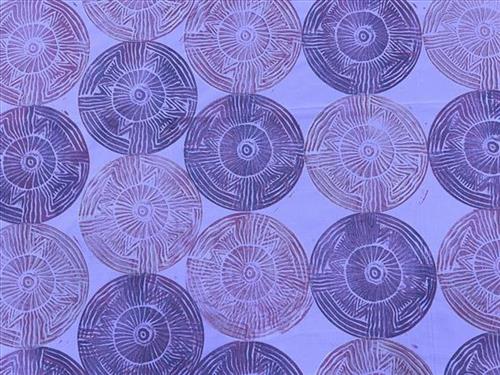
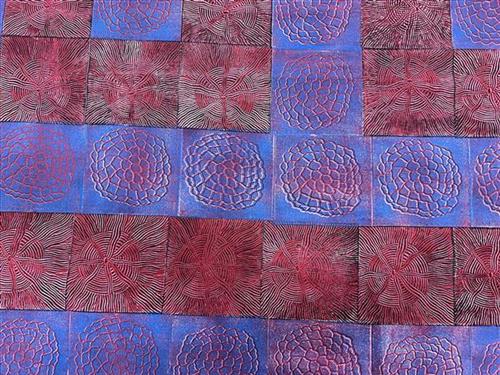
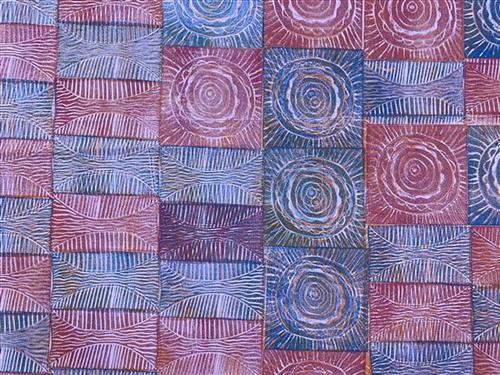
Janet Marawarr has depicted kunkurra, the spiralling wind associated with several sites in the Kardbam clan. On one level, this design can be interpreted as a depiction of the kinds of mini-cyclones common during the wet season in Arnhem Land, where the artist lives. Kunkurra also relates specifically to a site called Bilwoyinj, near Mankorlod, on the artist’s clan estate.

At this site, two of the most important Kuninjku creation beings, a father and son known as na-korrkko, are believed to have hunted and eaten a goanna. They left some of the goanna fat behind at the site, which turned into the rock that still stands there today.

Bilwoyinj site is also a ceremonial ground for a ceremony called Yabbaduruwa, a major ceremony owned by the Yirridja patrimoiety. The Yabbaduruwa ceremony is primarily concerned with initiation, land ownership and promoting the cyclical regeneration of the human and natural worlds.

377810582188997


Kunkurra (Spiral Wind)

‘My designs, they are all alive living up in my head’- Janet Marawarr

Janet Marawarr has depicted kunkurra, the spiralling wind associated with several sites in the Kardbam clan. On one level, this design can be interpreted as a depiction of the kinds of mini-cyclones common during the wet season in Arnhem Land, where the artist lives. Kunkurra also relates specifically to a site called Bilwoyinj, near Mankorlod, on the artist’s clan estate.

At this site, two of the most important Kuninjku creation beings, a father and son known as na-korrkko, are believed to have hunted and eaten a goanna. They left some of the goanna fat behind at the site, which turned into the rock that still stands there today.

Bilwoyinj site is also a ceremonial ground for a ceremony called Yabbaduruwa, a major ceremony owned by the Yirridja patrimoiety. The Yabbaduruwa ceremony is primarily concerned with initiation, land ownership and promoting the cyclical regeneration of the human and natural worlds.

377810582188990


Bush Dye

The old plant dyes used in Europe like indigo, saffron, woad and logwood fell out of use with the Industrial Revolution. But here, a natural “paintbox” thrives.
The most common dyes include:
Yellow-orange: Mandjurndum (the bright orange roots of the Pognolobus reticulatus bush)
Brown: Wirdilwirdil (the red bulb of Haemadorum breviculae grass)
Green: The growing shoot of the pandanus itself (Pandanus spiralis), boiled with the ashes of pandanus leaves.
Purple-pink – Wirndilk (the seeds of the Haemodorum coccineum plant, related to Kangaroo Paw)
Grey-Black – Manbedde (the leaves of the quinine bush, Petalostigma pubescens)


Source: Louise Hamby (ed.) “Twined Together”.