11151030638


Untitled

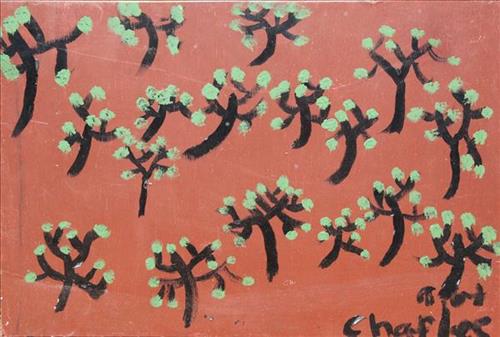
This work portrays an area known intimately to the artist, painted here in exquisite detail from memory. During the pujiman (traditional, desert dwelling) era one’s survival depended on their intimate knowledge of the location of resources; thus physical elements of Country, such as sources of kapi (water), tali (sandhills), and different varieties of warta (trees, vegetation) were carefully observed and remembered. Today, this relationship with Country remains equally strong, despite the movement of Martu out of the desert and into remote Aboriginal Communities, towns and cities.

Also visible may be traces of life cycles based around kalyu (rain, water) and waru (fire). A thousands of year old practice, fire burning continues to be carried out as both an aid for hunting and a means of land management today. As the Martu travelled and hunted they would burn tracts of land, ensuring plant and animal biodiversity and reducing the risk of unmanageable, spontaneous bush fires. The patchwork nature of regrowth is visible in many landscape works, with each of the five distinctive phases of fire burning visually described with respect to the cycle of burning and regrowth.  

Finally, metaphysical information relating to a location may also be recorded; jukurrpa (dreaming) narratives chronicle the creation of physical landmarks, and can be referenced through depictions of ceremonial sites, songlines, and markers left in the land. 
11152117696


Blue Hills

This painting depicts Blue Hills, which is Miriam’s father’s ancestral country. Kajarra (Kadjara) is the Martu name for the Carnarvon Ranges, which are situated in the Little Sandy Desert around 50 kilometres west of Well 5 on the Canning Stock Route. The red granite battlements of Kadjara rise up from spinifex plains and have many permanent waters. Kadjara was an important camping place for Martu walking between Jigalong and Wiluna for Law business up until the late 1960s, as well as Martu who walked the Canning Stock Route into Wiluna. Kadjara can be seen from Blue Hills. Blue Hills, now abandoned, was a small Martu outstation running cattle established after World War II and famously run by Tommy Ingebong, a Putijarra Martu from Wiluna. Many Martu people know of Blue Hills because of its was one of the first land grants to Martu, and because of its stunning views north-west across to Kajarra. Kajarra was the site of the 2008 Birriliburru Native Title Determination.

111581653707


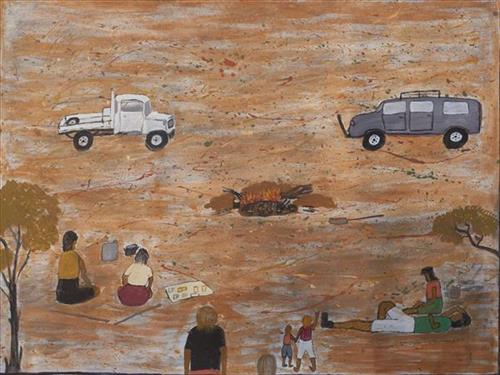
Kangaroo Hunting

“[this painting is of] when we shot and killed the kangaroo. We cooked it in the bush, then sit around and wait for the kangaroo to get cooked”

– Noreena Kadibil

Depicted in this work are animals hunted for bush tucker, their habitats, and different hunting methods. During the pujiman (traditional, desert dwelling) period, Martu would traverse very large distances annually in small family groups, moving seasonally from water source to water source, and hunting and gathering bush tucker as they went. Whilst desert life has moved away from mobile hunter-gatherer subsistence throughout the course of the twentieth century, bush tucker continues to be a significant component of the modern Martu diet. Hunting and gathering bush tucker remains equally valuable as an important cultural practice that is passed on intergenerationally.

Typically, animals hunted for their kuwiyi (meat) include kirti-kirti (euro kangaroo) and marlu (plains kangaroo), parnajarrpa (sand goanna), kipara (Australian bustard, bush turkey) and karlaya (emu). Lunki (witchetty grub) and wuukurta (honey ants) are dug from tree and bush trunks, or from underground nests. Tuulpara (spring) is considered by Martu as the principal hunting season, when resources are productive and the weather conducive to hunting activities requiring a high degree of stamina. 

Traditional tools used for hunting were carved from wanari (mulga), mulunturu (desert oak), yurungkura (river red gum) and mijarrpa (bloodwoods), and included kurlata (spears), jurna (hitting sticks), and karli (boomerangs). Today, animals are most typically hunted using vehicles and rifles. Nonetheless, carved objects retain enormous social and ceremonial importance in Martu life. Though hunting and gathering implements have been modernised, traditional methods of tracking and the use of fire burning to drive animals from their retreats are still commonly practiced today.

111581837591


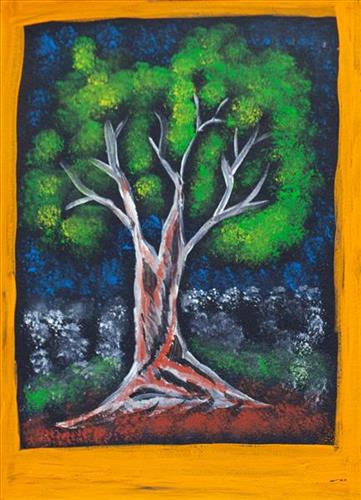
Untitled

This work portrays an area known intimately to the artist, painted here in exquisite detail from memory. During the pujiman (traditional, desert dwelling) era one’s survival depended on their intimate knowledge of the location of resources; thus physical elements of Country, such as sources of kapi (water), tali (sandhills), and different varieties of warta (trees, vegetation) were carefully observed and remembered. Today, this relationship with Country remains equally strong, despite the movement of Martu out of the desert and into remote Aboriginal Communities, towns and cities.

Also visible may be traces of life cycles based around kalyu (rain, water) and waru (fire). A thousands of year old practice, fire burning continues to be carried out as both an aid for hunting and a means of land management today. As the Martu travelled and hunted they would burn tracts of land, ensuring plant and animal biodiversity and reducing the risk of unmanageable, spontaneous bush fires. The patchwork nature of regrowth is visible in many landscape works, with each of the five distinctive phases of fire burning visually described with respect to the cycle of burning and regrowth.  

Finally, metaphysical information relating to a location may also be recorded; jukurrpa (dreaming) narratives chronicle the creation of physical landmarks, and can be referenced through depictions of ceremonial sites, songlines, and markers left in the land. 
111580591552


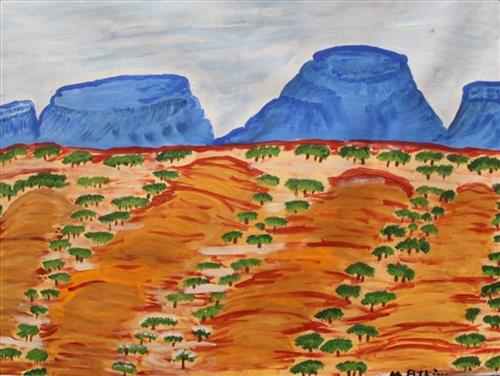
Punmu

Punmu is an Aboriginal community located 670km North-East of Newman, in the Pilbara region of Western Australia. Created during the return to Country movement of the 1980s, with the recognition of Martu land rights and native title, the community was named after a nearby jukurrpa (dreamtime) story.

Punmu community sits on the edge of a large salt lake known as Nyayartakujarra, or Lake Dora. The lake runs south into Karlamilyi River. There are many yinta (permanent water sources) in Punmu’s nearby vicinity including Wilarra, Rawa, Yilyara, Jilajila and Tuutuu.

Punmu features in several jukurrpa narratives. Of particular importance for the Warnman people is the story of the ‘Jila Kujarra’ (Two Snakes). These snakes travelled through Parnngurr, Punkulyi, Yulpu, and Winukurrujunu, forming lakes, claypans, rocks, rockholes, waterholes and soaks as they went. The powerful elder of the two snakes, Wirnpa, finally stopped at the site of Wirnpa, named for him. The young snake kept on travelling until coming to Punmu waterholes Rawa and Yilyarra, making that Country his ngurra (home camp). Another jukurrpa story describes the formation of Nyayartakujarra as occurring when two travelling snakes were first sung to sleep and then killed by magic men. The snakes’ fat was said to have burned away and melted into Nyayartakujarra. 

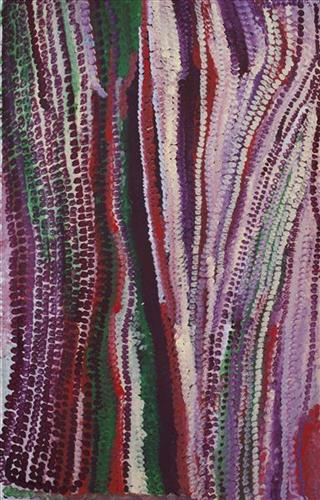
Bugai travelled through this country during the pujiman (traditional, desert-dwelling) era. “This is daddy’s ngurra, mummy’s ngurra.” At Punmu, Bugai and her family would collect minyarra (bush onions) and hunt jipuku (rabbit). Bugai recalls a specific time when she travelled with her mama (father) as a juri (beautiful, good) time. She paints the Country around Punmu, paying special attention to the many yinta and tuwa (sandhills), and to the pastel palette characteristic to the expansive white plains of Nyayartakujarra.

377810582195758


Comb Fish – Joy Garlbin

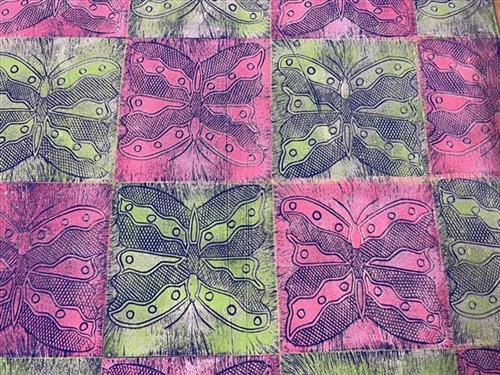
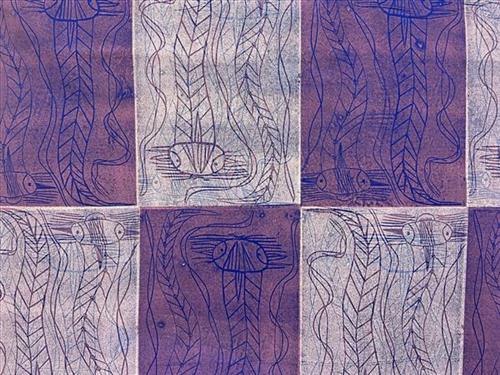
A beautiful, one off, lino cut, hand printed design by Ndjebanna woman, Joy Garlbin depicting the story of Comb Fish. 

111982195739


Waterholes (Kubumi)

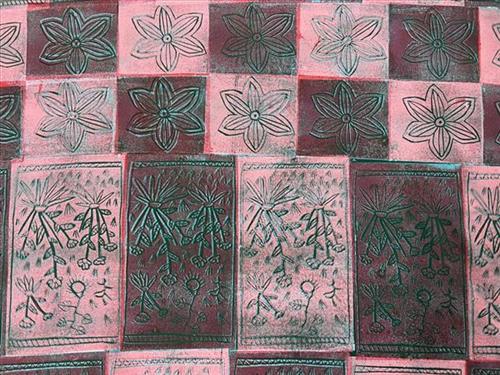
Kubumi is a sacred site on the Mann River. This is its story, as told by a ritual manager of the site, Lulu Laradjbi, with the authority of her husband Mick Kubarkku, a land owner of that country.

Ngalyod the Rainbow Serpent pierced the rock at a place called Bolerrhlerrh and journeyed downstream from there to Ngalmalanj. The camping place Kubumi is downstream from there but at Ngalmalanj the serpent was blocked. It pushed down into the riverbed, pushed into the earth, sinking down forever. Now it lives under the rocky riverbed. That site continues downstream. Upstream is the site Molerrhlerrh, which has a waterfall and a big waterhole. There the serpent moved inside, downstream, to the lower region.

During the dry season at Kubumi, the Mann River shrinks to a series of deep waterholes, exposing the tunnels through the rocky outcrop that interconnect the pools.